Image

Unlock $500M in Quoting Opportunity with Automation!

Join us for a 30‑minute live demo of Email AI

Trending

Categories

ACIA Aero Leasing Finalizes ATR Agreement with EWA Air
March 7, 2026By ePlane AI
ACIA Aero Leasing Finalizes ATR Agreement with EWA Air
0
0
ACIA Aero Leasing
ATR 72-600
EWA Air

ACIA Aero Leasing Finalizes ATR Agreement with EWA Air

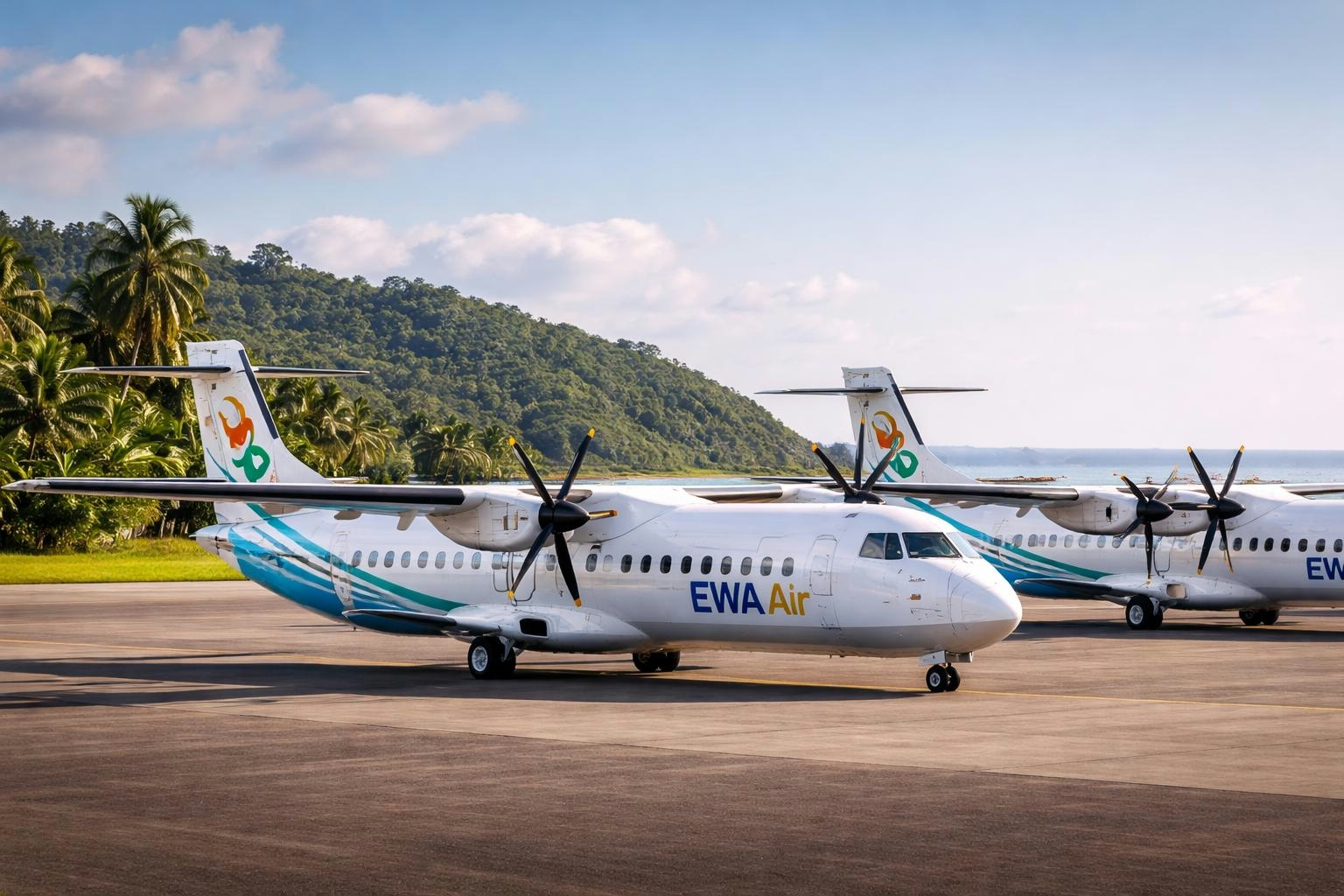
ACIA Aero Leasing has completed a sale and leaseback transaction involving two ATR 72-600 passenger aircraft with EWA Air, marking a significant development for both companies. The aircraft will remain in operation with EWA Air, a key regional carrier in the Indian Ocean that connects remote areas with major cities, thereby facilitating business, tourism, and cultural exchange across the region.

Strategic Partnership Strengthens Regional Connectivity

Mick Mooney, Chief Executive Officer of ACIA, expressed satisfaction at being chosen by EWA Air and its majority shareholder, Air Austral, for this important deal. He highlighted EWA Air’s essential role in regional connectivity and its contribution to supporting Air Austral’s long-haul network. Hugues Marchessaux, CEO of Air Austral and Chairman of EWA Air, described the agreement as a new phase for EWA, consolidating its operations and opening new opportunities through the partnership with ACIA. He emphasized the commitment to Mayotte’s economic development and the strengthening of the regional network enabled by leasing the two ATR aircraft from ACIA.

Market Context and Industry Challenges

This agreement arrives amid heightened activity and emerging challenges in the regional aircraft leasing market. ATR, the manufacturer of the ATR 72-600, plans to increase production by 20% in 2026 to meet strong demand. However, this expansion risks straining supply chains and affecting production schedules. As ATR strives to fulfill a robust order book and meet delivery targets for 2025, lessors such as ACIA may encounter increased pressure to manage delivery timelines and maintain operational flexibility.

The broader leasing market is also experiencing intensified competition, driven in part by industry consolidation, exemplified by DAE’s recent acquisition of Macquarie AirFinance. Competitors may respond by securing their own ATR orders or diversifying their fleets to safeguard market share amid supply constraints and potential delivery delays.

Despite these challenges, ACIA’s agreement with EWA Air highlights the sustained demand for efficient regional aircraft and the critical role of dependable leasing partners. As the industry contends with production hurdles and evolving competitive dynamics, such partnerships are poised to remain vital in supporting regional connectivity and fleet modernization initiatives.

More news
Two Small Planes in Pennsylvania Crashes Shared Engine Manufacturer, Records Show

Two Small Planes in Pennsylvania Crashes Shared Engine Manufacturer, Records Show

Two Small Plane Crashes in Pennsylvania Highlight Engine Manufacturer Safety Concerns Two recent small aircraft incidents in Pennsylvania have drawn attention to a common factor: both planes were powered by engines from the same manufacturer. This connection has raised questions about engine reliability and prompted increased regulatory scrutiny. Details of the Incidents and Initial Findings Within a span of just a few days, two small planes encountered serious engine troubles mid-flight. On April 1, a plane crashed into a field after striking a tree in Northeast Philadelphia, resulting in injuries to two individuals. Three days later, another aircraft was forced to make an emergency landing on Interstate 78 in Lehigh County. In both cases, pilots reported engine difficulties—one described a “little engine problem” over the radio, while the other communicated a “partial loss of power” to air traffic control. Although investigations into the precise causes remain ongoing, a review of Federal Aviation Administration (FAA) records revealed that both aircraft were equipped with engines manufactured by Lycoming, a prominent Pennsylvania-based company. Notably, the FAA had issued an airworthiness directive in March concerning these engine models. This directive, akin to a safety recall, was prompted by multiple reports of connecting rod failures that led to uncontained engine failures and in-flight shutdowns. However, the directive’s compliance deadline was set for April 8, after the two incidents had already occurred. Regulatory and Industry Response The coincidence of these incidents has raised alarm among aviation experts and regulatory authorities. Peter Knudsen, spokesperson for the National Transportation Safety Board (NTSB), emphasized the importance of identifying patterns in such events, stating that any emerging trends prompt thorough examination to determine if broader safety issues exist. This latest directive marks the third FAA action related to connecting rod problems in Lycoming engines. A previous directive issued in 2017 affected hundreds of engines, while the current one potentially applies to more than 45,000 aircraft. Aviation attorney and safety expert Arthur Wolk described the expanding scope as “troublesome,” suggesting that regulators have yet to fully ascertain the extent of the problem or the number of engines at risk. Wolk further warned that certain metal failures in these components could cause engines to fail abruptly during flight, posing significant hazards. The incidents have also reverberated throughout the aviation industry. Competitors of Lycoming have seized the opportunity to promote alternative engine options, while regulatory bodies have intensified their investigations into the affected engine models. Market responses reflect growing caution among operators and manufacturers, underscoring the broader implications of these safety concerns. Maintenance and Ongoing Investigations Aircraft mechanics note that some engine defects can be identified during routine maintenance, but the recent emergencies highlight the critical need for prompt attention to potential faults. As investigations proceed, officials and industry experts concur on the urgency of uncovering and addressing any underlying safety issues to prevent future occurrences.
The Resurgence of the Airbus A380

The Resurgence of the Airbus A380

The Resurgence of the Airbus A380 The unexpected revival of the Airbus A380 represents one of the most remarkable developments in contemporary aviation. Once regarded as an oversized and inefficient aircraft, leading to its early retirement by several major airlines, the superjumbo has now reemerged as a vital asset for long-haul travel. This turnaround, unforeseen by many industry experts just a few years ago, is driven by a combination of mechanical, economic, and operational factors, alongside shifting industry dynamics and emerging market pressures. Capacity Constraints and Market Demand At the heart of the A380’s resurgence lies the persistent demand for increased passenger capacity at the world’s busiest airports. As global air traffic has rebounded and surpassed pre-pandemic levels, major international hubs have reached their slot capacity limits, preventing airlines from adding more flights. In these slot-constrained environments, maximizing the number of passengers per departure has become essential—a challenge the A380 is uniquely positioned to address. With a standard four-class configuration accommodating over 500 passengers, the aircraft enables airlines to transport nearly twice as many travelers per takeoff compared to typical long-haul jets, without requiring additional gate space or flight slots. Although the A380’s four-engine design results in higher fuel consumption, this disadvantage is increasingly offset by the imperative to retain high-yield passengers. The aircraft’s substantial size allows airlines to safeguard market share in key cities where airport expansion has stalled. Furthermore, ongoing delays in Boeing’s 777X program have created a void in the widebody market. Airlines that had intended to replace aging quadjets with the new 777-9 have been compelled to reconsider their fleet strategies, prompting the reactivation of stored A380s. Engineering Challenges and Operational Realities Reactivating an A380 from storage is a complex engineering undertaking. Many of these aircraft were parked in arid locations such as Teruel, Spain, and Victorville, California, to minimize corrosion during the downturn caused by the COVID-19 pandemic. Restoring them to operational status demands months of meticulous work to refurbish intricate hydraulic systems, wiring, and avionics—far exceeding the scope of routine maintenance. Emerging Challenges and Market Dynamics Despite its renewed prominence, the A380 faces significant headwinds. Airbus reported a year-over-year decline in first-quarter deliveries for 2026, raising concerns about the future demand for large aircraft and airlines’ willingness to invest in such models. Geopolitical tensions, particularly between the United States and China, are disrupting Boeing’s delivery schedules and order books in the Asia-Pacific region, potentially altering the competitive landscape and influencing global fleet decisions. The economic environment is also evolving rapidly. The 2026 jet fuel crisis, characterized by a doubling of fuel prices, is exerting considerable pressure on airline operating costs. This surge threatens the economic viability of large, four-engine aircraft like the A380, compelling airlines to balance capacity requirements against profitability. Complicating the market further, new entrants and strategic partnerships—such as the Adani-Embraer alliance—are set to reshape regional air travel and introduce fresh competition. These developments may influence airline strategies and the role of the A380 within global fleets. Outlook The Airbus A380’s return underscores the enduring value of scale in an era marked by constrained infrastructure and soaring demand. Nevertheless, its future remains uncertain amid evolving market forces, rising operational costs, and intensifying competition. For the time being, the superjumbo’s capacity to transport large numbers of passengers through the world’s busiest hubs secures its continued relevance as the aviation industry prepares for its next phase of transformation.
IFS Introduces Industrial AI for Aviation Technicians

IFS Introduces Industrial AI for Aviation Technicians

IFS Introduces Industrial AI to Enhance Aviation Maintenance Efficiency Enterprise software provider IFS is advancing beyond experimental generative AI by launching practical artificial intelligence solutions designed to transform aviation maintenance operations. The company aims to equip technicians with tools that improve efficiency, integrate data across disparate systems, and uphold stringent security standards. This measured approach aligns with the aviation sector’s traditionally cautious stance toward new technologies, driven by rigorous safety and compliance requirements. Shifting from Planning to Deployment At the MRO Americas 2026 conference in Orlando, Robert Mather, Vice President of Aerospace and Defense Industries at IFS, highlighted the industry’s year-long preparation for broader AI adoption. He emphasized that the focus is now transitioning from conceptual planning to the deployment of AI products ready for real-world application. “Aviation has moved more slowly than other sectors because of its safety culture and the risks of introducing immature technology,” Mather explained. “But the conversation is now about where AI can genuinely help.” IFS’s AI strategy is structured around three core pillars. The first, Industrial AI, involves embedding AI directly into existing software platforms used for maintenance and operational workflows, rather than offering AI as a separate layer. This integration aims to deliver intelligence precisely where technicians perform their work. The second pillar, Agentic AI, introduces “digital workers” capable of executing specific tasks across systems, a concept that IFS is expanding through recent product releases. The third pillar, Nexus Black, is a specialized team within IFS that collaborates closely with customers to identify operational challenges and develop AI tools that can be scaled into repeatable products. One prominent application of these innovations automates the processing of airworthiness directives and service bulletins, evaluates their impact on fleets, and generates compliance-related job cards. According to Mather, this solution has reduced processing times by more than 70 percent. Challenges and Industry Implications Despite these advancements, integrating IFS’s Industrial AI with existing aviation systems presents notable challenges. Organizations will require skilled personnel to manage and maintain these AI solutions, and there may be resistance from traditional technicians skeptical of AI’s role. Mather acknowledged that most AI tools currently target white-collar roles, even though significant value in aviation maintenance lies with frontline technicians. He stressed that AI should serve to empower certified personnel by enabling faster work, quicker access to relevant information, and more efficient navigation of complex documentation, all while preserving human judgment in critical safety and compliance decisions. Market reactions to IFS’s AI initiatives may include increased investment as companies strive to remain competitive. However, concerns about the cost, complexity, and workforce retraining necessary for such advanced systems could temper enthusiasm. Competitors are expected to accelerate their own AI development or enhance existing offerings to keep pace with IFS’s progress. Cybersecurity remains a paramount concern, particularly as airlines and commercial operators increasingly view themselves as integral components of critical infrastructure. Mather emphasized that purpose-built AI tools can be securely contained within validated data sources and controlled environments, with all outputs subject to human oversight. IFS delivers its aviation maintenance solutions through the IFS Cloud platform, continuing to invest as it expands its industrial AI strategy. As the aviation industry moves from planning to implementation, the emphasis remains on practical, secure, and technician-focused AI tools that address tangible operational needs.
CAMP Introduces AI Tools for Aviation Software Users

CAMP Introduces AI Tools for Aviation Software Users

CAMP Advances Aviation Software with Comprehensive AI Integration CAMP Systems is accelerating the adoption of artificial intelligence across its aviation software suite, unveiling a range of new AI-powered tools designed to enhance parts pricing, technician support, analytics, customer service, and software development. This strategic initiative, launched in 2025, is now being implemented in both customer-facing applications and internal processes, according to Daniel Tautges, Senior Vice President of Sales at Component Control, a subsidiary of CAMP. Modernizing Legacy Systems and Enhancing User Experience At Component Control, the AI integration extends well beyond the deployment of chatbots on websites. Tautges explained that artificial intelligence is being embedded throughout the company’s operations, support functions, coding practices, and product design efforts. This comprehensive approach aims to modernize legacy software and facilitate the transition of more products to web-based platforms. “If you’re not on the AI bus, you’re going to get run over by the AI bus,” Tautges remarked during an interview at MRO Americas 2026, underscoring the urgency of embracing AI technologies. A key element of this modernization involves leveraging AI to analyze source code, user manuals, FAQs, and support tickets to determine whether existing legacy applications should be updated, migrated, or completely rebuilt. This effort forms part of a broader refresh under the CAMP Aviate brand, signaling a commitment to revitalizing the company’s software offerings. Several AI-driven tools are either in development or already deployed for customers. These include a pricing tool that estimates aircraft parts values by combining internal data with external market indicators, and a technician support application that assists less experienced mechanics by referencing maintenance records and company knowledge bases to suggest appropriate fixes. Additionally, an analytics tool allows users to pose questions in natural language, reducing dependence on traditional reports or custom queries. Customer support has also been enhanced through AI, enabling faster responses by drawing on FAQs, instructional videos, past trouble tickets, and internal documentation. Internal Efficiencies and Competitive Challenges Internally, CAMP is utilizing AI to streamline employee training amid the growing complexity of enterprise resource planning (ERP) systems. In software development, AI assists in evaluating older modules, expediting decisions on whether to migrate or rebuild components. The company’s AI team has expanded to 14 developers and is projected to grow to 45 by the end of 2026. Despite these advancements, CAMP faces a competitive environment as it rolls out its AI tools. Established technology firms such as Meta have already integrated AI into platforms serving small businesses, raising customer expectations and innovation standards. Market responses to AI adoption in enterprise software remain mixed; some investors express concerns about the impact of AI coding tools on established software providers like ServiceNow, while others recognize the potential for AI-driven solutions to deliver enhanced value to enterprise clients. Industry analysts suggest that companies effectively leveraging AI to strengthen their value propositions may be better positioned for future success. Security remains a paramount concern for CAMP. Tautges emphasized that the company’s AI systems are carefully ring-fenced to safeguard customer data, ensuring that information is not shared across clients. He also highlighted the support provided by Hearst, CAMP’s parent company, which offers additional legal, compliance, and cybersecurity resources as CAMP expands its AI initiatives. As the aviation software sector undergoes rapid transformation, CAMP’s comprehensive integration of AI across its products and operations exemplifies the opportunities and challenges confronting enterprise technology providers in a highly competitive and fast-evolving market.
Boeing 737-800 Leasing Trends and Asset Values for Aviation Investors

Boeing 737-800 Leasing Trends and Asset Values for Aviation Investors

Boeing 737-800 Leasing Trends and Asset Values for Aviation Investors The Boeing 737-800 platform is experiencing a renewed phase of strategic significance as leasing activity, asset trading, and secondary market demand intensify among global carriers. For UK-based investors and aviation financiers, the 737-800 continues to demonstrate resilience as a mid-life narrowbody asset, effectively balancing operational efficiency with strong lease placement potential. Evolving Leasing Strategies and Market Dynamics Recent transactions involving Boeing 737-800 aircraft reveal a deliberate shift in leasing strategies among global lessors. Supply chain disruptions have delayed new aircraft deliveries, prompting firms to focus increasingly on mid-life narrowbodies with proven operational records. Significant deals, including the acquisition of multiple 737-800 units for Eastar Jet and asset transfers to emerging operators, exemplify this trend. Leasing companies are prioritising liquidity and placement flexibility, ensuring these assets can be rapidly deployed across diverse markets. This approach aligns with insights from the International Air Transport Association, which highlight sustained demand for narrowbody aircraft within short-haul and regional networks. The 737-800 has solidified its position as a cornerstone of the secondary aircraft market. Unlike newer models that face delivery bottlenecks and pricing volatility, the 737-800 benefits from a well-understood cost structure and an established maintenance ecosystem. For UK investors and aviation funds, this translates into predictable cash flows. Lease rates have stabilised following the fluctuations experienced during the pandemic, while demand from low-cost carriers and start-up airlines continues to absorb available inventory. The aircraft’s global compatibility—supported by widespread pilot familiarity and existing infrastructure—reduces onboarding friction for new operators. Regional Growth and Geopolitical Challenges The Asia-Pacific region remains a key growth engine for Boeing 737 deployments, with airlines in South Korea, Southeast Asia, and emerging markets expanding their fleets primarily through leasing rather than direct purchases. This capital discipline enables carriers to scale operations without significant upfront investment and to adapt swiftly to fluctuating passenger demand. However, ongoing geopolitical tensions, particularly between the United States and China, present challenges that affect delivery schedules and long-term order books in the region. Market responses to these uncertainties are evident in recent consolidation moves, such as the acquisition of Air Lease by SMBC Aviation Capital and its partners. This transaction positions SMBC as a competitive and well-capitalised leasing platform. Broader sector consolidation and strategic investments, including Vertical Aerospace’s funding for eVTOL development, further underscore a rapidly evolving competitive landscape. Investor Positioning and Strategic Fleet Planning From a financial perspective, the Boeing 737-800 offers a compelling balance between yield and risk. While newer aircraft models promise higher efficiency, they also entail higher capital costs and exposure to delivery uncertainties. Mid-life 737 assets provide stable returns with manageable maintenance forecasting. Nonetheless, investors must remain vigilant regarding residual value risks as environmental regulations tighten and airlines gradually transition to more fuel-efficient models. Portfolio diversification remains critical, with many lessors blending 737-800 holdings alongside newer generation aircraft to hedge against long-term depreciation. Strategically, the Boeing 737-800 increasingly serves as a bridge aircraft amid delays affecting next-generation deliveries. Airlines are extending leases and acquiring additional mid-life units to maintain capacity, a practice particularly relevant for European carriers, including those operating from the UK. As travel demand stabilises and grows, maintaining fleet availability becomes a priority—even if it necessitates reliance on older but dependable aircraft. In this context, the 737-800 remains a vital asset for investors and operators navigating a complex and shifting aviation landscape.
Boeing Files Patent for New Turbulence-Reduction Technology

Boeing Files Patent for New Turbulence-Reduction Technology

Boeing Advances Turbulence-Reduction Technology with New Patent Filings Turbulence remains a persistent safety concern in commercial aviation, with tens of thousands of moderate to severe incidents reported annually. Although most turbulence events do not result in injuries—particularly when flight crews provide timely warnings—unexpected or intense turbulence can still cause significant harm to passengers and crew. Given that turbulence continues to be a leading cause of in-flight injuries, the aviation sector is increasingly focused on developing innovative strategies and technologies to mitigate its effects. Innovative Systems Targeting Turbulence Detection and Control Boeing, a leading American aircraft manufacturer, has recently filed patents for two novel systems aimed at detecting and reducing turbulence. These filings come amid reports of rising turbulence incidents and growing expert concerns that climate change may exacerbate such occurrences in the future. The first patent outlines a system for remotely measuring turbulence using electromagnetic sensors. This technology is designed to detect turbulence ahead of an aircraft by analyzing variations in electromagnetic signals while filtering out interference caused by aircraft movement and ionospheric conditions. Boeing envisions this system as part of a global, interconnected network capable of generating three-dimensional turbulence maps. These maps could be shared in real time with other aircraft and air traffic controllers, thereby enhancing situational awareness and overall flight safety. The second patent focuses on an inflow turbulence control structure intended to improve the accuracy of engine and airframe testing. Traditional ground-based tests often fail to replicate the complex turbulence conditions encountered at cruising altitudes. Boeing’s system aims to better simulate these real-world conditions during ground testing, resulting in more reliable performance data and potentially safer aircraft designs. Addressing Limitations in Current Turbulence Detection While existing weather and radar networks assist pilots in anticipating turbulence, their coverage and precision can be limited, especially over remote or oceanic regions. Boeing’s electromagnetic-based detection system, designed to integrate with satellite data, seeks to address these gaps by providing a more comprehensive and accurate depiction of atmospheric turbulence. Intellectual Property Challenges and Industry Implications Boeing’s patent filings arrive amid evolving challenges in the intellectual property landscape. The United States Patent and Trademark Office (PTO) has recently transferred gatekeeping responsibilities to its director, a move that may raise the threshold for patent challenges and alter the processes by which new patents are examined and contested. This shift could affect the speed and certainty with which Boeing’s patents are granted and defended. Competitors in the aerospace industry are likely to monitor Boeing’s progress closely, as successful deployment of these technologies could yield significant benefits in passenger comfort and operational efficiency. Furthermore, the broader context of patent litigation—particularly concerning standard essential patents and the increasing role of artificial intelligence in patent law—may influence how such innovations are protected and commercialized. As the aviation industry continues to pursue advancements for safer and smoother flights, Boeing’s turbulence-reduction technologies represent a potentially transformative development in the future of air travel.
Boeing's Surprise Recovery Offers Supply Chain Optimism

Boeing's Surprise Recovery Offers Supply Chain Optimism

Boeing's Surprise Recovery Offers Supply Chain Optimism Financial Turnaround Amid Global Challenges Boeing’s recovery is gaining momentum as improved aircraft deliveries and stabilizing production begin to alleviate pressures on its global supply chain. This development provides cautious optimism not only for aerospace manufacturing but also for the broader industrial ecosystem. The progress is particularly notable given the ongoing conflict in the Middle East, which continues to disrupt critical air and sea corridors, compelling manufacturers across the sector to reevaluate logistics and energy risks. In its first-quarter report, Boeing posted a net loss of $7 million, a significant improvement from the $31 million loss recorded a year earlier and well ahead of analyst expectations. Revenues increased by 14% year-on-year to approximately $22.2 billion, supported by a steady rise in aircraft deliveries. CEO Kelly Ortberg highlighted the positive trajectory in a memo to employees, stating, "We're off to a good start and continue building on our momentum with stronger performance across our business." Supply Chain Resilience and Market Dynamics Boeing’s recent financial results indicate that long-term demand for new aircraft remains largely intact despite the uncertainties introduced by the conflict in Iran, which has heightened concerns over global trade flows and operating costs. The company’s unexpected turnaround has injected a degree of optimism regarding supply chain resilience, especially as the aerospace sector contends with broader geopolitical and economic challenges. The company’s first profitable year since 2018 was reported in 2026, driven by increased deliveries and improved cash flow. Nevertheless, Boeing continues to face significant hurdles. Persistent tensions between the United States and China threaten the company’s delivery schedules and order book in the Asia-Pacific region, a critical market for future growth. Furthermore, 89% of manufacturers report material impacts from tariffs and shifting trade policies, complicating production planning and supply chain stability across the industry. Despite these challenges, global air cargo demand has stabilized and is expected to grow, albeit at a slower pace. This trend has provided some relief to manufacturers navigating volatile supply chains, acting as a buffer amid turbulent trade conditions. While Boeing’s recovery signals renewed strength for the aerospace sector, the company and the wider manufacturing landscape must continue to adapt to evolving geopolitical tensions and trade policy shifts. For now, the improved performance offers a cautiously optimistic outlook for supply chain resilience amid ongoing global uncertainty.
Vaeridion Reveals Powertrain Configuration Ahead of Upcoming Tests

Vaeridion Reveals Powertrain Configuration Ahead of Upcoming Tests

Vaeridion Unveils Twin-Motor Powertrain Ahead of Microliner Testing German electric aviation developer Vaeridion has revealed a mock-up of its innovative twin-motor powertrain, designed to power the upcoming Microliner aircraft, as the company prepares for full-scale ground testing. The system was showcased at Aero Friedrichshafen in Munich alongside a cockpit mock-up of the Microliner. It features two 500kW electric motors mounted on a single shaft and connected by a sprag clutch, driving a single nose-mounted propeller. This patented configuration eliminates the need for a traditional reduction gearbox, thereby reducing maintenance requirements, and instead relies solely on an accessory gearbox. Advancing Safety and Reliability in Electric Propulsion Vaeridion’s powertrain design addresses critical safety and reliability challenges associated with electric propulsion, particularly during demanding flight phases such as take-off and landing. The system incorporates redundancy that allows continued operation in the event of a single motor failure without producing asymmetric thrust, a major safety concern in multi-engine aircraft. This approach not only enhances operational safety but also ensures compliance with European regulations mandating multi-engine configurations for flights conducted in instrument meteorological conditions or at night. The company has previously conducted bench tests on a smaller version of the integrated system and is now preparing to test motors with power outputs closer to those intended for the final aircraft. The first ground test of a single motor, manufactured to Vaeridion’s specifications by an undisclosed electric motor specialist, is scheduled for this summer. Douglas de Costa, Vaeridion’s head of propulsion and systems, emphasized the importance of this milestone, stating that it will allow the team to mature the engine design and requirements. He also highlighted the opportunity to test the battery system and high-voltage network in a fully integrated manner. Vaeridion plans to commence testing of the complete two-motor system in the first half of 2027, contingent on the progress of single-motor trials and necessary upgrades to its test rig to accommodate the increased power output. CEO Ivor van Dartel noted that once testing begins, operations will run continuously to accelerate development. Preparing for Flight and Industry Implications Although the Microliner will ultimately be equipped with electric motors supplied by UK-based Evolito, the current ground-test articles form part of a broader strategy to mitigate risks ahead of the prototype’s maiden flight, targeted within the next 100 weeks. In addition to powertrain development, Vaeridion plans to flight-test several new battery packs on a dedicated testbed later this year. In parallel, the company has selected Garmin’s G600 TXi flight displays for the initial Microliner test aircraft, citing the system’s reliability, flexibility, and advanced touchscreen interface as key advantages for the demanding flight-test campaign. To avoid integration delays, Vaeridion has developed its own system for displaying remaining battery energy levels, with a more integrated solution expected by the third prototype. The Microliner, a nine-seat regional aircraft aiming for commercial service entry in 2030, has attracted significant attention within the electric aviation sector. Vaeridion’s redundant powertrain design is viewed as a potential benchmark for safety and efficiency in electric propulsion. However, ensuring the reliability and safety of this novel configuration during high-stress flight phases remains a formidable challenge. Market reactions have been largely positive, focusing on the innovation’s implications for operational safety, while competitors such as Horse Powertrain and NRG2fly are expected to closely monitor Vaeridion’s progress as the race to commercialize electric regional aircraft intensifies.
ITA Airways Employs AI to Cut Fuel Use and Emissions

ITA Airways Employs AI to Cut Fuel Use and Emissions

ITA Airways Employs AI to Cut Fuel Use and Emissions Advancing Sustainability Through Artificial Intelligence ITA Airways is intensifying its commitment to sustainability by expanding the use of artificial intelligence to reduce fuel consumption and carbon emissions. The airline has implemented SITA’s OptiFlight climb optimisation tool across its entire fleet, anticipating fuel savings of 7,100 tons and a reduction of 22,100 tons in CO2 emissions over the course of 2025 and 2026. This AI-powered system targets one of the most fuel-intensive phases of flight—climb-out—where even slight inefficiencies in speed, altitude, or thrust can significantly increase fuel burn. OptiFlight employs predictive analytics and machine learning to determine the optimal climb profile for each flight. By integrating real-time four-dimensional weather data with aircraft-specific performance metrics, the system continuously adjusts variables such as airspeed and altitude. This tailored approach ensures recommendations are specific to each aircraft and operational scenario, enabling more efficient fuel use without compromising safety or operational effectiveness. Early results from ITA Airways’ adoption of OptiFlight have demonstrated substantial reductions in fuel consumption. The airline is now embedding this technology into its routine operations, making data-driven efficiency improvements a core component of its broader sustainability strategy. Francesco Presicce, Chief Innovation and Strategic Projects/Vision at ITA Airways, emphasized that the deployment of OptiFlight reflects the company’s dedication to innovative and practical tools that deliver measurable environmental benefits while maintaining operational excellence. Navigating Industry Challenges: Fuel Costs and Emissions Regulations ITA Airways’ initiative comes amid escalating pressures across the European aviation sector, where soaring jet fuel prices and increasing regulatory costs are reshaping operational priorities. The recent cancellation of 20,000 flights by the Lufthansa Group, attributed largely to fuel cost challenges, highlights the volatility airlines face. Similarly, competitors such as Ryanair have issued warnings about potential flight cancellations if fuel shortages continue, underscoring the critical importance of fuel efficiency. Compounding these challenges is the impending expiration of the European Union Emissions Trading System (ETS) grace period in January 2027, which will require airlines to purchase emission allowances for all their carbon output. For instance, KLM reported ETS-related costs of €25 million in 2019, with projections suggesting these expenses could escalate to €325 million annually by 2030. For carriers like ITA Airways, operational improvements that reduce emissions offer a direct financial advantage by mitigating the need to buy costly emission rights. Yann Cabaret, CEO of SITA for Aircraft, highlighted the urgency of balancing emissions reduction with operational efficiency. He noted that ITA Airways’ adoption of OptiFlight exemplifies how leveraging data-driven solutions can produce tangible environmental and economic benefits, emphasizing that the demand for intelligent, innovative tools in aviation has never been more critical. Integrating Efficiency with Growth and Cost Management Beyond fuel savings, ITA Airways is also focused on managing fleet leasing costs and expanding its fleet, aligning with broader industry efforts to control operational expenses amid rising fuel prices. While climb optimisation addresses only one segment of flight operations, the consistent application of digital tools like OptiFlight can generate incremental efficiency gains that accumulate across thousands of flights. These improvements support both environmental objectives and financial sustainability. As the aviation industry confronts mounting pressures, ITA Airways’ investment in AI-driven efficiency reflects a growing consensus that digital innovation is essential. By harnessing advanced technologies, airlines can better navigate the dual challenges of cost control and emissions reduction, positioning themselves for sustainable growth in an increasingly complex operating environment.
China Aircraft Leasing Group Releases 2025 ESG Report on Sustainability and Governance

China Aircraft Leasing Group Releases 2025 ESG Report on Sustainability and Governance

China Aircraft Leasing Group Releases 2025 ESG Report on Sustainability and Governance China Aircraft Leasing Group Holdings Limited (CALC) has unveiled its 2025 Environmental, Social, and Governance (ESG) Report, marking notable advancements in sustainability, operational efficiency, and corporate governance. The report, prepared in accordance with the Hong Kong Exchanges and Clearing Limited (HKEX) ESG Reporting Code and the Global Reporting Initiative (GRI) standards, reflects CALC’s strategic commitment to integrating ESG principles into its core business operations. This approach responds to increasing regulatory scrutiny and growing investor demand for transparent sustainability practices. Progress in Sustainability and Governance In 2025, CALC strengthened its sustainability agenda by delivering 22 new-generation Airbus aircraft designed for enhanced fuel efficiency. This fleet modernization underscores the company’s dedication to promoting low-carbon growth within the aviation industry, aligning with global efforts to reduce environmental impact. The emphasis on fuel-efficient aircraft also corresponds with a broader market trend where ESG performance is becoming a critical factor in executive remuneration, particularly in European markets, and a key differentiator in competitive positioning. Further advancing its sustainable finance initiatives, CALC’s wholly owned subsidiary, CALC (Tianjin), issued sustainability-linked medium-term notes (MTNs). The proceeds from these notes are earmarked exclusively for acquiring fuel-efficient aircraft, with the company committing to report on progress against the established sustainability targets in future disclosures. This financing strategy not only broadens CALC’s access to green capital but also enhances its appeal to investors prioritizing ESG criteria, reflecting a wider shift toward sustainable investment frameworks. On the governance front, CALC reported that women constitute 47.83% of its leadership team, comprising 11 executives, highlighting a strong emphasis on diversity across multiple dimensions including age, gender, culture, education, skills, and experience. The company maintains rigorous governance and anti-bribery policies, with no corruption incidents recorded in 2025. Oversight of ESG and climate-related matters is entrusted to the Sustainability Steering Committee, chaired by the CEO and operating under the direct authority of the board, ensuring high-level accountability. CALC also undertook a comprehensive climate risk assessment and introduced a Climate Change Policy aligned with the Task Force on Climate-related Financial Disclosures (TCFD) and International Financial Reporting Standards (IFRS) S2 guidelines. The assessment identified one principal physical risk—extreme weather events—and four transition risks encompassing regulatory, technological, market, and reputational factors. Additionally, six climate-related opportunities were recognized. While the current financial impact of these risks and opportunities remains immaterial, CALC plans to incorporate scenario analyses in forthcoming reports to enhance transparency and strategic preparedness. Industry Context and Market Implications CALC’s ESG initiatives emerge amid intensifying regulatory demands and heightened market expectations for credible and transparent sustainability reporting. As ESG considerations increasingly influence investment decisions, CALC’s proactive measures may attract heightened investor interest and establish a benchmark for peers within the aircraft leasing sector. This dynamic is likely to prompt competitors to adopt comparable ESG frameworks or to emphasize their own sustainability credentials, thereby elevating the overall focus on responsible business conduct across the industry. Outlook The 2025 ESG Report positions CALC as a frontrunner in embedding sustainability within corporate governance and operational strategy. As global trends continue to drive demands for greater accountability and transparency, CALC’s initiatives in sustainable finance, climate risk management, and board diversity are poised to remain integral to its value proposition. These efforts will be critical not only in appealing to investors but also in maintaining a competitive edge in the evolving landscape of aircraft leasing.
line










