Image

AeroGenie — Your Intelligent Copilot.

Ask anything. Analyze everything. Act instantly.

Trending

Categories

Adani Group to Enter Engine Maintenance and Aircraft Conversion Sectors
December 21, 2025By ePlane AI
Adani Group to Enter Engine Maintenance and Aircraft Conversion Sectors
0
0
Adani Group
Engine Maintenance
Aircraft Conversion

Adani Group Expands into Engine Maintenance and Aircraft Conversion

Adani Group is set to broaden its presence in the aviation sector by entering the engine maintenance and passenger-to-freighter aircraft conversion markets. This strategic expansion aims to enhance the conglomerate’s aviation services portfolio, complementing its existing investments in airport infrastructure and pilot training programs.

Strengthening Training and Maintenance Capabilities

In line with the anticipated growth of India’s aviation industry, Adani plans to significantly increase its simulator capacity nationwide. By bolstering its training infrastructure, the group seeks to meet the rising demand for skilled aviation professionals, thereby supporting the sector’s projected expansion. The move into engine maintenance and aircraft conversion represents a natural extension of these efforts, positioning Adani to offer a more comprehensive range of aviation services.

Competitive Landscape and Market Challenges

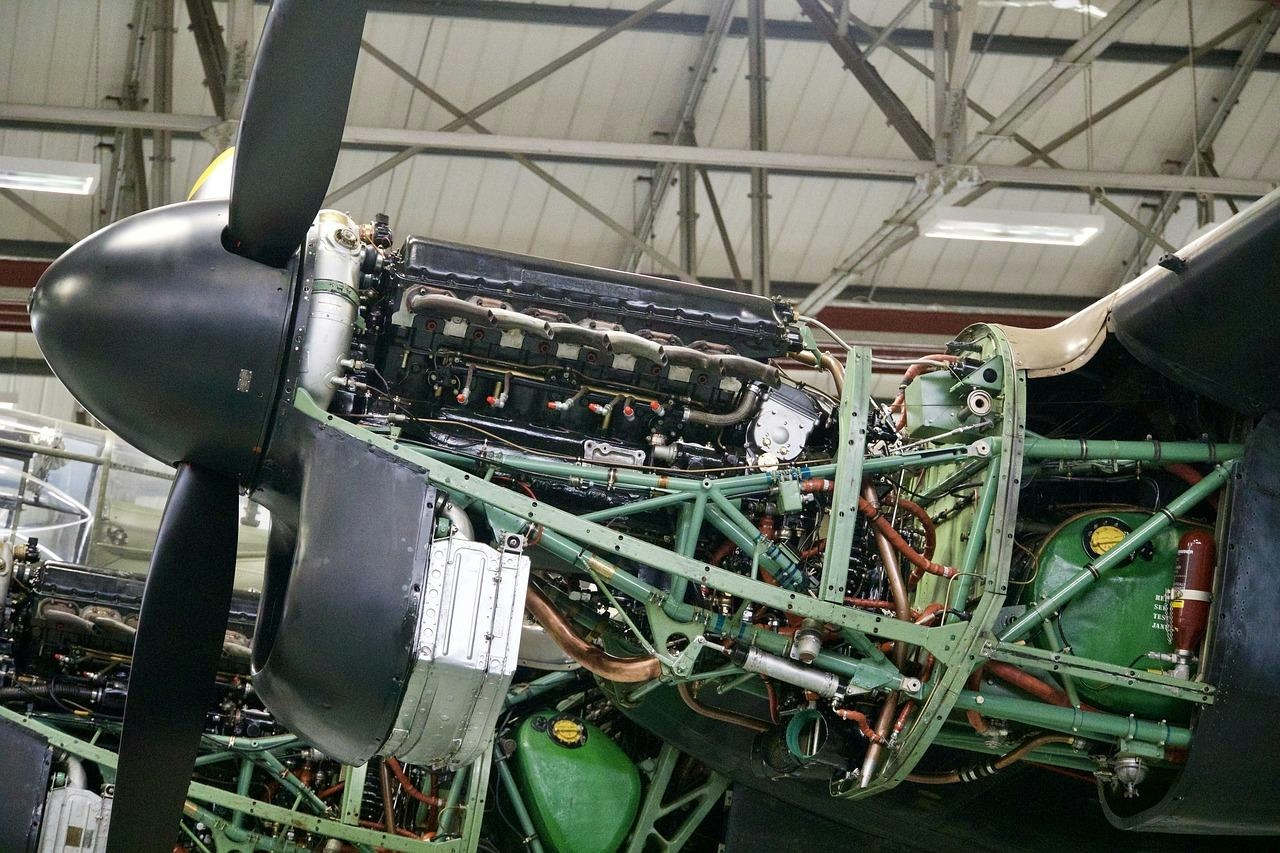
Adani’s entry into the maintenance, repair, and overhaul (MRO) space places it in direct competition with established players such as Ontic, PAG, and PrimeFlight. These incumbents have long-standing experience and well-established client relationships, creating a challenging environment for new entrants. Market responses to Adani’s expansion have been cautious, with some investors concerned about the substantial capital investment required to develop advanced maintenance facilities. The technical complexities and high operational costs associated with MRO activities may affect the group’s short-term financial results, even as it pursues long-term strategic benefits.

Industry Response and Future Prospects

Competitors are expected to respond assertively to Adani’s move into these sectors. Recent industry developments, including DAS Aviation’s acquisition of AQRD to enhance engineering and composites capabilities, illustrate a broader trend of established firms strengthening their service offerings to protect market share. Despite these challenges, Adani Group remains committed to its aviation growth strategy, leveraging India’s expanding air travel market and the increasing demand for integrated aviation services. The group’s investments across infrastructure, training, and now maintenance and conversion services underscore its ambition to become a significant player in the country’s evolving aviation landscape.

More news
Advanced Air Mobility Reshapes Eastern North Carolina

Advanced Air Mobility Reshapes Eastern North Carolina

Advanced Air Mobility Reshapes Eastern North Carolina A New Era of Aviation Innovation More than a century after the Wright Brothers’ pioneering flight, eastern North Carolina is emerging once again as a hub of aviation innovation, this time driven by advanced air mobility and unmanned aircraft systems (UAS). As drone technology advances rapidly, the region is positioned to experience transformative changes in transportation, emergency response, and everyday life. Elizabeth City State University (ECSU) plays a central role in this evolution. It hosts North Carolina’s only four-year FAA-authorized degree program dedicated to unmanned aircraft systems. Within ECSU’s Unmanned Aircraft Systems Research and Design Lab, students engage in designing, building, and 3D-printing drones, gaining practical experience through both simulated and real-world flight operations. Their projects increasingly emphasize applications in emergency response and search and rescue, supported by partnerships with agencies such as the Department of Homeland Security, which underscore the expanding role of drones in disaster management. Student Charli Brooks highlighted the technological capabilities of these drones, noting their extended battery life and advanced imaging features, including various radar systems. Fellow student Isabela Lujan emphasized the humanitarian impact, stating, “We use those drones to help people in need and save them.” Collaborative Efforts and Expanding Capabilities ECSU is also a key participant in a new statewide partnership involving the North Carolina Department of Transportation, N.C. A&T, and N.C. State University. This coalition has established a University Transportation Center of Excellence aimed at developing infrastructure guidelines to accommodate the anticipated increase in drone traffic. The collaboration seeks to address critical questions about the safe and logical integration of drones into North Carolina’s airspace. Kevin Kupietz, chair of ECSU’s Department of Aviation and Emergency Management, articulated the challenge: “How do we lay out the infrastructure for the future to proceed, in a logical manner?” To support these initiatives, ECSU is expanding its facilities with a new aviation building and experimenting with advanced drone models, including those with wingspans of up to 16 feet capable of flights lasting as long as 10 hours. Kupietz remarked on the expanding potential of drone technology, observing, “Every time that we think we’ve found all of the uses for drones, we find like 10, 15 more new uses.” Challenges and Future Prospects Despite the promising developments, the path forward for advanced air mobility in eastern North Carolina is not without obstacles. Regulatory challenges, safety concerns, and technological limitations continue to pose significant hurdles. Market responses have been characterized by cautious optimism, with investors and stakeholders closely monitoring the sector’s maturation. Industry players are responding with a mix of competition and collaboration, particularly in addressing shared issues such as safety standards and airspace management. Notable industry milestones, such as Pivotal’s recent attainment of AS9100D certification, highlight a growing focus on quality management that may influence market dynamics and organizational positioning within this rapidly evolving field. Looking ahead, ECSU’s Dr. Chandra Asthana envisions even more ambitious projects, including research into flying cars. “We have got a grant on which we are working on flying cars. It’s going to be a reality,” he stated. Dr. Asthana added that accelerating innovation is enabling achievements once thought impossible: “Things that were not possible earlier, we are making possible.” From drones to flying cars, eastern North Carolina is once again taking flight, navigating both the promise and complexities of advanced air mobility.
Air France Marks 50 Years Since Concorde's Inaugural Flight

Air France Marks 50 Years Since Concorde's Inaugural Flight

Air France Commemorates 50 Years Since Concorde’s Inaugural Flight On January 21, 1976, Air France made a historic leap in aviation with the Concorde’s first commercial flight, departing Paris for Rio de Janeiro with a stopover in Dakar. This milestone marked the dawn of supersonic travel, dramatically reducing the journey time between Paris and Rio to just 7 hours and 26 minutes—less than half the duration of conventional flights. Half a century later, Air France is celebrating the Concorde’s lasting legacy through a special collection and a series of tributes, including the issuance of commemorative stamps and the release of a newly designed coin honoring the aircraft’s iconic status in aviation history. The Concorde: A Symbol of Innovation and Luxury The Concorde quickly became emblematic of technological advancement and luxury air travel. Capable of flying at Mach 2.02 (approximately 1,350 mph) and cruising at an altitude of 60,000 feet—twice that of standard commercial jets—the aircraft offered passengers unparalleled views of the Earth’s curvature, a unique experience reserved for Concorde travelers. Its sleek design, featuring an 84-foot wingspan and a length of 204 feet, became instantly recognizable and synonymous with the pinnacle of high-speed aviation. From the outset, the Concorde was designed to embody both speed and sophistication. Air France collaborated with the renowned French industrial designer Raymond Loewy to create the aircraft’s inaugural interior, complemented by modern furnishings from Le Corbusier in the Paris-Charles de Gaulle lounge. The cabin exuded elegance, with vibrant seating, refined lighting, and exquisite tableware. Onboard service was equally exceptional, offering passengers champagne and signature Périgord truffle pastries crafted by Lenôtre, reinforcing the Concorde’s reputation for exclusivity and luxury. Over the years, the interior design evolved under the guidance of prominent designers such as Pierre Gautier-Delaye, who introduced vivid color schemes in the 1980s, and Andrée Putman, who infused a contemporary aesthetic in 1994 with geometric patterns and new porcelain dining sets. These continual enhancements ensured that the Concorde remained at the forefront of both comfort and style throughout its operational life. Legacy and Contemporary Challenges Although the Concorde was retired in 2003, it endures as a powerful symbol of ambition, ingenuity, and the fruitful Franco-British collaboration in aviation. Its legacy is celebrated not only by Air France but also through national commemorations, including the recent release of stamps and a commemorative coin, underscoring its enduring place in the collective memory of aviation enthusiasts worldwide. As Air France honors this significant anniversary, the airline—and the broader European aviation sector—continues to grapple with operational challenges. Recent months have witnessed widespread flight cancellations and delays affecting thousands of passengers at major European airports. These disruptions highlight the complexities of modern air travel, even as the industry reflects on the achievements of its golden age. Marking 50 years since the Concorde’s inaugural flight, Air France reaffirms the supersonic jet’s status as a lasting emblem of innovation, luxury, and the relentless pursuit of pushing the boundaries of what is possible in the skies.
APOC Aviation Appoints New Business Development Manager

APOC Aviation Appoints New Business Development Manager

APOC Aviation Appoints Carlos Miguel Branco Sandels as Business Development Manager APOC Aviation, a prominent firm specializing in the trading, leasing, and part-out of aircraft, engines, and landing gears, has announced the appointment of Carlos Miguel Branco Sandels as its new Business Development Manager. Based in the company’s Rotterdam office, Sandels brings over 15 years of extensive experience in sales and business development across various industries, with a concentrated focus on aviation over the past five years. Prior to joining APOC, he held a key role at Touchdown Aviation (TDA). Professional Background and Responsibilities Sandels holds a Bachelor’s degree in Languages and Communication and a Master’s degree in International Relations from the University of Évora. In his new capacity, he will be tasked with expanding APOC Aviation’s commercial reach both within Europe and internationally. His responsibilities include strengthening relationships with airlines, maintenance, repair, and overhaul providers (MROs), and strategic partners. Additionally, Sandels will focus on identifying new business opportunities in component support, teardown programs, asset acquisition, and material solutions. In outlining his vision, Sandels stated, “My role at APOC is to expand our commercial footprint across Europe, and globally, by strengthening our relationships with airlines, MROs and strategic partners. I will also be actively identifying new opportunities for component support, teardown programmes, asset acquisition, and material solutions. I approach every business relationship with a reciprocal mindset, aiming to create partnerships where both sides benefit and grow together.” Strategic Outlook and Market Context Sandels emphasized his commitment to accelerating APOC’s penetration into new markets and broadening its network, positioning the company as a trusted supplier to a wider range of operators worldwide. He highlighted APOC’s agility in responding to ongoing supply chain disruptions and the increasing global demand for high-quality, serviceable components as a decisive factor in his decision to join the company. “The company has a practical, forward-looking approach to material sourcing and teardown strategy, which is essential at a time when operators are struggling to secure reliable components to keep aircraft in service,” he remarked. His appointment comes at a critical juncture for APOC Aviation, as the business aviation sector is projected to encounter significant challenges in the near future. Industry analysts forecast heightened competition and regulatory changes by 2026, which are expected to increase scrutiny from competitors and stakeholders alike. In anticipation, market participants are likely to intensify efforts to secure market share and drive innovation within business aviation services. Sandels’ expertise and strategic approach are anticipated to support APOC in navigating these evolving dynamics and sustaining its competitive advantage. With Sandels leading business development, APOC Aviation aims to reinforce its position in a rapidly evolving industry, ensuring the company remains agile and responsive to both present and forthcoming challenges.
United Airlines to Add 20 Boeing 787 Dreamliners in 2026, Marking Largest Widebody Expansion Since 1988

United Airlines to Add 20 Boeing 787 Dreamliners in 2026, Marking Largest Widebody Expansion Since 1988

United Airlines to Expand Widebody Fleet with 20 Boeing 787 Dreamliners in 2026 United Airlines is preparing for its most substantial widebody fleet expansion in nearly four decades by adding 20 Boeing 787 Dreamliners in 2026. This delivery represents the largest widebody intake by a U.S. carrier since 1988 and will increase United’s Dreamliner fleet to over 100 aircraft. The expansion aims to support the airline’s growing international network, enhance premium seating capacity, and accelerate the phase-out of older, less fuel-efficient widebody jets. Fleet Composition and Strategic Focus All 20 aircraft scheduled for delivery next year will be the Boeing 787-9 variant. United, an early adopter of the Dreamliner family, currently operates all three versions—the 787-8, 787-9, and 787-10—making it one of the largest 787 operators globally. As of mid-January, the active Dreamliner fleet comprises 81 aircraft, including 12 787-8s, 48 787-9s, and 21 787-10s. The airline holds firm orders for an additional 140 Dreamliners, split between 84 787-9s and 56 787-10s. Recently, United converted 56 of its 787-9 orders to the larger 787-10, reflecting a strategic preference for higher-capacity widebodies, although all 2026 deliveries will remain 787-9s. The new Dreamliners will be outfitted with United’s updated Elevate interior, featuring 64 Polaris business class seats, 35 Premium Plus seats, and 123 economy seats. This configuration offers the highest premium seat count of any U.S.-registered widebody aircraft. United plans to deploy these aircraft on both international and select domestic routes, capitalizing on the 787’s range and fuel efficiency, particularly for ultra-long-haul flights exceeding 15 hours. Competitive Landscape and Operational Challenges United’s fleet expansion occurs amid intensifying competition in the premium long-haul market. Delta Air Lines recently placed an order for up to 60 Boeing 787 Dreamliners, signaling its intent to expand its share of premium international travelers. Alongside ongoing efforts by American Airlines, this competitive environment is expected to heighten pressure on United as the three carriers vie for the lucrative long-haul segment. The timing of United’s widebody growth also coincides with Boeing’s efforts to increase 787 production following recent manufacturing challenges. Any delays in Boeing’s delivery schedule could present operational hurdles for United as it seeks to modernize its fleet and extend its global reach. In addition to widebody expansion, United plans to introduce up to 100 new narrowbody aircraft over the next year, including the Airbus A321neo, Boeing 737 MAX, and the first Airbus A321XLRs. These new jets will replace aging Boeing 757s, Airbus A319s and A320ceos, and earlier-generation 737s. With a current fleet comprising more than 300 Boeing 737NGs and a similarly aged Airbus narrowbody fleet, this renewal strategy is vital for maintaining operational efficiency and competitiveness. United’s ambitious fleet expansion underscores its commitment to growing its premium international presence while navigating the competitive and operational challenges facing U.S. carriers in a rapidly evolving global aviation market.
Power by the Hour Market Analysis and Forecast, 2020–2035

Power by the Hour Market Analysis and Forecast, 2020–2035

Power by the Hour Market Set for Steady Growth Amid Volatility and Strategic Shifts The global Power by the Hour (PBH) market is poised for sustained expansion, with the latest analysis from ResearchAndMarkets.com projecting growth from $26.55 billion in 2025 to $28.32 billion in 2026, representing a compound annual growth rate (CAGR) of 6.7%. By 2030, the market is expected to reach $36.63 billion, driven by technological advancements in predictive maintenance, the growth of commercial aviation fleets, and the increasing adoption of PBH models within helicopter and business aviation sectors. Key Growth Drivers and Emerging Trends The momentum behind the PBH market is supported by several critical factors. Fixed-cost maintenance models provide operators with enhanced budget predictability, allowing for more effective financial planning. Lifecycle optimization is achieved through improved engine event management and streamlined spare parts procurement facilitated by contractual agreements. Additionally, operational efficiency has been bolstered by the expansion of logistics and transport services, which have contributed to reduced maintenance turnaround times. The broader acceptance of PBH programs also plays a vital role in mitigating risks associated with unplanned maintenance across both commercial and private fleets. Digital transformation is significantly reshaping the sector. Real-time engine health monitoring and integrated maintenance ecosystems enable more customized and flexible PBH offerings. Predictive maintenance, powered by flight data analytics, alongside flexible hourly-based contracts, are emerging as defining trends that enhance service delivery and operational reliability. Market Dynamics and Strategic Developments The rise in global air traffic serves as a major catalyst for the PBH market. According to the International Air Transport Association (IATA), passenger numbers increased by 3.7% to 9.8 billion in 2025. PBH models, which link payments directly to actual usage, are increasingly preferred for their ability to provide cost predictability and operational efficiency. Strategic partnerships and acquisitions continue to shape the competitive landscape. For instance, the AJW Group’s collaboration with Skyfive Airlines AG in 2023 introduced a predictable budgeting model that has been well received in the industry. Similarly, StandardAero’s acquisition of Western Jet Aviation expanded its repair portfolio and customer base, strengthening its PBH service capabilities and market position. Regional and Competitive Landscape In 2025, North America led the PBH market, with significant activity also recorded across Asia-Pacific and Europe. Prominent industry players include GE Aerospace, Rolls-Royce Holdings plc, Pratt & Whitney Services Inc., Honeywell Aerospace, and Lufthansa Technik AG. Despite positive growth prospects, the market faces notable challenges. Volatility in gold and silver prices has introduced instability, affecting market confidence and prompting more cautious trading strategies. Competitors have responded by adjusting production and pricing to protect market share amid these fluctuations. Recent data indicates ongoing market caution following periods of volatile trading, with forecasts suggesting continued fluctuations and strategic maneuvering by leading companies. Furthermore, global trade relations and tariffs have increased costs for aircraft components and maintenance, repair, and overhaul (MRO) services, particularly in North America, Europe, and Asia-Pacific. In response, companies are increasingly adopting domestic sourcing strategies and developing innovative, cost-efficient maintenance solutions to mitigate these pressures. Outlook Despite these challenges, the PBH market is expected to maintain its growth trajectory, underpinned by digital innovation, expanding aviation activity, and evolving maintenance strategies. The comprehensive market report offers detailed statistics, market shares, and trend analyses, providing essential insights for stakeholders navigating this dynamic and rapidly evolving sector.
Global Aviation Revenue Expected to Surpass $1 Trillion by 2026

Global Aviation Revenue Expected to Surpass $1 Trillion by 2026

Global Aviation Revenue Set to Surpass $1 Trillion by 2026 The global aviation industry is on track to exceed USD 1 trillion in revenues for the first time by 2026, according to the latest findings from aviation analytics firm IBA. Their report, *IBA Market Outlook 2026*, highlights a robust surge in demand that is simultaneously constrained by significant structural challenges in aircraft production and delivery. The study forecasts that global origin-destination passenger traffic will double from current figures, reaching 8.4 billion by 2045. Regional Growth and Fleet Expansion The Asia-Pacific (APAC) region is expected to be the primary driver of this expansion, with a projected compound annual growth rate (CAGR) of 4.2% in fleet size over the next two decades. In contrast, fleet growth in Europe and North America is anticipated to remain modest, ranging between 1.1% and 1.4% CAGR. Overall, the global commercial aircraft fleet is forecast to grow from approximately 30,800 units today to 51,900 by 2045. Despite this growth, the industry faces a significant shortfall in aircraft deliveries. IBA data reveals that more than 4,100 aircraft scheduled for delivery have been delayed due to ongoing supply chain disruptions and engine reliability issues. While Airbus and Boeing are expected to deliver a combined total of 1,800 aircraft in 2026, the industry will not return to the delivery levels seen in 2018 until late that year. A stable annual delivery rate of 2,200 units is not anticipated until 2029. Impact on Aircraft Age, Leasing, and Market Dynamics The average age of aircraft is increasing, which is driving heightened demand for maintenance, repair, and overhaul (MRO) services, as well as elevated lease rates. Stuart Hatcher, the report’s author, notes that lease rates for older aircraft have softened but remain well above historical norms, indicating a balanced market rather than one in decline. Airlines are focusing on maximizing the use of existing assets rather than pursuing aggressive fleet expansion, with lease starts and ends at historic lows and shorter lease tenors becoming the norm. The scarcity of new aircraft has also slowed the depreciation of existing assets, keeping values and lease rates for current-generation aircraft elevated. This trend has led some owners to pursue “opportunistic part-out” strategies, dismantling relatively new aircraft to capitalize on the high value of components. For example, AJW has reportedly been dismantling A321neos because the value of their GTF engines exceeds the returns from leasing the entire aircraft. Lease rates for current-generation models, including the A320ceo and 737 NG families, are expected to remain above historical averages through 2026 as airlines extend the operational life of older fleets to meet capacity demands. The market is also poised for increased transaction volumes, driven in part by new deliveries and sale-leaseback agreements. A key growth driver will be sales that include attached leases. Additionally, the issuance of Asset-Backed Securities (ABS) is expected to rise, reflecting a growing trend among airlines and lessors to leverage tangible assets such as aircraft, engines, and future revenue streams to generate capital.
Elon Musk Suggests Node.js Creator for Airline Role Amid Ryanair Dispute and AI Coding Debate

Elon Musk Suggests Node.js Creator for Airline Role Amid Ryanair Dispute and AI Coding Debate

Elon Musk Proposes Node.js Creator for Ryanair Leadership Amid Ongoing Dispute and AI Debate Tech entrepreneur Elon Musk has once again drawn international attention by linking artificial intelligence, software development, and commercial aviation in an unexpected public exchange. This development emerges amid a heated dispute with Ryanair CEO Michael O’Leary, as Musk hinted at a potential acquisition of the European budget airline and suggested Ryan Dahl, the creator of Node.js, might be considered to lead the company. The Unconventional Proposal and AI Coding Discussion The suggestion followed a viral post by Dahl on the social media platform X, where he predicted that artificial intelligence would soon render most human software development obsolete. Responding to Dahl’s forecast and his ongoing conflict with Ryanair, Musk tweeted, “Does he have any interest in running an airline? Might be a job opening soon.” This comment rapidly circulated across social media, sparking speculation about Musk’s intentions and his tendency to spotlight unconventional figures in his ventures. Musk’s remarks also referenced an earlier quip about wanting someone named “Ryan” to head Ryanair if he were to take control of the company. With Dahl now explicitly mentioned, industry observers are left uncertain whether Musk’s proposal is a serious consideration or another instance of his characteristic social media theatrics. The Ryanair Feud and Its Wider Implications The dispute between Musk and O’Leary originated when Ryanair declined Musk’s Starlink satellite internet service for its fleet, citing concerns over increased drag and fuel consumption. O’Leary dismissed the economic viability of Starlink for Ryanair and reportedly labeled Musk an “idiot,” prompting Musk to escalate the confrontation by expressing interest in purchasing the airline outright. O’Leary, however, downplayed the threat, citing stringent European Union regulations that would likely prevent such a takeover. The public exchange has since taken on a theatrical dimension. Ryanair leveraged the attention with a “Big Idiot Seat Sale,” a tongue-in-cheek promotion widely interpreted as a jab at Musk. O’Leary welcomed the publicity, noting that the controversy had actually boosted ticket sales. Musk responded with further insults, calling O’Leary an “insufferable, special needs chimp.” The back-and-forth has attracted both criticism and amusement, exemplifying the spectacle often associated with Musk’s online presence. Beyond the personal insults, this episode highlights two broader trends: the disruptive potential of artificial intelligence in traditional technology roles and Musk’s expanding ambitions beyond electric vehicles, space exploration, and social media. Competitors and market analysts are closely monitoring the situation, as the high-profile dispute has reignited debate over the future role of human programmers in an AI-driven world and the evolving dynamics of commercial aviation. Whether Musk will seriously pursue a Ryanair acquisition or consider Ryan Dahl for an executive position remains uncertain. For now, the saga sits at the crossroads of technological disruption, corporate rivalry, and internet spectacle, illustrating how Musk’s provocations can resonate far beyond the technology sector.
UAE Aviation Sector Expands Hiring Across Technical and AI Roles

UAE Aviation Sector Expands Hiring Across Technical and AI Roles

UAE Aviation Sector Expands Hiring Across Technical and AI Roles The United Arab Emirates’ aviation industry is intensifying its recruitment efforts, with a pronounced emphasis on technical and artificial intelligence (AI)-driven positions. This surge in hiring corresponds with a notable increase in passenger traffic and heightened investment across the sector. The General Civil Aviation Authority (GCAA) recently hosted its inaugural career fair, the first event of its kind in the country, which attracted over 13,000 registrants. This turnout underscores the strong interest among young Emiratis and residents seeking careers within aviation. Career Fair Highlights and Industry Demand The GCAA event convened 27 prominent stakeholders, including Abu Dhabi Airports, Dubai Civil Aviation Authority (DCAA), Airbus, and Etihad Airways. Omar bin Ghaleb, Deputy Director General of the GCAA, emphasized that the fair played a crucial role in clarifying the diverse range of career opportunities available, enabling job seekers to better target their applications. Industry leaders at the event highlighted a growing demand for roles in technical, engineering, and data-centric fields. While traditional positions such as air traffic controllers, pilots, and ground engineers remain vital, emerging sectors like air mobility, air taxis, aerospace law, and AI-driven operations are rapidly gaining prominence. Bin Ghaleb noted that despite technological advancements, core aviation roles will continue to be essential. Expansion Plans and Talent Development Sanad, a leading provider of aircraft engine Maintenance, Repair, and Overhaul (MRO) services, exemplifies the sector’s expansion. Currently employing approximately 800 staff, Sanad aims to increase its workforce to 1,000 by the end of the year, driven by new long-term contracts with global engine manufacturers. Ebraheem Budebs, Group Head of Human Resources at Sanad, highlighted the company’s partnership with the GCAA as a strategic initiative to introduce job seekers—particularly Emiratis—to careers in one of aviation’s most regulated and skill-intensive domains. Sanad has formalized its collaboration with the GCAA through a memorandum of understanding focused on talent development and recruitment. The company, which partners with industry giants such as Safran, Pratt & Whitney, and GE, employs personnel from over 40 nationalities. Additionally, a new engine MRO facility, currently in early development and slated to become operational by the fourth quarter of 2028, is projected to generate up to 2,000 jobs over the next decade, significantly enhancing aviation employment opportunities in Abu Dhabi. Challenges and Market Implications Despite ambitious hiring targets, the sector faces several challenges. Intensifying global competition for skilled professionals complicates efforts to attract and retain top talent. Meeting the evolving demands of technical and AI roles will require substantial investment in training and development programs. Furthermore, geopolitical and economic uncertainties pose risks to workforce planning and long-term recruitment strategies. Market responses to the sector’s expansion include increased demand for aviation services and a potential rise in operational costs, as companies may need to offer higher salaries to secure specialized expertise. Competitors are expected to initiate similar hiring campaigns and invest in technological advancements to maintain their market positions. Outlook for Technical Roles Industry leaders remain optimistic about the future. Budebs remarked, “These technical roles are the backbone of the industry. Five years from now, the number of jobs increases, but the ratio remains the same.” Currently, approximately 80 percent of MRO positions involve hands-on technical work, such as engine assembly, underscoring the enduring importance of skilled professionals in the UAE’s rapidly evolving aviation sector.
Bristow First to Operate Electra EL9 uSTOL Aircraft

Bristow First to Operate Electra EL9 uSTOL Aircraft

Bristow Becomes Launch Operator of Electra EL9 uSTOL Aircraft Bristow Group has taken a significant step into the realm of advanced air mobility by becoming the launch customer for Electra’s EL9 ultra-short take-off and landing (uSTOL) aircraft. The Houston-based aviation services provider has formalized its commitment through a binding pre-delivery payment agreement with Electra, converting a prior letter of intent into firm delivery slots for five aircraft. This order includes the very first EL9 to come off the production line, with options to acquire an additional 45 aircraft contingent upon certification. In an industry where many advanced air mobility initiatives remain in the conceptual or developmental stages, Bristow’s firm commitment is notable. Pre-delivery payments are a standard practice in commercial aviation, signaling a genuine intent to integrate new aircraft into operational service rather than merely reserving production capacity. By securing the initial production slot, Bristow positions itself to play a pivotal role in shaping early operational frameworks, regulatory engagement, and customer applications for the EL9. The Electra EL9 uSTOL: Innovation in Regional Air Mobility The Electra EL9 is a hybrid-electric fixed-wing aircraft designed to carry nine passengers plus a pilot, engineered specifically for operations from extremely short runways, including spaces as small as sports fields. Unlike vertical take-off and landing (VTOL) aircraft, the EL9 achieves ultra-short take-off and landing distances—approximately 150 feet—through the use of distributed electric propulsion combined with blown-lift aerodynamics. Eight electric motors mounted along the wing’s leading edge accelerate airflow over large flaps, significantly enhancing lift at low speeds and enabling take-off and landing within a fraction of the distance required by conventional aircraft. The aircraft’s hybrid-electric propulsion system incorporates a turbine generator that provides cruise power while recharging onboard batteries during flight. This approach circumvents the high energy demands and infrastructure requirements associated with hovering flight, offering greater range, payload capacity, and operational flexibility compared to fully electric VTOL designs. Electra markets the EL9 under its “Direct Aviation” concept, which aims to bypass congested transportation hubs by enabling point-to-point service connecting communities, resorts, corporate campuses, and regional centers. By combining the efficiency of fixed-wing flight with the accessibility of helicopter-like operations, the EL9 is positioned as a quieter, more cost-effective alternative to rotorcraft, without necessitating specialized ground infrastructure. Key specifications of the EL9 include a payload capacity of up to 3,000 pounds (1,360 kilograms), a cruise speed of approximately 175 knots, and a mission range of around 330 nautical miles at full load, with a ferry range extending up to 1,100 nautical miles. The aircraft’s first flight is targeted for 2027, with entry into service anticipated by 2029. Market and Regulatory Challenges Ahead Bristow’s endorsement of the EL9 underscores strong confidence in hybrid-electric propulsion technology, yet it also introduces regulatory and market challenges. One immediate hurdle involves securing Federal Aviation Administration (FAA) approval for upgrades to radio altimeters to mitigate potential interference from 5G networks—a concern affecting many next-generation aircraft platforms. The market response to Bristow’s commitment may stimulate increased interest in hybrid-electric aircraft as sustainable alternatives, potentially prompting competitors such as Joby Aviation and Vertical Aerospace to accelerate their electric air taxi programs. However, the broader economic environment remains uncertain. Internal divisions within the Federal Reserve and elevated market valuations are expected to contribute to volatility in 2026, which could dampen investor enthusiasm for emerging aviation technologies and complicate Bristow’s pioneering efforts. By securing the first EL9 aircraft, Bristow not only advances its own operational capabilities but also contributes to shaping the future landscape of sustainable regional air mobility.
Ultralight and Light Aircraft Market Outlook, 2020–2035

Ultralight and Light Aircraft Market Outlook, 2020–2035

Ultralight and Light Aircraft Market Outlook, 2020–2035 The ultralight and light aircraft market is set for substantial growth over the coming decade, with its value projected to rise from $7.8 billion in 2025 to $10.59 billion by 2030. This expansion corresponds to a compound annual growth rate (CAGR) of 6.1%, according to the latest analysis from ResearchAndMarkets.com. Key Growth Drivers and Industry Trends The market’s expansion is primarily driven by increasing demand for affordable short-haul travel and the integration of advanced lightweight materials such as composites and titanium. These innovations contribute to enhanced fuel efficiency and safety, while also reducing operational costs. The growing appeal of personal flying solutions, which offer cost-effective and flexible transportation options, further propels market momentum. Regulatory frameworks that support the adoption of lightweight aircraft are also instrumental in facilitating this growth. Air tourism has become a significant factor in market dynamics, with ultralight aircraft favored for scenic flights, sightseeing tours, and adventure tourism due to their agility and versatility. The International Air Transport Association reported a 52.4% increase in total air traffic in 2023 compared to the previous year, underscoring the rising interest in air travel experiences and the potential for ultralight aircraft to capture a larger share of this expanding market. Industry Dynamics and Strategic Collaborations Strategic partnerships are reshaping the competitive landscape within the ultralight and light aircraft sector. Notably, in 2023, Swiss manufacturer Jekta collaborated with Honeywell to incorporate advanced systems into its all-electric seaplane, emphasizing both performance and sustainability. Additionally, the 2025 acquisition of Flight Design General Aviation GmbH and its Czech subsidiary by Shang Gong Group reflects a strategic effort to broaden aviation portfolios and enhance global market presence. Prominent industry players include Textron Inc., Pilatus Aircraft Limited, and Piper Aircraft Inc., all of which continue to invest in innovation and market expansion. Regional Outlook and Market Challenges North America currently dominates the ultralight and light aircraft market, with Europe following closely. Meanwhile, regions such as Asia-Pacific, South America, the Middle East, and Africa are anticipated to experience robust growth, fueled by increasing regional demand and ongoing technological advancements. Despite positive growth prospects, the market faces several challenges. Supply chain disruptions, particularly in the procurement of essential materials like steel and aluminum, threaten production schedules and cost structures. Tariffs and embargoes on critical components, including engines and avionics, have elevated manufacturing expenses for companies reliant on imports, while simultaneously encouraging local innovation in cost-efficient aircraft solutions. Segments focused on advanced propulsion systems and vertical take-off and landing (VTOL) technologies are especially vulnerable to these pressures. Regulatory challenges also persist, with new taxes on charter services potentially impacting business aviation operations. The sector is responding to increased demand for business aviation during airline crew management and flight management system outages by retrofitting existing aircraft with advanced avionics to comply with evolving safety and regulatory standards. Outlook Despite these obstacles, the ultralight and light aircraft market is expected to maintain its upward trajectory. Innovation, strategic partnerships, and growing interest in both recreational and utility aviation will continue to drive expansion. While global trade dynamics and regulatory changes present ongoing challenges, they are simultaneously fostering advancements in local manufacturing capabilities and accelerating technology adoption across the industry.
line










