
Orchestrate AI insights into action

Trending
Categories
AI Reshapes Airport Operations
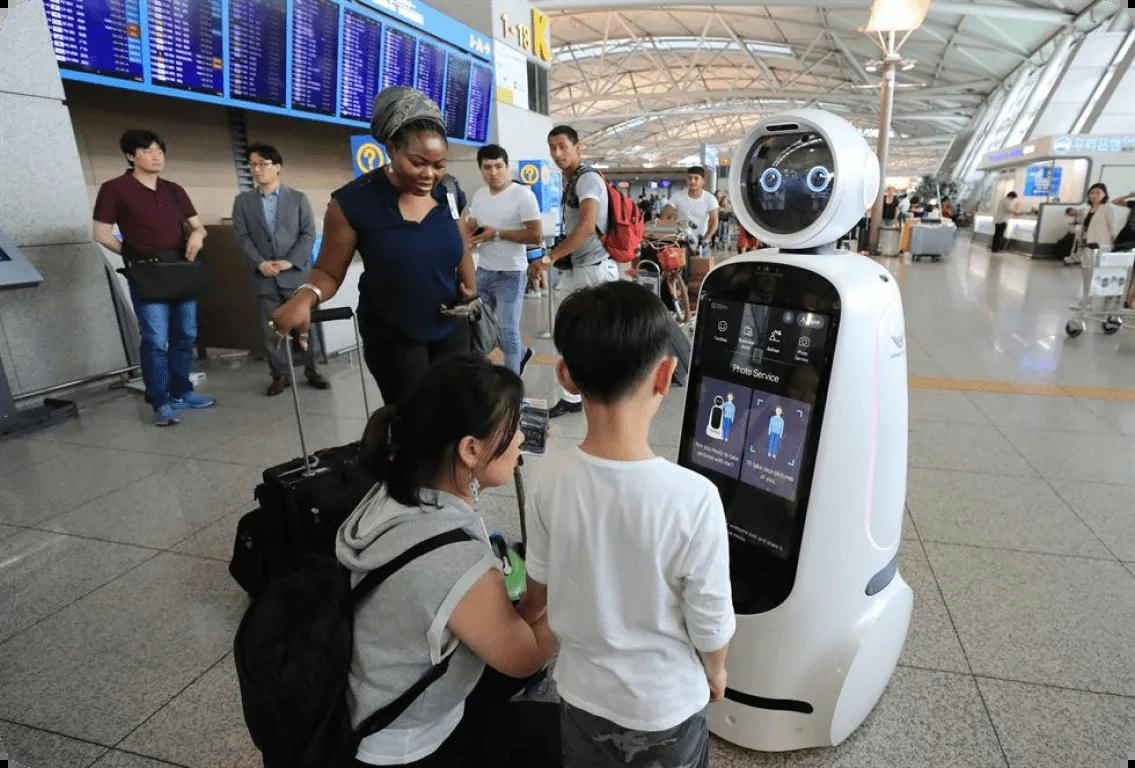
AI Reshapes Airport Operations
Airports today generate vast amounts of data from cameras, sensors, ground support systems, and passenger flow monitors. However, much of this information remains fragmented and inaccessible to the personnel who require it most. This challenge lies at the core of modern aviation infrastructure and is the primary issue that Huawei’s Smart Aviation Business Unit seeks to address.
Thomas Xu, President of Huawei’s Smart Aviation Business Unit, has been instrumental in driving technological transformation within the transport sector. Reflecting on Huawei’s initial collaboration with Shenzhen Airport nearly eight years ago, Xu recalls a landscape characterized by disconnected systems: separate operation centres for the airfield, terminal, landside, and security, each maintaining its own isolated data. The solution, he explains, was to develop a unified platform capable of aggregating and sharing this data seamlessly across departments.
This vision culminated in the creation of the Integrated Operations Centre (IOC), built on the foundation of Total Airport Management (TAM), which has since become an industry standard. Xu stresses that the true value of this system lies not in the visual displays but in the underlying data integration: “The screen wall is only a display. What matters is the data sharing behind it.”
AI Transforming Airport Operations
Artificial intelligence is now accelerating the evolution of airport management. Xu highlights two AI-driven innovations that are significantly reshaping operations on the apron. The first, known as AI Turnaround, automates the tracking of aircraft turnaround processes, which involve up to 40 distinct milestones from taxi-in to pushback. Traditionally recorded manually, Huawei’s computer vision system now performs this task with 98% accuracy, resulting in an 80% reduction in abnormal flight incidents.
The second innovation, the Digital Apron, addresses the longstanding logistical challenges of managing unpowered ground support equipment such as tugs, baggage trailers, and service vehicles. By leveraging AI-powered systems, airports can now streamline these operations, enhancing efficiency in one of the busiest and most complex areas of airport activity.
Industry Impact and Market Responses
The swift integration of AI technologies within aviation is part of a broader disruption affecting the travel sector. AI agents are increasingly capable of automating planning, booking, and operational functions, thereby challenging the traditional roles of intermediaries. This shift has contributed to significant market volatility, with travel and logistics sectors experiencing notable selloffs as AI-driven innovations threaten established business models.
Market analysts have observed varied responses among industry players. Bernstein analysts, for example, suggest that while Flughafen Zürich may encounter some pressure on its business travel segment due to AI-induced reductions in white-collar roles, its core airport operations remain robust. Meanwhile, Brazilian airlines such as Azul continue to pursue growth by expanding their networks to serve additional cities, despite the turbulence caused by AI-driven changes.
The so-called “AI scare trade” has also reverberated through adjacent sectors including software, real estate, and financial services, prompting companies to reassess strategies and adapt to the evolving technological landscape.
Airports as Intelligent Cities
Looking ahead, Xu envisions the airport of the future functioning more like a city—complex, interconnected, and driven by data. As AI continues to dismantle operational silos and automate routine tasks, airports are set to become smarter, more efficient, and better equipped to meet the demands of contemporary travel.
In this dynamic environment, the competitive advantage will belong to those who can harness data and AI not merely for technological innovation but to achieve concrete operational improvements. This approach will transform airports from collections of isolated systems into seamless, intelligent ecosystems.
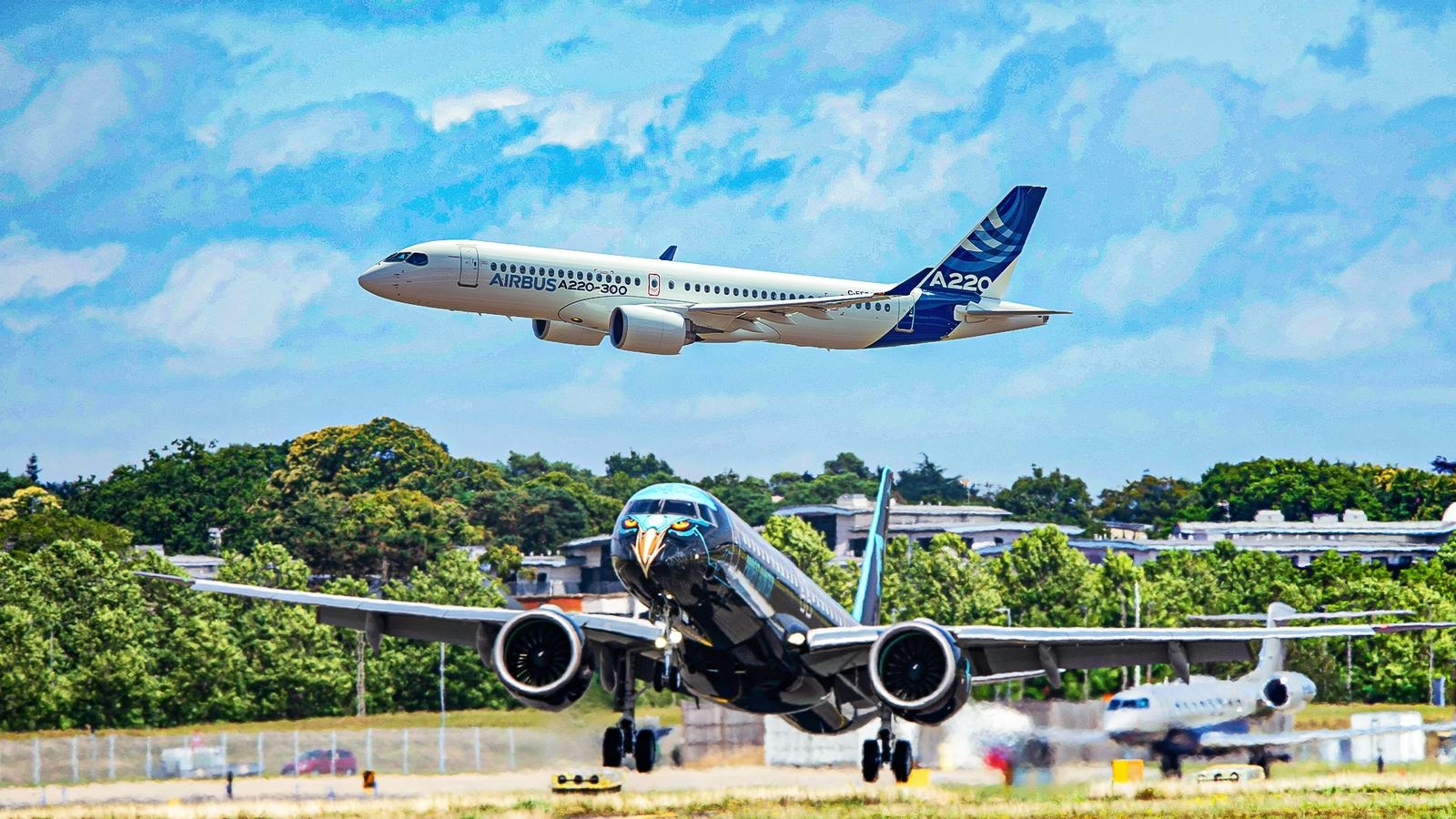
Embraer Delivers 2,000th E-Jet as Airbus A220 Seeks Market Share
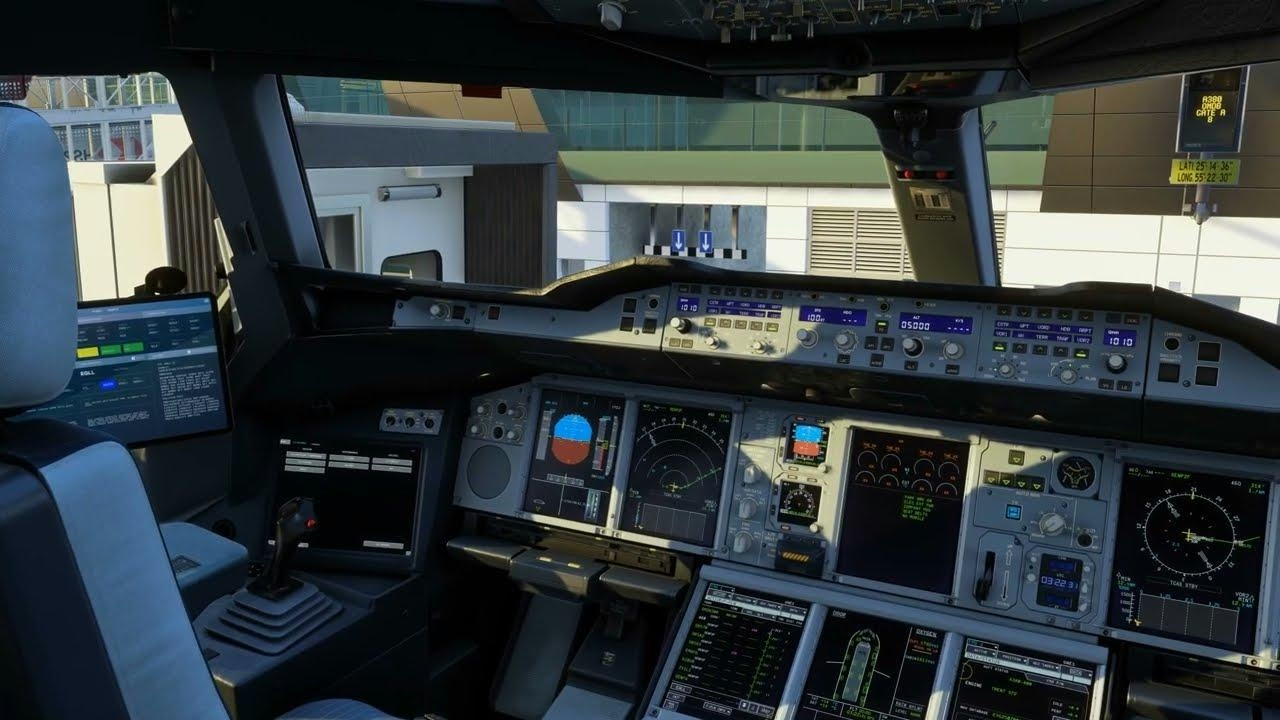
iniBuilds Releases Second In-Depth A380 Video
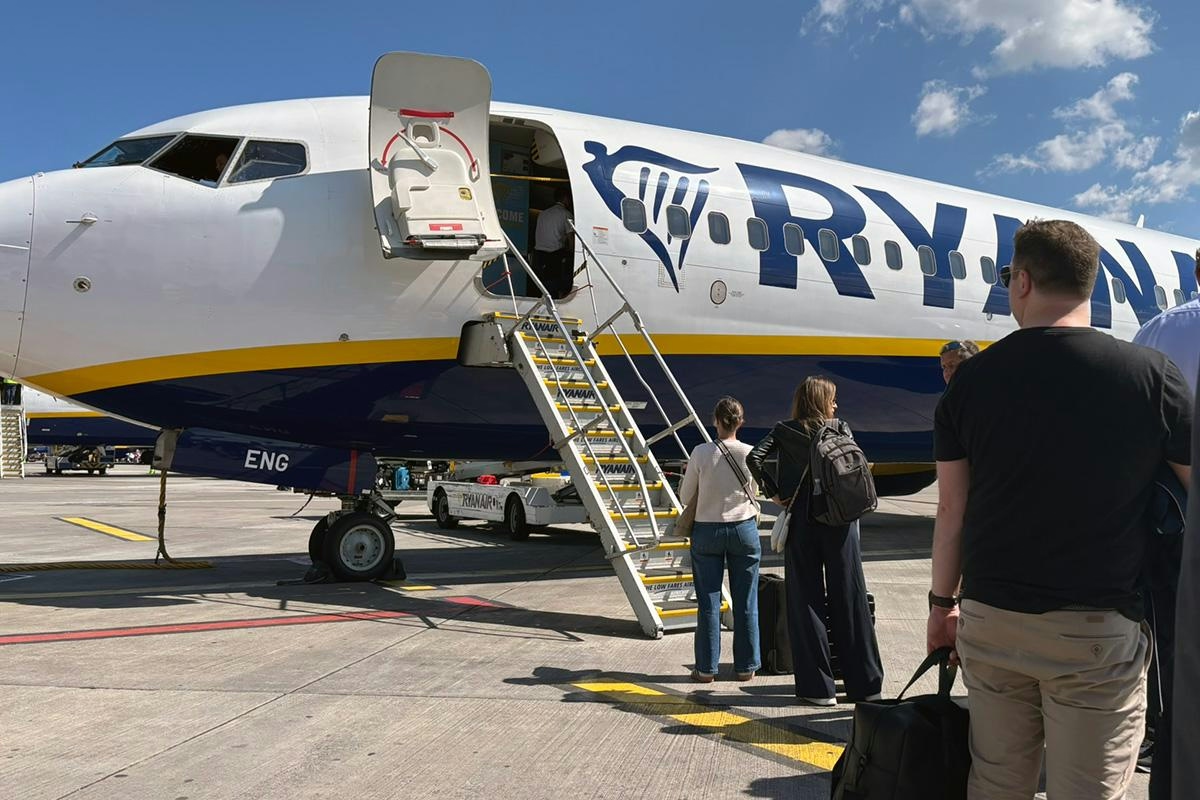
Ryanair and Alaska Airlines Apply AI to Operational Decision-Making
Digital Payments, AI, and Aviation Strengthen Philippines-India Relations
PlaneSense Suspends PC-12 Jet Card Sales
How AI Could Transform Bird-Strike Prevention for Business Aviation
American Airlines and Boeing Complete First 737 MAX Landing Gear Swap

Vietjet and Thales sign major MRO and AI deals in Paris
Etihad CEO Cites Aircraft Capacity as Limiting Factor Amid Growth in China and Africa
Artificial Intelligence Enters the Cockpit
