
Orchestrate AI insights into action

Trending
Categories
Air Canada prepares for a new era with Airbus A321XLR arrival
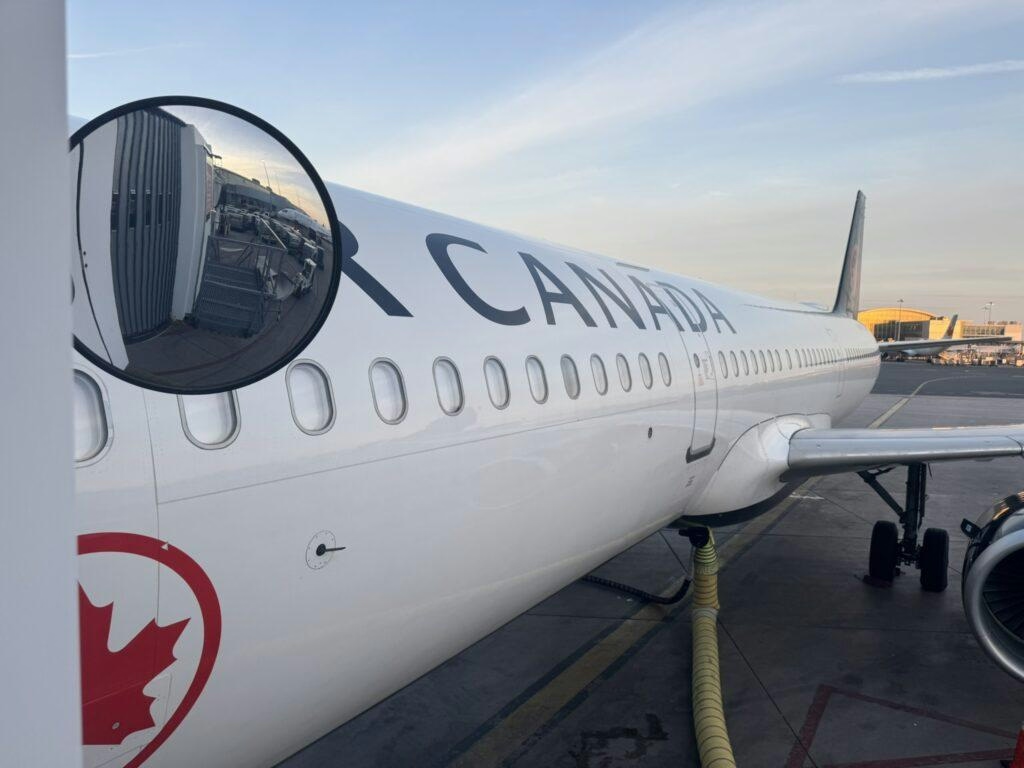
Air Canada Prepares for a New Era with Airbus A321XLR Arrival
Air Canada is poised to embark on a transformative phase with the impending arrival of its first Airbus A321XLR, a development expected to significantly enhance its medium-haul international network and unlock new market opportunities. After years of meticulous analysis by the airline’s network planning team, the delivery of this advanced aircraft, scheduled for early 2026, marks a pivotal moment in Air Canada’s strategic expansion.
Strategic Significance of the A321XLR
Alexandre Lefevre, Vice President of Network Planning – North America and Scheduling, emphasized the importance of the A321XLR to the airline’s future. He described the aircraft as a “turning point” that will enable Air Canada to explore new routes and markets previously inaccessible with its existing fleet. The A321XLR’s extended range and fuel efficiency are central to the airline’s fleet modernization efforts, allowing for direct flights to destinations beyond the reach of traditional narrowbody jets.
Following its delivery, the aircraft will undergo rigorous testing and certification before entering full commercial service by the summer of 2026. This timeline reflects Air Canada’s commitment to ensuring operational readiness and safety as it integrates the new model into its network.
Expanding Network and Operational Challenges
Air Canada has announced that the inaugural A321XLR route will commence in June 2026, connecting Montréal to Palma de Mallorca, a popular Mediterranean destination. Additional routes planned for the summer include flights from Montréal to Toulouse, Dublin, and Edinburgh, thereby broadening passenger options and enhancing convenience on these medium-haul international corridors.
The introduction of the A321XLR, however, presents operational challenges. The airline must adapt pilot training programs and maintenance protocols to accommodate the new aircraft type. Ensuring seamless integration with the existing fleet and operational systems will be critical to maintaining efficiency and service quality.
Competitive Landscape and Market Implications
The arrival of the A321XLR also intensifies competition within the long-range narrowbody segment, as carriers such as IndiGo and Qantas have begun incorporating the aircraft into their fleets. This shift is expected to increase competition on routes serving secondary cities, potentially altering established transatlantic travel patterns.
Despite these challenges, Air Canada views the A321XLR as a strategic asset that will drive sustainable growth and operational flexibility. The aircraft’s capabilities will empower the airline to confidently expand into new markets while reinforcing its presence across the transatlantic corridor.
As Air Canada prepares to integrate the Airbus A321XLR, it positions itself to capitalize on emerging opportunities and adapt to the evolving dynamics of international air travel.

Etihad Airways Suspends Airbus A380 Flights on Key Route

Aditya Birla Group Seeks Approval for Aircraft Leasing in GIFT City

Qatar Airways Highlights Innovation and Connectivity at Arabian Travel Market 2026

Hong Kong's Five-Year Plan Includes Andrew Fan's Aircraft Parts Processing Hub Proposal

ACIA Aero Leasing Delivers ATR72-600 to Air Nostrum

RTX Appoints Jill Albertelli as Head of Pratt & Whitney

TAT Technologies Joins Beyond Aero Hydrogen Aircraft Program

AURAK Study Highlights Barriers to Air Taxi Adoption in Emerging Economies

Xiamen Air Selects Altitude for 787 Maintenance at Heathrow

Etihad and Swissport Extend Global Partnership
