
Orchestrate AI insights into action

Trending
Categories
Air India CEO Campbell Wilson Resigns
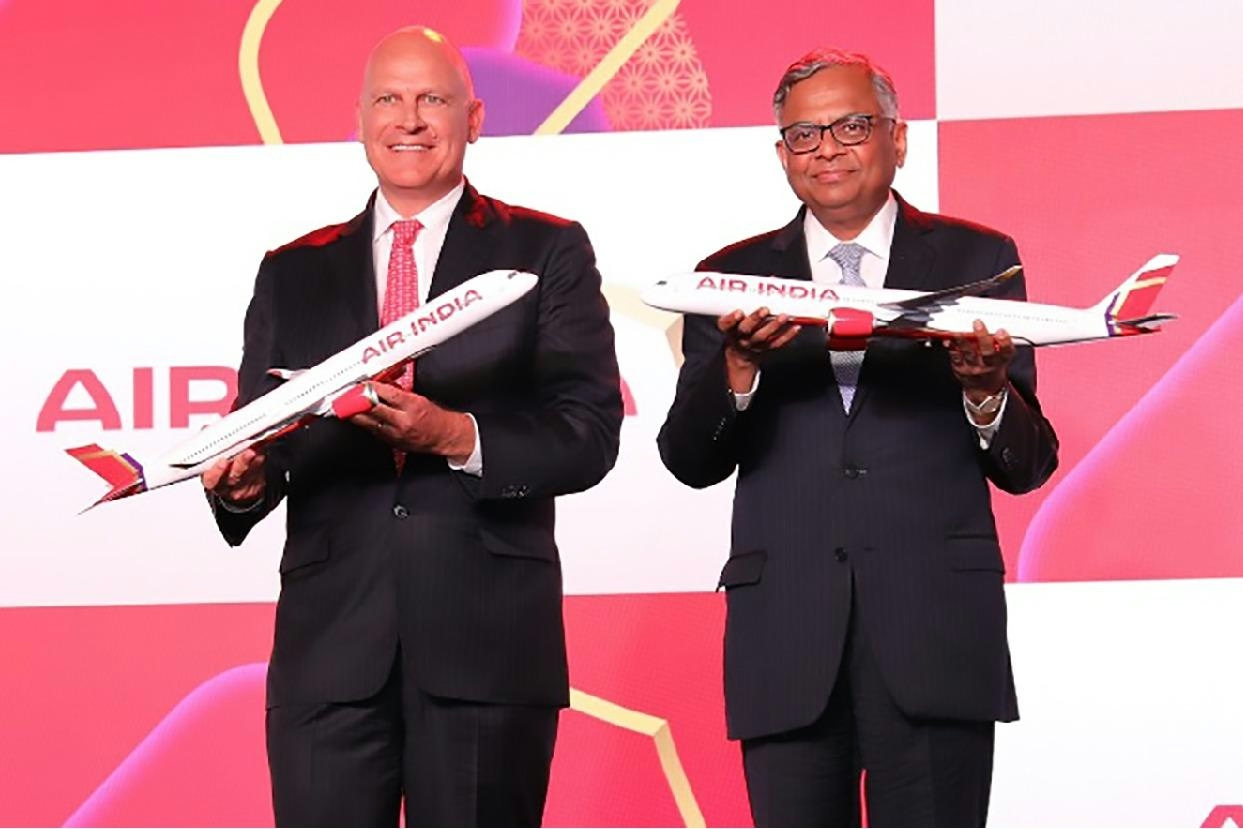
Air India CEO Campbell Wilson Resigns Amid Industry Challenges
Campbell Wilson, the Chief Executive Officer and Managing Director of Air India, has announced his resignation, concluding a tenure of nearly four years characterized by significant transformation efforts and mounting difficulties at the Tata Group-owned airline. A New Zealand national with over 25 years of experience at Singapore Airlines, Wilson assumed leadership of Air India in July 2022. He will continue in his role until a successor is appointed, with a search committee already established to manage the transition.
Leadership During a Period of Transformation and Turmoil
Wilson’s departure occurs amid a turbulent period for both Air India and the wider Indian aviation sector. The airline, together with its low-cost subsidiary Air India Express, reported a combined loss of 98.08 billion rupees (approximately $1.05 billion) for the 2024-2025 financial year, with expectations of even greater losses in the current year. This resignation marks the third major CEO exit among Indian carriers in the past month, highlighting the intense pressures confronting industry leaders amid operational challenges, regulatory scrutiny, and reputational risks.
Throughout his leadership, Wilson oversaw a comprehensive post-privatization overhaul of Air India. Under his guidance, the airline completed the acquisition and integration of four carriers into the current Air India group, expanded its fleet by over 100 aircraft, and nearly finalized the retrofitting of its narrowbody cabins. The airline also began receiving new widebody jets featuring custom-designed interiors and made substantial investments in training and maintenance infrastructure, including the establishment of South Asia’s largest aviation training academy and a new maintenance, repair, and overhaul (MRO) facility.
Wilson described his resignation as a natural transition point, occurring before the majority of deliveries from Air India’s nearly 600-aircraft order book are scheduled to begin arriving in 2027. In his statement, he emphasized the need to hand over the reins as the airline moves into the next phase of growth following the foundational changes implemented since the Tata Group’s acquisition in 2022.
Intensifying Challenges and Industry Context
The airline’s difficulties have escalated over the past year. Air India has been under sustained regulatory and public scrutiny following the crash of Flight AI171 on June 12, 2025. The Boeing 787-8 Dreamliner accident resulted in the deaths of 260 people and remains under investigation. This tragedy was the first fatal hull loss of a Boeing 787 and the deadliest aviation disaster of the decade. Additionally, Air India’s operations have been disrupted by Pakistan’s closure of its airspace to Indian carriers, necessitating costly rerouting, alongside broader regional instability linked to ongoing conflicts in the Middle East.
Air India Chairman N. Chandrasekaran commended Wilson’s resilience in navigating a challenging operating environment marked by prolonged post-Covid supply chain constraints, aircraft delivery delays, and significant geopolitical headwinds.
Wilson’s background includes founding and leading Singapore Airlines’ budget subsidiary Scoot and serving as senior vice president of sales and marketing at Singapore Airlines. He was recruited to lead Air India’s turnaround and, in a 2025 interview, highlighted the airline’s growth potential, noting that India’s per capita air travel remains significantly below that of comparable markets.
His resignation follows a series of high-profile leadership changes within Indian aviation, including the appointment of former International Air Transport Association (IATA) chief Willie Walsh as CEO of rival carrier IndiGo. These developments signal a broader industry shift as airlines contend with financial and operational headwinds.

Etihad Airways Suspends Airbus A380 Flights on Key Route

Aditya Birla Group Seeks Approval for Aircraft Leasing in GIFT City

Qatar Airways Highlights Innovation and Connectivity at Arabian Travel Market 2026

Hong Kong's Five-Year Plan Includes Andrew Fan's Aircraft Parts Processing Hub Proposal

ACIA Aero Leasing Delivers ATR72-600 to Air Nostrum

RTX Appoints Jill Albertelli as Head of Pratt & Whitney

TAT Technologies Joins Beyond Aero Hydrogen Aircraft Program

AURAK Study Highlights Barriers to Air Taxi Adoption in Emerging Economies

Xiamen Air Selects Altitude for 787 Maintenance at Heathrow

Etihad and Swissport Extend Global Partnership
