
Orchestrate AI insights into action

Trending
Categories
Air India Receives New Boeing 787, Marking Key Milestone
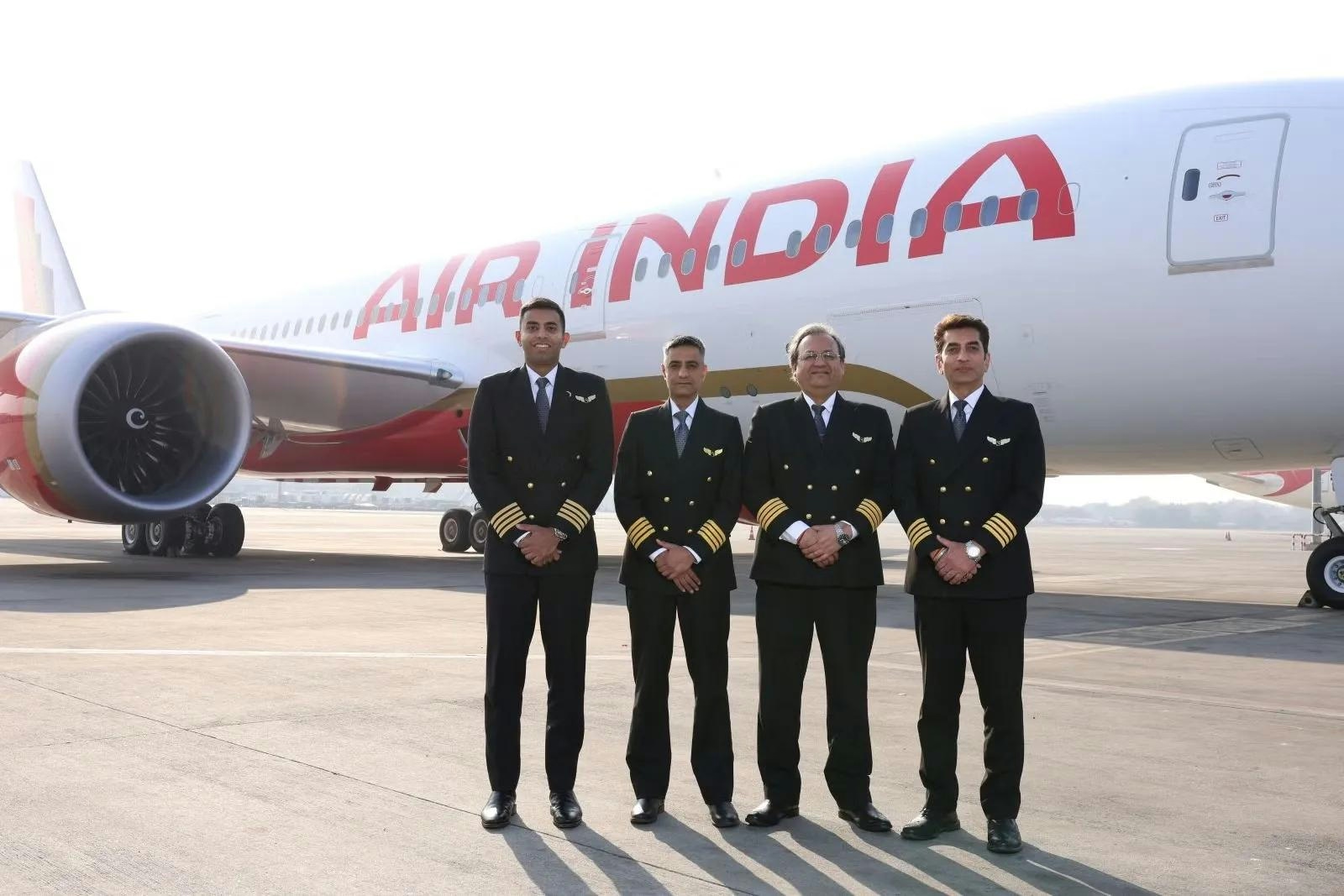
Air India Receives First New Boeing 787-9, Marking Major Fleet Milestone
Air India has taken delivery of its first purpose-built wide-body aircraft since its privatization four years ago, signaling a significant advancement in the airline’s ongoing transformation. The newly delivered Boeing 787-9, registered as VT-AWA, arrived in Delhi in the early hours of January 11, 2026. This aircraft is the first of four 787-9s scheduled to join Air India’s fleet this year, alongside two Airbus A350-1000s, which are poised to become the airline’s new flagship models.
Fleet Modernization and Passenger Experience
This milestone reflects Air India’s continued efforts to modernize its fleet and enhance the passenger experience. Since privatization, the airline has faced criticism for slow progress, particularly as many long-haul travelers have continued to fly on aging Boeing 777s with outdated interiors. Although Air India has incorporated six Airbus A350-900s in recent years, these aircraft were originally intended for Aeroflot and were not purpose-built for the airline. The arrival of the new 787-9 marks the first occasion since privatization that Air India has received a wide-body jet constructed specifically to its specifications.
Currently, Air India has 21 Boeing 787-9s on order, which will complement six ex-Vistara 787-9s already in service. The airline also operates 26 Boeing 787-8s, which are undergoing reconfiguration with new cabin interiors, with the first upgraded aircraft expected to enter service shortly. The new Boeing 787-9s will feature 296 seats arranged across three cabins: business class, premium economy, and economy. While initial plans suggested the introduction of the Safran Unity business class seat, Air India has instead opted for the Adient Ascent seat for all new and retrofitted Dreamliners, aiming to provide a consistent and modern onboard product.
Competitive Landscape and Strategic Challenges
The integration of these new aircraft presents both opportunities and challenges for Air India. The airline must ensure a seamless introduction into its existing operations while completing the rollout of new cabin products across its fleet. This effort unfolds amid a competitive global environment where other carriers are also renewing their fleets. For instance, LATAM recently received its first GEnx-powered 787, EVA Air has approved the purchase of four Boeing 787-9s, and Chinese airlines continue to expand with substantial A320neo orders. These developments underscore the competitive pressures Air India faces as it strives to reclaim its position in the international market.
Market analysts will be closely monitoring how Air India’s ongoing fleet renewal and cabin upgrades influence its competitive standing, particularly as the airline undergoes a leadership transition that may shape its strategic direction. The successful integration of the new Dreamliners will serve as a critical measure of Air India’s ability to fulfill its promises of transformation and enhanced passenger experience.

Etihad Airways Suspends Airbus A380 Flights on Key Route

Aditya Birla Group Seeks Approval for Aircraft Leasing in GIFT City

Qatar Airways Highlights Innovation and Connectivity at Arabian Travel Market 2026

Hong Kong's Five-Year Plan Includes Andrew Fan's Aircraft Parts Processing Hub Proposal

ACIA Aero Leasing Delivers ATR72-600 to Air Nostrum

RTX Appoints Jill Albertelli as Head of Pratt & Whitney

TAT Technologies Joins Beyond Aero Hydrogen Aircraft Program

AURAK Study Highlights Barriers to Air Taxi Adoption in Emerging Economies

Xiamen Air Selects Altitude for 787 Maintenance at Heathrow

Etihad and Swissport Extend Global Partnership
