
Orchestrate AI insights into action

Trending
Categories
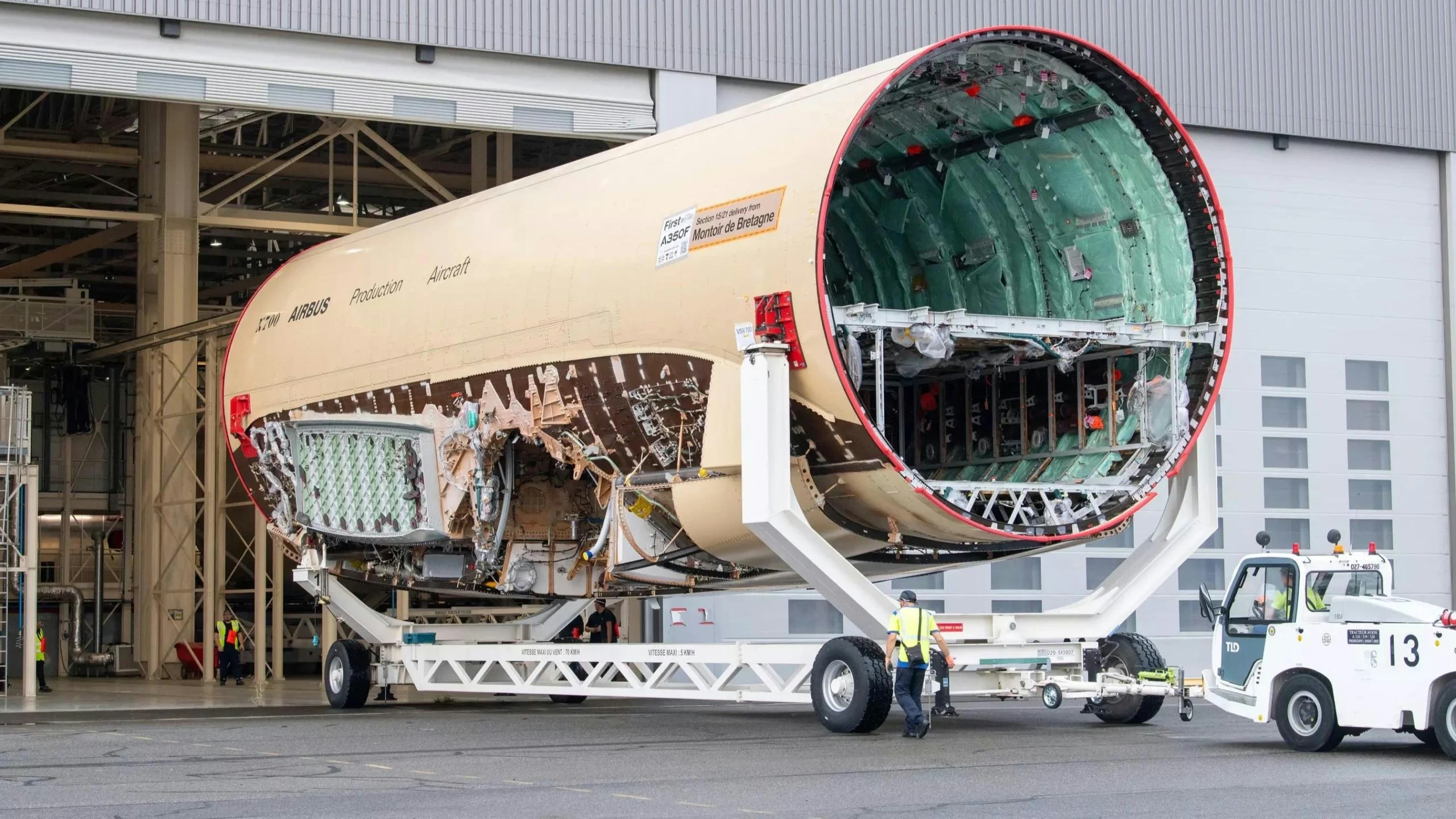
Airbus Achieves Milestone in A350F Cargo Door Development
Airbus Achieves Milestone in A350F Cargo Door Development
Completion of First Main Deck Cargo Door
Airbus has reached a pivotal milestone in its A350F freighter program with the completion of the first main deck cargo door at its Illescas facility in Spain. This critical component has now been delivered to the final assembly line in Toulouse, where it will be integrated into the fuselage of the program’s first test aircraft. Ground and flight testing for the A350F are planned for 2026 and 2027, with two aircraft designated for the certification campaign.
The main deck cargo door is a defining feature of the A350F, measuring 4.5 meters in width and 4.3 meters in height, making it the largest of its kind in the industry. Its design aims to enhance cargo handling by enabling faster, safer, and more efficient loading and unloading operations. Positioned in the rear fuselage, the door helps maintain an optimal center of gravity during loading. Constructed from advanced composite materials and equipped with an electrically powered actuation system, the door exemplifies Airbus’s commitment to innovation and operational efficiency.
Production and Assembly Process
The Illescas facility, a key Airbus center specializing in large composite structures, is responsible for manufacturing the door’s structural skins and completing its assembly before shipment. During the pre-series phase, the doors are installed in Toulouse. However, once serial production begins, integration will transition to Hamburg, where the door will be fitted into the aft fuselage and equipped with its actuation systems prior to final transport to Toulouse.
A350F’s Capabilities and Market Position
The A350F is engineered to address evolving air freight demands, offering a range of up to 8,700 kilometers and a payload capacity of 111 tonnes, positioning it well for long-haul operations. The aircraft is constructed with more than 70% advanced materials, resulting in a significantly lighter airframe compared to competitors, which enhances operational efficiency. Powered by Rolls-Royce Trent XWB-97 engines, the freighter is expected to achieve up to 20% lower fuel consumption and carbon emissions relative to previous-generation models. It is also the only freighter fully compliant with ICAO’s 2027 CO₂ standards and will be capable of operating with up to 50% sustainable aviation fuel at entry into service, with plans to reach 100% capability by 2030.
Market Implications and Challenges Ahead
This development has attracted considerable attention within the air cargo market, as the A350F emerges as a strong alternative to Boeing’s 777-8F. The progress of Airbus’s program has reportedly prompted Boeing to consider accelerating its own freighter development timelines to maintain competitiveness. Additionally, ongoing geopolitical tensions, particularly between the United States and China, may affect Boeing’s delivery schedules and order books, potentially providing Airbus with a strategic advantage.
Despite this achievement, Airbus faces potential challenges, including the complexities of integration and the risk of delays during test flights. As the A350F advances toward certification, industry observers will closely monitor how Airbus manages these hurdles and how the competitive dynamics in the freighter market evolve.

Etihad Airways Suspends Airbus A380 Flights on Key Route

Aditya Birla Group Seeks Approval for Aircraft Leasing in GIFT City

Qatar Airways Highlights Innovation and Connectivity at Arabian Travel Market 2026

Hong Kong's Five-Year Plan Includes Andrew Fan's Aircraft Parts Processing Hub Proposal

ACIA Aero Leasing Delivers ATR72-600 to Air Nostrum

RTX Appoints Jill Albertelli as Head of Pratt & Whitney

TAT Technologies Joins Beyond Aero Hydrogen Aircraft Program

AURAK Study Highlights Barriers to Air Taxi Adoption in Emerging Economies

Xiamen Air Selects Altitude for 787 Maintenance at Heathrow

Etihad and Swissport Extend Global Partnership
