Image

Orchestrate AI insights into action

Join the AeroGenie waitlist today!

Trending

Categories

Airbus and MTU Aero Engines Form Partnership to Advance Hydrogen Fuel Cell Technology for Aviation
June 18, 2025By ePlane AI
Airbus and MTU Aero Engines Form Partnership to Advance Hydrogen Fuel Cell Technology for Aviation
0
0
Hydrogen Fuel Cell
Airbus
MTU Aero Engines

Airbus and MTU Aero Engines Form Partnership to Advance Hydrogen Fuel Cell Technology for Aviation

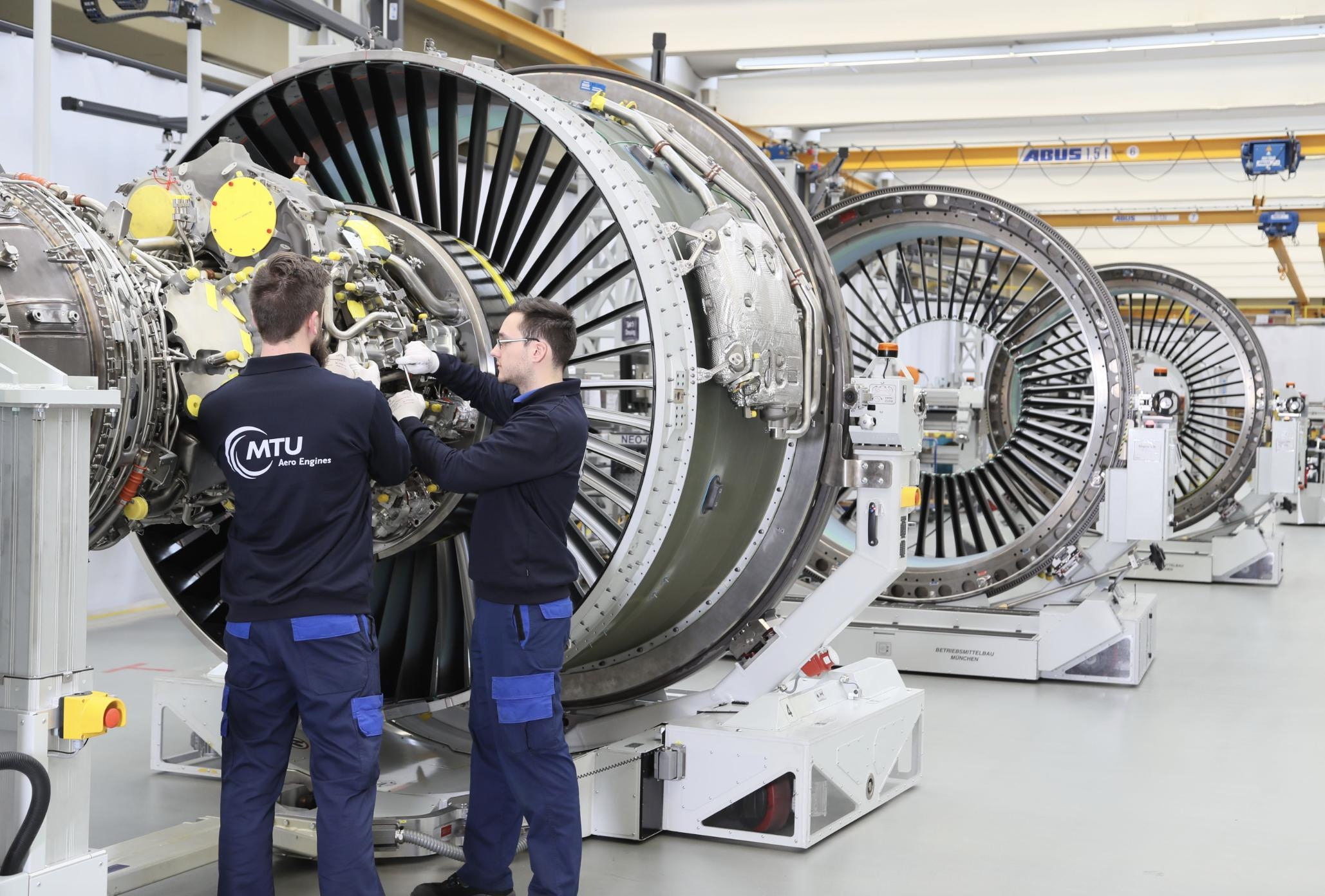
Airbus and MTU Aero Engines have entered into a strategic partnership to accelerate the development of hydrogen fuel cell propulsion, a critical innovation for the future of sustainable aviation. The agreement, formalized through a Memorandum of Understanding (MoU) at the 55th Paris Airshow, unites two leading aerospace companies in addressing the urgent challenge of reducing carbon emissions in air travel.

The collaboration combines Airbus’s expertise in aircraft design, exemplified by its ambitious ZEROe program aimed at creating the world’s first zero-emission commercial aircraft, with MTU Aero Engines’ extensive experience in engine technology and its pioneering Flying Fuel Cell concept. Together, the partners seek to develop a reliable and efficient hydrogen fuel cell engine tailored for commercial aviation, marking a significant milestone toward emission-free flight.

A Structured Roadmap to Hydrogen Propulsion

The MoU sets out a three-phase approach to advance hydrogen propulsion technology. The initial phase centers on joint research and development to mature the core components of hydrogen-powered engines. This includes advancing fuel cell technology, hydrogen storage systems, and fuel management solutions, with collaborative efforts such as the European Clean Aviation initiative playing a pivotal role. These foundational activities aim to ensure that hydrogen propulsion can be integrated into commercial aircraft without compromising safety or performance.

Following this, Airbus and MTU will align their research and development roadmaps to synchronize their technological strategies. This coordination is intended to streamline progress and facilitate the transition from experimental technology to market-ready hydrogen propulsion systems.

The final phase focuses on the implementation and commercialization of the developed hydrogen fuel cell engine, enabling airlines to adopt zero-emission technologies and move toward sustainable operations.

Industry Challenges and Market Dynamics

Despite the promising outlook for hydrogen propulsion, the path to widespread adoption faces significant challenges. High development costs and complex technical hurdles may delay commercial deployment. Market responses have been varied; while some investors express optimism about the long-term environmental and economic advantages of zero-emission flight, others remain cautious regarding the immediate financial feasibility.

The competitive landscape is also shifting. Some aerospace companies may intensify their own hydrogen initiatives in response to this partnership, whereas others, such as GKN Aerospace, have recently scaled back projects amid delays in Airbus’s ZEROe program. Meanwhile, MTU Aero Engines continues to advance its fuel cell projects independently, underscoring the competitive drive to lead in this emerging sector.

By joining forces, Airbus and MTU Aero Engines are positioning themselves at the forefront of the transition to sustainable aviation. Their collaboration reflects a broader industry commitment to overcoming the technical and economic challenges of hydrogen propulsion and advancing toward net-zero emissions in the coming decades.

More news
CFM’s Open-Fan Engine Faces Acoustic Challenges Similar to GE’s 1980s Open-Rotor Program

CFM’s Open-Fan Engine Faces Acoustic Challenges Similar to GE’s 1980s Open-Rotor Program

CFM’s Open-Fan Engine Faces Acoustic Challenges Echoing GE’s 1980s Open-Rotor Program CFM International’s RISE program has garnered significant attention within the aerospace industry by promising a reduction in fuel consumption exceeding 20% compared to the most efficient narrowbody engines currently in service. As the aviation sector confronts increasing pressure to reduce emissions while maintaining growth, such advancements in engine efficiency could have transformative implications. However, the critical challenge for CFM lies in overcoming the technical and regulatory obstacles that have historically hindered the adoption of open-rotor propulsion. Revisiting a Challenging Legacy The last major exploration of open-rotor technology was General Electric’s GE36 demonstrator in the 1980s. That program demonstrated the potential for substantial efficiency gains but ultimately faltered due to concerns over noise levels, difficulties in certification, and public resistance. Now, four decades later, CFM’s RISE initiative is revisiting these issues with the advantage of modern engineering tools, including advanced materials, sophisticated digital design capabilities, and enhanced testing methodologies. Despite these technological improvements, the fundamental challenges that impeded the GE36 remain relevant. Efficiency Potential and Integration Complexities The appeal of open-fan propulsion is grounded in aerodynamic principles. Traditional turbofan engines have progressively increased their bypass ratios—the ratio of air bypassing the engine core relative to the air passing through it—to improve fuel efficiency. Current leading narrowbody engines operate at bypass ratios around 15:1. The RISE engine architecture targets an unprecedented bypass ratio of approximately 60:1 by eliminating the conventional nacelle and enabling a significantly larger fan diameter without incurring the weight penalties associated with traditional engine casings. This design is expected to deliver efficiency improvements exceeding 20%. Nonetheless, integrating the characteristics of turboprop and turbofan technologies, which is essential for open-fan designs, has historically presented significant engineering challenges. The GE36 program encountered similar integration difficulties, and the novelty of open-fan propulsion continues to provoke cautious market responses. CFM’s collaboration with General Electric and Dowty Propellers, known for their expertise in propeller systems, may help mitigate some concerns. However, the industry’s collective memory of the GE36 experience persists. Concurrently, competitors are likely to accelerate the development of alternative engine technologies to safeguard their market positions. For instance, the joint venture between SIA Engineering and Safran focusing on CFM’s established Leap engine family underscores a continued emphasis on proven technologies rather than a wholesale transition to open-fan concepts. Testing and Future Prospects Currently, the RISE program functions as a technology demonstrator rather than a certified production engine. Its objectives extend beyond fuel efficiency to include compatibility with 100% Sustainable Aviation Fuel and the potential integration of hybrid-electric propulsion systems, aligning with the broader industry agenda to reduce aviation’s environmental impact. Full-scale ground testing is scheduled for early 2027, followed by flight trials aboard an Airbus A380 in 2029. These milestones will be pivotal in assessing whether open-fan propulsion can evolve from an experimental concept into a commercially viable technology. While the open-fan concept is poised for a resurgence, the challenges that undermined the GE36—particularly those related to noise emissions, certification hurdles, and public acceptance—continue to cast a long shadow. The success of CFM’s RISE program will depend not only on overcoming these technical barriers but also on the aviation industry’s readiness to embrace a bold and unproven propulsion paradigm.
SITA: Software, Not Airports, Will Drive Aviation Growth

SITA: Software, Not Airports, Will Drive Aviation Growth

SITA: Software, Not Airports, Will Drive Aviation Growth The aviation industry’s future growth will be propelled by software innovations rather than the expansion of physical infrastructure such as runways or terminals, according to a recent impact report by SITA. With airline passenger numbers expected to double and reach approximately 10 billion by 2050, SITA’s analysis of the year 2025 identifies a pivotal shift towards customer-driven change in global travel. The primary challenge facing the sector is to increase capacity through technological advancements rather than costly construction projects. Technological Advancements Easing Capacity Strains SITA emphasizes that improvements in customs processing, border control, baggage handling, and communication systems are already mitigating the pressures of rising passenger volumes. One notable example is SITA’s OptiFlight tool, which employs machine learning and digital-twin modeling to optimize flight profiles for fuel efficiency. In 2025 alone, OptiFlight managed 2.9 million flights across 59 airlines, resulting in fuel savings of 127,732 tons and a reduction of 403,633 tons in CO₂ emissions. Additionally, AI-powered solutions such as SITA WorldTracer Auto Reflight have revolutionized baggage handling by automatically rebooking mishandled luggage onto the next available flight, cutting reconciliation times from three minutes to a mere second. David Lavorel, CEO of SITA, highlights the collaborative nature of these advancements: “Airports are scaling capacity within the buildings they already have. Governments are clearing borders before passengers ever reach the queue. AI is moving out of pilots and into the operations rooms where flights are run. None of this is one company’s achievement; it belongs to the airlines, airports, governments, and partners doing the work together as a unit.” Challenges and Industry Response Despite the clear benefits of software-driven growth, the transition presents significant challenges. Substantial investment in technology and supporting infrastructure is necessary, and some traditional stakeholders may resist adopting new digital solutions. Ensuring robust cybersecurity to protect sensitive aviation data remains a critical concern, while regulatory frameworks could delay implementation. Market reactions have been mixed, with some stakeholders maintaining a preference for physical infrastructure investments. Meanwhile, competitors are accelerating their own software integration efforts or acquiring technology firms to maintain a competitive edge. Achieving compatibility and interoperability across the diverse aviation ecosystem will require extensive cooperation among all parties involved. Financially, the case for digitization is compelling. SITA reported a 7 percent increase in revenue to $1.71 billion in 2025, marking its fourth consecutive year of growth between 7 and 8 percent. Global Momentum in Biometric and AI Technologies Biometric and AI-driven airport initiatives are gaining traction worldwide. Security operations in countries such as Germany, Thailand, and Somalia are poised for transformation as airports increasingly adopt biometric identification systems to streamline passenger checks, enhance safety, and combat criminal activity. In the Middle East, nations including Egypt, Jordan, the United Arab Emirates, Saudi Arabia, and Qatar are upgrading to faster, AI-powered biometric systems in response to surging passenger volumes, which are projected to approach 240 million this year. In Germany, legislative progress has been made with a bill permitting the use of passport or ID card data combined with facial recognition technology for airport check-ins. Approved by the cabinet in April, authorities assert that this legal framework will not only improve operational efficiency but also bolster security measures. As the aviation sector continues to evolve, the prevailing consensus underscores that software and digital innovation, rather than physical infrastructure, will serve as the primary drivers of future growth.
Frontier Airlines Revises Airbus A321neo Order Following Avolon Leasing Agreement

Frontier Airlines Revises Airbus A321neo Order Following Avolon Leasing Agreement

Frontier Airlines Revises Airbus A321neo Order Following Avolon Leasing Agreement Strategic Adjustment in Fleet Management Frontier Airlines has announced a significant revision to its Airbus A321neo order by transferring 11 delivery positions to Avolon, a leading aircraft leasing company based in Ireland. This decision, involving aircraft initially ordered directly from Airbus, reflects a strategic approach to fleet management amid rising demand and persistent production challenges within the aviation sector. Rather than indicating a reduction in capacity, Frontier’s move is designed to maintain access to new, fuel-efficient aircraft while enhancing financial flexibility. By leasing these jets from Avolon instead of purchasing them outright, Frontier can modernize and expand its fleet without the burden of substantial upfront capital expenditure, a critical consideration as airlines navigate evolving market dynamics and capital constraints. Production Delays and Market Implications The revision coincides with Airbus’s notification of delivery delays affecting the A320neo family, particularly the A321neo model, with postponements expected in 2027 and 2028. These delays pose challenges for Frontier’s fleet expansion plans, potentially necessitating adjustments to operational and financial strategies to accommodate the revised delivery timeline. The ongoing production backlog has intensified competition among airlines and lessors for near-term delivery slots. Frontier’s partnership with Avolon serves as a strategic measure to mitigate risks associated with these delays, ensuring continued access to modern aircraft despite the extended wait for direct deliveries. This arrangement also exemplifies a broader industry trend where leasing companies increasingly acquire delivery positions from airlines to navigate manufacturer backlogs. By securing these slots, Avolon enhances its capacity to supply contemporary aircraft to carriers facing prolonged delivery lead times. Leasing remains a vital mechanism within the aviation industry, providing airlines with the flexibility to scale operations efficiently without heavy capital commitments. As demand for the A321neo grows and delivery slots become more valuable, leasing firms are emerging as essential intermediaries between manufacturers and operators. The Significance of the Airbus A321neo The Airbus A321neo continues to be one of the most coveted single-aisle aircraft globally, valued for its fuel efficiency, extended range, and increased passenger capacity. For low-cost carriers like Frontier, these attributes translate into operational efficiencies, including higher seating capacity per flight, reduced fuel consumption, and improved environmental performance. Given Airbus’s extensive order backlog, securing timely access to the A321neo is a critical competitive advantage. However, ongoing production delays may prompt some carriers to consider alternative aircraft models or renegotiate existing agreements with Airbus, potentially reshaping the competitive landscape. Future Outlook Frontier’s revised order and leasing collaboration with Avolon underscore the fluid and adaptive nature of fleet planning in the current aviation environment. As airlines contend with production delays and shifting market conditions, flexible leasing arrangements and strategic partnerships are poised to play an increasingly pivotal role in supporting fleet growth and operational resilience.
Airbus and RVmagnetics Develop Sensing Mat for Aircraft Repair

Airbus and RVmagnetics Develop Sensing Mat for Aircraft Repair

Airbus and RVmagnetics Develop Advanced Sensing Mat to Enhance Composite Aircraft Repairs Airbus, in collaboration with deep-tech firm RVmagnetics, has introduced a cutting-edge sensing mat designed to revolutionize the repair process of composite aircraft structures. Utilizing RVmagnetics’ patented MicroWire technology, this ultra-thin, reusable mat replaces conventional thermocouples with a flexible sheet embedded with multiple measurement points. The innovation aims to accelerate and improve out-of-autoclave (OOA) repair procedures by simplifying sensor installation and providing comprehensive real-time monitoring. Overcoming Challenges in Composite Material Repairs The increasing use of composite materials in modern aircraft has introduced significant complexities in maintenance and repair operations (MRO). Traditional thermocouple-based monitoring systems require numerous individual sensors, extensive wiring, and prolonged setup times, especially when applied to large, curved surfaces. These factors contribute to operational inefficiencies and can delay aircraft turnaround. The newly developed sensing mat addresses these challenges by integrating all sensor functions into a single adaptable sheet. Featuring just one connection interface, the mat facilitates multi-point monitoring of cure cycles and heat distribution in real time. This consolidation markedly reduces installation time and complexity, enabling up to an 80% faster sensor setup for OOA hot bonder repairs. The mat is rated for temperatures up to 200°C and has been validated through multiple thermal cycles. Its ultra-thin MicroWire sensors conform seamlessly to complex, double-curved surfaces and are compatible with both conductive and radiant heating technologies. By ensuring more uniform heat distribution and minimizing the risk of air leakages, the sensing mat enhances repair quality while significantly decreasing setup durations for large composite surfaces. Supporting the Composite Lifecycle and Industry Innovation The sensing mat forms part of RVmagnetics’ broader strategy to support composite structures throughout their entire lifecycle—from manufacturing and in-service structural health monitoring to efficient repair operations. Crucially, the technology achieves this without compromising the structural integrity of the composite materials. Dr. Pavol Lipovský, Tech Lead at RVmagnetics, emphasized the significance of the collaboration with Airbus, stating, “With our technology, we empower clients to monitor the entire composite lifecycle. Collaborating with Airbus has allowed us to validate this sensing mat in real-world conditions, setting a new industrial standard for complex composite repairs.” This partnership emerges amid a competitive and evolving aerospace landscape. Industry groups such as Team Gen 6, which is developing a sixth-generation fighter aircraft, present new challenges for established manufacturers like Airbus. Meanwhile, Airbus has experienced a surge in commercial orders as of May 2026, surpassing rival Boeing. American Airlines is currently evaluating widebody aircraft purchases from both manufacturers to strengthen its position against competitors Delta and United. In addition to advancing repair technologies, Airbus is diversifying its portfolio through strategic partnerships, including a recent collaboration with Kawasaki Heavy Industries to develop a Japanese anti-submarine variant of the Eurodrone. These initiatives reflect Airbus’s broader strategy to consolidate its market position amid shifting industry demands. Path Forward: From Validation to Industrialization Following successful validation at Technology Readiness Level 5 (TRL 5) in operational environments, Airbus and RVmagnetics are progressing toward the prototype phase, with plans for industrialization to follow. The development of the sensing mat underscores both companies’ dedication to innovation in aircraft maintenance, a critical area as the aerospace sector adapts to emerging technologies and intensifying competitive pressures. RVmagnetics specializes in developing the world’s smallest passive sensors, enabling real-time, contactless monitoring in extreme environments while preserving the integrity of composite materials. The company serves a diverse range of sectors, including aerospace, automotive, medical, energy, and defense.
Cirrus Introduces TRAC10 Trainer Featuring Rotax Engine and Three-Seat Cockpit

Cirrus Introduces TRAC10 Trainer Featuring Rotax Engine and Three-Seat Cockpit

Cirrus Introduces TRAC10 Trainer Featuring Rotax Engine and Three-Seat Cockpit Cirrus Aircraft has unveiled the TRAC10, a new piston-powered trainer specifically designed for professional flight training organizations. Aimed at flight schools, universities, and pilot academies, the TRAC10 is scheduled to begin deliveries in the United States in 2027, with international shipments expected to follow in 2028. Innovative Design and Performance Features The TRAC10 expands Cirrus’ TRAC training lineup by introducing a new airframe and powerplant, diverging from the company’s established SR Series. It is powered by a 160-horsepower Rotax 916 iSc turbocharged engine equipped with full-authority digital engine control (FADEC). This represents a departure from the larger Continental engines used in the SR20 and SR22 models. Cirrus highlights the Rotax engine’s fuel efficiency, noting consumption as low as 5.9 gallons per hour at 65% cruise power. The engine’s compatibility with multiple fuel types—including 100LL avgas, unleaded 91/94, and approved automotive gasoline blends—offers potential cost savings for training operators. A significant design innovation is the TRAC10’s three-seat cockpit, replacing the conventional two-seat layout common in primary trainers. The centrally positioned and elevated rear seat provides an observer with an unobstructed view of the cockpit. This seat can be optionally fitted with a display, enabling instructors or students to monitor flight data during training sessions. The aircraft is equipped with a Garmin flight deck, adjustable seats and rudder pedals, USB-C charging ports, storage compartments, and optional air conditioning. These features are tailored to support the intensive usage typical of training fleets. Safety and Digital Integration Safety remains a central focus for the TRAC10. The aircraft incorporates the Cirrus Airframe Parachute System (CAPS), which can deploy a parachute to safely lower the entire aircraft in emergency situations. Additional safety technologies include Garmin’s Electronic Stability and Protection (ESP) system, a level (LVL) recovery button, a stick shaker for stall warnings, and a modified wing design aimed at enhancing spin resistance. Cirrus also plans to integrate its Cirrus IQ digital fleet management platform into the TRAC10. This system wirelessly transmits aircraft data, allowing operators to monitor maintenance schedules, fuel levels, engine parameters, and navigation database status through cloud-based software compatible with third-party fleet management tools. Market Reception and Regulatory Considerations The TRAC10 has received a strong market response, with Cirrus reporting over 100 orders from 13 flight training organizations worldwide. Specific customers and detailed delivery timelines have not been disclosed. Production will be based at Cirrus’ headquarters in Duluth, Minnesota, with a starting price set at $499,900. Despite the positive reception, the TRAC10 faces potential regulatory challenges. Cirrus is owned by AVIC, a Chinese state-owned enterprise, and has been designated by the Pentagon as a Chinese military company operating in the United States. This classification may subject the TRAC10 and its manufacturer to increased regulatory scrutiny as deliveries approach. Meanwhile, competitor responses to the TRAC10’s launch remain unclear, with no direct announcements reported to date.
Why Delta Air Lines Has Returned the Boeing 747 to Service

Why Delta Air Lines Has Returned the Boeing 747 to Service

Why Delta Air Lines Has Returned the Boeing 747 to Service For most airlines, reintroducing an aircraft type after decades of retirement is an uncommon occurrence. Yet, Delta Air Lines has revived the iconic Boeing 747 after an 18-year absence. This decision transcends nostalgia, reflecting a strategic response to significant industry transformations, evolving network priorities, and intensifying competition within the global aviation market. The Boeing 747: A Transformative Legacy The Boeing 747, which first took to the skies on February 9, 1969, fundamentally changed commercial aviation. Its distinctive hump-backed upper deck and unprecedented size earned it the moniker "Queen of the Skies." The original 747-100 model could accommodate over 350 passengers, nearly doubling the capacity of aircraft available at the time. With an initial range exceeding 5,000 nautical miles and later variants extending close to 8,000 nautical miles, the 747 enabled airlines to consolidate passenger demand on long-haul routes, thereby reducing operating costs and lowering ticket prices. Over a production span of more than five decades, Boeing manufactured 1,574 units of the 747 across several variants, including the 747-100, 747-400, and 747-8. Although production ceased in early 2023, the 747 remains an enduring symbol of the modern era of air travel. Delta’s Initial Experience and Subsequent Retirement Delta introduced the Boeing 747-100 to its fleet in October 1970, marking its transition into the widebody aircraft era. By late 1971, the airline operated five 747-100s, each configured to carry approximately 370 passengers. However, the aircraft’s large capacity did not align well with Delta’s predominantly domestic network at the time, limiting its operational efficiency. Consequently, Delta retired the 747 after just seven years, opting to focus on aircraft better suited to its route structure and market demands. Strategic Reintroduction Amid Industry Evolution The decision to reintegrate the 747 into Delta’s fleet after nearly two decades was driven by strategic imperatives and emerging market opportunities. Following a major merger that expanded Delta’s international footprint, the airline required larger, long-range aircraft to service new transatlantic and transpacific routes. The 747’s capacity and range made it an optimal choice to support these expanded operations, reinforcing Delta’s position as a leading global carrier. This reintroduction occurs amid heightened competition in the widebody aircraft segment. American Airlines is actively considering new widebody orders to enhance its competitiveness against Delta and United, both of which have already made substantial fleet investments. Additionally, the emergence of Riyadh Air, which aims to establish direct routes to major U.S. cities such as New York and Washington, introduces further competitive pressure. Meanwhile, Southwest Airlines has experienced increased demand following the collapse of Spirit Airlines, potentially diverting some passenger traffic from Delta. Outlook for Delta and the 747 Delta’s return to the Boeing 747 reflects a broader strategic effort to adapt to a rapidly evolving industry landscape. While the 747 provides the capacity and range necessary to support Delta’s global ambitions, the airline faces significant challenges from both established competitors and new market entrants. As the aviation market continues to develop, Delta’s ability to capitalize on the strengths of the 747 will be pivotal in sustaining its status among the world’s foremost airlines.
Aircraft Engine Troubleshooting at AirVenture

Aircraft Engine Troubleshooting at AirVenture

Aircraft Engine Troubleshooting at AirVenture As the EAA AirVenture Oshkosh 2026 event draws near, thousands of aircraft owners and aviation enthusiasts are preparing to attend the world’s largest aviation gathering. For many participants, the event offers a unique opportunity to explore the latest products, witness impressive air shows, and engage directly with manufacturers—particularly when it comes to addressing aircraft engine issues. The Complexity of Engine Support Having spent numerous hours at AirVenture and similar events such as SUN ’n FUN, assisting with technical inquiries at the Lycoming booth, it has become clear that a common misconception persists. Many attendees assume that every manufacturer representative possesses exhaustive knowledge of all products their company produces. In truth, while factory representatives have access to extensive technical data—often derived from field reports and customer feedback—they depend significantly on information provided by aircraft owners and technicians who encounter real-world operational challenges over time. This year, troubleshooting aircraft engines has become increasingly complex amid broader industry challenges. The aircraft engine market is currently volatile, with experts cautioning that a sudden influx of assets could precipitate sharp market corrections. Airlines are contending with extended turnaround times for shop visits and delayed aircraft deliveries, exacerbating the difficulties posed by engine reliability issues. At the recent International Air Transport Association annual meeting, airline executives openly criticized engine manufacturers for persistent delays, emphasizing that engine dependability remains a critical constraint throughout the aviation sector. Industry Pressures and Aftermarket Demand These pressures are reshaping aftermarket demand dynamics. For instance, Turkish Technic anticipates a sustained rise in demand for engine and component maintenance, driven by ongoing supply chain disruptions and escalating labor costs. Concurrently, companies such as MTU are reevaluating their strategies for military engines, aiming to better support collaborative combat aircraft markets through initiatives like AeroDesignWorks. On the commercial front, AAR Corp. is capitalizing on robust aerospace aftermarket trends, benefiting from increased global air travel and heightened defense expenditures, despite continuing supply chain challenges. The Importance of Preparation and Clear Communication In this challenging environment, it is more crucial than ever for aircraft owners to arrive well-prepared when seeking technical assistance at AirVenture. Taking Lycoming’s O-320 engine as an example, there are nearly 60 different configurations of this model, excluding those with fuel injection. Simply stating, “I have an O-320 engine,” is insufficient. The suffix—such as A, B, C, D, or H—signifies variations in horsepower and design, which are essential for accurate diagnosis and troubleshooting. A practical illustration occurred at a previous show when an owner requested the part number for an oil filter without specifying the exact engine model. Without this critical detail, providing the correct information was impossible. This underscores the necessity of bringing comprehensive information, including engine model, serial number, and recent maintenance history, when seeking technical support. In today’s demanding market, clear communication and thorough preparation are vital for effective troubleshooting. Whether consulting the Lycoming booth or other manufacturers at AirVenture, arriving equipped with precise details ensures that aircraft owners receive the support necessary to maintain safe and reliable flight operations.
Small plane lands on rural Nebraska road after engine failure, no injuries reported

Small plane lands on rural Nebraska road after engine failure, no injuries reported

Small Plane Executes Emergency Landing on Rural Nebraska Road Following Engine Failure RICHARDSON COUNTY, Neb. — A single-engine Cessna aircraft successfully performed an emergency landing on a rural road in Richardson County Sunday evening after experiencing engine failure. The incident took place at approximately 8:07 p.m. near the intersection of 652 Avenue and 714 Road. Emergency Response and Safety Outcome Emergency personnel, including deputies from the Richardson County Sheriff’s Office, Falls City Rural Fire, and Falls City EMS, promptly responded to the scene. Upon arrival, responders found the aircraft intact with both occupants unharmed. To restore normal traffic flow, the plane was carefully moved from the county road onto adjacent private property. Investigation and Industry Implications The Federal Aviation Administration (FAA) and the National Transportation Safety Board (NTSB) have initiated an investigation into the engine failure and the circumstances leading to the emergency landing. The aircraft remains at the site pending recovery and further examination by federal authorities. This event underscores the persistent challenges in maintaining the safety of small aircraft operations, particularly concerning engine reliability and emergency response protocols. Aviation experts emphasize that such incidents often lead to heightened scrutiny of maintenance standards and can impact insurance considerations for small aircraft operators. Additionally, these occurrences may drive industry competitors to improve safety features and operational procedures to mitigate the risk of similar emergencies. Authorities praised the pilot’s skillful handling of the situation, which ensured no injuries were sustained. The investigation into the incident remains ongoing.
Iran Air Retires the Last Boeing 747SP, Ending an Era in Aviation

Iran Air Retires the Last Boeing 747SP, Ending an Era in Aviation

Iran Air Retires the Last Boeing 747SP, Ending an Era in Aviation The retirement of Iran Air’s final Boeing 747SP marks the conclusion of a significant chapter in aviation history. As the last airline to operate this distinctive jumbo jet, Iran Air’s decision signals not only the end of the 747SP’s operational life but also highlights the evolving priorities and challenges confronting the global airline industry today. The Boeing 747SP: An Engineering Milestone Introduced in the 1970s, the Boeing 747SP was developed in response to airlines’ growing demand for ultra-long-haul flights. Unlike the standard 747-200, the 747SP featured a fuselage shortened by approximately 14 meters, which reduced both weight and aerodynamic drag. This design included a taller vertical stabilizer to maintain balance and was optimized for mission-specific fuel efficiency. These engineering adaptations enabled airlines to operate nonstop intercontinental routes, such as Tehran to New York, which had previously been unfeasible without refueling stops. However, the aircraft’s reduced passenger capacity limited its commercial appeal, resulting in only 45 units ever produced, making the 747SP one of the rarest widebody aircraft in aviation history. Iran Air: The Last Operator Iran Air’s continued operation of the 747SP was driven more by necessity than preference. The airline initially acquired the aircraft to serve some of the world’s longest commercial routes. However, as international sanctions tightened and access to newer aircraft became increasingly restricted, Iran Air was compelled to maintain its aging fleet well beyond the typical industry lifespan. While most airlines retired the 747SP by the early 2000s, Iran Air persisted in flying the model into the late 2010s, transforming the aircraft into a symbol of resilience and adaptability amid challenging circumstances. Industry Challenges and the End of an Era The retirement of the last 747SP coincides with a period of considerable turbulence in the global airline industry. Rising jet fuel prices, exacerbated by ongoing conflict in the Middle East, have forced airlines to reduce their profit forecasts for 2026 by nearly half. In response, many carriers are cutting unprofitable routes and postponing new aircraft acquisitions amid persistent uncertainty and elevated operational costs. Aircraft manufacturer Embraer has reported that some airlines are deferring purchase options due to the war in Iran and broader regional instability. Analysts anticipate that these financial pressures will continue into 2027, prompting airlines worldwide to reassess fleet strategies and operational decisions. A Lasting Legacy For aviation enthusiasts and industry observers, the Boeing 747SP stands as a testament to an era when range and engineering innovation were paramount. Its retirement not only signifies the end of a unique aircraft but also reflects the broader transformation of commercial aviation, where efficiency, flexibility, and economic resilience have become essential. As Iran Air’s final 747SP departs from service, it closes a chapter defined by ambition, adaptation, and the relentless progression of the aviation industry.
The Impact of Generative AI on Airline Distribution and Travel Retail

The Impact of Generative AI on Airline Distribution and Travel Retail

The Impact of Generative AI on Airline Distribution and Travel Retail Transformation in Airline Distribution The airline distribution landscape is experiencing a profound transformation. Traditionally anchored in fares, schedules, and availability, the industry’s foundational elements remain relevant but are no longer sufficient in meeting contemporary demands. Airlines today are expected to engage in more intelligent retailing, offer differentiated products, and provide seamless customer support across multiple channels. This evolution reflects a broader shift towards a more dynamic and customer-centric approach to travel retail. Generative artificial intelligence (AI) is emerging as a pivotal technology that complements existing pricing, inventory, and order management systems. Rather than supplanting these core infrastructures, AI enhances the utilization of extensive data, content, and commercial logic already embedded within the distribution ecosystem. This development coincides with the adoption of the New Distribution Capability (NDC) and modern retailing frameworks, which enable airlines to distribute richer and more diverse content. These include branded fares, ancillary services, seat products, baggage options, and bundled offerings. Consequently, the industry’s challenge has shifted from a scarcity of content to the need for greater clarity and accessibility. Enhancing Customer Experience and Operational Efficiency The principal advantage of generative AI lies in its capacity to convert complex, structured airline data into clear and accessible language. This capability facilitates the summarization of fare bundle benefits, simplification of fare conditions, and real-time comparison of options, making content more understandable and actionable for both travel sellers and consumers. For travel agents and online platforms, AI reduces the time spent interpreting fare rules, baggage policies, and refund conditions, allowing greater focus on delivering personalized recommendations. AI-powered assistants, drawing on reliable airline data, can effectively explain why a flexible fare suits a business traveler or why a bundled package offers value to a family. Beyond pre-booking interactions, generative AI holds significant promise in post-booking customer service. Frequent and commercially critical tasks such as managing schedule changes, processing refunds, reissuing tickets, and addressing baggage inquiries can be streamlined through AI. By quickly summarizing booking contexts, surfacing relevant policies, and providing consistent first-line responses, AI enhances both the speed and accuracy of customer support operations. Challenges and Market Dynamics Despite its potential, the integration of generative AI into airline distribution presents notable challenges. Industry leaders convened at the Skift Data + AI Summit 2026 emphasized the importance of clear ownership, robust system architecture, and the cultivation of trust among customers and employees. The necessity of strategic governance was underscored by incidents such as Air Canada’s chatbot hallucination, which highlighted the risks associated with unverified AI-generated responses. In critical domains like pricing, availability, and servicing, AI outputs must be anchored in authoritative content, governed by transparent workflows, and rigorously validated before being presented to customers. The foundation of trust in airline distribution remains accuracy, not automation alone. Market dynamics are also evolving rapidly. AI-driven search is becoming a dominant distribution channel, with recent data indicating that 82% of AI hotel recommendations originate from online travel agencies and editorial media. However, only 6% of hotels appear in AI-generated results, reflecting a significant concentration of visibility among leading brands. The AI Visibility Index 2026 reveals that top airline and hotel brands benefit disproportionately from earned editorial coverage and third-party authority, intensifying competitive pressures and underscoring the importance of strategic visibility in the AI era. As generative AI continues to reshape airline distribution and travel retail, its successful adoption will depend on disciplined implementation, strong governance, and a steadfast commitment to clarity and trust. These elements are essential to ensuring that technological advancements enhance, rather than compromise, the customer experience.
line









