
Orchestrate AI insights into action

Trending
Categories
Airbus Employs 3D Printing to Address Aircraft Supply Chain Challenges
Airbus Employs 3D Printing to Address Aircraft Supply Chain Challenges
Adopting Additive Manufacturing Amid Supply Chain Disruptions
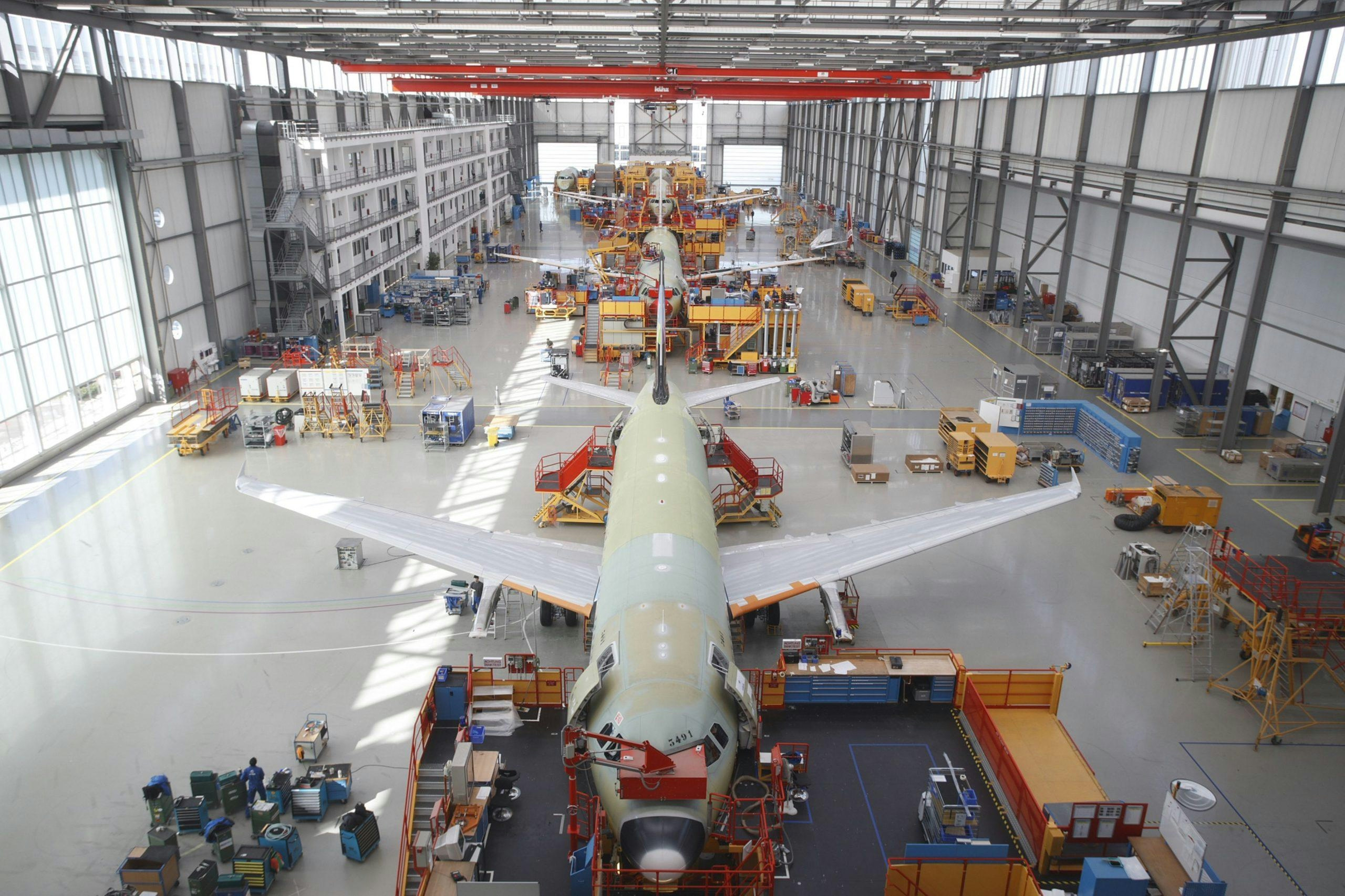
Since the onset of the COVID-19 pandemic in 2019, global aircraft manufacturers have grappled with persistent supply chain bottlenecks that have delayed the delivery of critical components and slowed production schedules. In response to these challenges, Airbus has increasingly turned to 3D printing, or additive manufacturing, as a strategic solution to mitigate disruptions and uphold its delivery commitments.
Airbus currently produces over 25,000 flight-ready 3D-printed parts annually, collaborating closely with Minnesota-based technology firm Stratasys. This transition has not only helped alleviate supply chain constraints but has also revolutionized the manufacturing and maintenance processes of modern aircraft. To date, more than 200,000 certified Stratasys polymer parts are in active service across airlines and air forces worldwide.
Benefits and Implementation Across Key Aircraft Models
The integration of 3D-printed components has delivered measurable advantages. For instance, the Airbus A350 long-haul jet has benefited from a 43% reduction in component weight through the use of these parts. Furthermore, Airbus has eliminated minimum order quantity requirements and achieved an 85% reduction in lead times. These improvements have been applied across three major production lines: the A320neo family, the A350, and the A400M military transport aircraft. The parts are manufactured using Stratasys’ industrial-grade printers and Certified Grade (CG) filament, ensuring compliance with stringent aerospace standards.
Serge Senac, Airbus Industrial Leader for Polymer Additive Manufacturing, emphasized the significance of this technology, stating, “Stratasys’ additive manufacturing technology is an integral part of our commitment to safe and sustainable aviation. We can produce certified, repeatable parts faster, with less reliance on complex supply chains. This manufacturing flexibility reduces costs and ensures improved response times to meet the needs of our customers around the world.” Senac also highlighted that 3D printing aligns with Airbus’ ambition to achieve carbon neutrality by 2050.
Ongoing Challenges and Strategic Advantages
Despite these advancements, Airbus continues to confront challenges. Recent quality issues involving metal panels on certain A320 aircraft have exposed ongoing vulnerabilities within the supply chain, contributing to an 11% decline in Airbus shares following the report. These incidents underscore the critical need for continued innovation in manufacturing processes. While competitor Boeing has demonstrated improved performance amid similar supply chain pressures, the adoption of 3D printing may emerge as a key differentiator in the competitive aerospace landscape.
Stratasys underscores that distributed additive manufacturing enables Airbus to produce parts on demand and in proximity to where they are needed, thereby reducing aircraft downtime, minimizing inventory storage, and avoiding costly supply chain delays. The flexibility inherent in 3D printing allows for the production of a diverse range of components, irrespective of type or function, providing Airbus with a strategic advantage as it navigates ongoing industry challenges.
By leveraging 3D printing technology, Airbus aims to mitigate supply chain risks, reduce operational costs, and maintain its leadership position in the aerospace sector amid persistent market pressures and quality concerns.

Etihad Airways Suspends Airbus A380 Flights on Key Route

Aditya Birla Group Seeks Approval for Aircraft Leasing in GIFT City

Qatar Airways Highlights Innovation and Connectivity at Arabian Travel Market 2026

Hong Kong's Five-Year Plan Includes Andrew Fan's Aircraft Parts Processing Hub Proposal

ACIA Aero Leasing Delivers ATR72-600 to Air Nostrum

RTX Appoints Jill Albertelli as Head of Pratt & Whitney

TAT Technologies Joins Beyond Aero Hydrogen Aircraft Program

AURAK Study Highlights Barriers to Air Taxi Adoption in Emerging Economies

Xiamen Air Selects Altitude for 787 Maintenance at Heathrow

Etihad and Swissport Extend Global Partnership
