
Orchestrate AI insights into action

Trending
Categories
Airbus Posts Strong Q1 Orders Despite Decline in A320neo Deliveries
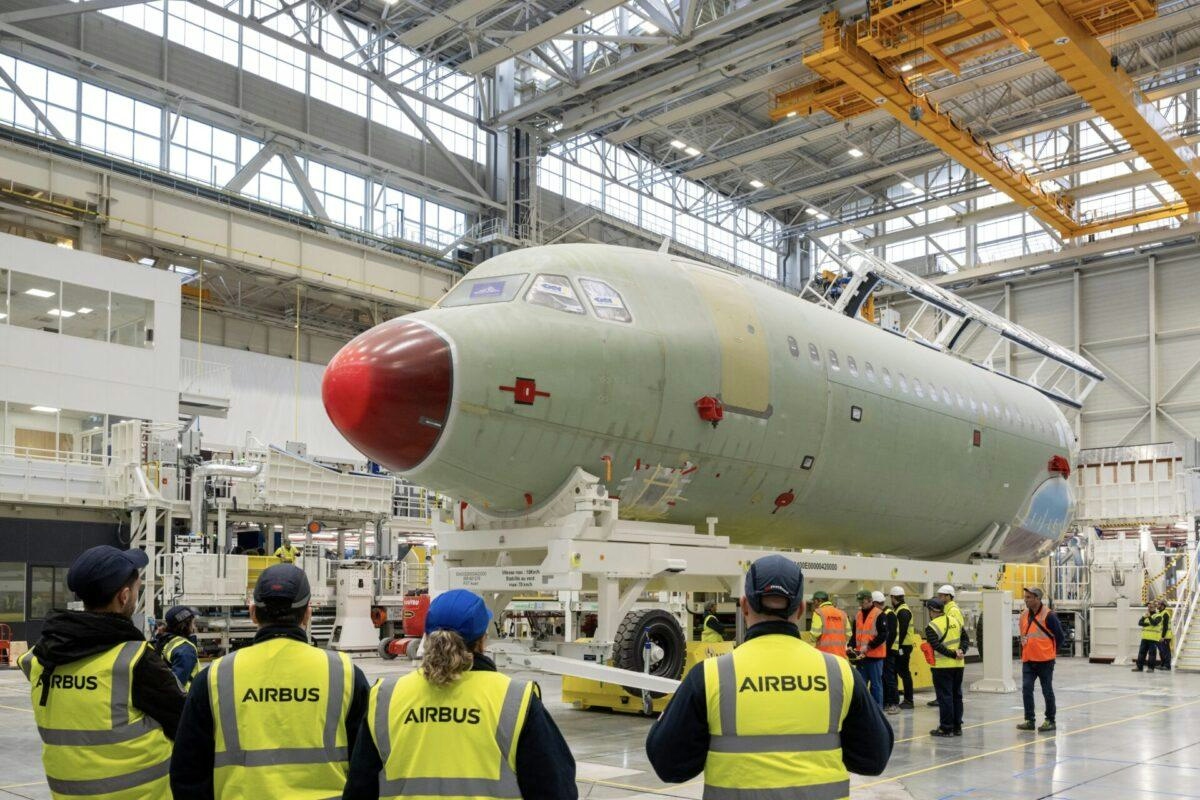
Airbus Posts Strong Q1 Orders Despite Decline in A320neo Deliveries
Airbus reported a robust first quarter in 2024, securing net orders for 398 aircraft despite a noticeable decline in deliveries of its A320neo-family jets. The European aerospace leader delivered 114 aircraft during the period, down from 136 in the same quarter last year. This reduction was largely driven by a slowdown in single-aisle jet deliveries, with only 81 A320neo-family aircraft handed over compared to 106 in the first quarter of 2023.
Supply Chain Challenges and Delivery Impact
The decline in deliveries follows Airbus’s mid-February warning regarding a shortage of Pratt & Whitney PW1100G engines, which has disrupted the company’s production ramp-up plans. These supply chain constraints have constrained Airbus’s ability to meet delivery targets, particularly for its popular single-aisle models. Despite these challenges, Airbus demonstrated resilience by securing significant new orders throughout the quarter.
Strong Order Book and Key Contracts
Among the notable deals, AerCap placed an order for 100 A320neo-family jets, which has been allocated to its US entity, NAS Aviation Services. China Eastern Airlines committed to 101 aircraft from the same family, while Juneyao Air of China ordered 25 jets in March. Airbus also recorded substantial twin-aisle aircraft agreements, including Delta Air Lines’ purchase of 16 A330-900s and 15 A350-900s, alongside 34 A321neos. Additionally, Atlas Air confirmed an order for 20 A350 freighters. Airbus further assigned 20 A220-300 aircraft to undisclosed customers through two separate orders of 10 jets each. However, a longstanding order for 10 A220-100s, originally placed by start-up Odyssey Airlines in 2011 when the program was known as the Bombardier CS100, was cancelled.
Market Implications and Competitive Landscape
The strong order intake has reinforced market confidence in Airbus’s long-term prospects, even as the company contends with ongoing supply chain issues. Industry analysts suggest that the surge in orders may bolster investor optimism regarding Airbus’s ability to sustain a healthy backlog. Meanwhile, competitors such as Boeing, which reported a nine-year high in deliveries in February, could potentially strengthen their market position in light of Airbus’s delivery setbacks. This dynamic may prompt rival manufacturers to intensify marketing efforts to capitalize on Airbus’s temporary production challenges.
Despite the delivery slowdown, Airbus’s success in attracting substantial new orders highlights continued demand for its aircraft and positions the company for future growth as supply chain disruptions are gradually resolved.

Etihad Airways Suspends Airbus A380 Flights on Key Route

Aditya Birla Group Seeks Approval for Aircraft Leasing in GIFT City

Qatar Airways Highlights Innovation and Connectivity at Arabian Travel Market 2026

Hong Kong's Five-Year Plan Includes Andrew Fan's Aircraft Parts Processing Hub Proposal

ACIA Aero Leasing Delivers ATR72-600 to Air Nostrum

RTX Appoints Jill Albertelli as Head of Pratt & Whitney

TAT Technologies Joins Beyond Aero Hydrogen Aircraft Program

AURAK Study Highlights Barriers to Air Taxi Adoption in Emerging Economies

Xiamen Air Selects Altitude for 787 Maintenance at Heathrow

Etihad and Swissport Extend Global Partnership
