
Orchestrate AI insights into action

Trending
Categories
Airbus Weighs Asian Orders Amid U.S. Airlines’ Cuts and Earnings Shortfalls
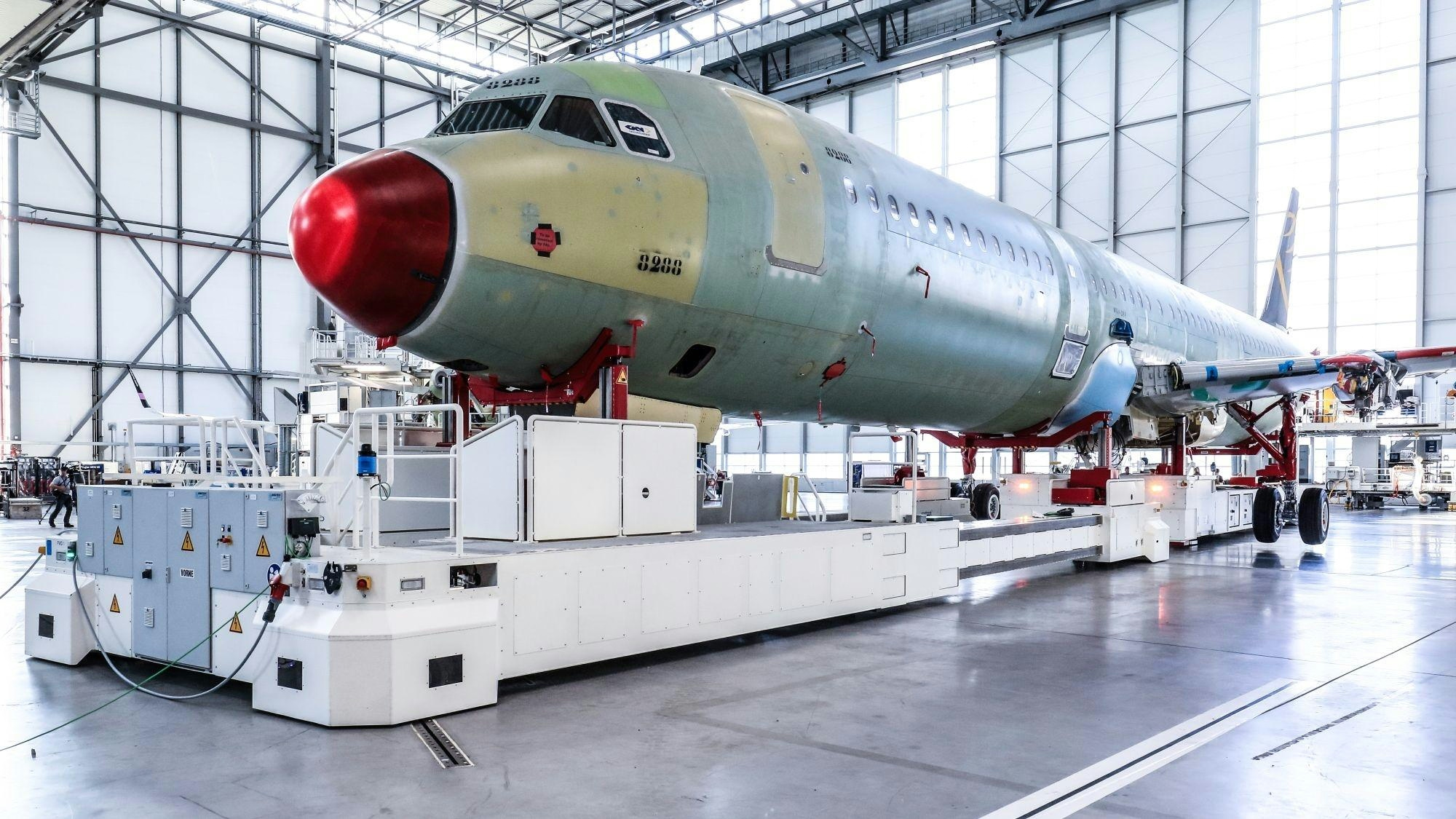
Airbus Navigates Divergent Market Signals Amid Shifting Global Demand
Airbus finds itself at a crossroads this week, confronted by contrasting developments across key markets. While the European aerospace leader benefits from a surge in orders from Asia, it simultaneously faces setbacks in the United States and broader industry challenges. The company’s shares closed Monday at €44.20, marking a 1.78% decline for the day and nearly a 10% drop since the beginning of the year. Technical indicators, such as the relative strength index falling to 10.9, suggest the stock is deeply oversold, yet the company’s fundamental outlook remains clouded by uncertainty.
Strengthening Presence in Asia and Europe
Positive momentum for Airbus is evident in recent commitments from major carriers. Lufthansa Group has approved the acquisition of ten Airbus A350-900 aircraft as part of a €7.7 billion widebody fleet renewal program. This order complements a broader 20-aircraft deal, with the remainder allocated to Boeing. Lufthansa’s CEO, Carsten Spohr, described the investment as a “sustainable” initiative aimed at enhancing the airline’s competitive position by replacing older, less fuel-efficient models. The airline is also accelerating the retirement of its A340-600 fleet, targeting a complete phase-out by October 2026.
In the Asian market, Airbus is solidifying its foothold through several significant agreements. Scoot, the low-cost subsidiary of Singapore Airlines, has confirmed orders for eleven A320neo-family jets, with deliveries scheduled to begin in 2028. These aircraft, equipped with Pratt & Whitney engines, are intended to strengthen Scoot’s regional network. Additionally, AirAsia X has entered into a twelve-year maintenance contract for its forthcoming A220 fleet, while Vietjet has secured a $5.4 billion deal for Pratt & Whitney engines to power its A321neo aircraft. These long-term technical partnerships underscore Airbus’s deepening integration into Asia’s rapidly expanding aviation sector.
Challenges in the U.S. Market and Rising Operational Costs
Despite encouraging developments in Asia and Europe, Airbus faces headwinds in the United States. American Airlines has reduced its order for the A321XLR by 20%, citing a strategic shift toward emerging aviation technologies anticipated later this year. Although this adjustment does not significantly impact Airbus’s overall backlog, it signals a diminished enthusiasm for the long-range narrowbody aircraft among key U.S. customers. This move coincides with first-quarter earnings shortfalls reported by American Airlines and other U.S. carriers, raising concerns about near-term demand in the region.
Compounding these challenges are rising fuel costs. Brent crude oil prices have surged beyond $103.56 per barrel amid escalating geopolitical tensions in the Strait of Hormuz. The increase in fuel expenses is squeezing airline profit margins and prompting some carriers, including Emirates, to suspend A380 operations on select routes. Elevated fuel prices may further suppress demand for new aircraft, particularly widebody models, as airlines seek to manage operational costs.
Geopolitical and Competitive Pressures Intensify
Airbus’s position is further complicated by geopolitical frictions involving both the United States and China, which could influence its order pipeline in the Asia-Pacific region. As U.S. airlines scale back commitments and market sentiment remains mixed, Boeing is poised to leverage its recent profitability and enhanced production capacity to capture additional market share in Asia-Pacific. These dynamics, coupled with geopolitical uncertainties, present a complex competitive landscape for Airbus.
With technical indicators pointing to an oversold stock but fundamental uncertainties persisting, investors face a challenging assessment of whether Airbus’s current difficulties represent a strategic buying opportunity or signal deeper turbulence ahead.

Etihad Airways Suspends Airbus A380 Flights on Key Route

Aditya Birla Group Seeks Approval for Aircraft Leasing in GIFT City

Qatar Airways Highlights Innovation and Connectivity at Arabian Travel Market 2026

Hong Kong's Five-Year Plan Includes Andrew Fan's Aircraft Parts Processing Hub Proposal

ACIA Aero Leasing Delivers ATR72-600 to Air Nostrum

RTX Appoints Jill Albertelli as Head of Pratt & Whitney

TAT Technologies Joins Beyond Aero Hydrogen Aircraft Program

AURAK Study Highlights Barriers to Air Taxi Adoption in Emerging Economies

Xiamen Air Selects Altitude for 787 Maintenance at Heathrow

Etihad and Swissport Extend Global Partnership
