
Orchestrate AI insights into action

Trending
Categories
Airline Group Warns Jet Fuel Shortages Could Last Months Despite Potential Strait of Hormuz Reopening
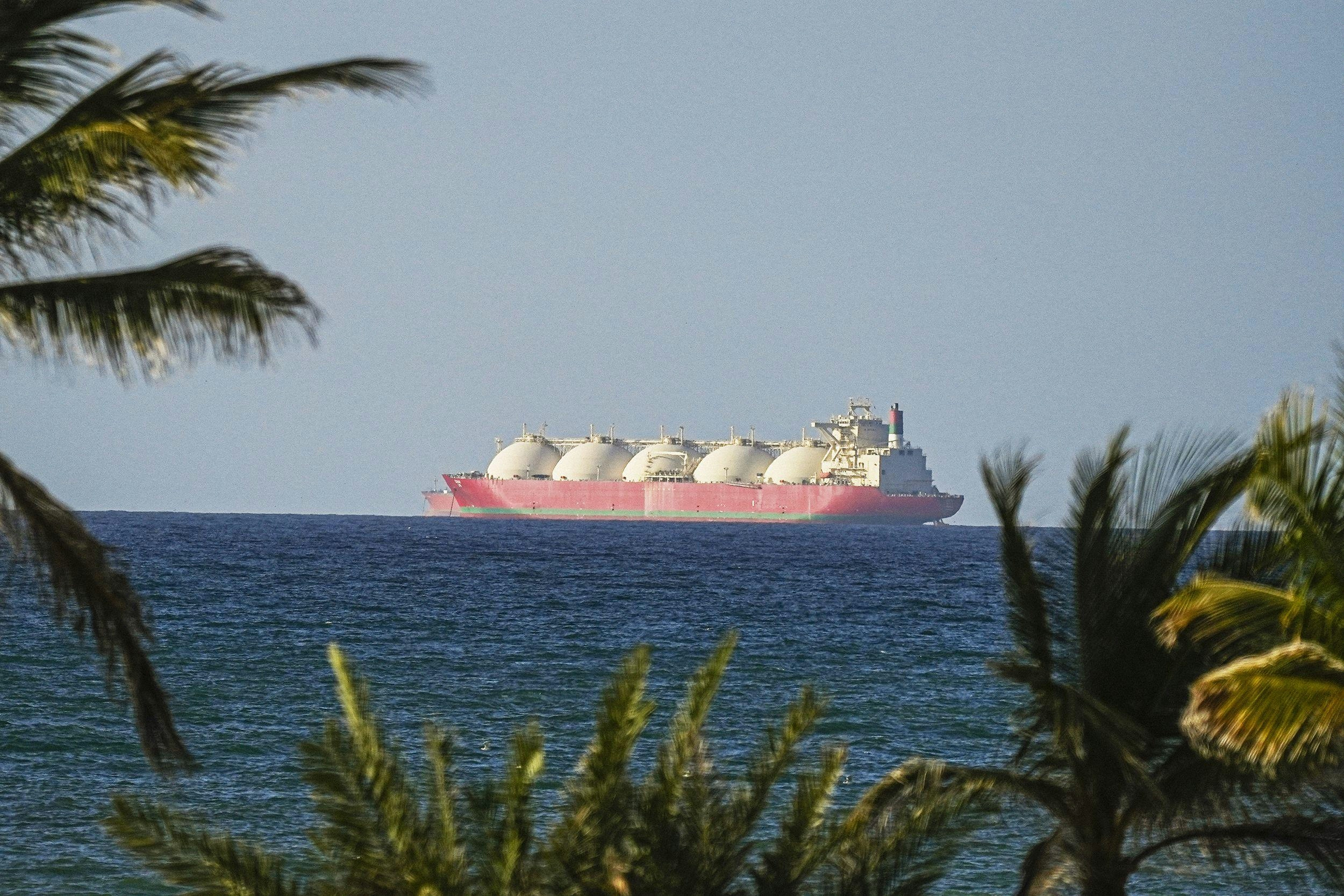
Airline Group Warns Jet Fuel Shortages Could Persist for Months Despite Potential Strait of Hormuz Reopening
The escalating conflict between Iran and the United States has caused oil prices to surge by as much as 70% within weeks, placing significant strain on the global airline industry. Despite tentative signs of a ceasefire and the possible reopening of the Strait of Hormuz—a vital maritime chokepoint responsible for 20% of the world’s oil shipments—industry leaders warn that jet fuel shortages and elevated prices are likely to endure for several months.
Prolonged Supply Challenges Amid Disrupted Refining Capacity
Willie Walsh, director general of the International Air Transport Association (IATA), which represents airlines worldwide, emphasized that even if the Strait of Hormuz reopens and remains accessible, the recovery of jet fuel supply will be slow. He highlighted that the primary constraint lies not in crude oil availability but in the significant disruption to refining capacity across the Middle East. Unlike crude oil, jet fuel lacks strategic reserves, leaving airlines particularly vulnerable to supply shocks.
“If [the Strait of Hormuz] were to reopen and remain open, I think it will still take a period of months to get back to where supply needs to be given the disruption to the refining capacity in the Middle East,” Walsh stated. According to data from S&P Global Energy, global refining capacity has declined by 10% to 12% since the conflict began, with over 2 million barrels per day of refining operations halted in the region. This reduction has triggered widespread supply chain disruptions, driving energy costs sharply higher.
Industry Impact and Financial Strain
The consequences of the jet fuel shortage are already manifesting across the aviation sector. Several European airports have imposed restrictions on aircraft refueling, and some airlines have preemptively canceled flights to manage limited fuel supplies. Executives from major carriers, including Delta’s Ed Bastian and United Airlines’ Scott Kirby, report that the conflict has increased their operating costs by approximately $400 million each. In response, United Airlines has raised checked luggage fees by $10—the first increase in two years—while Malaysia’s AirAsia X has increased airfares by up to 40% and fuel surcharges by 20%.
United’s CEO Scott Kirby cautioned that sustaining operations amid persistently high fuel prices will be challenging if oil prices remain elevated. Industry analysts warn that ongoing fuel cost pressures and potential shortages could erode airline profits, particularly if passenger demand weakens. The sector may face significant financial strain, with some carriers potentially forced to reduce capacity to manage soaring expenses.
Contextualizing the Crisis
Despite the severity of the current disruptions, Walsh underscored that the situation does not compare to the scale of the COVID-19 pandemic, which decimated global aviation capacity by 95%. Instead, he likened the current crisis to the aftermath of 9/11 or the Great Recession, periods during which recovery took several months rather than years. “This is not similar to COVID. This is not a crisis anywhere close to what we experienced [then],” Walsh remarked, noting that the post-9/11 recovery spanned about four months, while the 2008-2009 downturn lasted 10 to 12 months.
Nevertheless, the damage to energy infrastructure has left industry leaders cautious about a swift resolution. Thai Airways CEO Chai Eamsiri described the current oil shock as the worst in his nearly four-decade career, citing the destruction of critical infrastructure and the protracted process required to restore normal operations.

Etihad Airways Suspends Airbus A380 Flights on Key Route

Aditya Birla Group Seeks Approval for Aircraft Leasing in GIFT City

Qatar Airways Highlights Innovation and Connectivity at Arabian Travel Market 2026

Hong Kong's Five-Year Plan Includes Andrew Fan's Aircraft Parts Processing Hub Proposal

ACIA Aero Leasing Delivers ATR72-600 to Air Nostrum

RTX Appoints Jill Albertelli as Head of Pratt & Whitney

TAT Technologies Joins Beyond Aero Hydrogen Aircraft Program

AURAK Study Highlights Barriers to Air Taxi Adoption in Emerging Economies

Xiamen Air Selects Altitude for 787 Maintenance at Heathrow

Etihad and Swissport Extend Global Partnership
