
Orchestrate AI insights into action

Trending
Categories
Airlines Emphasize Communication Amid Disruptions
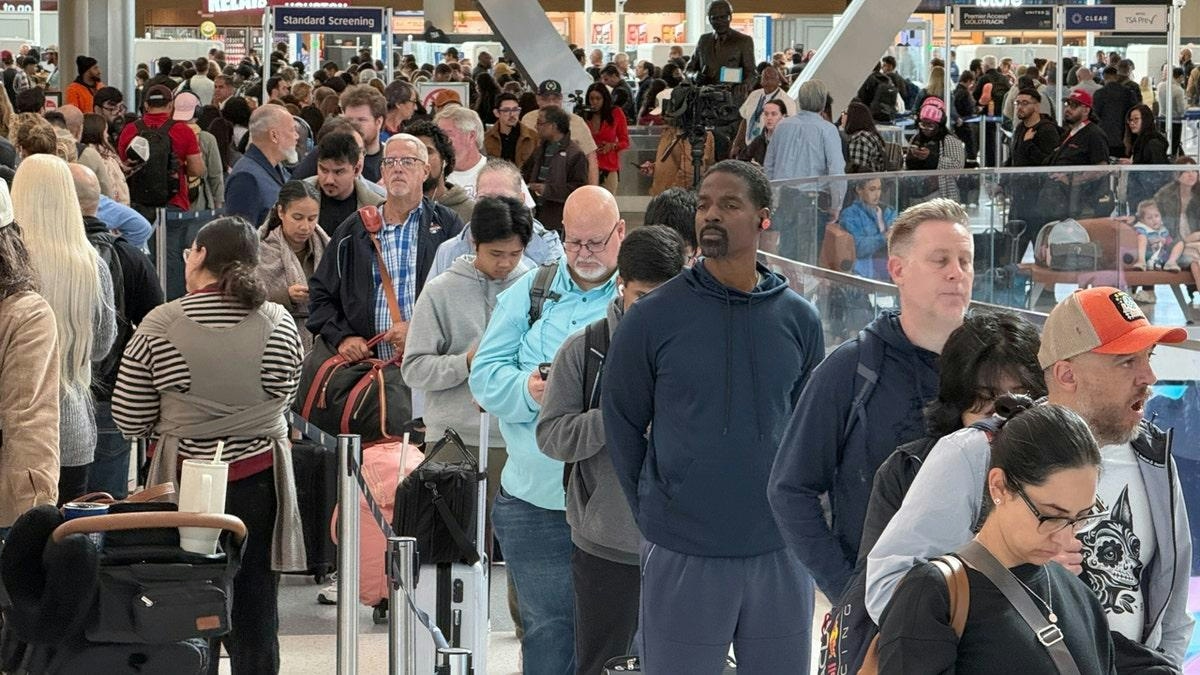
Airlines Emphasize Communication Amid Disruptions
In the face of increasing operational disruptions, airlines and aviation stakeholders are turning to data and digital technologies to place passengers at the heart of their response strategies. While artificial intelligence (AI) innovations—such as more sophisticated chatbots—are transforming customer service, industry leaders emphasize that effective communication and human connection remain indispensable, particularly during times of crisis.
The Role of Communication and Technology
At the recent Aviation Festival Asia in Singapore, experts underscored the necessity of providing passengers with regular and transparent updates, even when no new information is available. Al Tredinnick, head of commercial at 15below, highlighted the enduring need for human empathy alongside technological tools. He advocated for airlines to extend flight updates beyond passengers to include their family members, thereby broadening the communication network during uncertain situations.
Yanendra Weerakkody, digital transformation lead at SriLankan Airlines, stressed the importance of unified communication across internal teams to ensure consistency. Vivian Dsouza, vice president of business development for APAC at Accommodation Plus International (API), supported the use of channel platforms—potentially moderated by AI—to help passengers feel acknowledged and reduce frustration. Dsouza revealed that API leverages climate and geopolitical data to anticipate and prepare for 95 percent of disruption scenarios, managing 85 percent of passenger accommodations through a combination of AI, machine learning, and human oversight.
Challenges and Industry Responses
Despite these technological advances, recent incidents such as the Middle East airspace crisis have exposed persistent challenges. Heavy dependence on human agents during large-scale disruptions resulted in prolonged wait times and customer dissatisfaction, even as airlines invested heavily in AI-driven customer service solutions. This has led to skepticism among passengers and industry observers regarding the effectiveness of communication strategies when technology alone cannot alleviate operational bottlenecks.
Mandeep Grewal, founding partner and CEO of Flyaway Advisors, emphasized the critical role of frontline staff in maintaining service quality during disruptions. Similarly, Mert Aydin, a ground operations specialist at Turkish Airlines, noted the necessity of continuous system monitoring and updates to ensure reliability.
Firdaus Abhar Ali, AirAsia’s engineering manager and architect for customer experience, AI, and community, shared that the introduction of a customer rating system has enhanced satisfaction levels. The airline also plans to launch a travel concierge chatbot integrated within its booking platform, aiming to further improve the passenger experience.
Strategic Shifts in the Industry
As airlines confront these operational challenges, some are reconsidering their market positioning. Delta Air Lines, for instance, has announced plans to expand premium seating on international routes by 2026, signaling a strategic shift away from low-cost services toward catering to higher-value passengers. This move reflects a broader industry trend to balance technological innovation with personalized service, as airlines strive to rebuild trust and loyalty amid ongoing uncertainties.

Etihad Airways Suspends Airbus A380 Flights on Key Route

Aditya Birla Group Seeks Approval for Aircraft Leasing in GIFT City

Qatar Airways Highlights Innovation and Connectivity at Arabian Travel Market 2026

Hong Kong's Five-Year Plan Includes Andrew Fan's Aircraft Parts Processing Hub Proposal

ACIA Aero Leasing Delivers ATR72-600 to Air Nostrum

RTX Appoints Jill Albertelli as Head of Pratt & Whitney

TAT Technologies Joins Beyond Aero Hydrogen Aircraft Program

AURAK Study Highlights Barriers to Air Taxi Adoption in Emerging Economies

Xiamen Air Selects Altitude for 787 Maintenance at Heathrow

Etihad and Swissport Extend Global Partnership
