
Orchestrate AI insights into action

Trending
Categories
Airlink Seeks Release of Blocked Ticket Funds in Mozambique
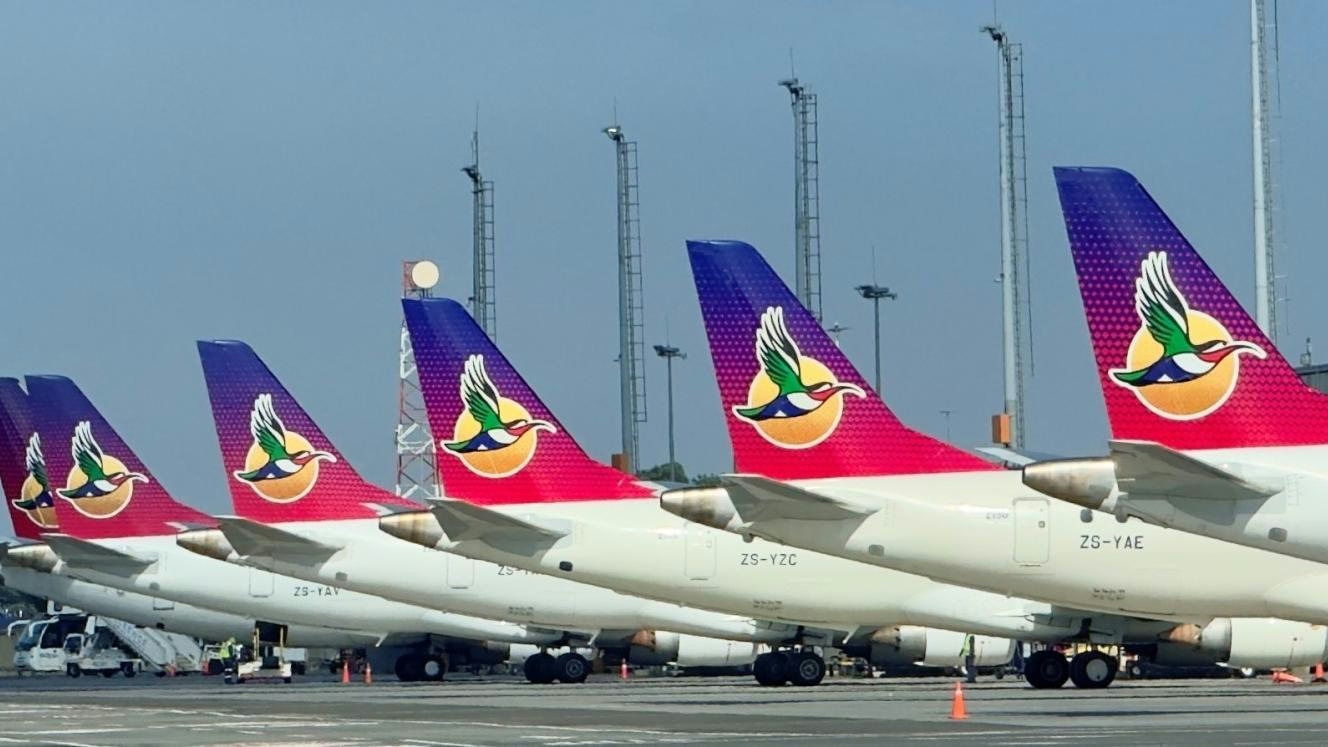
Airlink Seeks Resolution on Blocked Ticket Revenues in Mozambique
Airlink, the South African regional carrier, remains cautiously optimistic that Mozambican authorities will soon resolve the ongoing issue of blocked airline ticket revenues. The airline has faced persistent challenges in repatriating funds generated from ticket sales in Mozambique, prompting high-level discussions with government and banking officials. Recently, Airlink warned it might suspend ticket sales through local travel agents if the impasse continues.
Encouraging Dialogue Amid Operational Strain
CEO de Villiers Engelbrecht described recent talks with Mozambican stakeholders as “encouraging,” expressing hope that a swift solution will enable the airline to expedite the repatriation of its revenues. These remarks followed the leak of a letter Airlink sent to Noor Momade, president of Mozambique’s Association of Travel Agents and Tour Operators (AVITUM). In the letter, Airlink underscored the “considerable strain” the ongoing restrictions are placing on its operations, warning that the sustainability of its flights to Mozambique is at risk.
Airlink currently operates 58 return flights weekly between South Africa and Mozambique. Its network connects Maputo with Johannesburg O.R. Tambo Airport (21 weekly flights) and Cape Town International Airport (four weekly flights), while also linking Beira, Nampula, Pemba, and Tete with Johannesburg. The airline offers daily flights from Johannesburg to Vilanculos and four weekly flights from Mbombela to Vilanculos.
Regulatory and Market Challenges Ahead
Despite the positive tone of recent discussions, Airlink faces significant hurdles in securing the release of its blocked funds. Mozambique’s complex financial regulations present a challenging environment, and the situation may invite regulatory scrutiny or legal disputes. Additionally, regional competitors could capitalize on Airlink’s difficulties to strengthen their market positions, potentially eroding Airlink’s share in Mozambique. The airline’s reputation is also at stake, as public perception of its crisis management may influence customer loyalty and future business prospects.
Mozambique’s handling of airline revenues has drawn international criticism. The International Air Transport Association (IATA) has identified Mozambique as the world’s worst offender in blocking airline funds. By the end of April 2025, Mozambique was withholding approximately USD 205 million from airlines, a sharp increase from USD 127 million in October 2024. IATA Director General Willie Walsh warned that such delays and denials violate bilateral agreements and expose airlines to exchange rate risks, threatening international connectivity and economic stability. “Governments must realise that it is a challenge for airlines to maintain connectivity when revenue repatriation is denied or delayed,” Walsh stated.
Mozambican government spokesman Inocêncio Impissa has characterized the issue as a matter of management rather than state intervention, emphasizing that the government’s role is to provide a free operating environment for businesses without interfering in their daily operations.
As Airlink awaits a resolution, the outcome will have significant implications not only for its operations and competitive standing in the region but also for Mozambique’s reputation as a viable market for international carriers.

Etihad Airways Suspends Airbus A380 Flights on Key Route

Aditya Birla Group Seeks Approval for Aircraft Leasing in GIFT City

Qatar Airways Highlights Innovation and Connectivity at Arabian Travel Market 2026

Hong Kong's Five-Year Plan Includes Andrew Fan's Aircraft Parts Processing Hub Proposal

ACIA Aero Leasing Delivers ATR72-600 to Air Nostrum

RTX Appoints Jill Albertelli as Head of Pratt & Whitney

TAT Technologies Joins Beyond Aero Hydrogen Aircraft Program

AURAK Study Highlights Barriers to Air Taxi Adoption in Emerging Economies

Xiamen Air Selects Altitude for 787 Maintenance at Heathrow

Etihad and Swissport Extend Global Partnership
