
Orchestrate AI insights into action

Trending
Categories
American Airlines Expands Long-Haul Routes with Widebody Aircraft Alongside Major North American Carriers
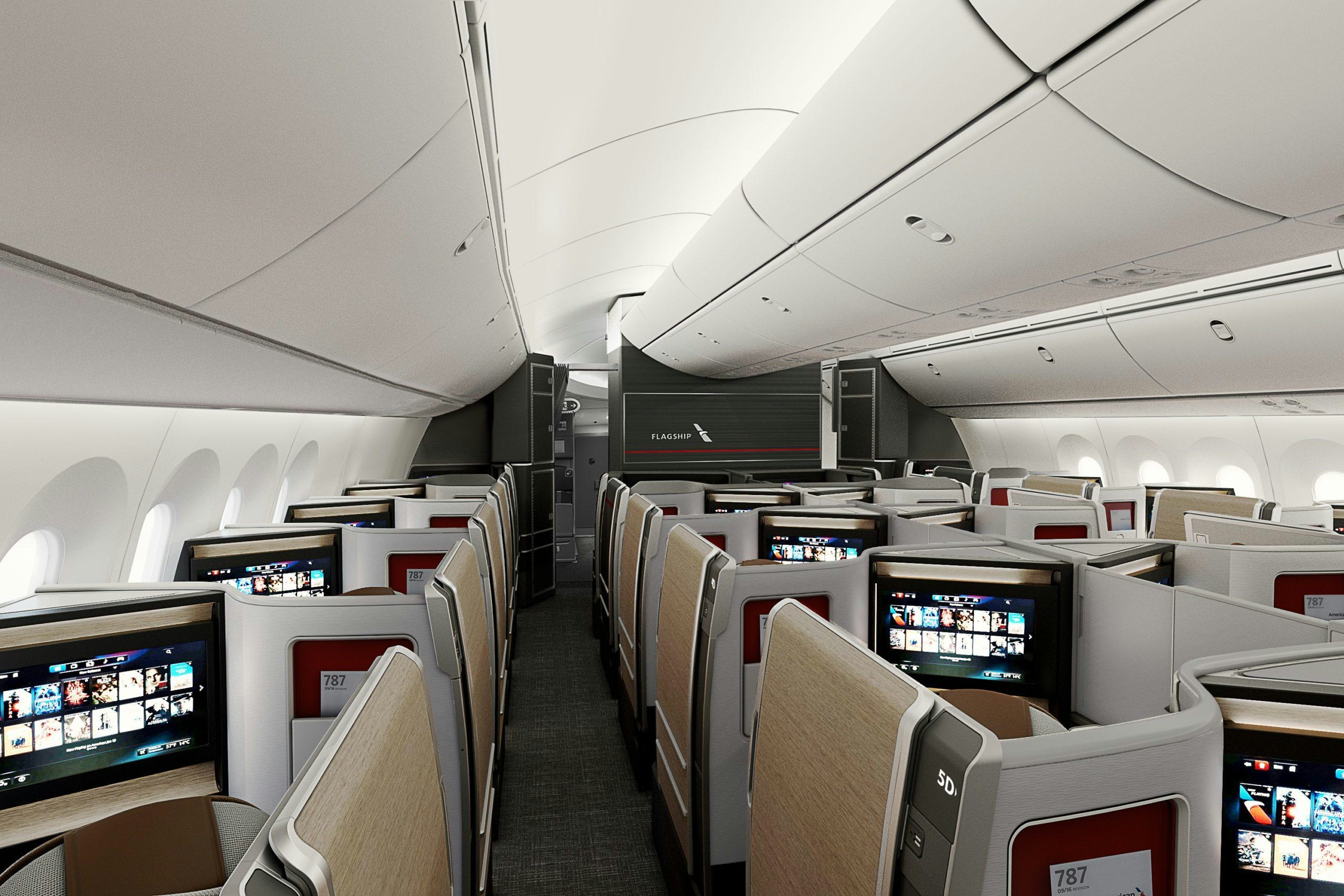
American Airlines Expands Long-Haul Routes with Widebody Aircraft Amid Intensifying Competition
American Airlines is set to join a growing cohort of major North American carriers—including Delta Air Lines, United Airlines, Air Canada, and WestJet—in expanding their long-haul flight offerings through the deployment of widebody aircraft. This strategic initiative, scheduled to accelerate in 2026, represents a significant development in the aviation industry as airlines seek to enhance the international travel experience and broaden their global networks.
Strategic Fleet Expansion and Market Competition
The renewed emphasis on long-haul routes is driven by the desire to offer passengers access to a wider range of destinations coupled with improved comfort. Widebody aircraft, characterized by their twin-aisle design and spacious cabins, are central to this strategy. These jets provide increased passenger capacity and elevated onboard amenities, enabling airlines to serve high-demand international markets more efficiently.
American Airlines’ expansion occurs within a highly competitive environment. United Airlines, for instance, has acknowledged challenges in the Chicago market, where it faces strong competition from American. In response, United plans to introduce 20 new Boeing 787 aircraft in 2026, signaling a substantial enhancement of its international operations. Concurrently, Delta Air Lines is aggressively targeting premium long-haul travelers, having placed orders for up to 60 Boeing 787-10s alongside 31 Airbus A330 and A350 widebody jets. These significant fleet investments highlight the intensifying rivalry among North America’s largest carriers as they compete for a larger share of the lucrative long-haul market.
Broader Industry Trends and Market Dynamics
The push to expand widebody fleets is not confined to American, Delta, and United. Canadian carriers Air Canada and WestJet are also increasing their widebody capacity, reflecting a continent-wide trend of fleet modernization and network growth. This expansion is particularly pronounced on transatlantic routes, where airlines are optimizing capacity to serve both major and secondary European destinations, as well as popular leisure markets across the North Atlantic.
In addition to widebody aircraft, airlines are supplementing their long-haul networks with long-range narrow-body jets such as the Boeing 737 MAX and Airbus A321XLR. While these aircraft do not match the capacity or onboard amenities of widebodies, their extended range allows carriers to open new markets and increase flight frequency on existing routes.
These developments are influenced by government approvals and shifting market dynamics, as airlines adapt their strategies to meet rising demand for international travel. For frequent flyers, this translates into a broader selection of destinations, enhanced onboard experiences, and more competitive options for travel to Europe, Asia, Latin America, and beyond.
As 2026 approaches, the aviation sector is poised for a transformative period. The combination of expanded long-haul routes, advanced widebody aircraft, and fierce competition among leading airlines is set to reshape the international travel landscape for millions of passengers worldwide.

Etihad Airways Suspends Airbus A380 Flights on Key Route

Aditya Birla Group Seeks Approval for Aircraft Leasing in GIFT City

Qatar Airways Highlights Innovation and Connectivity at Arabian Travel Market 2026

Hong Kong's Five-Year Plan Includes Andrew Fan's Aircraft Parts Processing Hub Proposal

ACIA Aero Leasing Delivers ATR72-600 to Air Nostrum

RTX Appoints Jill Albertelli as Head of Pratt & Whitney

TAT Technologies Joins Beyond Aero Hydrogen Aircraft Program

AURAK Study Highlights Barriers to Air Taxi Adoption in Emerging Economies

Xiamen Air Selects Altitude for 787 Maintenance at Heathrow

Etihad and Swissport Extend Global Partnership
