
Orchestrate AI insights into action

Trending
Categories
American Flight Returns to Las Vegas After Engine Malfunction Causes Loud Noise and Smoke
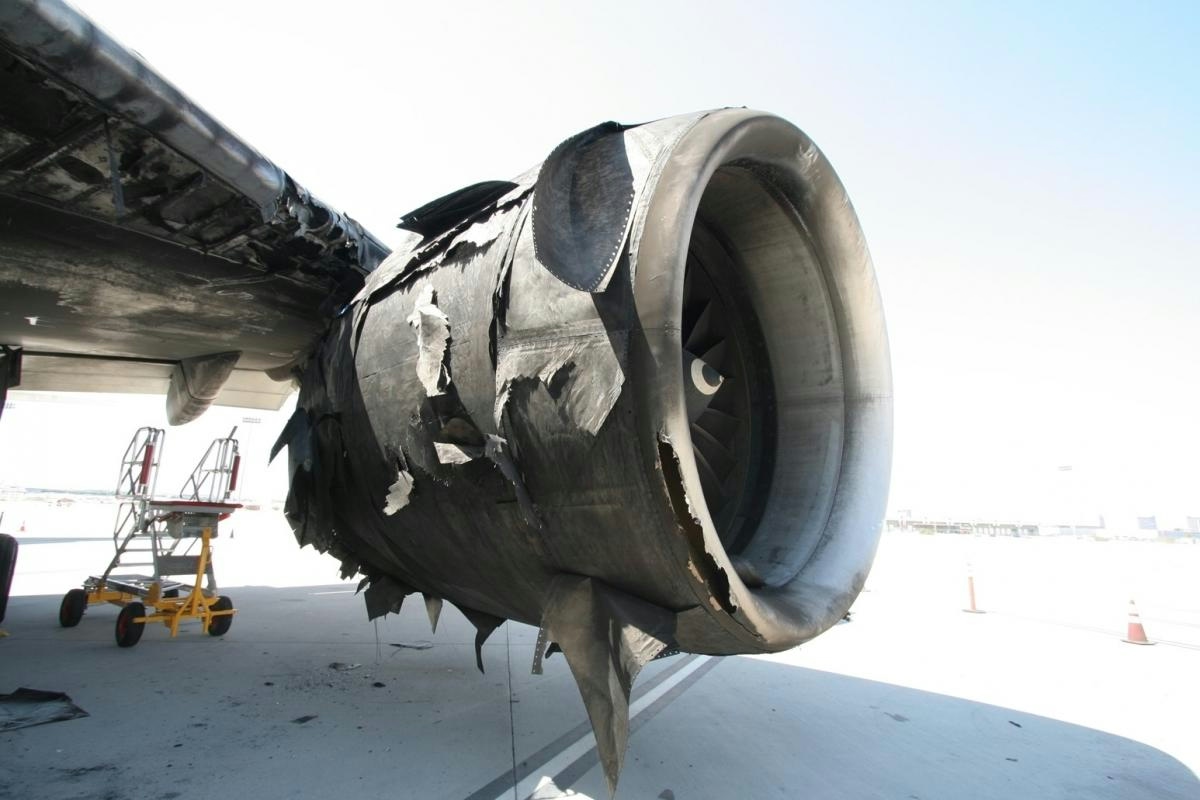
American Airlines Flight Returns to Las Vegas Following Engine Malfunction
An American Airlines flight was compelled to return to Las Vegas on Wednesday morning after an engine malfunction shortly after takeoff generated loud noises and smoke. Flight 1665, operated by an Airbus A321 and en route to Charlotte, North Carolina, reported the engine issue soon after departing Harry Reid International Airport, according to the Federal Aviation Administration (FAA).
The aircraft safely landed back in Las Vegas at approximately 8:20 a.m. All 165 passengers and crew members aboard were confirmed unharmed. The plane taxied to the gate under its own power, where fire department personnel promptly inspected the affected engine.
Eyewitnesses described hearing a loud booming sound accompanied by visible smoke emanating from one of the engines. Several local residents alerted news outlets, and videos shared on social media appeared to capture flashes from the engine during the incident.
Investigation and Industry Context
The FAA has indicated that the details available are preliminary and that a comprehensive investigation is underway to determine the cause of the malfunction. American Airlines has yet to issue an official statement regarding the event.
This incident occurs amid ongoing challenges for American Airlines concerning passenger safety and regulatory oversight. The airline faces the task of addressing passenger concerns while cooperating fully with the FAA’s inquiry, which may influence its operational policies. Although the aircraft involved was an Airbus model, the event draws attention within the broader context of recent engine-related issues affecting commercial aviation, particularly those involving Boeing aircraft. Such developments have the potential to affect public perception and investor confidence in American Airlines.
Market analysts observe that incidents of this nature often lead to heightened scrutiny from investors and competitors. Rival carriers may seek to leverage American Airlines’ operational difficulties, while the airline endeavors to reassure travelers and uphold its safety reputation.
The FAA’s ongoing investigation will establish the root cause of the engine malfunction and determine if further regulatory action is necessary. Meanwhile, American Airlines continues to monitor the situation closely and provide support to those affected.

Etihad Airways Suspends Airbus A380 Flights on Key Route

Aditya Birla Group Seeks Approval for Aircraft Leasing in GIFT City

Qatar Airways Highlights Innovation and Connectivity at Arabian Travel Market 2026

Hong Kong's Five-Year Plan Includes Andrew Fan's Aircraft Parts Processing Hub Proposal

ACIA Aero Leasing Delivers ATR72-600 to Air Nostrum

RTX Appoints Jill Albertelli as Head of Pratt & Whitney

TAT Technologies Joins Beyond Aero Hydrogen Aircraft Program

AURAK Study Highlights Barriers to Air Taxi Adoption in Emerging Economies

Xiamen Air Selects Altitude for 787 Maintenance at Heathrow

Etihad and Swissport Extend Global Partnership
