
Orchestrate AI insights into action

Trending
Categories
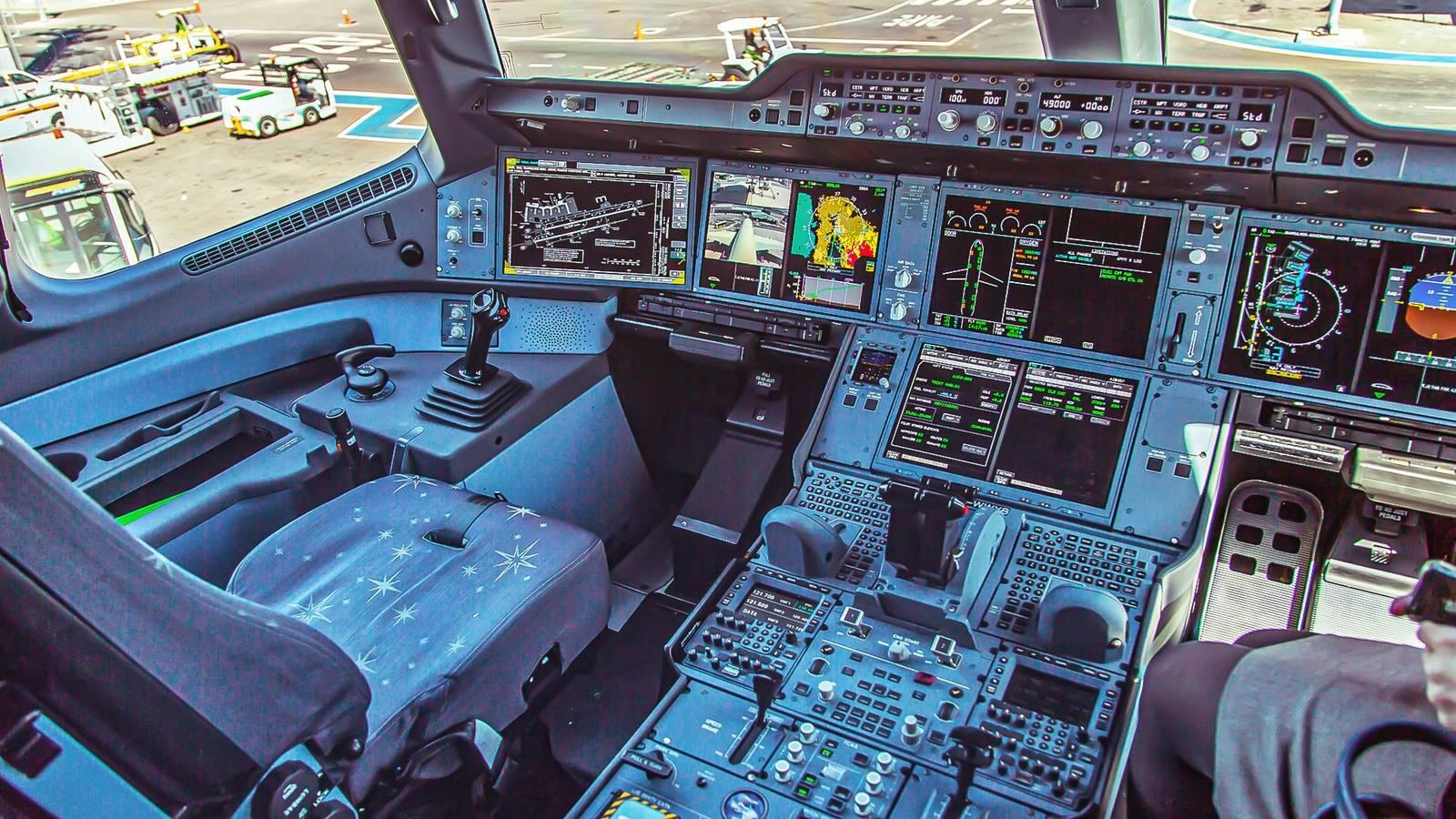
Aviation Industry Divided Over Jet Servicing Profits
Aviation Industry Divided Over Jet Servicing Profits
Industry Tensions Surface at Farnborough Airshow
The aviation sector is currently embroiled in a significant dispute over the allocation of billions in future jet servicing revenues. Traditionally dominated by engine manufacturers, the lucrative aftermarket profits are now being contested by planemakers such as Airbus and Boeing, who are seeking a greater share. This debate has come to the forefront at the Farnborough Airshow, where industry leaders are confronting the challenges posed by a new generation of fuel-efficient aircraft and evolving market conditions.
With both Airbus and Boeing facing sold-out order books and ongoing supply chain difficulties, the focus has shifted to the aftermarket—the high-margin business involving engine repairs and servicing. The anticipated replacement of today’s best-selling narrowbody aircraft by 2040 has intensified longstanding tensions, as airframers aim to renegotiate their role in the profit distribution. Airbus Commercial CEO Lars Wagner described the moment as a “once-in-a-lifetime opportunity” to rebalance the business model and secure participation in the aftermarket revenues expected over the next three to four decades.
Divergent Business Models Fuel Dispute
At the heart of the conflict are the fundamentally different business models employed by planemakers and engine manufacturers. Airbus and Boeing typically receive payment upon delivery of new aircraft, whereas engine makers such as GE Aerospace and Pratt & Whitney often sell engines at or near cost, recovering profits through long-term maintenance and repair contracts. Planemakers argue that, as the primary gateway to market for engines—which have limited alternative uses—they merit a share of these ongoing revenues. This position is likely to extend to other aircraft components as well.
Nick Cunningham, Managing Partner at Agency Partners, explained that airframers leverage their position primarily during the launch of new programs, using this influence to claim a portion of supplier profits. Conversely, engine manufacturers emphasize the greater long-term risks they assume, particularly when offering fixed-cost-per-flight-hour agreements that resemble insurance contracts. Chris Calio, CEO of Pratt & Whitney’s parent company RTX, acknowledged the need to adjust the current model, expressing openness to exploring new approaches to smooth cash flows and investment, noting that preliminary discussions have already taken place.
Market Pressures and Infrastructure Challenges
This debate over servicing profits is unfolding against a backdrop of broader industry shifts. Infrastructure capacity constraints are becoming increasingly acute, with Signature Aviation CEO Tony Lefebvre highlighting the strain as demand surges. The private jet market, buoyed by new wealth generated from the artificial intelligence sector and the recent SpaceX IPO, is experiencing intensified competition for limited inventory, driving prices upward. The rise in business jet and turboprop deliveries in the second quarter of 2026 further underscores the sector’s robust demand.
These market dynamics are influencing strategic decisions across the aviation industry. Boeing, for instance, is maintaining an open stance on open-fan engine technology as it seeks to rebuild production of the 737, reflecting both competitive pressures and the evolving technological landscape.
Outlook for the Narrowbody Market
Currently, the narrowbody aircraft market is dominated by the GE Aerospace-Safran joint venture CFM, which powers the Boeing 737, and Pratt & Whitney, which competes on the Airbus A320neo. As engine manufacturers push for greater returns and planemakers strive for a larger share of aftermarket profits, the industry faces a rare opportunity to redefine its profit-sharing framework. The outcome of this dispute could shape the financial and operational landscape of aviation for the next generation.

Etihad Deploys Widebody Fleet to Meet Strong Demand

Korean Air Finalizes $36.2 Billion Deal with Boeing

Australia’s RFDS Queensland Section Orders Six King Air 260Cs

Korean Air Finalizes Order for 103 Boeing Jets and Engines

Embraer E195-E2 Features Distinctive Engine Placement Among Regional Jets

What Passengers Can Expect on Boeing’s New 777X Jet

How Ethiopian Airlines Became Africa’s Leading Carrier Amid Gulf Competition

Joby Aviation Extends Autonomous Flight Capabilities with Cross-Country Tour

Strengthening Europe's Aviation Supply Chain Amid Uncertainty
The Evolution of the Aircraft Maintenance Engineer Role
