
Orchestrate AI insights into action

Trending
Categories
Aviation Institute of Maintenance Holds Third Industry Advisory Board Meeting
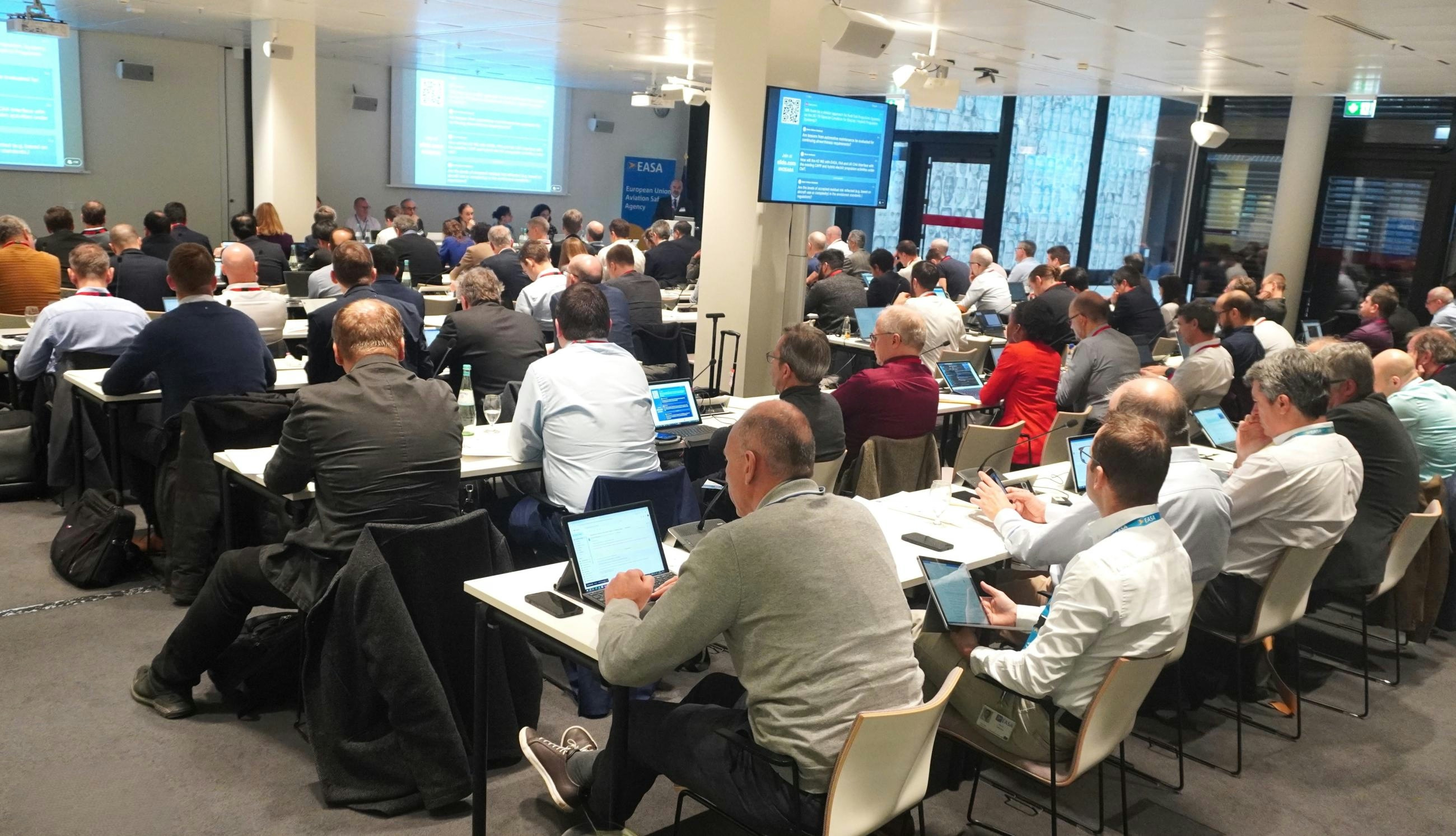
Aviation Institute of Maintenance Holds Third Industry Advisory Board Meeting
The Aviation Institute of Maintenance (AIM) recently convened its third Industry Advisory Board meeting, underscoring its dedication to aligning the Aviation Maintenance Technician (AMT) curriculum with the dynamic demands of the aviation sector. The gathering brought together senior leaders from prominent airlines and industry organizations to address critical workforce challenges and to ensure that AIM graduates are well-prepared to meet the practical requirements of the field.
Addressing Workforce Shortages and Industry Needs
AIM’s advisory board plays a pivotal role in shaping the institution’s training programs amid a growing shortage of qualified maintenance professionals. With a significant portion of experienced AMTs approaching retirement and insufficient numbers of new technicians entering the workforce, the gap in skilled labor is expected to widen substantially. This shortage is not confined to the United States; globally, regions such as Africa are projected to require over 21,000 Maintenance, Repair, and Overhaul (MRO) technicians by 2044, highlighting the urgent need for effective training pipelines.
The board comprises executives from leading organizations including United Airlines, Southwest Airlines, American Airlines, Delta Airlines, Airlines for America, Piedmont Airlines, and AIM itself. These members regularly review hiring outcomes and interview feedback to ensure that students acquire not only the necessary technical skills but also a thorough understanding of industry expectations and workplace culture, which are essential for sustained success in the aviation maintenance field.
Industry Collaboration and Future Workforce Development
Jason Pfaff, CEO of AIM, emphasized the importance of the advisory board in bridging education and industry. He stated, “Aviation is vital to our nation’s economy and connectivity, and AIM is proud to play a role in shaping its future. The advisory board reflects our commitment to uniting education and industry to build a workforce pipeline that meets today’s demands and anticipates tomorrow’s opportunities.”
William Brown, AIM’s Chief Aviation Officer, highlighted the board’s mission to enhance student outcomes through close collaboration with industry partners. He noted, “By working closely with our industry partners, we’re aligning training with real-world needs, advancing best practices across our hangars nationwide, and helping ensure the aviation workforce remains strong, skilled, and ready for the future.”
As the aviation consulting services market expands and the industry confronts increasingly complex challenges related to growth and sustainability, institutions like AIM are adapting by enhancing their training programs and strengthening partnerships. These efforts aim to attract and retain students, a strategy likely to be adopted by other organizations facing similar workforce shortages.
A video recording of the 2025 Advisory Board meeting is available for those seeking further insight into the discussions and initiatives undertaken by AIM and its industry collaborators.

Etihad Airways Suspends Airbus A380 Flights on Key Route

Aditya Birla Group Seeks Approval for Aircraft Leasing in GIFT City

Qatar Airways Highlights Innovation and Connectivity at Arabian Travel Market 2026

Hong Kong's Five-Year Plan Includes Andrew Fan's Aircraft Parts Processing Hub Proposal

ACIA Aero Leasing Delivers ATR72-600 to Air Nostrum

RTX Appoints Jill Albertelli as Head of Pratt & Whitney

TAT Technologies Joins Beyond Aero Hydrogen Aircraft Program

AURAK Study Highlights Barriers to Air Taxi Adoption in Emerging Economies

Xiamen Air Selects Altitude for 787 Maintenance at Heathrow

Etihad and Swissport Extend Global Partnership
