Image

Unlock $500M in Quoting Opportunity with Automation!

Join us for a 30‑minute live demo of Email AI

Trending

Categories

Berlin and Dubai Collaborate on Private Bathrooms for First-Class Airline Passengers
April 24, 2026By ePlane AI
Berlin and Dubai Collaborate on Private Bathrooms for First-Class Airline Passengers
0
0
Emirates
First-Class Cabin
Luxury Air Travel

Berlin and Dubai Collaborate on Private Bathrooms for First-Class Airline Passengers

The aviation industry stands on the threshold of a significant transformation in luxury air travel as Emirates explores the possibility of introducing fully private en-suite bathrooms for every first-class passenger. This ambitious initiative, discussed at the recent CAPA Airline Leader Summit in Berlin, could redefine the standards of comfort, exclusivity, and premium service in commercial aviation.

A New Standard in First-Class Luxury

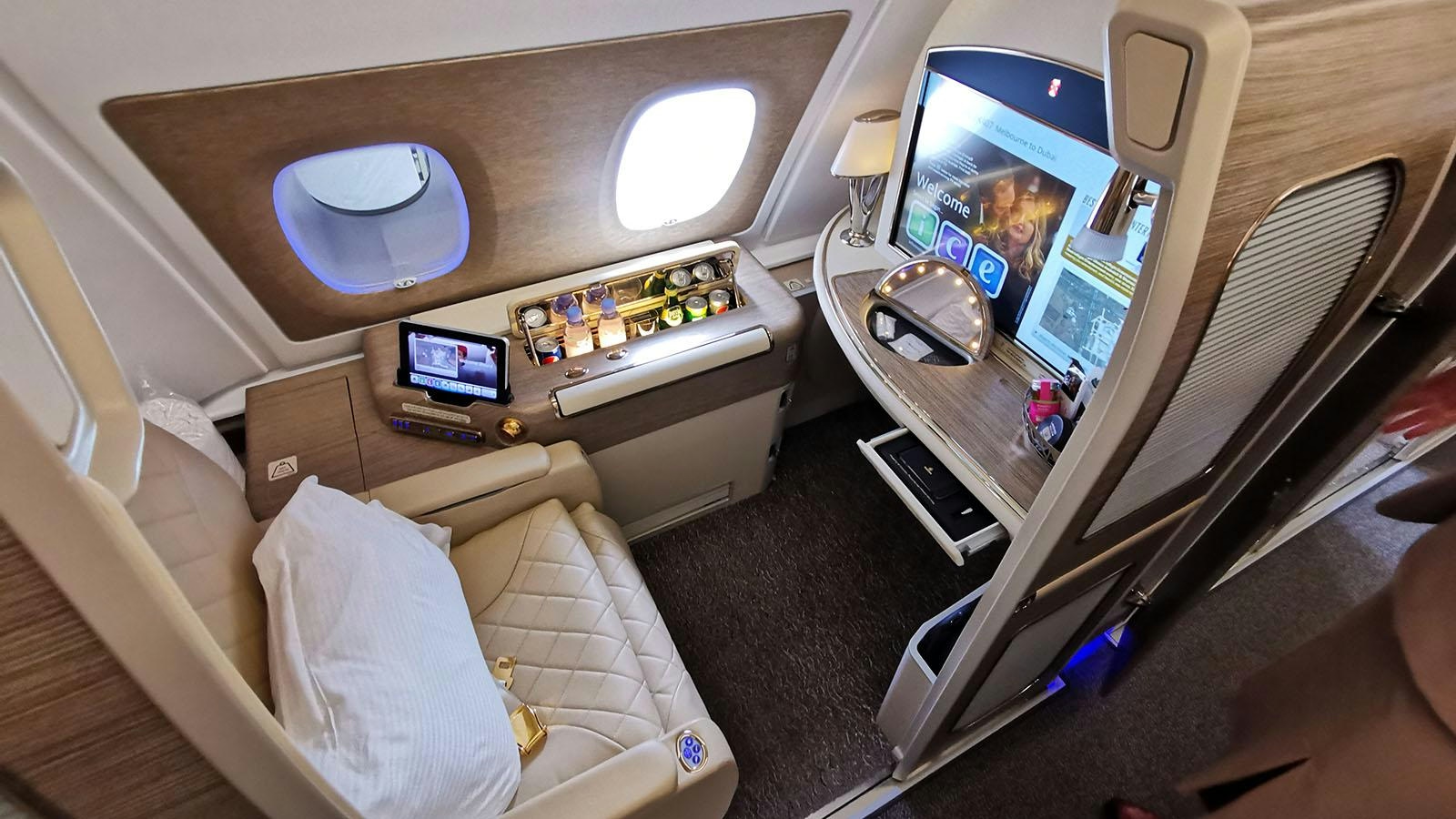
Emirates, widely recognized for its pioneering approach to premium air travel, is considering a comprehensive redesign of its first-class cabins. Tim Clark, President of Emirates, disclosed that the airline is actively assessing the feasibility of incorporating individual bathrooms within each first-class suite. Such a development would establish a new benchmark in the industry, elevating the concept of personal space and privacy to levels typically associated with private jets.

Currently, even the most luxurious first-class cabins rely on shared restroom facilities. Emirates’ flagship Airbus A380 offers private suites, onboard shower spas, and exclusive lounges, yet these amenities remain communal. The introduction of en-suite bathrooms would transform first-class suites into fully self-contained personal environments, significantly enhancing the passenger experience.

Challenges and Industry Implications

The implementation of private bathrooms for every first-class passenger presents considerable challenges. It would necessitate substantial financial investment, potentially reduce overall seat capacity, and require extensive development and certification processes. Despite these obstacles, the initiative aligns with a broader industry trend toward enhancing first-class offerings to bolster brand prestige and attract affluent travelers.

This shift also reflects evolving dynamics in first-class pricing strategies. Airlines are increasingly focused on maximizing profitability from premium seats rather than using them solely as loss leaders for brand positioning. This indicates a market willing to pay a premium for unprecedented levels of comfort and privacy, rendering such innovations commercially viable.

Emirates’ Legacy of Innovation

Since its inception in 1985, Emirates has consistently pushed the boundaries of onboard luxury. Its A380 first-class cabins feature private suites with sliding doors, access to onboard shower spas, exclusive lounges and bars, as well as high-end dining and personalized service. The Boeing 777 fleet complements this with fully enclosed floor-to-ceiling suites, virtual windows for middle seats, and advanced entertainment systems, underscoring the airline’s commitment to privacy and technological sophistication.

Despite these advancements, no commercial airline currently offers a private bathroom for every first-class passenger. The closest comparison is Etihad Airways’ ultra-premium “The Residence” on select A380 aircraft, which includes a private living room, bedroom, and bathroom, but is limited to a single suite per plane.

Competitive Response

Emirates’ bold vision is expected to prompt reactions from rival carriers, who may seek to match these luxury features or develop alternative enhancements to maintain their competitive position in the lucrative first-class market. As airlines continue to push the boundaries of premium travel, Emirates’ pursuit of private en-suite bathrooms could mark a pivotal moment, ushering in a new era of privacy and comfort previously unimaginable in commercial aviation.

More news
Fuel Consumption of the Airbus A350-1000 During Takeoff

Fuel Consumption of the Airbus A350-1000 During Takeoff

Fuel Consumption of the Airbus A350-1000 During Takeoff The Airbus A350-1000, the largest aircraft currently produced by Airbus, is distinguished by its impressive size and advanced efficiency. Equipped with two Rolls-Royce XWB-97 turbofan engines, each generating 97,000 pounds of thrust, this twin-engine jet can lift over 300 tons into the air. However, this remarkable capability comes with a significant fuel consumption cost during takeoff, a concern that has gained heightened importance amid the ongoing global fuel crisis of 2026. Takeoff Fuel Burn and Economic Impact During takeoff and the initial climb phase, the A350-1000 consumes between 2.5 and 3 tons of jet fuel within the first few minutes, an amount comparable to approximately ten minutes of cruising flight. This equates to a fuel burn rate exceeding 1,000 kilograms per minute. Under typical market conditions, the cost of this fuel consumption ranges from $500 to $1,000 per minute. However, with jet fuel prices having doubled over the past eight weeks due to the crisis, these costs have surged beyond $2,000 per minute, exerting considerable pressure on airline operating budgets. Despite the substantial fuel burn required to achieve takeoff, the A350-1000 is engineered for optimal efficiency at cruising altitudes. Once stabilized in cruise, its fuel consumption decreases dramatically to around 100 kilograms per minute, roughly one-tenth of the takeoff rate. This efficiency is largely attributable to the aircraft’s advanced carbon-fiber composite structure and the latest generation Rolls-Royce Trent XWB engines, which collectively render the A350-1000 approximately 25% more fuel-efficient than earlier widebody aircraft. Strategic Advantages Amid the Fuel Crisis The current fuel crisis has compelled airlines to reassess their fleets and operational strategies. Carriers such as KLM are incorporating the A350-1000 into their fleet renewal programs, aiming to phase out older, less efficient models like the Boeing 777-200ER. The A350-1000’s reduced fuel consumption—estimated to be 25% lower than that of its competitors—provides a critical advantage as airlines grapple with soaring fuel costs and potential supply constraints. To mitigate these rising expenses, many airlines have been forced to increase ticket prices by at least 20%, a challenging adjustment given the unique logistical and policy limitations imposed by the 2026 crisis. The A350-1000’s capacity to deliver high thrust during takeoff, even from demanding “hot and high” airports, is balanced by its exceptional long-range fuel efficiency. This balance enables airlines to maintain operational flexibility while optimizing fuel consumption on ultra-long-haul routes. In a competitive market that includes the Boeing 777 and 787 Dreamliner, the A350-1000’s combination of payload capacity and fuel economy positions it as a preferred choice for airlines navigating the complexities of today’s volatile fuel environment. While the A350-1000’s fuel consumption during takeoff remains substantial, its overall efficiency and cutting-edge technology make it an indispensable asset for airlines striving to control costs and sustain service amid unprecedented fuel price volatility.
Japan Explores Air Taxi Operations From Highway Rest Stops

Japan Explores Air Taxi Operations From Highway Rest Stops

Japan Explores Highway Rest Stops as Vertiports for Air Taxi Operations Japan is advancing a pioneering initiative to incorporate electric vertical takeoff and landing (eVTOL) aircraft into its transportation network by utilizing expressway rest stops and parking areas as vertiports. This innovative approach, led by SkyDrive—a prominent Japanese eVTOL manufacturer—in collaboration with West Nippon Expressway Company (Nexco West), aims to establish a network of vertiports spaced approximately every 10 to 15 miles along major highways. By leveraging the vertical takeoff and landing capabilities of eVTOLs, the project seeks to extend air mobility beyond conventional airports and heliports, integrating it into everyday travel infrastructure. SkyDrive’s Vision and Operational Plans At the heart of this initiative is SkyDrive’s two-passenger SD-05 air taxi, designed specifically for compact vertiport operations. The company initially plans to deploy these air taxis for aerial sightseeing, with longer-term ambitions to facilitate commuter transport and enhance emergency response capabilities. SkyDrive’s CEO, Tomohiro Fukuzawa, emphasized that incorporating air mobility services alongside existing amenities at highway rest stops would transform these locations into gateways to the skies, potentially boosting tourism and providing critical support during disaster recovery efforts. The ability to conduct rapid aerial assessments of accidents and natural disasters is seen as a significant advantage in improving regional emergency response. Challenges and Market Context Despite the promising outlook, Japan’s advanced air mobility (AAM) ambitions face considerable challenges. Regulatory frameworks, technological integration, and market readiness remain key hurdles to the widespread adoption of air taxi services. Industry observers maintain a cautiously optimistic stance, anticipating that commercial AAM operations in Japan could commence as early as 2027 or 2028. Meanwhile, the global competitive landscape is intensifying. In the United States, leading eVTOL manufacturers such as Joby Aviation and Archer Aviation are aggressively pursuing infrastructure development, often through partnerships with or acquisitions of airports and heliports. However, these companies are also embroiled in legal disputes concerning trade secrets and import practices. Notably, Joby Aviation is under investigation by the US International Trade Commission for potential import violations, a situation that may influence its strategic positioning in the market. Design Considerations and Infrastructure Implications SkyDrive’s SD-05 distinguishes itself from many American eVTOL designs through its compact multirotor configuration, featuring 12 rigid vertical lift propellers arranged to minimize rotor-to-rotor width to approximately 37 feet. This dimension is comparable to the wingspans of US models from Archer, Joby, Beta Technologies, and Wisk Aero, which generally range between 40 and 50 feet. However, most American air taxis are designed to accommodate four to five passengers, making them less suitable for the smaller vertiports planned at Japanese expressway hubs. In the United States, the Federal Aviation Administration’s Engineering Brief 105A (EB 105A) provides guidelines for vertiport design, categorizing them as a subset of heliports intended for aircraft with three or more propulsors and a maximum takeoff weight of up to 12,500 pounds. Many American highway rest stops already feature electric vehicle charging stations and are increasingly utilized for drone delivery operations, positioning them as potential candidates for future vertiport development. As Japan progresses with integrating air taxis into its highway infrastructure, the initiative could significantly reshape regional mobility and emergency response frameworks. The success of this endeavor will depend on navigating complex regulatory environments, advancing technological capabilities, and fostering market acceptance within a rapidly evolving global AAM landscape.
NTSB Issues Final Report on Fatal CL604 Crash

NTSB Issues Final Report on Fatal CL604 Crash

NTSB Releases Final Report on Fatal Bombardier Challenger 604 Crash The National Transportation Safety Board (NTSB) has published its conclusive report on the 2024 crash of a Bombardier Challenger 604 on a Florida freeway, identifying extensive engine corrosion as the primary cause. The tragic accident resulted in the deaths of the pilot and copilot, who succumbed to a post-crash fire. Meanwhile, the cabin attendant and two passengers escaped with minor injuries by exiting through the baggage compartment door. Additionally, a motorist on the interstate sustained slight injuries when the aircraft descended during rush hour traffic. Engine Corrosion and Mechanical Failures The 21-page NTSB report details significant corrosion found in the variable geometry (VG) systems of both General Electric CF34-3B engines. This system, responsible for regulating airflow through the high-pressure compressor (HPC) by adjusting the inlet guide vanes and the first five stages of stator vanes, was severely compromised. The corrosion obstructed airflow, leading to compressor stalls and a subsequent loss of engine power. Investigators recovered the engines and transported them to GE facilities for thorough disassembly and examination under federal supervision. The inspection revealed pronounced corrosion in the VG stage 5 area and the HPC case VG stage 5 stator vane spindle bores. This deterioration restricted the movement of the VG stage 5 stator vanes, slowed system responsiveness, and prevented the vanes from achieving their full operational range as outlined in maintenance manuals. Chemical analyses of the corrosion and debris identified corroded steel and elements typically associated with seawater exposure. Further findings indicated corrosion along the compressor case inner diameter and within the HPC vane bores of both engines. The compressor cases, constructed from stainless steel, exhibited signs of degradation consistent with prolonged exposure to corrosive environments. At the time of the accident, the aircraft was operated by Ace Aviation Services, trading as Hop-A-Jet, and was based at Fort Lauderdale Executive Airport (KFXE), located approximately four nautical miles from the Atlantic Ocean. Notably, the aircraft had previously been stationed in Barbados since its delivery in 2004. Additional Factors and Industry Implications Beyond mechanical issues, the NTSB report identified pilot judgment error concerning hail damage as a contributing factor. The investigation referenced a prior incident on January 14, 2024, when the jet experienced a “hung start,” an abnormal engine start characterized by failure to accelerate to idle speed. Maintenance personnel conducted fuel contamination tests following this event but found no evidence of contamination. The NTSB’s findings are anticipated to prompt heightened scrutiny of engine maintenance and inspection protocols throughout the aviation industry. The report underscores potential safety risks associated with business jets, particularly regarding corrosion in critical engine components. In response, industry competitors may intensify safety measures and highlight aircraft reliability in forthcoming marketing efforts. This crash serves as a stark reminder of the vital importance of rigorous engine inspection and maintenance, especially for aircraft operating in coastal regions where exposure to corrosive elements is elevated.
NASA Marks 10 Years of University Collaboration in Aeronautics

NASA Marks 10 Years of University Collaboration in Aeronautics

NASA Marks a Decade of University Collaboration in Aeronautics For the past ten years, NASA’s University Leadership Initiative (ULI) has been instrumental in driving innovation within the field of aeronautics while nurturing the next generation of aviation professionals. As the program celebrates its 10th anniversary, it continues to advance groundbreaking research, awarding new projects that hold the potential to redefine air travel in the 21st century. Advancing Aeronautical Innovation Through Academic Partnership Since its launch, ULI has supported over 1,100 students from more than 100 universities, empowering them to address critical challenges facing U.S. aviation. The initiative focuses on key areas such as high-speed flight, advanced air mobility, future airspace management and safety, and electrified propulsion systems. Many participants have leveraged their experience within ULI to establish careers in aviation, while their research—ranging from efficient wing designs to shape-shifting supersonic aircraft—has garnered significant industry attention and, in some cases, direct adoption. What distinguishes ULI from other NASA research programs is its collaborative framework. Rather than NASA dictating the research agenda, the initiative invites universities to propose projects aligned with NASA’s strategic goals. This approach fosters creativity and grants students and faculty a direct role in shaping the future of aeronautics. John Cavolowsky, director of NASA’s Transformative Aeronautics Concepts Program, emphasized the value of this model, stating, “There are no better ways in my mind to help develop that talent within the students than to engage them in identifying big problems and then give them the resources they need to use their creativity to solve them.” Building on a Legacy of Academic Collaboration NASA’s partnership with academia is deeply rooted, tracing back to its origins as the National Advisory Committee for Aeronautics in 1958. Cavolowsky highlighted this longstanding relationship, noting, “For more than a century we have leaned on the brilliance and the capabilities of universities to help us think. With ULI, we can ensure they continue to bring their fresh ideas and young energy to the work we do at NASA Aeronautics.” ULI evolved from the earlier Leading Edge Aeronautics Research for NASA (LEARN) project, which in 2015 selected teams to explore unconventional concepts, such as whether airliners could reduce fuel consumption by flying in a ‘V’ formation inspired by migrating birds. While not all ideas reached implementation, the initiative underscored the value of academic ingenuity in pushing the boundaries of aeronautical research. Looking ahead, NASA plans to build on ULI’s success with new awards scheduled for 2026 and beyond. The program faces challenges in maintaining momentum and securing sustained funding as it moves beyond its initial phase. Nevertheless, growing interest from universities and students suggests the potential for expanded partnerships and further innovations. Concurrently, other aerospace organizations and academic institutions may develop competing initiatives to capture a share of the next wave of aeronautical breakthroughs. As NASA continues to invest in university collaboration, ULI stands as a testament to the enduring power of academic partnerships in shaping the future of flight.
Alibaba Introduces Voice-Activated AI for Booking Flights and Ordering Food

Alibaba Introduces Voice-Activated AI for Booking Flights and Ordering Food

Alibaba Launches Voice-Activated AI for Flight Booking and Food Ordering Alibaba Group Holding Limited (NYSE: BABA) has unveiled a new voice-activated artificial intelligence system designed to streamline everyday tasks such as booking flights and ordering food through natural language commands. Central to this initiative is Alibaba’s proprietary Qwen AI model, which the company is deploying across multiple industries to expand its service offerings and tap into emerging growth opportunities. Integration of Qwen AI Across Sectors The Qwen AI technology is being embedded in vehicles produced by leading automakers including BYD, Geely, and SAIC Volkswagen. This integration allows drivers and passengers to perform a variety of functions using voice commands, such as ordering meals, reserving hotel rooms, and navigating routes. These features are intended to provide automakers with a competitive edge amid a decelerating electric vehicle market. In addition to automotive applications, Alibaba is extending Qwen’s capabilities to consumer services. For instance, customers can now book flights with China Eastern Airlines simply by speaking to the AI, which manages ticketing, seat selection, and check-in processes. This innovation represents a departure from conventional app-based interfaces, offering a more seamless and intuitive user experience that could transform consumer interactions with digital platforms. Market Context and Industry Response Alibaba’s introduction of voice-activated AI services arrives as global competitors intensify their efforts in this space. Amazon, through its Alexa Plus platform, is developing comparable AI-driven travel planning and booking functionalities, heightening competition in the voice services market. The increasing adoption of voice-activated technologies is expected to drive consumer engagement while compelling rivals to enhance their AI capabilities. Nevertheless, some companies remain cautious about embracing automation. For example, the fast-food chain In-N-Out continues to reject automated ordering systems, reflecting an ongoing debate between the convenience offered by AI and the value of traditional customer service. This divergence highlights the complex decisions businesses face amid accelerating digital transformation. Executive Insights and Strategic Vision Jia Wu, president of the Qwen AI division, emphasized the significance of the China Eastern Airlines partnership as Alibaba’s first collaboration that opens its agentic AI to an external partner. Wu noted that traditional menu-driven interfaces limit users’ ability to express their true intentions, whereas voice-activated AI can unlock new forms of demand. Alibaba envisions evolving Qwen into a unified platform that integrates services and transactions, thereby reshaping consumer engagement. Stock Performance and Analyst Perspectives Alibaba’s shares currently trade near the midpoint of their 52-week range, reflecting prevailing market uncertainties. The stock is positioned 3.6% above its 20-day simple moving average but remains 9.6% below the 100-day average, indicating a short-term recovery within a broader challenging trend. Technical analysis points to improving momentum, though resistance is noted near $139.00, with support levels around $118.00. Looking forward, Alibaba’s upcoming earnings report, scheduled for May 14, 2026, is anticipated to be a key market catalyst. Analysts forecast earnings per share of $1.12, down from $1.73 year-over-year, alongside revenue growth to $35.23 billion from $32.58 billion. The stock maintains a Buy rating with an average price target of $191.70, although recent adjustments, such as Barclays’ reduction of its target to $186.00, suggest measured optimism. As Alibaba advances its AI-driven service platform, the company navigates a dynamic digital environment marked by shifting consumer preferences and intensifying competition.
Embraer Signs E-Jets Inventory Support Agreement with Jazz at MRO Americas

Embraer Signs E-Jets Inventory Support Agreement with Jazz at MRO Americas

Embraer and Jazz Aviation Forge E-Jets Inventory Support Partnership at MRO Americas Embraer has formalized a spare parts inventory support agreement with Jazz Aviation, marking a pivotal advancement in the Brazilian manufacturer’s expansion of aftermarket services across North America. Announced at the MRO Americas 2026 conference in Orlando, the agreement encompasses Jazz’s fleet of 25 Embraer E-175 aircraft and designates Jazz as the inaugural Canadian participant in Embraer’s Collaborative Inventory Planning (ECIP) programme. Enhancing Operational Efficiency through Collaborative Inventory Planning As Canada’s largest regional airline and the principal operator of Air Canada Express, Jazz Aviation will utilize the ECIP programme’s data-driven methodology to optimize inventory management and ensure the availability of critical materials. Under the terms of the agreement, Embraer will assume the majority of the investment in spare parts and oversee materials logistics. This arrangement is designed to minimize aircraft downtime and improve operational efficiency across Jazz’s E-Jets fleet. Carlos Naufel, president and CEO of Embraer Services & Support, underscored the strategic importance of the partnership, stating, “The new contract shows the fast pace at which Embraer Services & Support is growing in North America, home of the world’s largest E-Jets footprint. We look forward to supporting Jazz, our first customer in Canada, and helping them reduce downtime and strengthen their performance.” Doug Clarke, president of Jazz Aviation, highlighted the operational advantages of the collaboration, noting, “This agreement with Embraer represents another important step in strengthening the reliability and efficiency of our E-Jets operations across North America. By participating in the ECIP programme, we’re leveraging Embraer’s global materials expertise to reduce downtime and support consistent, high-quality service for our Air Canada Express passengers.” The ECIP Programme and Market Implications The ECIP programme offers customers fixed annual pricing for each spare part, predefined lead times, and guaranteed performance metrics. It also delivers weekly ordering recommendations based on real-time usage and inventory data, supported by Embraer’s extensive global logistics network and planning capabilities. While this agreement is anticipated to bolster confidence in Embraer’s supply chain proficiency and potentially attract additional aftermarket partnerships, it also presents competitive challenges. Embraer must maintain pricing competitiveness against other spare parts suppliers and ensure prompt delivery to meet Jazz’s operational requirements. Industry analysts suggest that competitors may respond by pursuing similar agreements with other carriers or enhancing their own support services to preserve market share. This partnership highlights the increasing significance of comprehensive supply chain solutions within the regional aviation sector, as airlines strive to maximize fleet reliability and reduce operational disruptions.
NAVSUP WSS Hosts Marine Aviation Supply Roundtable at NSA Philadelphia

NAVSUP WSS Hosts Marine Aviation Supply Roundtable at NSA Philadelphia

NAVSUP WSS Hosts Marine Aviation Supply Roundtable at NSA Philadelphia The Naval Supply Systems Command Weapon Systems Support (NAVSUP WSS) convened a Marine Aviation Supply Officer Roundtable this week at Naval Support Activity Philadelphia. The event brought together Marine Corps aviation logisticians and supply chain experts to collaborate on strategies aimed at enhancing fleet readiness. Aviation Supply Officers from Marine Aviation Logistics Squadrons joined NAVSUP WSS leadership and subject-matter experts in a forum designed to foster strategic alignment and operational efficiency. Aligning Supply Chain Efforts with Operational Needs The roundtable’s primary goal was to synchronize the Department of the Navy and Marine Corps aviation supply communities, ensuring that shore-based supply infrastructure effectively supports the tactical and expeditionary demands of Marine aviation. Over the course of the week, participants engaged in comprehensive discussions addressing critical challenges such as parts shortages, repair turnaround times, and overall readiness optimization for Marine-specific aircraft. Presentations from key logistics partners showcased ongoing initiatives and best practices, highlighting efforts to streamline supply chain processes across the enterprise. A central theme of the discussions was the Marine Corps’ commitment to modernizing its aviation supply chain through the integration of artificial intelligence (AI) technologies. These advancements, focused on inventory management and predictive maintenance, are intended to replace legacy systems, improve fleet readiness, and enhance operational safety. This shift toward AI-driven solutions mirrors broader trends in military logistics, where competitors and industry partners alike are pursuing similar technological upgrades to maintain strategic advantage. The increased focus on advanced supply chain management has also stimulated market interest in AI-enabled aviation supply and maintenance solutions, potentially driving growth in related sectors. Enhancing Warfighting Readiness Through Collaboration By facilitating direct dialogue between operational fleet representatives and supply chain integrators, the Marine Aviation Supply Officer Roundtable serves as a critical platform for implementing process improvements that bolster the warfighting readiness of the Marine Corps. NAVSUP WSS, as the Navy and Marine Corps’ supply chain manager and end-to-end integrator, plays an essential role in supporting naval aviation. It oversees the procurement, repair, and distribution of aviation components, ensuring that Marine Aviation Logistics Squadrons and deployed Air Combat Elements receive the necessary parts to sustain aircraft readiness, maintain lethality, and conduct expeditionary operations worldwide. Operating from locations in Norfolk, Philadelphia, Mechanicsburg, and Tucson, NAVSUP WSS manages operational readiness for nearly 300 deployable ships, 92 submarines, and 3,700 aircraft globally. Its comprehensive program and supply support are vital to keeping U.S. Navy, Marine Corps, and allied forces mission ready across diverse operational theaters.
Atlas Air Extends Maintenance Partnership with HAECO at MRO Americas

Atlas Air Extends Maintenance Partnership with HAECO at MRO Americas

Atlas Air Extends Maintenance Partnership with HAECO at MRO Americas At the MRO Americas 2026 event in Orlando, engineering and maintenance provider HAECO announced the extension of its longstanding partnership with Atlas Air. The renewed agreement, which builds on a collaboration spanning more than 25 years, covers line and base maintenance support for Atlas Air’s operations in Hong Kong. Expanded Maintenance Support in Hong Kong Under the new terms, HAECO will continue to deliver line maintenance services for Atlas Air from 2026 through 2030, with an increase in on-site manpower aimed at reducing aircraft ground time and enhancing turnaround efficiency. In addition, HAECO has secured an extension for base maintenance services for Atlas Air’s Boeing 747 fleet at its Hong Kong facility, covering the period from 2028 to 2030. This extension provides Atlas Air with greater long-term maintenance certainty in a critical operating hub and offers the potential to scale capacity in line with the airline’s ongoing expansion. Atlas Air, headquartered in White Plains, New York, is recognized as the world’s largest outsourced aviation logistics provider and operates the industry’s largest fleet of Boeing 747 freighters. For HAECO, the agreement reinforces its position as a leading provider of line and heavy maintenance services for freighter operators across Asia. Strategic Implications and Industry Context Despite the benefits, the extension presents several challenges for Atlas Air. The company must navigate a highly competitive aviation maintenance sector, ensure compliance with evolving regulatory standards, and manage the financial commitments associated with long-term maintenance contracts. The strategic value of this renewed partnership is expected to attract close attention from investors, particularly as the North American engine MRO market experiences significant growth. This dynamic market environment may influence Atlas Air’s future strategic decisions, while competitors could respond by enhancing their own maintenance capabilities or pursuing alternative partnerships to maintain their competitive advantage. Gerald Steinhoff, Chief Commercial Officer at HAECO Group, highlighted the customer-centric nature of the partnership, stating, “Atlas Air’s teams rely on fast, predictable support wherever they operate, and that starts with listening closely to what they need. We work side by side to understand their priorities and shape the right maintenance support around them—so they can keep cargo moving with confidence. This renewed commitment reflects how we put customers first: we listen, we understand, and we lead with reliable solutions built for long-term partnership.” Rich Steer, Vice President of Technical Operations at Atlas Air, emphasized the importance of the collaboration for the airline’s growth strategy in the Asia-Pacific region. “As Atlas Air continues to grow and evolve, our partnership with HAECO remains a key enabler of our technical operations strategy, particularly in the Asia-Pacific region. Their proven track record and commitment to excellence make them an ideal partner as we scale to meet increasing global demand and our customers.” The expanded agreement between Atlas Air and HAECO underscores both companies’ dedication to operational excellence amid a dynamic and competitive maintenance landscape.
ITP Aero Expands Global MRO Presence Through BP Aero Investment

ITP Aero Expands Global MRO Presence Through BP Aero Investment

ITP Aero Expands U.S. MRO Operations with Major BP Aero Investment Spanish aerospace supplier ITP Aero is poised to significantly enhance its maintenance, repair, and overhaul (MRO) capabilities in the United States through a substantial investment in its BP Aero business based in Texas. The company has unveiled plans to construct a new 120,000-square-foot facility near Dallas Fort Worth International Airport, which, upon completion by the end of 2026, will more than double BP Aero’s current component repair capacity. Expansion of Repair Capabilities and Workforce The expanded facility will enable BP Aero to undertake more advanced repairs across its existing portfolio, which includes components for CFM, CF6, CF34, and GE90 engines. Additionally, the new site will introduce repair capabilities for newer engine platforms such as LEAP, GTF, and GEnx. This strategic move aims to address increasing customer demand, reduce turnaround times, and support a wider array of engine programs. ITP Aero anticipates that the expansion will generate approximately 100 new jobs over the next two years, reinforcing its long-term industrial growth objectives within the U.S. market. Alan Jones, executive vice president of MRO at ITP Aero, emphasized the significance of the expansion, stating, “This expansion strengthens ITP Aero’s position in the US aftermarket and reflects the direction of our MRO growth strategy. By increasing capacity in component repair we are reinforcing our ability to support customers today while preparing for the requirements of newer platforms.” Strategic Acquisition and Market Challenges This expansion follows ITP Aero’s acquisition of BP Aero in February 2024, marking the company’s first MRO acquisition and its initial operational foothold in the United States. The investment represents a critical component of ITP Aero’s broader strategy to grow its global aftermarket business through targeted investments, enhanced repair capabilities, and the development of a more robust international MRO network. Despite these promising developments, ITP Aero faces several challenges as it scales its U.S. operations. The GTF-designated service provider network is highly competitive, with rival MRO providers expected to intensify efforts to secure contracts with engine manufacturers such as Pratt & Whitney. Furthermore, ITP Aero must allocate significant resources to new facilities and test cells, not only in Texas but also at its Madrid base, to meet the growing demand for maintenance of PW1500G and PW1900G engines. Fluctuations in market demand for these engines could further complicate the company’s expansion plans. Industry analysts suggest that investors will closely monitor ITP Aero’s ability to manage risk and revenue sharing as it pursues aggressive aftermarket growth. Competitors are likely to leverage their existing capabilities and networks to capture a larger share of the GTF aftermarket, potentially increasing pressure on ITP Aero to fulfill its strategic commitments. The announcement was made at the MRO Americas 2026 event in Orlando, underscoring ITP Aero’s commitment to expanding its industrial capacity and strengthening its MRO offerings in key global markets.
Lufthansa to Retire Quadjets Earlier Than Planned

Lufthansa to Retire Quadjets Earlier Than Planned

Lufthansa to Accelerate Retirement of Quadjets Amid Economic Pressures Lufthansa has announced an expedited phase-out of its four-engine aircraft, signaling a significant shift in its long-haul fleet strategy in response to escalating economic challenges. For many years, quadjets such as the Airbus A340 and Boeing 747 were emblematic of intercontinental air travel, prized for their range, redundancy, and prestige. At its operational peak, Lufthansa maintained a fleet of over 60 quadjets, positioning it among the world’s largest operators of these aircraft. However, evolving market conditions have rendered their continued use increasingly untenable, prompting the airline to hasten their retirement. Economic and Operational Drivers Behind the Shift The primary impetus for this accelerated retirement is the sharp increase in jet fuel prices, which now constitute up to 35% of Lufthansa’s operating costs. Fuel prices have been further driven upward by renewed geopolitical tensions, notably the ongoing conflict involving Iran and instability in the Strait of Hormuz. These factors have exerted considerable pressure on the airline’s financial performance. In response, Lufthansa is reducing its overall capacity by approximately 1% through October, a move that includes the cessation of Lufthansa CityLine operations and the grounding of its remaining Airbus A340-600s alongside five additional aircraft. This strategy is projected to yield fuel savings exceeding 40,000 metric tons. Compounding these challenges are labor disputes within Lufthansa’s German operations and persistent supply chain disruptions, which have constrained the airline’s ability to rely on long-term fleet planning. Initially, the retirement of quadjets such as the A340-600 and Boeing 747-400 was slated for the late 2020s. The revised timeline now anticipates the A340-600’s exit by October 2026, several years ahead of schedule, while the 747-400 is being gradually phased out, with full retirement expected by 2027. Several aircraft have already been parked or are seeing reduced utilization, underscoring the urgency of this transition. Implications for Lufthansa’s Fleet and Network Traditionally, widebody aircraft are operated for 25 to 30 years to maximize their economic value. Many of Lufthansa’s A340-600s, delivered in the early 2000s, have not yet reached the end of their service life. Nonetheless, the rising costs associated with fuel, maintenance, and operations now outweigh the benefits of continued use, even if this necessitates absorbing financial write-downs. This fleet transformation will be most apparent on routes departing from Lufthansa’s primary hubs in Frankfurt and Munich, where quadjets have long been a defining feature of the airline’s long-haul identity. These aircraft will be replaced by newer, more fuel-efficient twin-engine models such as the Airbus A350 and Boeing 787 Dreamliner, with the Boeing 777X expected to join the fleet in due course. These aircraft offer enhanced fuel efficiency, reduced operating costs, and greater operational flexibility, marking a definitive end to the era of four-engine dominance in Lufthansa’s long-haul operations. While Lufthansa is scaling back capacity and retiring older aircraft within its German operations, it is concurrently expanding its route network at other hubs, including Brussels, Vienna, and Zurich. This strategic realignment reflects the airline’s broader efforts to adapt to a high-cost, high-uncertainty environment by prioritizing efficiency and resilience amid the ongoing challenges confronting global aviation.
line










