
Orchestrate AI insights into action

Trending
Categories
Blackshape Unveils Hybrid-Electric ePrime Aircraft with 3-5 Hour Endurance, Targets Surveillance Use
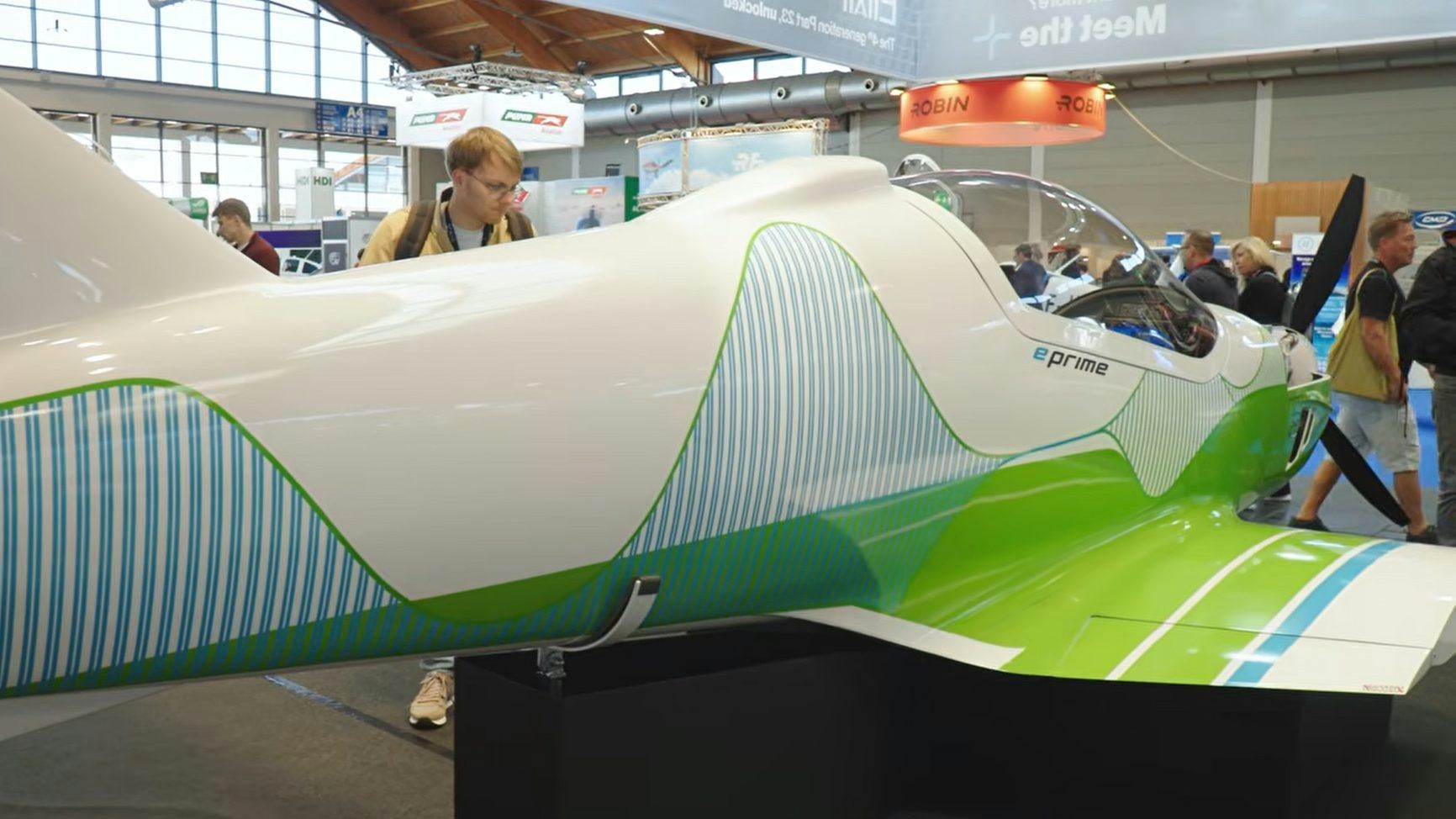
Blackshape Unveils Hybrid-Electric ePrime Aircraft with 3-5 Hour Endurance, Targets Surveillance Market
Italian aircraft manufacturer Blackshape has introduced the ePrime, a hybrid-electric demonstrator designed to offer between three and five hours of flight endurance while significantly reducing fuel consumption and emissions. This two-seat aircraft, presented as a technological testbed, aims to meet the growing demand for efficient, low-emission platforms suitable for both pilot training and surveillance operations.
Innovative Hybrid Powertrain Inspired by Automotive Technology
The ePrime employs a parallel hybrid system adapted from automotive engineering. A conventional combustion engine is positioned at the rear of the aircraft, responsible for cruise flight and functioning as an in-flight generator. Meanwhile, batteries located in the nose power electric motors during energy-intensive phases such as takeoff and climb. This dual system allows the combustion engine and electric motors to operate simultaneously, with the engine recharging the batteries during flight. This approach, proven in the automotive sector, represents a novel adaptation for aviation applications.
Endurance Capabilities and Operational Flexibility
Blackshape reports that the current battery configuration supports approximately three hours of flight time, with the potential to extend endurance to four or five hours as battery technology advances. Flight duration varies depending on passenger load and the number of battery modules installed. The ePrime’s performance is comparable to that of the conventional Prime model, which offers a 4.5-hour range on fuel alone. The modular battery design enables operators to customize the aircraft for specific missions, balancing endurance, payload capacity, and operational costs.
Targeting Surveillance and Training Markets
While the ePrime is positioned primarily as a sustainable trainer for private pilots and flight schools, Blackshape is also focusing on the surveillance sector. The aircraft’s extended loiter time and quiet electric operation make it well-suited for intelligence, surveillance, and reconnaissance (ISR) missions. Blackshape references previous optionally-piloted demonstrations conducted with the Italian Navy and envisions future autonomous, fully “dronized” ISR operations. The ePrime is intended to fill a niche between expensive turboprop aircraft and limited-endurance drones, offering persistent monitoring capabilities at a lower cost.
Market Context and Competitive Challenges
The hybrid-electric and uncrewed aircraft market is rapidly evolving, with numerous companies vying for leadership in surveillance and defense applications. Blackshape’s ePrime faces competition from platforms such as Xer Technologies’ X8 PRO, which offers similar endurance and payload capabilities. Industry reactions are mixed; some stakeholders express enthusiasm about the potential for reduced operating costs and carbon emissions, while others remain cautious, awaiting further technological maturation. Competitors may respond by enhancing their own hybrid-electric offerings or by targeting alternative market segments to differentiate themselves from Blackshape’s approach.
Technological Significance and Industry Implications
Blackshape describes the ePrime as a “technological test bench,” with its first flight anticipated soon, although certification timelines remain uncertain. The ePrime joins a growing roster of hybrid demonstrators, including RTX’s Dash 8 and AURA AERO’s ERA, but distinguishes itself by focusing on the light aircraft segment. By validating hybrid concepts at this scale, Blackshape aims to mitigate risks associated with the technology and facilitate broader adoption within general aviation.
As the aviation industry faces mounting pressure to reduce emissions and operating costs, the ePrime represents a concrete step toward a hybrid future. It delivers innovation in a practical, two-seat platform that could have significant influence across both surveillance and pilot training markets.

Etihad Airways Suspends Airbus A380 Flights on Key Route

Aditya Birla Group Seeks Approval for Aircraft Leasing in GIFT City

Qatar Airways Highlights Innovation and Connectivity at Arabian Travel Market 2026

Hong Kong's Five-Year Plan Includes Andrew Fan's Aircraft Parts Processing Hub Proposal

ACIA Aero Leasing Delivers ATR72-600 to Air Nostrum

RTX Appoints Jill Albertelli as Head of Pratt & Whitney

TAT Technologies Joins Beyond Aero Hydrogen Aircraft Program

AURAK Study Highlights Barriers to Air Taxi Adoption in Emerging Economies

Xiamen Air Selects Altitude for 787 Maintenance at Heathrow

Etihad and Swissport Extend Global Partnership
