
Orchestrate AI insights into action

Trending
Categories
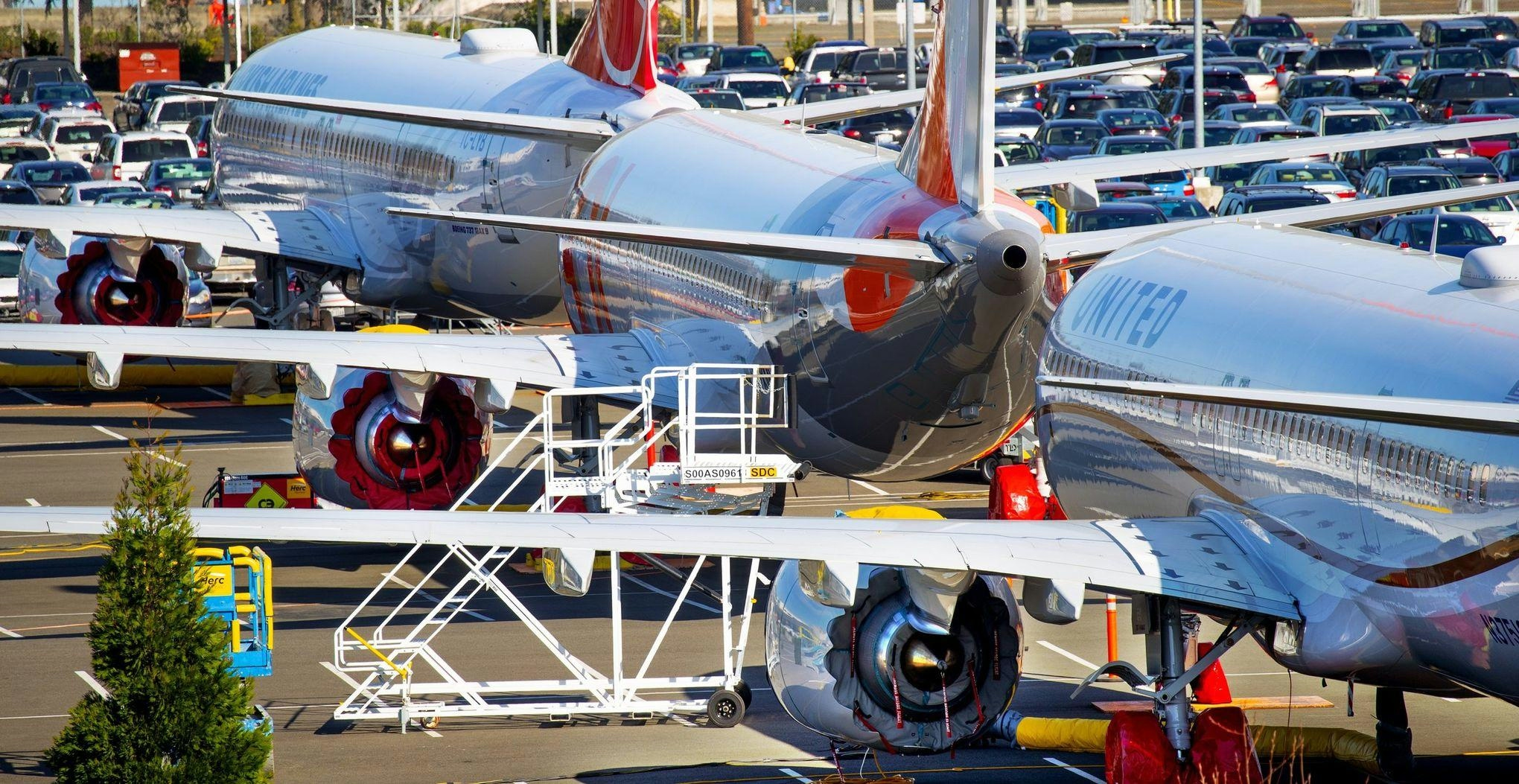
Boeing 737 Aircraft Grounded Amid Safety Concerns
Boeing 737 Aircraft Grounded Amid Safety Concerns
The recent grounding of Boeing 737 aircraft has sent shockwaves through the global aviation industry, raising critical questions about safety and operational reliability. This decision has disrupted airline schedules worldwide and prompted a strategic reassessment among carriers and manufacturers alike. The incident has also accelerated shifts in market dynamics, with Airbus emerging as a prominent beneficiary.
Market Shifts and Industry Impact
Airbus’s A320 family has now overtaken the Boeing 737 in total deliveries, a milestone reflecting the European manufacturer’s ability to offer adaptable and cost-effective aircraft. Airlines grappling with rising fuel costs and growing passenger demand are increasingly favoring Airbus’s extended-range models, such as the A321LR and the forthcoming A321XLR. These single-aisle jets enable carriers to operate longer routes efficiently without resorting to larger, less economical aircraft, thereby strengthening Airbus’s competitive position in the market.
Broader Trends in Mobility and Sustainability
Detroit, historically renowned as the birthplace of the moving assembly line and a hub of transportation innovation, remains a symbolic reference point amid these industry changes. Alisyn Malek, managing director of Newlab Detroit and an expert in urban mobility, highlights that the current shifts in aviation and transportation reflect wider trends shaping the future of travel. She underscores the urgency of addressing sustainability, noting that transportation accounts for approximately 37% of global greenhouse gas emissions.
Malek stresses that accessibility and sustainability have become central to mobility planning. Ensuring that mobility solutions are widely accessible, frequent, and capable of meeting diverse travel needs is essential. As cities and industries evolve, there is a clear movement away from traditional gas-powered vehicles toward electrification and emerging technologies. Looking ahead to 2050, Malek envisions a transportation ecosystem characterized by a variety of flexible options, including biking, buses, electrified vehicles, and autonomous technologies, all tailored to meet real-world demands.
Safety and Innovation at the Forefront
The grounding of the Boeing 737 has underscored the paramount importance of safety and reliability in the aviation sector. Airlines’ search for alternatives has highlighted how swiftly market preferences can shift in response to operational challenges. Competition between manufacturers is intensifying, with innovation, efficiency, and environmental responsibility becoming key drivers of industry progress.
As Detroit and the broader transportation industry navigate this transformative period, the lessons of past innovation combined with present-day market realities are shaping a new era of mobility—one where safety, adaptability, and sustainability are integral to future success.

Etihad Airways Suspends Airbus A380 Flights on Key Route

Aditya Birla Group Seeks Approval for Aircraft Leasing in GIFT City

Qatar Airways Highlights Innovation and Connectivity at Arabian Travel Market 2026

Hong Kong's Five-Year Plan Includes Andrew Fan's Aircraft Parts Processing Hub Proposal

ACIA Aero Leasing Delivers ATR72-600 to Air Nostrum

RTX Appoints Jill Albertelli as Head of Pratt & Whitney

TAT Technologies Joins Beyond Aero Hydrogen Aircraft Program

AURAK Study Highlights Barriers to Air Taxi Adoption in Emerging Economies

Xiamen Air Selects Altitude for 787 Maintenance at Heathrow

Etihad and Swissport Extend Global Partnership
