
Orchestrate AI insights into action

Trending
Categories
Boeing Delivery Delays Lead U.S. Airlines to Extend Aging Fleet Leases Amid Growing Backlog
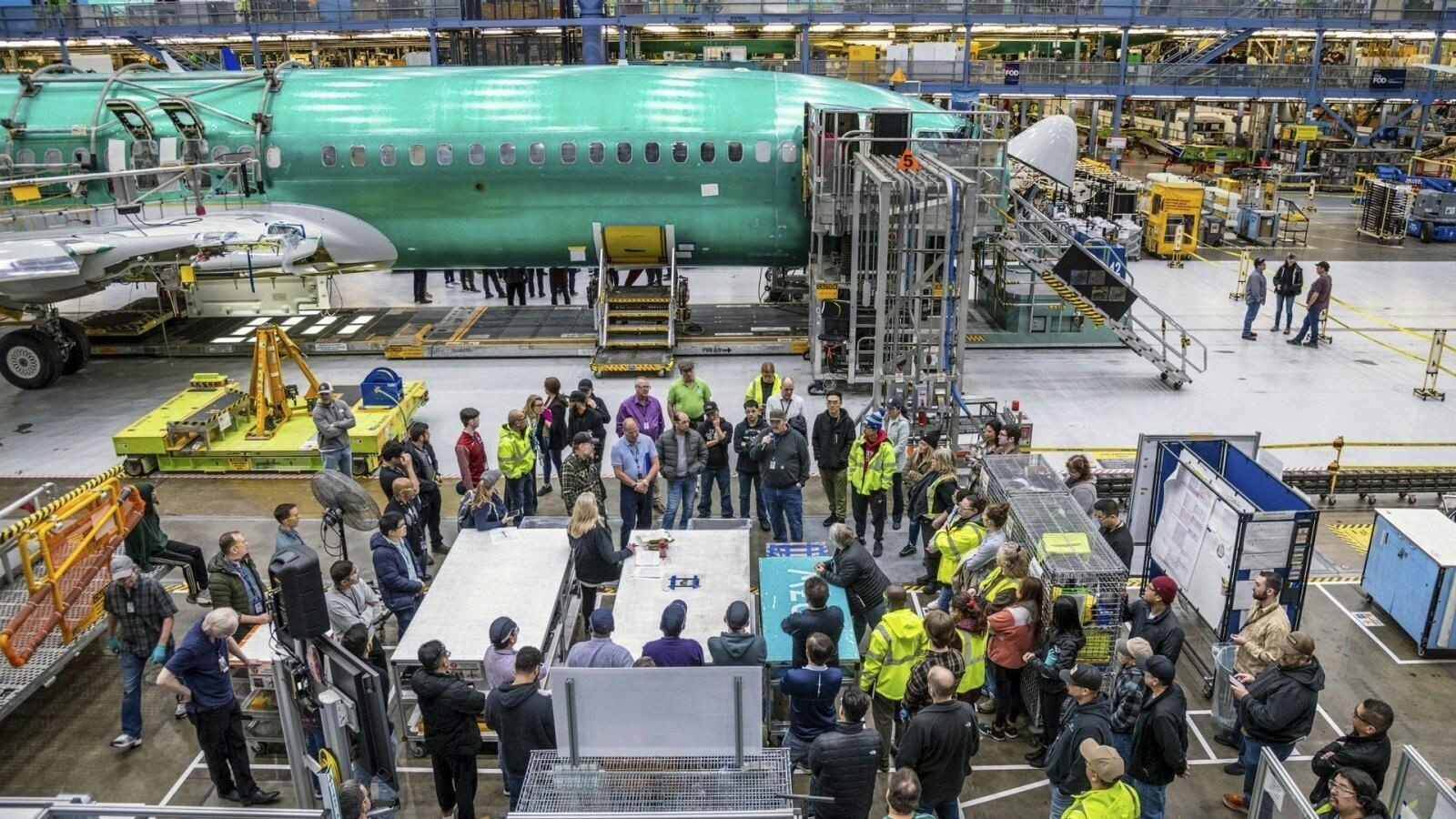
Boeing Delivery Delays Force U.S. Airlines to Extend Aging Fleet Leases Amid Growing Backlog
Boeing’s persistent production challenges have compelled U.S. airlines to revise their fleet renewal strategies, extending leases on aging aircraft and adjusting route plans as the manufacturer grapples with quality control setbacks and regulatory constraints. What was initially anticipated as a temporary disruption has evolved into a structural problem with no immediate resolution.
Regulatory Caps and Production Constraints
In January 2024, the Federal Aviation Administration (FAA) imposed a production limit of 38 Boeing 737 aircraft per month following a door plug incident involving an Alaska Airlines 737 MAX 9. This restriction, coupled with ongoing supplier quality issues at Spirit AeroSystems and a recently revealed wiring defect affecting certain 737 MAX jets, has significantly hindered Boeing’s capacity to fulfill delivery commitments. FAA records and Boeing’s regulatory disclosures indicate that production rates have yet to rebound to pre-crisis levels.
The FAA’s production cap remains firmly in place, directly impacting airlines’ ability to receive new aircraft as planned. Boeing’s commercial backlog, which includes the 737 MAX family, the 787 Dreamliner, and the delayed 737 MAX 10, now comprises thousands of unfilled orders, underscoring the scale of the challenge.
Impact on U.S. Airlines and Fleet Strategies
The delays are especially pronounced for the 737 MAX 10, Boeing’s largest narrowbody model, which as of early 2025 still lacks full FAA type certification. United Airlines, holding an order for 200 MAX 10s, has been forced to revise its fleet and network strategies in response. Southwest Airlines, the world’s largest operator of 737s with a fleet exceeding 770 aircraft, has publicly acknowledged that delivery shortfalls have necessitated scaling back network expansion and postponing the retirement of older 737-700s, resulting in increased maintenance expenditures.
American Airlines, operating a mixed fleet of Boeing and Airbus narrowbodies, has also adjusted its delivery expectations. Recent filings with the Securities and Exchange Commission (SEC) highlight that delayed aircraft deliveries have constrained the carrier’s ability to optimize network capacity, leading to the curtailment of planned summer route expansions.
To mitigate these challenges, airlines are increasingly turning to the lease market. Finnair, for example, has leased additional Embraer 190s and ATR 72-600s to support regional operations. Across the industry, carriers are extending leases and maintenance agreements on older jets, a strategy that, while raising operating costs, is essential to maintaining service levels amid limited new aircraft availability.
Market Outlook and Competitive Dynamics
Although Boeing’s delivery delays are unlikely to derail its 2026 sales target of approximately 500 MAX jets, near-term deliveries—particularly in the first quarter—are expected to remain constrained. Market analysts are divided on Boeing’s prospects; some anticipate a potential stock rebound driven by the eventual delivery of over 1,500 high-margin aircraft and positive free cash flow projections for 2026. Nonetheless, risks persist, including recent negative free cash flow and pressure on operating margins.
Meanwhile, Airbus has experienced robust demand for its A320neo family and the newly introduced A321XLR, which entered commercial service in 2024. However, with Airbus’s order books largely filled through 2030 for most variants, airlines seeking alternatives to Boeing face extended wait times.
As Boeing endeavors to resolve its production and certification challenges, U.S. airlines confront a prolonged period of fleet uncertainty, balancing the financial and operational costs of maintaining older aircraft against the constraints imposed by a limited global supply of new jets.

Etihad Airways Suspends Airbus A380 Flights on Key Route

Aditya Birla Group Seeks Approval for Aircraft Leasing in GIFT City

Qatar Airways Highlights Innovation and Connectivity at Arabian Travel Market 2026

Hong Kong's Five-Year Plan Includes Andrew Fan's Aircraft Parts Processing Hub Proposal

ACIA Aero Leasing Delivers ATR72-600 to Air Nostrum

RTX Appoints Jill Albertelli as Head of Pratt & Whitney

TAT Technologies Joins Beyond Aero Hydrogen Aircraft Program

AURAK Study Highlights Barriers to Air Taxi Adoption in Emerging Economies

Xiamen Air Selects Altitude for 787 Maintenance at Heathrow

Etihad and Swissport Extend Global Partnership
