
Orchestrate AI insights into action

Trending
Categories
Boeing Dreamliner Retired After 13 Flight Hours Amid Supply Chain Issues
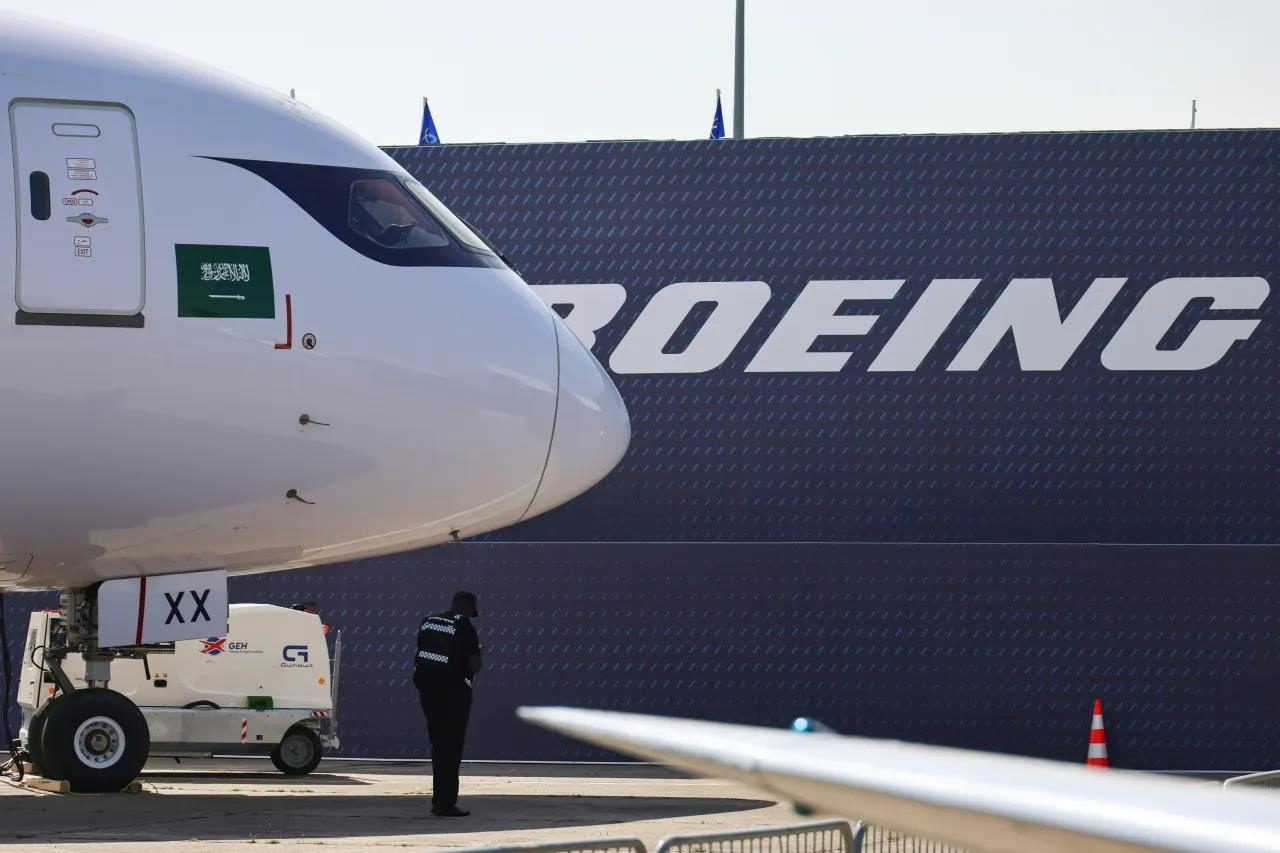
Boeing Dreamliner Retired After 13 Flight Hours Amid Supply Chain Crisis
A Boeing 787-8 Dreamliner, tail number N947BA, is being dismantled at Roswell International Air Center in New Mexico after accumulating a mere 13 flight hours. This aircraft, the 17th Dreamliner produced at Boeing’s Everett facility, is being scrapped for parts despite its nearly new condition. This unusual decision highlights the profound impact of the ongoing global aviation supply chain crisis.
Industry Turmoil Drives Unprecedented Aircraft Retirement
Typically, aircraft are retired and dismantled only after extensive use or when they become obsolete. The choice to scrap a virtually unused Dreamliner marks a significant departure from industry norms and reflects a shift in economic priorities within aviation. Airlines and manufacturers are increasingly valuing certain aircraft more as sources of spare parts than as operational assets. This shift is driven by severe shortages of critical components, including engines, avionics, landing gear, and cabin modules, which are affecting carriers worldwide.
Both the International Air Transport Association (IATA) and the International Airlines Technical Pool (IATP) have underscored the operational risks posed by prolonged turnaround times and material shortages. As airlines expand their fleets amid unprecedented maintenance backlogs, the demand for replacement parts has surged, creating intense supply and demand pressures across the sector.
Widespread Supply Chain Disruptions Affect Aviation Operations
The current component shortage represents the most significant disruption since commercial jet production resumed following pandemic-related shutdowns. Airlines operating large fleets of 787s are experiencing delays of several months in sourcing replacement parts, with some aircraft grounded for extended periods while awaiting specialized components. This crisis extends beyond the Dreamliner, impacting Boeing’s broader product lines and Airbus operators alike.
Further complicating the situation, a wiring defect in the Boeing 737 MAX has led to a halt in deliveries and necessitated rework, placing additional strain on production schedules. Despite these challenges, Boeing remains confident in achieving its 2026 sales target of approximately 500 MAX jets. Nevertheless, ongoing supply constraints for new aircraft and engine materials continue to fuel demand for legacy aircraft, even as some analysts suggest that a potential slowdown in travel demand could eventually alleviate market pressures and lead to increased retirements.
Market Impact and Long-Term Consequences
The dismantling of N947BA exemplifies a growing trend in which airlines acquire entire aircraft solely to harvest parts needed to maintain other planes. Salvage operations targeting nearly new jets enable suppliers to meet urgent demands and help airlines avoid costly groundings, but they also expose deep structural weaknesses in the aviation procurement system.
These cascading effects are delaying network expansion plans and leaving new aircraft idle at manufacturing facilities, awaiting critical components. The precedent set by scrapping a nearly new Dreamliner signals that supply chain vulnerabilities will continue to influence fleet management strategies and industry economics well into 2026 and beyond.

Etihad Airways Suspends Airbus A380 Flights on Key Route

Aditya Birla Group Seeks Approval for Aircraft Leasing in GIFT City

Qatar Airways Highlights Innovation and Connectivity at Arabian Travel Market 2026

Hong Kong's Five-Year Plan Includes Andrew Fan's Aircraft Parts Processing Hub Proposal

ACIA Aero Leasing Delivers ATR72-600 to Air Nostrum

RTX Appoints Jill Albertelli as Head of Pratt & Whitney

TAT Technologies Joins Beyond Aero Hydrogen Aircraft Program

AURAK Study Highlights Barriers to Air Taxi Adoption in Emerging Economies

Xiamen Air Selects Altitude for 787 Maintenance at Heathrow

Etihad and Swissport Extend Global Partnership
