Image

Unlock 3x Revenue in Quoting Opportunity with AI!

Join us for a 30‑minute live demo of Quoting Automation

Trending

Categories

Boeing Faces Risk to 14% of Widebody Aircraft Backlog
March 15, 2026By ePlane AI
Boeing Faces Risk to 14% of Widebody Aircraft Backlog
0
0
Boeing 777X
Middle East Airlines
Aircraft Backlog Risk

Boeing Faces Heightened Risk to Widebody Aircraft Backlog Amid Middle East Instability

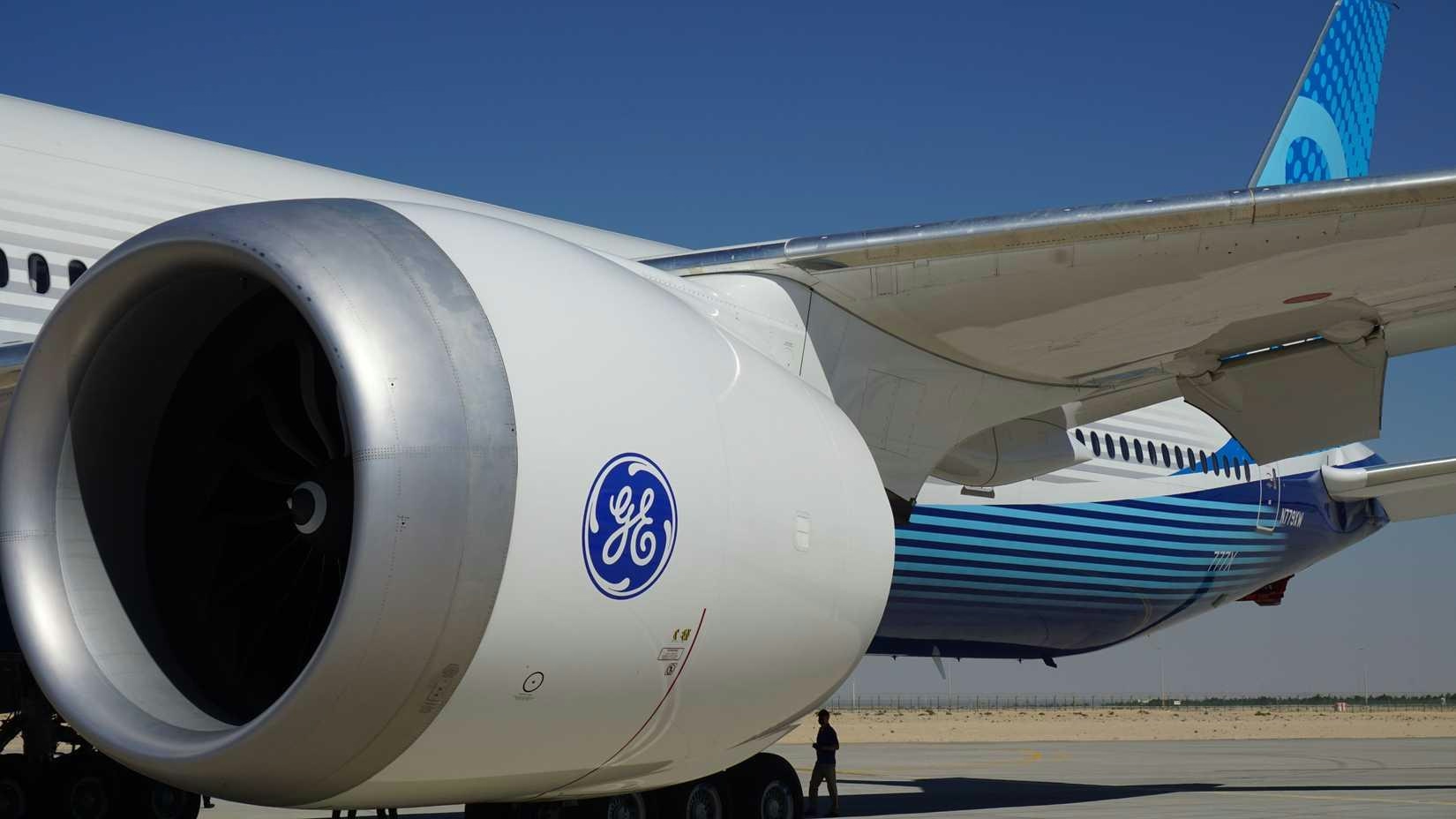
Boeing’s growing dependence on the Middle East market has shifted from a narrative of robust regional demand to one of concentrated vulnerability, particularly within its widebody aircraft segment. Middle Eastern airlines and lessors now represent 14% of Boeing’s total aircraft backlog, a significantly higher proportion compared to Airbus, which has just 9% exposure in the region. This concentration is most pronounced in the Boeing 777X program, where Gulf carriers—especially Emirates—play a pivotal role. Emirates alone has placed orders for 270 777X aircraft, underscoring its critical influence on the program’s commercial viability, reminiscent of its previous role as the anchor customer for the Airbus A350.

Geopolitical Tensions Amplify Commercial Risks

The ongoing geopolitical crisis in the Middle East has intensified the risks facing Boeing’s backlog quality. According to Leeham News, the region currently holds orders for 1,710 aircraft, with Boeing accounting for 57% of these commitments. Gulf carriers, whose business models rely heavily on stable hub operations, strong premium demand, and uninterrupted airspace access, are particularly susceptible to disruptions caused by the conflict. The fallout has already manifested in increased fuel costs, altered flight routes, and widespread cancellations. For instance, KLM has suspended flights to Dubai International Airport through late March due to complications in regional airspace.

These geopolitical shocks translate into a concentrated commercial risk for Boeing, potentially resulting in order deferrals, financing difficulties, and slower cash flow—challenges that come at a time when financial stability is crucial. The immediate threat is less about outright cancellations and more about delayed deliveries, compressed profit margins, and postponed revenue recognition. Since aircraft backlogs only generate cash upon delivery and payment completion, any wave of deferrals from Middle Eastern customers could significantly slow Boeing’s revenue stream and cash conversion, particularly for widebody jets that are vital to the company’s profitability.

Supply Chain Disruptions Compound Challenges

Adding to these concerns are persistent supply chain disruptions and manufacturing delays. Willie Walsh, director general of the International Air Transport Association (IATA), recently emphasized ongoing difficulties in the supply chains for widebody freighters, noting that the industry is still recovering from the impacts of the Covid-19 pandemic. Julia Seiermann of IATA further highlighted that widebody airfreight capacity is expected to remain constrained through 2026 and beyond due to elevated backlog levels. Meanwhile, Boeing’s 737 Max program is also experiencing setbacks, currently facing delays caused by a wiring issue. Despite this, the company remains confident in meeting its 2026 sales target of approximately 500 Max jets.

Backlog Growth Amid Persistent Risks

Despite these headwinds, Boeing continues to secure new orders, including a recent deal with Sun PhuQuoc Airways for up to 40 787 Dreamliner jets. The company’s overall backlog reached a record $682 billion at the end of 2025, encompassing more than 6,100 commercial aircraft on order. However, the sheer size of the backlog does not mitigate the risk posed by over-concentration, especially if key customers in the Middle East delay or defer deliveries.

As instability in the Middle East endures and supply chain challenges persist, Boeing’s reliance on the region for widebody aircraft sales exposes the company to significant geopolitical and operational risks at a critical juncture for its commercial aviation business.

More news
Commission Requests Input on New EU Aviation and Aeronautics Strategy

Commission Requests Input on New EU Aviation and Aeronautics Strategy

European Commission Launches Public Consultation on New Aviation and Aeronautics Strategy The European Commission has embarked on the development of a comprehensive new EU Aviation and Aeronautics Strategy, inviting input from citizens, businesses, and industry stakeholders through a public consultation. This initiative seeks to establish a robust framework aimed at strengthening Europe’s aviation and aeronautical sectors amid growing global competition and increasing uncertainty. Addressing Challenges and Strategic Priorities Europe’s aviation industry remains a vital contributor to economic growth and connectivity across the continent. However, it currently confronts a range of significant challenges, including rising energy costs, geopolitical tensions, supply chain disruptions, and intensified competition from international players. In response, the Commission’s forthcoming strategy will prioritise enhancing the sectors’ competitiveness, resilience, and decarbonization efforts, while safeguarding Europe’s strategic autonomy and industrial leadership. A key proposal under consideration involves extending the EU Emissions Trading System (EU ETS) to encompass all flights departing from European airports. This measure aims to accelerate the sector’s transition to greener operations and reduce carbon emissions. Nonetheless, it is anticipated to face opposition from some industry stakeholders concerned about the potential increase in operational costs and logistical complexities. Market reactions are expected to vary, with some organisations supporting the environmental objectives and others wary of the financial implications. The strategy also highlights the necessity of strengthening crisis management and security response mechanisms within the aviation sector. Recent developments have underscored the importance of maintaining operational stability, prompting plans to establish an EU observatory tasked with monitoring aviation fuel stocks to prevent shortages. This initiative is likely to garner support from European airports and other key actors. Ensuring Fair Competition and Fostering Innovation In the context of global competition, the strategy recognises the challenges posed by regulatory investigations and allegations of anti-competitive practices affecting both European and international companies. Notable cases include scrutiny of firms such as Joby Aviation over trade practices and allegations directed at companies like MakeMyTrip. The Commission aims to uphold a level playing field for all market participants, ensuring fair competition within the sector. Additional priorities outlined in the strategy include accelerating digital innovation, mobilising investment in emerging technologies, and maintaining the highest safety standards. The development of a skilled and motivated workforce is also emphasised as essential to sustaining the sector’s long-term success and ensuring effective connectivity for citizens and businesses throughout the European Union. The public consultation remains open until 21 May 2026 and can be accessed via the Commission’s Have Your Say portal in all official EU languages. The Commission encourages wide participation to help shape a strategy that effectively addresses the evolving needs of Europe’s aviation and aeronautics industries.
Africa’s Largest Refinery Exports Jet Fuel to Europe as Ethiopian Airlines Joins Supply Chain

Africa’s Largest Refinery Exports Jet Fuel to Europe as Ethiopian Airlines Joins Supply Chain

Africa’s Largest Refinery Begins Jet Fuel Exports to Europe Amid Growing Role in Aviation Supply Chain Africa’s largest oil refinery has commenced exporting jet fuel to Europe, marking a pivotal development in the global aviation fuel supply landscape. Ethiopian Airlines has become a direct recipient of these exports, underscoring the refinery’s expanding influence beyond the continent. At a recent energy conference in Lagos, Managing Director David Bird revealed that the refinery, now operating at full capacity following maintenance, has achieved output levels sufficient to satisfy Nigeria’s domestic demand while also supplying refined products—including jet fuel, diesel, and petrol—to international markets. Expanding Export Strategy Amid Global Supply Challenges Since the escalation of the Middle East crisis in late February, the refinery has extended its export reach to 11 African countries, reflecting a strategic shift driven by surplus production capacity. Bird emphasized the company’s commitment to prioritizing African markets, stating, “We’re proud to have done a direct delivery to Ethiopian Airlines, and we will continue to export surplus production to neighbouring African countries.” This expansion comes at a time when global aviation fuel supply chains are under strain due to geopolitical tensions and rising demand. Global oil prices have surged to approximately $112 per barrel, exerting upward pressure on aviation fuel costs worldwide. Bird highlighted that the primary challenge facing the industry is not merely price volatility but the availability of fuel, particularly in import-dependent nations such as Australia, Bangladesh, Sri Lanka, and the Philippines. “What is worse than $100 or $120 oil is no oil at all,” he remarked, underscoring the critical nature of supply security. Domestic Stability and Export Profitability Despite these global pressures, Nigeria’s domestic fuel supply has remained stable, a development attributed to significant investments led by industrialist Aliko Dangote, which have reduced the country’s dependence on imported refined products. Industry data indicates that the refinery is capitalizing on robust profit margins for jet fuel, especially in export markets. European buyers, facing peak summer travel demand, have paid a premium for Nigerian jet fuel imports, which reached record volumes of 78,000 to 96,000 barrels per day in April. While European refiners typically earn around $15 per barrel, analysts estimate that margins at the Dangote facility exceed double that figure, benefiting from access to locally sourced crude and the refinery’s large scale. According to refinery official Devakumar Edwin, the facility produces approximately 24 million litres of jet fuel daily. While a substantial portion is exported to Europe, the refinery also supplies Nigerian airlines, whose combined demand is estimated at 2.1 million litres per day. However, rising fuel prices continue to place pressure on the domestic aviation sector, with local carriers warning of potential operational disruptions as costs escalate. This situation highlights the tension between the refinery’s export-driven profitability and the affordability of fuel for domestic users. Strategic Positioning in Global Refined Fuel Markets The refinery sources much of its crude oil from the United States, other African producers, and Brazil, positioning itself as a significant player in global refined fuel markets. The surge in jet fuel exports from the Dangote Refinery has been met with positive market reactions, signaling a realignment in global aviation fuel supply chains. Competitors across Africa are now reevaluating their strategies to leverage these shifting dynamics, even as the sector remains vulnerable to geopolitical risks, fluctuating demand, and intensifying competition among refineries.
Using AI to Find Better Summer Flight Deals

Using AI to Find Better Summer Flight Deals

Using AI to Find Better Summer Flight Deals As summer vacation planning intensifies, travel experts are encouraging consumers to utilize artificial intelligence (AI) flight booking tools to secure more competitive fares and reduce travel expenses. Airlines themselves are increasingly employing AI to adjust ticket prices dynamically—sometimes on an hourly basis—responding to fluctuations in demand and competitor pricing. This rapid fare adjustment means traditional online flight searches may no longer suffice to guarantee the best deals. The Role of AI in Dynamic Pricing Farhana Nusrat, a marketing professor at the University of San Diego, explains that airlines continuously update fares throughout the day. “All of the airlines are using AI themselves, so it’s not just daily that they’re changing fares, it’s hourly,” she said. “They’re responding to demand for particular routes and to how their competitors are moving.” Given this environment, travelers can improve their chances of finding better prices by strategically employing AI-powered flight search technologies. Nusrat advises booking domestic flights between one and three months in advance, while international flights should ideally be booked two to six months ahead. She also emphasizes the importance of providing detailed information when using AI tools. “The first message you send should include all the important information—your travel dates, flexibility, and preferred airports. For example, ‘I can fly any day between June 2nd and June 21st, from San Diego or nearby airports,’” she recommended. Tools and Features for Smarter Booking Popular free AI-enabled flight search platforms such as Google Flights, Kayak, and Skyscanner offer travelers accessible options to compare fares. For those seeking enhanced capabilities, paid subscription services—typically costing between $30 and $50 annually—provide features like deal tracking and price monitoring across both major and lesser-known airlines. Some of these services offer price freezing, allowing travelers to lock in a fare for several days. Nusrat explains, “If the price drops, you can buy at the lower rate. If it goes up, you’re protected by the frozen price.” Additionally, certain platforms can identify “mistake fares,” which are rare pricing errors that can yield substantial savings if booked promptly. Industry Implications and Future Trends The growing influence of AI in travel booking is also reshaping the broader industry landscape. AI travel agents increasingly rely on third-party sources such as NerdWallet and Reddit for value comparisons, rather than directing consumers to official hotel or airline websites. This trend poses a challenge for major hotels and airlines, which risk losing control over how their offerings are presented, as AI-driven recommendations may prioritize independent reviews and aggregated deals. While consumer-facing AI adoption in the travel sector remains in its early stages, the emergence of large language models (LLMs) for trip planning represents a significant opportunity. Vertical online travel agencies (OTAs) like Agoda are exploring deeper operational integration and more sophisticated agent designs to enhance user experience. At the same time, marketers who depend solely on technology shortcuts may find themselves at a disadvantage, as travelers increasingly assess options across a wider array of sources. As AI technology continues to evolve, both travelers and industry stakeholders will need to adapt accordingly. For now, employing AI tools thoughtfully and maintaining awareness of how recommendations are generated can help consumers secure better summer flight deals and make more informed travel decisions.
Volaris Delays Fleet Expansion Pending Availability of GTF Advantage Engines

Volaris Delays Fleet Expansion Pending Availability of GTF Advantage Engines

Volaris Delays Fleet Expansion Pending Availability of GTF Advantage Engines Strategic Shift in Fleet Management Mexican low-cost carrier Volaris has announced a significant revision to its fleet expansion plans, driven by ongoing groundings of Airbus A320neo-family aircraft and escalating fuel costs. The airline is adopting a more streamlined and efficient fleet strategy by deferring new Airbus deliveries into the next decade. This approach aims to reduce lease liabilities and enhance operational efficiency amid current market challenges. During the company’s April 28 earnings call, CEO Enrique Beltranena outlined the planned fleet adjustments. He stated that the contractual fleet size is expected to decrease from 155 aircraft in December 2025 to approximately 137 by the end of 2027. However, the productive, revenue-generating fleet will grow to around 125 aircraft, up from 112 at the close of 2025. Beltranena highlighted that this transition is designed to unlock significant efficiency gains for the airline. In practical terms, Volaris has already sold four Airbus aircraft scheduled for delivery to a lessor and postponed the arrival of seven aircraft originally slated for 2027, along with three more planned for 2028. These deliveries have been rescheduled for 2030 or later. The airline projects that this fleet reduction initiative will reduce total lease liabilities by $360 million and yield approximately $50 million in annual savings. Impact of GTF Advantage Engine Availability A critical factor influencing Volaris’s decision is the delayed availability of Pratt & Whitney’s GTF Advantage engines, which are integral to the airline’s A320neo-family jets. Although these engines have received certification from both the Federal Aviation Administration and the European Union Aviation Safety Agency, Pratt & Whitney continues to grapple with production challenges and ongoing quality inspections following a manufacturing issue identified in July 2023. Consequently, Volaris has paused incremental aircraft investments until the new engines become available. Beltranena emphasized the importance of this development, noting, “Most 2027 and 2028 deliveries have been rescheduled, and no incremental aircraft investments will be made until the GTF Advantage engines enter service. Ultimately, the most powerful value-creation lever over the next several years is restoring fleet productivity and reducing aircraft ownership costs.” The forthcoming GTF Advantage engines are expected to incorporate more durable components, including double-walled structures and advanced cooling systems designed to mitigate wear caused by high operating temperatures. Pratt & Whitney plans to gradually ramp up deliveries, aiming to supply only Advantage turbofans by 2028. Operational Challenges and Future Outlook The grounding of A320neo-family jets has had a pronounced impact on Volaris, which began the year with 41 grounded aircraft out of a total fleet of 155. By the end of the first quarter, this number had decreased to 32, aided by increased maintenance capacity and accelerated production of critical engine components. Parent company RTX reports a 15% reduction in grounded jets across the industry. Volaris’s leadership anticipates that returning more A320neo-family jets to service will enhance fleet efficiency and help mitigate the effects of rising fuel prices. Beltranena noted that shifting every 10 aircraft from older A320ceo models to A320neos generates approximately $2 million in monthly fuel savings at current price levels. Looking ahead, Volaris expects that by year-end, 70% of its operating fleet will consist of newer, more fuel-efficient Airbus narrowbodies. The airline’s decision to delay fleet growth until the GTF Advantage engines become widely available reflects broader industry concerns regarding engine reliability, maintenance costs, and the necessity for operational resilience amid ongoing supply chain disruptions.
Overview of Spain's Aircraft Battery Market: Prices, Size, and Forecast

Overview of Spain's Aircraft Battery Market: Prices, Size, and Forecast

Overview of Spain's Aircraft Battery Market: Prices, Size, and Forecast The aircraft battery market in Spain is anticipated to experience steady growth, with forecasts projecting a compound annual growth rate (CAGR) of 6 to 8 percent between 2026 and 2035. This expansion is driven by ongoing fleet renewals, military modernization initiatives, and the gradual integration of hybrid-electric and electric aircraft platforms. Despite these positive trends, the sector contends with a complex environment shaped by regulatory, economic, and supply chain challenges. Market Dynamics and Key Trends Lithium-ion (Li-ion) batteries are expected to dominate the Spanish aircraft battery market, accounting for more than 55 percent of new installations—both line-fit and retrofit—by 2030. This transition is progressively replacing traditional nickel-cadmium (NiCd) and lead-acid batteries in critical applications such as engine starting, auxiliary power units (APUs), and emergency power systems. Leading Spanish airlines, including Iberia, Vueling, and Air Europa, are actively retrofitting their fleets with Li-ion units, achieving significant weight reductions of 30 to 50 percent alongside enhanced battery longevity. Spain remains structurally dependent on imports for aerospace-grade cells and qualified battery packs. The domestic industry primarily focuses on pack assembly, system integration, testing, and aftermarket services. The military and defense sector plays a substantial role, contributing approximately 25 to 30 percent of the annual market value, notably through Airbus Defence & Space programs and the modernization of the Spanish Air Force. Aftermarket and maintenance, repair, and overhaul (MRO) services constitute a significant revenue stream, representing 40 to 45 percent of total market expenditure. This demand is largely driven by the extensive installed base of Airbus A320 and A330 family aircraft operated by Spanish carriers. Value Chain and Bottlenecks The aircraft battery value chain in Spain encompasses upstream inputs such as high-purity cathode materials—including nickel manganese cobalt (NMC) and lithium iron phosphate (LFP)—anode materials, electrolytes, and aerospace-grade electronics. These inputs feed into manufacturing, integration, and project delivery processes. Key bottlenecks within this value chain include a limited supply of qualified aerospace-grade cells, protracted certification cycles ranging from 18 to 36 months due to stringent standards set by EASA ETSO, RTCA DO-160, and DO-311, as well as the necessity for specialized testing facilities. Additional constraints arise from supply chain limitations for aviation-compliant materials and the pressing need to expand the MRO network to support advanced battery chemistries. Regulatory and Economic Challenges Regulatory compliance remains a significant barrier to market entry, with new battery products subjected to rigorous environmental and safety testing protocols. Rising production costs, coupled with increasingly stringent safety and performance requirements, exert considerable pressure on manufacturers and integrators. Certification authorities and operators are mandating enhanced safety features, including cell-level fusing, flame-arresting vents, and fire-resistant enclosures, to mitigate the risk of thermal runaway incidents. Global economic conditions and geopolitical tensions further influence market dynamics. Improved foreign relations have facilitated the expansion of Chinese electric vehicle battery manufacturers, such as BYD, into international markets, potentially affecting Spain’s supply chain and competitive landscape. In response, Spanish and European industry players are pursuing strategic partnerships and investing in advanced battery technologies, including lithium-sulfur (Li-S) chemistries and sophisticated battery management systems (BMS), to preserve market share and technological leadership. Outlook The outlook for Spain’s aircraft battery market is robust, supported by the ongoing transition to lithium-ion and emerging battery technologies, alongside growing demand from both commercial and military aviation sectors. Nevertheless, the industry must navigate persistent challenges related to certification processes, supply chain resilience, and escalating costs. Strategic investments in innovation and international collaboration will be essential to maintaining competitiveness in the coming years.
Trent XWB-97: Advancing the World’s Most Used Engine

Trent XWB-97: Advancing the World’s Most Used Engine

Trent XWB-97: Advancing the World’s Most Used Engine The Trent XWB-97 represents the most powerful iteration of the world’s leading large aero engine, widely recognised for its exceptional fuel efficiency and reliability. These attributes have established it as a preferred choice among major airlines worldwide, supporting high utilisation rates across diverse fleets. Despite its proven performance, Rolls-Royce remains committed to enhancing the engine’s capabilities, continually pushing the boundaries of durability and operational excellence. Enhancing Durability in Challenging Environments A significant challenge for the Trent XWB-97 has arisen in harsh operating conditions, particularly in the Middle East, where extreme desert environments place considerable strain on engine durability. In response, Rolls-Royce launched a comprehensive multi-phase enhancement programme, part of a broader £1 billion investment aimed at modernising the Trent engine family. The initial two phases have already been implemented, delivering extended time on wing and improved resilience. Currently, Phase 3 is underway, marking a critical advancement in prolonging engine life while preserving the high performance standards valued by operators. Ben Williams, Vice President of Programmes for the Trent XWB-97, emphasises the importance of these improvements: “The engine is incredibly reliable and performs brilliantly in terms of fuel usage. But in desert environments, it’s not meeting the durability expectations of our customers – and we’re changing that.” With the latest enhancements, Rolls-Royce seeks to future-proof the Trent XWB-97, enabling airlines to operate with greater confidence and longer intervals between maintenance, even under the most demanding conditions. Navigating a Competitive Aero Engine Market This commitment to innovation unfolds amid intensifying competition within the aero engine sector. Key rivals such as GE Aerospace and Pratt & Whitney are also addressing durability challenges with their respective Leap and PW1000G engines. GE Aerospace, for instance, is advancing durability upgrade kits for its Leap engines to sustain its competitive position. The market dynamics are further influenced by high-profile demonstrations, including Qantas’s flight-testing of the first Airbus A350-1000 powered by Trent XWB-97 engines. These trials are anticipated to showcase the engine’s long-range operational capabilities, potentially shaping customer perceptions and influencing procurement decisions. As airlines increasingly demand greater efficiency and reliability, engine manufacturers are responding with continuous technological innovation. Rolls-Royce’s ongoing enhancements to the Trent XWB-97 exemplify a broader industry trend focused on developing advanced solutions to meet evolving operational requirements and maintain leadership in a rapidly changing global market.
American Airlines Reduces Airbus A321XLR Order, Issues $1 Billion in Bonds for New Aircraft

American Airlines Reduces Airbus A321XLR Order, Issues $1 Billion in Bonds for New Aircraft

American Airlines Adjusts Fleet Strategy Amid Market Pressures American Airlines has announced a recalibration of its fleet expansion plans, reflecting a more measured approach to growth in a competitive and capital-intensive environment. The carrier has issued $1.14 billion in aircraft-backed bonds to finance the acquisition of 17 new aircraft, refinance existing loans on 15 jets, and strengthen its overall liquidity position. Concurrently, American has reduced its Airbus A321XLR order from 50 to 40 units, even as deliveries of the long-range narrowbody accelerate. Strategic Shift in Fleet Composition The decision to scale back the A321XLR order signals a cautious stance toward expanding the long-range narrowbody segment. The A321XLR remains integral to American’s network strategy, particularly for thinner transatlantic routes and extended domestic services. However, the airline appears to be aligning its fleet size more closely with evolving route economics, delivery timelines, and capital constraints. With a mainline fleet exceeding 1,000 aircraft and over 100 Boeing 737 MAX 8s already delivered, reducing the XLR order helps mitigate risks of overcapacity and preserves operational flexibility. This adjustment contrasts with the aggressive widebody expansion strategies pursued by rivals such as Delta Air Lines and United Airlines, both of which have more than 100 widebody aircraft on order. American’s decision to temper its narrowbody growth may limit its ability to compete in lucrative long-haul markets, where widebody jets dominate. Instead, the airline is increasingly relying on partnerships and the versatility of narrowbody aircraft to drive international growth. This strategic divergence raises questions about American’s long-term competitiveness and its capacity to keep pace with industry peers investing heavily in widebody fleets. Financing Fleet Modernization Through Bond Issuance The $1.14 billion bond issuance underscores American Airlines’ effort to modernize its fleet while managing cash flow prudently. By issuing aircraft-backed bonds secured by new and recently delivered jets, the airline can spread the costs of fleet renewal over time, preserving liquidity for ongoing operations and strategic initiatives. For investors, aircraft-backed debt offers the security of tangible assets with strong resale value, particularly when linked to newer, more fuel-efficient models. Nonetheless, the airline industry’s inherent volatility—including exposure to fuel price fluctuations and demand shocks—remains a concern, especially given American’s relatively high leverage compared to competitors like Delta. For shareholders, the bond sale presents a nuanced picture. While it facilitates fleet modernization and supports growth, it also involves refinancing or adding debt rather than reducing financial risk. Market observers may question whether American’s strategy of cautious fleet expansion combined with increased debt reliance will enable it to compete effectively over the long term, particularly as competitors continue to invest heavily in widebody capacity. American Airlines’ recent actions reflect a complex balancing act between fleet renewal and financial discipline, as the carrier seeks to adapt its aircraft portfolio amid intensifying industry competition and evolving investor expectations.
Global Travel Trends for 2026: AI, Sustainable Aviation, and the Growing Adventure Retiree Demographic

Global Travel Trends for 2026: AI, Sustainable Aviation, and the Growing Adventure Retiree Demographic

Global Travel Trends for 2026: AI, Sustainable Aviation, and the Growing Adventure Retiree Demographic For decades, the travel industry prioritized speed and distance, emphasizing how far and how fast people could go. In 2026, however, the paradigm has shifted significantly. The value of travel is increasingly measured by the quality of connections and experiences rather than mere destinations. Whether aboard a luxury transatlantic flight or a small-ship cruise through northern fjords, this year marks a pivotal moment where the journey itself has become the destination. The “Non-Negotiable” Holiday and the Rise of the Adventure Retiree Despite ongoing economic uncertainty and inflationary pressures, travel remains a “non-negotiable” priority for 72% of households worldwide. Many consumers are willing to reduce discretionary spending on dining and shopping to preserve their annual vacations. This trend has contributed to the emergence of the “Adventure Retiree,” a demographic of travelers aged 65 and older who now represent the fastest-growing segment in the industry. Far from seeking traditional quiet beach resorts, these retirees are pursuing more active and immersive experiences, such as trekking the Andes or diving in the Red Sea. Their expanding appetite for unique and adventurous travel is driving companies to innovate and differentiate their offerings. At the same time, this demographic shift intensifies competition and necessitates specialized services tailored to the needs and preferences of older, more adventurous travelers. AI as the Silent Concierge Following a year of experimentation with artificial intelligence in 2025, 2026 has seen AI become seamlessly integrated into the travel experience. The concept of the “Silent Concierge” has emerged as an invisible digital layer that anticipates travelers’ needs, automatically rebooking dinner reservations or adjusting hotel check-ins in response to flight delays. This frictionless integration is transforming travel by making it more personal and human, effectively eliminating many of the logistical challenges that have historically burdened travelers. Nonetheless, the adoption of AI is not without obstacles. Traditional industry players may resist these technological changes, and significant investments in both technology and staff training are required. As companies race to overhaul their operations and enhance traveler experiences, the market is closely observing which organizations will successfully adapt and which may fall behind. Aviation: Sustainable Skies and Enhanced Connectivity The aviation sector is poised for remarkable growth in 2026, with a record 5.2 billion passengers expected to take to the skies. For the first time, global aviation revenue is projected to exceed $1 trillion. Amid this expansion, the industry is undergoing a quiet but profound transformation. The widespread adoption of Low-Earth Orbit (LEO) satellite internet, exemplified by services like Starlink, has revolutionized in-flight connectivity. Passengers can now engage in 4K video calls from 35,000 feet, effectively turning aircraft into high-altitude offices. Concurrently, airlines are accelerating fleet modernization by replacing aging jets with ultra-efficient, narrow-body aircraft capable of longer routes. This shift is driven both by surging demand and the imperative to meet increasingly stringent climate targets. Sustainable aviation initiatives are gaining momentum, though not without resistance. Established airlines, often focused on profitability, may be reluctant to invest in costly environmental upgrades. Nevertheless, growing consumer demand for eco-friendly travel is compelling the industry to adapt. Market leaders and competitors alike are racing to offer greener options, signaling a gradual but significant shift toward sustainability in aviation. Looking Ahead As artificial intelligence, sustainability, and the adventure retiree demographic reshape global travel, the industry faces a landscape of unprecedented opportunities alongside complex challenges. Companies that embrace innovation and respond effectively to evolving traveler expectations will shape the next era of travel—one in which the journey holds as much significance as the destination.
Can AI Replace Air Traffic Controllers?

Can AI Replace Air Traffic Controllers?

Can AI Replace Air Traffic Controllers? Artificial intelligence (AI) is increasingly recognized as a transformative force in air traffic control, yet experts and officials concur that it should not supplant human controllers. The safety of aviation depends on a combination of data analysis, predictive capabilities, sound judgment, and accountability—qualities that remain indispensable in managing the United States’ highly complex airspace. The Federal Aviation Administration (FAA) oversees more than 45,000 daily flights carrying nearly 3 million passengers across an expanse exceeding 29 million square miles. While advanced technology is vital to managing such a vast system, human expertise is essential to navigate the uncertainties that arise when weather conditions, equipment issues, pilot actions, airport operations, and emergencies converge in real time. Balancing Modernization and Human Expertise The ongoing debate over modernizing air traffic control highlights the need to balance technological innovation with human oversight. Congress has allocated $12.5 billion toward upgrading the system, which the FAA describes as a “down payment,” while Transportation Secretary Sean Duffy is advocating for an additional $10 billion to fund advanced software and infrastructure improvements. Reflecting a widespread caution among officials, Duffy has emphasized that AI should function as a supportive tool rather than a replacement for human controllers. This stance is widely shared by industry observers and regulators, who agree that AI can enhance the system but must not become its foundation. AI’s Role in Predictive Analytics The most promising application of AI in air traffic control lies in predictive analytics. Sophisticated software can integrate airline schedules, airport capacity, weather forecasts, and FAA traffic data to anticipate congestion before it leads to delays. For instance, the FAA is developing SMART, an AI-driven system designed to forecast and manage air traffic conflicts up to two hours in advance. Such technology can suggest minor schedule adjustments—shifting flights by a few minutes—to alleviate bottlenecks, a task well suited to machines capable of processing extensive datasets rapidly. The FAA’s NextGen program has already introduced advancements such as digital communication, satellite-enabled surveillance, and enhanced information management. However, the Government Accountability Office has cautioned that many FAA systems remain outdated and require urgent modernization, with some critical upgrades still years away. AI’s effectiveness depends on reliable infrastructure; it cannot compensate for obsolete radios, wiring, or inadequate telecommunications networks. The Imperative of Human Oversight Air traffic control differs fundamentally from other AI applications like recommending movies or sorting advertisements. Controllers make critical decisions that ensure aircraft maintain safe separation, runways remain secure, and passenger lives are protected. The Bureau of Labor Statistics highlights the profession’s high stress levels and the demand for unwavering concentration. According to the FAA’s workforce plan, the agency employed 14,264 controllers in fiscal year 2024 and hired an additional 1,811, yet it remains approximately 3,500 controllers short of its target staffing levels. Many controllers are working mandatory overtime and six-day weeks, fueling concerns that AI might eventually be used to justify reducing personnel. Despite these anxieties, regulators and industry leaders emphasize that AI should be deployed to alleviate controller fatigue and support decision-making rather than as a rationale for cutting staff. Both the National Academies and the FAA stress that staffing models must prioritize safety and operational efficiency. A Human-Centric Vision for Aviation AI The FAA’s strategy for integrating AI centers on safety, regulatory standards, and rigorous oversight, as detailed in its AI safety assurance roadmap. Similarly, Europe’s aviation regulator, the European Union Aviation Safety Agency (EASA), advocates a human-centric approach in its Artificial Intelligence Roadmap 2.0. Meanwhile, competition for FAA AI contracts is intensifying, with companies such as Palantir, Thales, and various startups vying to deliver cutting-edge solutions. Ultimately, the objective is not to replace air traffic controllers but to equip them with enhanced tools that promote safer and more efficient skies. AI’s role is to augment human judgment, not to supplant it.
LATAM Chooses Rolls-Royce Trent Engines for Three Boeing 787s After Previous Issues

LATAM Chooses Rolls-Royce Trent Engines for Three Boeing 787s After Previous Issues

LATAM Reaffirms Partnership with Rolls-Royce for Boeing 787 Engines LATAM Airlines has announced its decision to equip three new Boeing 787 Dreamliners with Rolls-Royce Trent 1000 engines, marking a renewed commitment to the British engine manufacturer after a period of diversification in its widebody fleet. The Chilean carrier, an early adopter of the 787 powered by Trent engines, previously faced challenges related to engine availability and durability that affected operational efficiency. In response, LATAM had incorporated additional Dreamliners fitted with GE Aerospace engines to reduce reliance on a single supplier. The latest agreement signals a strategic shift back to Rolls-Royce, reflecting significant improvements in the Trent 1000 design. The new Trent 1000 XE variant incorporates enhancements to the high-pressure turbine, aimed at increasing durability and extending the engine’s time on wing. LATAM’s chief executive, Roberto Alvo, emphasized the enduring relationship with Rolls-Royce and the evolution of the Trent 1000 engine since its introduction in 2012. He highlighted that the updated engines would support the airline’s goals of improving operational efficiency and providing flexibility for future network expansion. Market Context and Industry Implications LATAM’s decision comes amid a period of limited recent demand for 787s powered by Rolls-Royce engines. Boeing’s data had not indicated any Trent engine selections for nearly three years, although some customers choose not to publicly disclose their engine preferences. A notable exception occurred in March, when a deal for eight 787-9s equipped with Trent engines was reported. LATAM remains the largest operator of Boeing 787s in Latin America, with a fleet comprising 39 aircraft—10 787-8s and 29 787-9s, including both owned and leased jets. This development unfolds against a backdrop of broader industry challenges and shifting market dynamics. Geopolitical tensions between the United States and China continue to pose risks to Boeing’s delivery schedules and order book, particularly in the Asia-Pacific region, potentially influencing airlines’ fleet planning decisions. Market reactions to LATAM’s engine selection are expected to be mixed. Some investors may focus on Rolls-Royce’s robust aftermarket business and recent improvements in profitability, despite ongoing supply-chain concerns and the company’s history of technical difficulties. Others may remain cautious, recalling the earlier issues with Trent engines that initially prompted LATAM’s diversification strategy. Competitors are also adapting to evolving trends in the engine market. Persistent reliability problems with Pratt & Whitney’s GTF engines have increased demand for maintenance services from providers such as MTU Aero Engines. Meanwhile, Ethiopian Airlines’ recent exercise of options for six additional 787-9s underscores sustained market interest in the Dreamliner platform, a factor that may have influenced LATAM’s decision to expand its own 787 fleet. By recommitting to Rolls-Royce for its latest Dreamliners, LATAM is positioning itself to leverage technological advancements and capitalize on emerging market opportunities while navigating the complexities of a rapidly evolving global aviation environment.
line










