Image

AeroGenie — Your Intelligent Copilot.

Ask anything. Analyze everything. Act instantly.

Trending

Categories

Boeing Outpaces Airbus in January Aircraft Deliveries and Orders
February 10, 2026By ePlane AI
Boeing Outpaces Airbus in January Aircraft Deliveries and Orders
0
0
Boeing
Airbus
Aircraft Deliveries

Boeing Outpaces Airbus in January Aircraft Deliveries and Orders

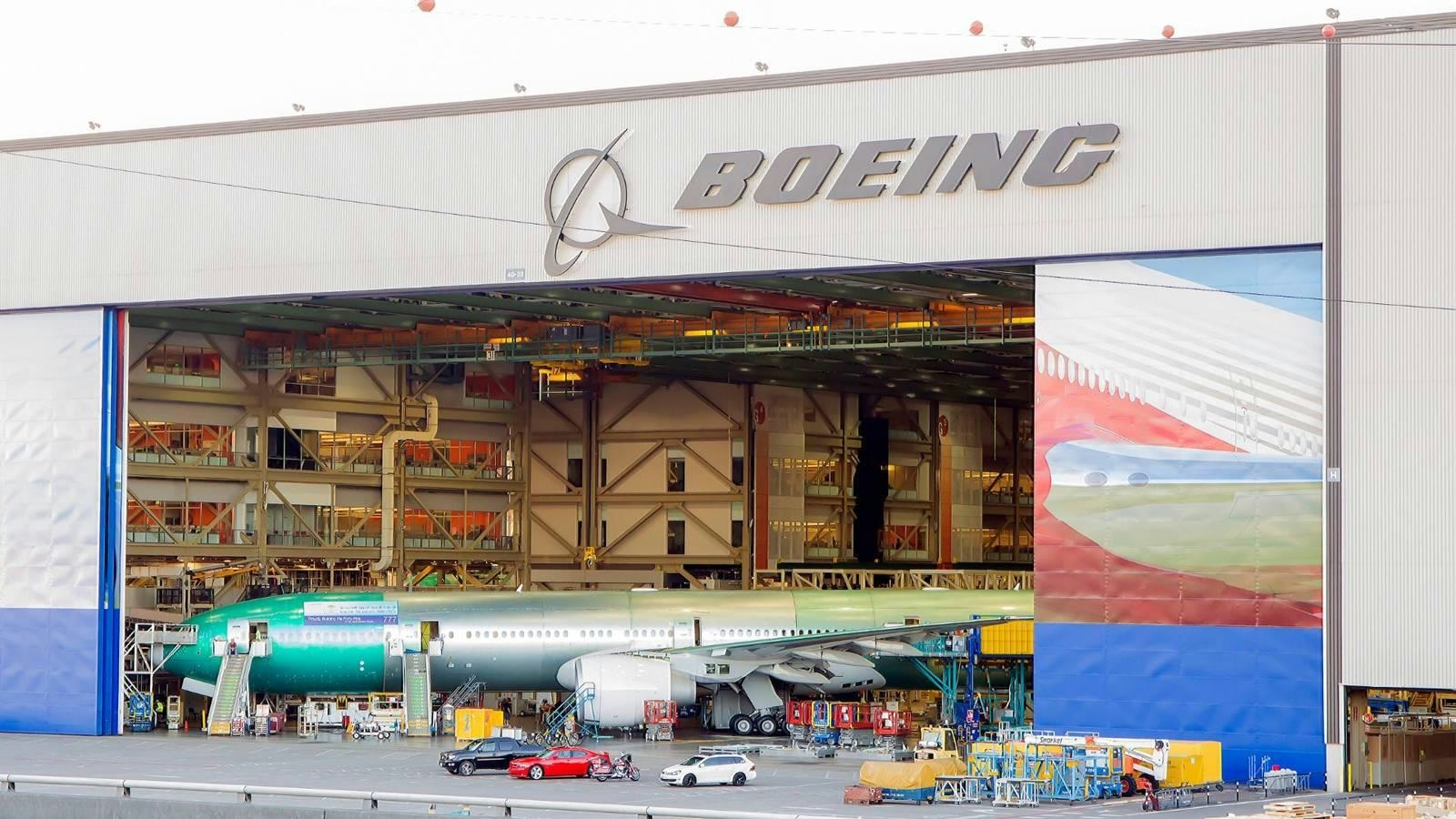
Boeing has outperformed its European rival Airbus in both aircraft deliveries and new orders for January, marking a significant milestone in the U.S. aerospace manufacturer’s recovery after several difficult years. The company delivered a total of 46 aircraft during the month, including 38 737 MAX jets and five 787 Dreamliners, representing Boeing’s third-strongest January on record. In comparison, Airbus reported just 19 deliveries over the same period.

The surge in Boeing’s new orders was even more pronounced, with 107 gross orders translating into 103 net new orders after cancellations. This figure substantially exceeds Airbus’s 49 net orders for January. Among the notable contracts were an order for 50 737 MAX jets from Aviation Capital Group and 34 new 787 Dreamliners, with 30 of those allocated to Delta Air Lines. This robust demand, particularly for the 737 MAX and the forthcoming 777X, reflects renewed confidence from airline customers in Boeing’s product offerings and may indicate a longer-term shift in market dynamics.

While Airbus maintains a lead in total deliveries for the year so far, Boeing’s strong showing in both deliveries and order intake suggests a potential turning point. The company’s success in securing new business points to a growing preference among airlines for Boeing aircraft as the aviation industry continues its recovery.

Industry Position and Financial Overview

Boeing’s operations span three primary segments: commercial airplanes, defense, space and security, and global services. Its commercial airplanes division directly competes with Airbus in the market for aircraft seating more than 130 passengers. The defense, space, and security segment contends with major players such as Lockheed Martin and Northrop Grumman, while the global services division provides aftermarket support to airlines worldwide.

With a market capitalization of $191.63 billion, Boeing remains a dominant force within the Aerospace & Defense sector. The company’s extensive product portfolio and global reach continue to underpin its competitive advantage.

Financial Health and Market Sentiment

Boeing’s financial position presents a nuanced picture. Over the past three years, the company has achieved modest revenue growth of 1.6%. However, profitability remains a challenge, with an operating margin of -6.05% contrasting with a net margin of 2.5%. The company carries a high debt-to-equity ratio of 9.98, though its current ratio of 1.19 indicates sufficient liquidity to meet short-term obligations.

Risk metrics highlight ongoing concerns, as Boeing’s Altman Z-Score stands at 1.63, placing it within the “distress zone” and signaling a potential bankruptcy risk within two years. On the valuation front, Boeing’s price-to-earnings (P/E) ratio of 121.4 and price-to-sales (P/S) ratio of 2.1 are near historical highs. Analyst sentiment remains broadly positive, with an average target price of $272.48 and a recommendation score of 1.8. Technical indicators, including a relative strength index (RSI 14) of 63.54, suggest the stock is approaching overbought territory.

Outlook

Boeing’s strong performance in January, both in terms of deliveries and new orders, represents a meaningful step forward in its recovery trajectory and may signal a shift in airline industry preferences. Despite ongoing financial and operational challenges, the company’s recent momentum points to renewed market confidence and the possibility of a sustained trend favoring Boeing’s aircraft in the years ahead.

More news
IATA Proposes New AI Initiatives for Global Air Cargo

IATA Proposes New AI Initiatives for Global Air Cargo

IATA Proposes New AI Initiatives for Global Air Cargo The International Air Transport Association (IATA) is intensifying its efforts to integrate artificial intelligence (AI) into global air cargo operations. By introducing new digital standards, facility blueprints, and industry charters, IATA aims to enhance the speed, intelligence, and resilience of freight transportation worldwide. These initiatives form part of a comprehensive strategy to modernize the sector through advanced technology adoption. From Concept to Practical Deployment in Cargo Operations Recent discussions at the World Cargo Symposium and IATA publications indicate a significant shift in AI’s role within air cargo—from a conceptual innovation to a practical operational tool. Industry leaders are increasingly focused on harnessing data-driven strategies, generative AI, and automation to reduce costs, minimize delays, and improve the reliability of shipment flows. Rather than treating AI as a standalone technology, these efforts are integrated into the broader digitalization of air cargo, aligning AI tools with established data-sharing and messaging standards. This approach facilitates seamless connectivity among airlines, handlers, freight forwarders, and customs authorities, avoiding fragmented or siloed solutions. IATA’s analysis of projected trade activity for 2025 highlights AI’s dual impact on the sector. Not only is AI transforming cargo operations, but the air cargo industry itself is a critical transporter of the high-value servers, storage devices, and memory chips essential for expanding global AI infrastructure. This interdependence strengthens the business rationale for further investment, as airlines seek to capture emerging high-tech cargo markets while employing AI to better forecast demand, optimize capacity, and protect time-sensitive shipments. Governance and Standards: The Digitalization Leadership Charter At the core of IATA’s AI strategy is the Digitalization Leadership Charter, which has garnered early support from airlines, handlers, and technology providers. The charter establishes shared principles focused on data standards, sustainability, and the secure deployment of technology, with particular emphasis on the responsible use of generative AI in cargo processes. A central element of the charter is the promotion of unified data formats and platforms, especially IATA’s ONE Record framework. This system enables the creation of machine-readable, end-to-end records for each consignment, providing AI applications with reliable data for functions such as anomaly detection, service prediction, and automated document verification. The charter also underscores the importance of cybersecurity and ethical technology use. As cargo operators increasingly experiment with AI for decision support and process automation, the framework advocates for algorithmic oversight and clear accountability mechanisms when human operators interact with automated recommendations. This governance model is timely, given the rapid integration of generative AI across booking portals, contact centers, and operational control rooms. Addressing Workforce and Industry Challenges Despite the promising potential of AI, IATA’s initiatives face significant challenges, particularly regarding workforce implications. Concerns have been voiced by students, job seekers, and labor advocates about the risk of automation displacing employment opportunities within the sector. Some industry stakeholders remain cautious, debating whether AI will primarily serve as a tool for operational efficiency or pose a threat to traditional job roles. Market responses to AI adoption are varied. While some competitors embrace AI to enhance efficiency, others resist integration to safeguard existing jobs and established operational models. There are also apprehensions about potential increases in operational costs and the broader consequences for hands-on roles in air cargo management. Looking Ahead As IATA’s AI-driven vision for air cargo continues to evolve, the industry is navigating a complex balance between innovation and workforce concerns. With formal governance frameworks and collaborative standards now in place, early adopters are expected to share best practices and demonstrate tangible improvements in efficiency and reliability. Ongoing dialogue among stakeholders will remain essential to ensure that the benefits of AI are equitably realized across the global air cargo ecosystem.
Aerospace Tech Week Announces Partnership with ADS Group

Aerospace Tech Week Announces Partnership with ADS Group

Aerospace Tech Week Partners with ADS Group to Launch UK Edition in London Aerospace Tech Week has formalised a strategic partnership with ADS Group, the United Kingdom’s foremost trade association representing the aerospace, defence, security, and space sectors. This collaboration comes as Aerospace Tech Week prepares to debut its inaugural UK edition at ExCeL London on 11–12 November. The alliance seeks to reinforce the UK’s aerospace technology ecosystem and establish the event as a pivotal platform for innovation and industry engagement. Strengthening the UK Aerospace Technology Ecosystem Aerospace Tech Week, a well-established event series with origins in continental Europe and recent expansions into the Americas, is positioning its London edition to align closely with the priorities of the UK aerospace sector. The partnership with ADS Group, which represents over a thousand UK companies ranging from major manufacturers to small and medium-sized suppliers, is expected to deepen the event’s footprint within the UK market. ADS Group’s mandate includes fostering innovation, promoting exports, and supporting industrial growth across the aerospace and defence industries. The event will focus on key areas such as avionics, connected aircraft, maintenance and engineering software, flight operations technology, cybersecurity, and sustainability. These themes reflect the pressing challenges and opportunities facing the UK aerospace sector, particularly as it confronts the need to decarbonise, digitalise, and modernise air traffic infrastructure. Industry experts highlight the growing importance of forums that bring together airlines, manufacturers, technology suppliers, and regulators to drive progress in these critical domains. Opportunities and Challenges for the UK Aerospace Cluster ADS Group views the partnership as a means to integrate Aerospace Tech Week’s London edition within the broader UK aerospace ecosystem, complementing existing trade fairs and specialist conferences. The association has a track record of co-developing major industry events that enhance the UK’s visibility in high-growth areas such as space and advanced manufacturing. The UK aerospace industry is widely recognised as a national flagship, with particular strengths in wings, engines, cabin interiors, and complex systems. By hosting a technology-focused event at a prominent venue like ExCeL London, supported by the national trade association, the partnership aims to highlight UK capabilities in digital aviation, data-driven maintenance, and low-emission flight technologies. Nonetheless, the collaboration faces significant challenges. Maintaining the event’s relevance and securing strong engagement within a competitive UK aerospace landscape will be essential, especially as other industry events and trade bodies may seek to bolster their own profiles in response. Additionally, ongoing supply chain constraints and evolving regulatory frameworks present further complexities for organisers and participants alike. Market Impact and Industry Reception Previous Aerospace Tech Week editions have attracted senior engineering and programme leaders from airlines, airframers, avionics suppliers, software vendors, and regulatory authorities. With ADS Group’s extensive network, the London event is anticipated to draw a wider array of UK-based companies, ranging from Tier 1 integrators to specialised software and component firms pursuing new export opportunities. Market observers are expected to focus on the event’s capacity to showcase innovation and sustainability within aviation technology. Competitors may respond by enhancing their own offerings to capture the attention of industry leaders and stakeholders. The event programme will include technical sessions, workshops, and exhibitions designed to foster practical collaboration and knowledge exchange as the UK aerospace sector navigates a rapidly evolving environment.
Haveus Aerotech Opens ₹450 Crore ATR MRO Facility in Karnataka

Haveus Aerotech Opens ₹450 Crore ATR MRO Facility in Karnataka

Haveus Aerotech Opens ₹450 Crore ATR MRO Facility in Karnataka Haveus Aerotech has inaugurated a dedicated Maintenance, Repair, and Overhaul (MRO) facility for ATR aircraft in Karnataka, backed by a ₹450 crore investment. This development marks a significant advancement in bolstering India’s domestic aviation maintenance infrastructure. Established in collaboration with the Karnataka government, the new facility is projected to generate approximately 100 jobs and will specialize in servicing critical ATR components, including radomes, nacelles, landing gear, and auxiliary power units (APUs). Strengthening India’s MRO Capabilities Amid Market Growth This initiative aligns with India’s strategic objective to enhance self-reliance in MRO services, capitalizing on the country’s rapidly expanding aviation sector and supportive policy environment. The Indian MRO market, currently valued at around $2 billion, is anticipated to grow to $7 billion by 2034. Despite this growth, a significant share of maintenance activities continues to be outsourced internationally, resulting in considerable foreign exchange outflows. Government measures such as the ‘Make in India’ campaign, the reduction of Goods and Services Tax (GST) on MRO services from 18% to 5%, and the allowance of 100% Foreign Direct Investment (FDI) have collectively fostered a conducive atmosphere for domestic enterprises like Haveus Aerotech. Additionally, Karnataka’s aerospace and defense policies are designed to attract investment and develop a robust industrial ecosystem. Haveus Aerotech, a subsidiary of the Satyasai Group operational since 2014, holds certifications from the US Department of Transportation (DOT), India’s Directorate General of Civil Aviation (DGCA), and the European Union Aviation Safety Agency (EASA). As of March 31, 2024, the company reported a net worth of ₹21.80 crore and achieved a 120.86% year-on-year increase in operating income, reaching ₹45.23 crore for the fiscal year 2024. This financial momentum positions Haveus Aerotech to undertake significant projects, with its focus on ATR aircraft strategically aligned with government initiatives such as the UDAN scheme, which promotes regional connectivity. Navigating a Competitive and Complex MRO Landscape Despite these advantages, the Indian MRO sector remains intensely competitive. Established domestic players including Air India Engineering Services Limited (AIESL), Air Works, and GMR Aero Technic actively operate in this space, while global firms such as Lufthansa Technik and ST Engineering maintain a strong international presence. The Adani Group is expanding its MRO capabilities through acquisitions, and international manufacturers like Safran are establishing advanced facilities within India. Furthermore, AerSale has highlighted concerns regarding a hypercompetitive feedstock market, underscoring the sector’s fierce rivalry. The launch of Haveus Aerotech’s facility is expected to heighten demand for skilled engineers and technicians, a challenge already acknowledged within the industry. Airbus’s new technology hub in Bengaluru aims to mitigate this talent shortage, while competitors may respond by expanding their own MRO capacities, exemplified by Aequs’s manufacturing growth in Karnataka. Additionally, geopolitical tensions, such as the ongoing conflict involving Iran, pose risks of logistical disruptions and deferred maintenance, adding complexity to the sector’s growth prospects. To establish a competitive edge, Haveus Aerotech will need to leverage its regulatory certifications and operational efficiencies while addressing workforce constraints and potential geopolitical uncertainties. This investment not only supports India’s ambition to emerge as a global MRO hub but also reflects the evolving dynamics and challenges within the country’s aviation maintenance industry.
Haveus Aerotech Signs MoU with Karnataka Government for Rs 450 Crore MRO Facility

Haveus Aerotech Signs MoU with Karnataka Government for Rs 450 Crore MRO Facility

Haveus Aerotech Signs MoU with Karnataka Government for Rs 450 Crore MRO Facility Haveus Aerotech, a prominent provider of aviation maintenance, repair, and overhaul (MRO) services, has formalized a memorandum of understanding (MoU) with the Karnataka government to develop a state-of-the-art MRO facility dedicated to ATR aircraft. The company has committed an investment of Rs 450 crore over the next five years to establish this advanced center. Partnership and Facility Focus Under the terms of the agreement, the Karnataka government will facilitate Haveus Aerotech in obtaining the necessary permissions, registrations, and incentives aligned with state policies. The new facility will specialize in component MRO services, including ATR aircraft repair, radome and nacelle maintenance, landing gear servicing, and auxiliary power unit (APU) overhauls. The project is expected to create employment opportunities for approximately 100 individuals, contributing to the region’s growing aerospace workforce. Context and Industry Dynamics This development comes amid rapid expansion in India’s MRO sector, fueled by increased investments and rising demand for domestic aviation services. Haveus Aerotech’s announcement follows recent approvals from the Directorate General of Civil Aviation (DGCA) to broaden its service offerings at its Bengaluru and Delhi locations. Notably, the Bengaluru facility now hosts South India’s first and only service station authorized by Safran Cabin Germany, a leading aircraft interiors manufacturer. The Gurgaon-based company emphasized its commitment to enhancing aviation maintenance within India by investing in infrastructure and securing partnerships with world-class original equipment manufacturers (OEMs) such as Safran Cabin Germany. This strategy aims to make maintenance operations faster, more cost-effective, and reliable domestically. Competitive Landscape and Market Response Despite these advancements, Haveus Aerotech faces significant competition in the region. Airbus recently inaugurated a technology hub in Bengaluru to support its global aircraft programs and MRO activities, intensifying competition in the sector. Other key players, including AerSale, are also increasing investments in feedstock and MRO facilities to capitalize on the expanding Indian market. Market reaction to Haveus Aerotech’s MoU has been favorable, with the company’s stock rising by 1.65% following the announcement. Industry analysts anticipate that competitors will escalate efforts to secure additional MRO contracts and investments as the sector continues to attract both domestic and international participants. The establishment of this new facility highlights Karnataka’s emerging status as a significant hub for aviation and aerospace services, reflecting a broader national trend toward strengthening India’s capabilities in aircraft maintenance and support.
Airline CEO Pilots New Airbus A350 on Delivery Flight

Airline CEO Pilots New Airbus A350 on Delivery Flight

STARLUX Airlines CEO Pilots Inaugural Airbus A350-1000 Delivery Flight STARLUX Airlines Chairman Chang Kuo-wei personally captained the airline’s first Airbus A350-1000 delivery flight from Toulouse, France, to Taipei Taoyuan International Airport (TPE) on January 6, 2026. This hands-on demonstration of leadership reflects Chang’s enduring passion for aviation and his technical expertise. A licensed pilot and former chairman of EVA Air, Chang is widely recognized for his meticulous approach to airline management. His decision to pilot the delivery flight underscored the importance of the A350-1000 as STARLUX’s new flagship aircraft. The transcontinental journey covered thousands of nautical miles and concluded with a smooth landing at TPE, where the aircraft was greeted with a traditional water cannon salute. Aviation enthusiasts and industry observers closely followed the event, noting Chang’s skilled piloting and STARLUX’s dedication to operational excellence. Upon arrival, Chang remarked, “Bringing our first A350-1000 home is an incredibly proud moment for STARLUX Airlines. This aircraft represents the future of our long-haul operations, offering unparalleled comfort, efficiency, and a truly luxurious experience for our passengers. To personally fly it here is a privilege and a powerful reminder of our commitment to excellence in every aspect of our service.” Strategic Significance of the Airbus A350-1000 for STARLUX The Airbus A350-1000, the largest variant in the A350 family, is renowned for its advanced technology, fuel efficiency, and spacious cabin design. Its introduction enables STARLUX to expand its intercontinental network, particularly targeting routes to North America and Europe. Passengers can anticipate the airline’s signature premium experience, featuring state-of-the-art inflight entertainment, gourmet dining, and attentive service across all classes. This delivery arrives amid a dynamic and competitive aviation market. Atlas Air Worldwide’s recent order for up to 40 Airbus A350F freighters—the largest agreement for the new cargo jet—signals robust confidence in the A350 platform’s capabilities. This development is expected to intensify competition among cargo operators as other logistics companies consider the A350F as a viable alternative. Concurrently, China Airlines’ decision to reduce its previous order for A350-900s and A321neos reflects a broader industry trend of airlines reassessing fleet strategies in response to evolving market conditions. Such shifts may prompt competitors to highlight the strengths of their own aircraft, potentially heightening rivalry within the sector. Airbus’s strong delivery figures in recent months further emphasize the sustained demand for its aircraft, placing pressure on rival manufacturers to enhance their product offerings to maintain market share. Founded in 2018 by Chang Kuo-wei, STARLUX Airlines is a full-service international carrier headquartered in Taipei, Taiwan. Operating a modern fleet of Airbus aircraft, the airline continues to broaden its network across Asia, North America, and beyond, with a focus on delivering a boutique, luxury flying experience centered on comfort and exceptional service.
Airbus Faces Supply Chain Challenges Amid Defense Sector Growth

Airbus Faces Supply Chain Challenges Amid Defense Sector Growth

Airbus Faces Supply Chain Challenges Amid Defense Sector Growth Airbus SE, the European aerospace giant, is navigating a complex post-pandemic recovery characterized by strong commercial aviation demand alongside persistent supply chain difficulties. As global air travel rebounds and defense budgets expand amid escalating geopolitical tensions, Airbus’s growing presence in the U.S. market and its expanding defense portfolio have attracted heightened interest from North American investors. Business Model and Operational Dynamics Airbus’s operations are organized into three primary divisions: Commercial Aircraft, Helicopters, and Defence and Space. The Commercial Aircraft segment, anchored by the widely popular A320 family and the A350 wide-body jets, accounts for the majority of the company’s revenue. This division benefits from a record order backlog exceeding 8,000 aircraft, providing long-term visibility but also placing significant pressure on production ramp-ups to drive earnings growth. The company’s business model depends heavily on long-term contracts and a global network of suppliers, with key partners located across the United States, Europe, and Asia. While this diversified supply chain mitigates some risks, it also exposes Airbus to ongoing disruptions—a challenge mirrored across the UK manufacturing sector, where concerns over supply chain resilience are mounting amid energy cost volatility, labor market pressures, and fluctuating material prices. In recent years, Airbus has accelerated its digital transformation efforts, incorporating AI-driven manufacturing processes and predictive maintenance to enhance operational efficiency and offset the substantial fixed costs associated with research and development. Although these initiatives provide a degree of stability through the company’s extensive backlog, Airbus remains vulnerable to economic downturns and supply chain volatility. Market Position and Competitive Environment Airbus holds a dominant position within the commercial aviation duopoly alongside Boeing, commanding over half of the narrow-body market with its A320neo family. Its competitive advantage is bolstered by the use of advanced composite materials and efficient engine partnerships with firms such as CFM International and Pratt & Whitney. In the wide-body segment, the A350 competes directly with Boeing’s 777X, while in the defense arena, Airbus contends with major players like Lockheed Martin and BAE Systems through products including the A400M military transport and ArianeGroup’s space systems. The helicopter division maintains leadership in civil and parapublic markets, recently establishing a European supply chain for the H175M model to reduce dependence on Chinese aerostructure suppliers. Airbus is also proposing a Canadian final assembly line to address evolving defense procurement requirements. These strategic moves align with broader industry trends toward supply chain localization aimed at mitigating geopolitical risks. Industry Drivers and Persistent Challenges The aerospace sector is supported by forecasts predicting a doubling of global air traffic by 2040, prompting airlines to place record orders for fuel-efficient aircraft. In January 2026, commercial aircraft orders surged by 71%, reflecting renewed market confidence and contributing to Airbus’s unprecedented backlog. Nevertheless, supply chain constraints, regulatory complexities, and tariff uncertainties continue to pose challenges, even as some pressures begin to ease. Despite generally optimistic outlooks—two-thirds of UK manufacturers report positive sentiment—the reliance on self-financing models is increasingly unsustainable. For Airbus, ongoing risks such as supply chain delays, inflationary pressures, labor shortages, and geopolitical instability threaten program delivery and customer satisfaction. As Airbus strives to balance robust demand with operational headwinds, its capacity to adapt supply chains and sustain production momentum will be pivotal in maintaining its leadership across both commercial and defense aerospace sectors.
Shandong Airlines Leases 10 Boeing 737 Jets in $405 Million Fleet Upgrade

Shandong Airlines Leases 10 Boeing 737 Jets in $405 Million Fleet Upgrade

Shandong Airlines Commits $405 Million to Lease 10 Boeing 737 Jets Shandong Airlines, a prominent regional carrier headquartered in Jinan, China, has entered into a lease agreement for ten Boeing 737 aircraft valued at approximately $405 million (2.88 billion yuan). This strategic initiative aims to modernize the airline’s aging fleet and enhance its competitive standing in both domestic and international markets. Fleet Modernization and Lease Structure The new aircraft, consisting of Boeing 737-800 and Boeing 737 MAX models, will be delivered in phases over the next two years. The lease terms are structured to provide operational flexibility and financial prudence: three Boeing 737-800s will be leased for ten years, an additional three for eleven years, and four Boeing 737 MAX jets for twelve years. This staggered approach allows Shandong Airlines to systematically upgrade its fleet while managing costs effectively. As a subsidiary of Air China, Shandong Airlines operates an all-Boeing 737 fleet, servicing more than 70 cities across China with over 4,400 weekly flights. The airline’s continued reliance on Boeing aircraft underscores a longstanding partnership with the American manufacturer, despite ongoing complexities in US-China trade relations. Financial and Market Implications Opting to lease rather than purchase the aircraft offers Shandong Airlines significant financial advantages. By circumventing the substantial upfront costs associated with buying new planes, the airline can accelerate fleet modernization more efficiently. This approach is particularly critical given the financial pressures stemming from an aging fleet and persistent operational losses. The leased jets, described as “relatively new” and in “good technical condition,” are expected to enhance service reliability and increase capacity. Nevertheless, the $405 million commitment arrives amid considerable uncertainty in the aviation sector. Volatile fuel prices and broader economic challenges may complicate Shandong Airlines’ ability to meet its lease obligations. The decision also coincides with intensifying competition in the regional market. Other carriers, including Air Algerie, have recently placed significant orders for Boeing 737 models, reflecting a wider industry trend toward fleet renewal. Market observers anticipate that Shandong Airlines’ fleet expansion could prompt competitors to recalibrate their strategies, potentially accelerating fleet upgrades or operational improvements as airlines strive to maintain market share and competitive advantage. Despite these challenges, Shandong Airlines’ lease agreement signals a clear commitment to maintaining a modern and efficient fleet, reinforcing its position within China’s rapidly evolving aviation landscape. The airline’s enduring loyalty to Boeing remains evident as it continues to depend on the US manufacturer to support its growth and modernization objectives.
IndiGo Flight Makes Emergency Landing at Delhi Airport Following Suspected Engine Failure

IndiGo Flight Makes Emergency Landing at Delhi Airport Following Suspected Engine Failure

IndiGo Flight Makes Emergency Landing at Delhi Airport Following Suspected Engine Failure An IndiGo flight en route to Bengaluru was compelled to make an emergency landing at Delhi’s Indira Gandhi International Airport on Thursday morning after a suspected engine failure occurred mid-flight. The aircraft, carrying 180 passengers and crew members, touched down safely at 11:30 AM, with no injuries reported. Incident Overview and Safety Response Flight 6E-120, a regularly scheduled service from Delhi to Bengaluru, was cruising over northern India when the flight crew detected a potential malfunction in one of the engines. In accordance with standard aviation protocols, the captain immediately informed air traffic control and requested an urgent diversion back to Delhi. Emergency services were placed on standby as a precautionary measure, and the aircraft executed a safe landing. Passengers were promptly evacuated, and IndiGo confirmed that all onboard were unharmed. The crew’s swift and professional response has been widely praised by aviation authorities and experts. Although engine failures are infrequent, pilots undergo rigorous training to manage such emergencies, including diverting to the nearest suitable airport and maintaining close coordination with ground control. This incident highlights the critical importance of continuous crew training, stringent operational procedures, and regular aircraft maintenance. Authorities have initiated an investigation to ascertain the precise cause of the suspected engine malfunction. Preliminary reports suggest a technical fault, but further analysis is ongoing to prevent recurrence and ensure the safety of future flights. The event has reignited discussions about the necessity of rigorous maintenance checks and the vital role of preparedness in aviation safety. Broader Context and Passenger Experience The emergency landing occurs amid a challenging period for IndiGo, which is currently under increased scrutiny from aviation regulators following recent operational disruptions, including widespread flight cancellations. The sudden resignation of CEO Pieter Elbers during this turbulent time has further intensified concerns regarding the airline’s leadership stability and operational reliability. Industry analysts caution that such incidents may have wider implications, potentially affecting IndiGo’s reputation and stock market performance. Competitors might seek to leverage these challenges to attract passengers concerned about safety and service reliability. Internally, the airline faces the dual challenge of addressing technical issues while reassuring customers about its commitment to safety standards. Passengers described the experience as unsettling but commended the professionalism and composure of the crew, who maintained clear communication and calm throughout the emergency. Many expressed relief at the safe resolution and praised IndiGo’s handling of the situation. As the investigation proceeds, IndiGo and aviation authorities remain focused on identifying the root cause of the engine issue and reinforcing safety protocols. This incident serves as a reminder of the complexities inherent in airline operations and the paramount importance of passenger safety within the aviation industry.
IndiGo Flight Makes Emergency Landing at Delhi Airport After Engine Failure

IndiGo Flight Makes Emergency Landing at Delhi Airport After Engine Failure

IndiGo Flight Makes Emergency Landing at Delhi Airport Following Engine Failure An IndiGo flight from Visakhapatnam to Delhi was forced to make an emergency landing at Indira Gandhi International Airport on Saturday after reporting an engine failure, according to the Civil Aviation Ministry. The incident, involving flight 6E 579, has intensified scrutiny of IndiGo’s safety protocols amid ongoing operational challenges faced by the airline. Incident Details and Response The Boeing 737, carrying 160 passengers, experienced the engine malfunction shortly before its scheduled arrival in Delhi. Airport authorities declared a full emergency at 10:39 a.m., with the Delhi Fire Service alerted at 10:53 a.m. The aircraft successfully landed at 10:59 a.m., as confirmed by flight tracking data from Flightradar24. In an official statement, an IndiGo spokesperson explained that a technical snag was detected just before landing. The pilots requested priority landing as a precautionary measure, following standard operating procedures. The airline emphasized that all relevant authorities were promptly informed and that the aircraft is currently undergoing necessary checks and maintenance. The statement reaffirmed IndiGo’s commitment to the safety of its passengers and crew as its highest priority. Regulatory and Industry Implications Although airport operations continued without disruption after the emergency landing, the incident is expected to prompt increased regulatory scrutiny of IndiGo’s maintenance and safety standards. Aviation authorities are likely to investigate the cause of the engine failure and evaluate the airline’s adherence to safety protocols. This could lead to regulatory fines or heightened oversight. The emergency landing occurs amid a turbulent period for IndiGo. The airline has recently faced mounting pressure to uphold service standards amid regulatory demands and operational disruptions. The resignation of CEO Pieter Elbers following a significant operational meltdown has further raised concerns about leadership stability and the company’s capacity to manage ongoing challenges. Market analysts warn that such incidents may temporarily undermine passenger confidence, particularly among frequent flyers. Competitors could leverage the situation to highlight their own safety records and operational reliability, potentially affecting IndiGo’s market position. As investigations proceed, IndiGo’s management confronts growing pressure to reassure both regulators and the public of its dedication to safety and operational excellence. The airline has reiterated that the affected aircraft is undergoing comprehensive maintenance checks and that passenger and crew safety remains paramount.
Why Airlines Retire Aircraft Early

Why Airlines Retire Aircraft Early

Why Airlines Retire Aircraft Early Airlines are increasingly retiring relatively young aircraft, including models such as the Airbus A320neo and A220, some of which are only four to eight years old. This trend is not driven by the age of the airframes but rather by persistent engine reliability problems and the soaring value of spare engines. Recent fleet data and analysis from industry firms like Naveo highlight that engines such as the Pratt & Whitney PW1000G have experienced prolonged inspection and repair backlogs. These issues have left aircraft grounded for extended periods, fundamentally altering how these assets are valued within the industry. Engine Reliability and Supply Chain Challenges A primary factor behind the early retirement of aircraft is the reliability of new-generation engines. Although modern engines like the PW1000G and CFM LEAP are engineered for improved fuel efficiency and reduced emissions, their increased technical complexity has resulted in unforeseen problems. These include premature wear, contamination of metal components, and frequent maintenance requirements. Airlines such as IndiGo have reported significant portions of their A320neo fleets grounded for months due to ongoing engine inspections. Similarly, Air Austral has faced difficulties maintaining its A220 fleet amid recurring engine faults. These reliability challenges are exacerbated by global supply chain disruptions and limited maintenance capacity. Even when the airframes remain structurally sound, the inability to obtain reliable engines renders many aircraft economically unviable. Consequently, airlines are compelled to make difficult decisions, often opting to retire aircraft earlier than originally planned rather than endure continuous operational disruptions and escalating costs. The Rising Value of Spare Engines Another critical factor reshaping airline fleet management is the dramatic increase in the value of serviceable spare engines. Due to global shortages and maintenance bottlenecks, a single functioning engine can command prices between $10 million and $15 million (€9–14 million) or more. Airlines such as Lufthansa and Spirit Airlines have reported grounding aircraft simply because spare engines were unavailable, despite the rest of the aircraft being fully operational. This scarcity has made dismantling relatively new aircraft for valuable components more profitable than continuing to operate them. Broader Industry Pressures and Market Dynamics The trend toward early aircraft retirements is further influenced by elevated maintenance costs associated with newer engines, high fuel prices, and ongoing supply chain challenges. Industry analysts anticipate a wave of liquidations and retirements of older, maintenance-intensive aircraft, which could substantially reduce the number of such planes in the global fleet. Geopolitical conflicts, particularly in regions like the Middle East, add further complexity to airline operations, sometimes resulting in flight cancellations and operational adjustments that accelerate retirement decisions. Despite these challenges, the aerospace sector is exhibiting renewed confidence. There has been a notable increase in aircraft orders and deliveries, signaling a gradual easing of supply chain pressures and a return of optimism. Nevertheless, the current combination of engine reliability issues, component shortages, and shifting economic factors means that dismantling modern aircraft can often be more financially advantageous than keeping them in service—an unprecedented development that is reshaping global airline fleets.
line










