
Orchestrate AI insights into action

Trending
Categories
Boeing Reportedly Developing Successor to 737 Max
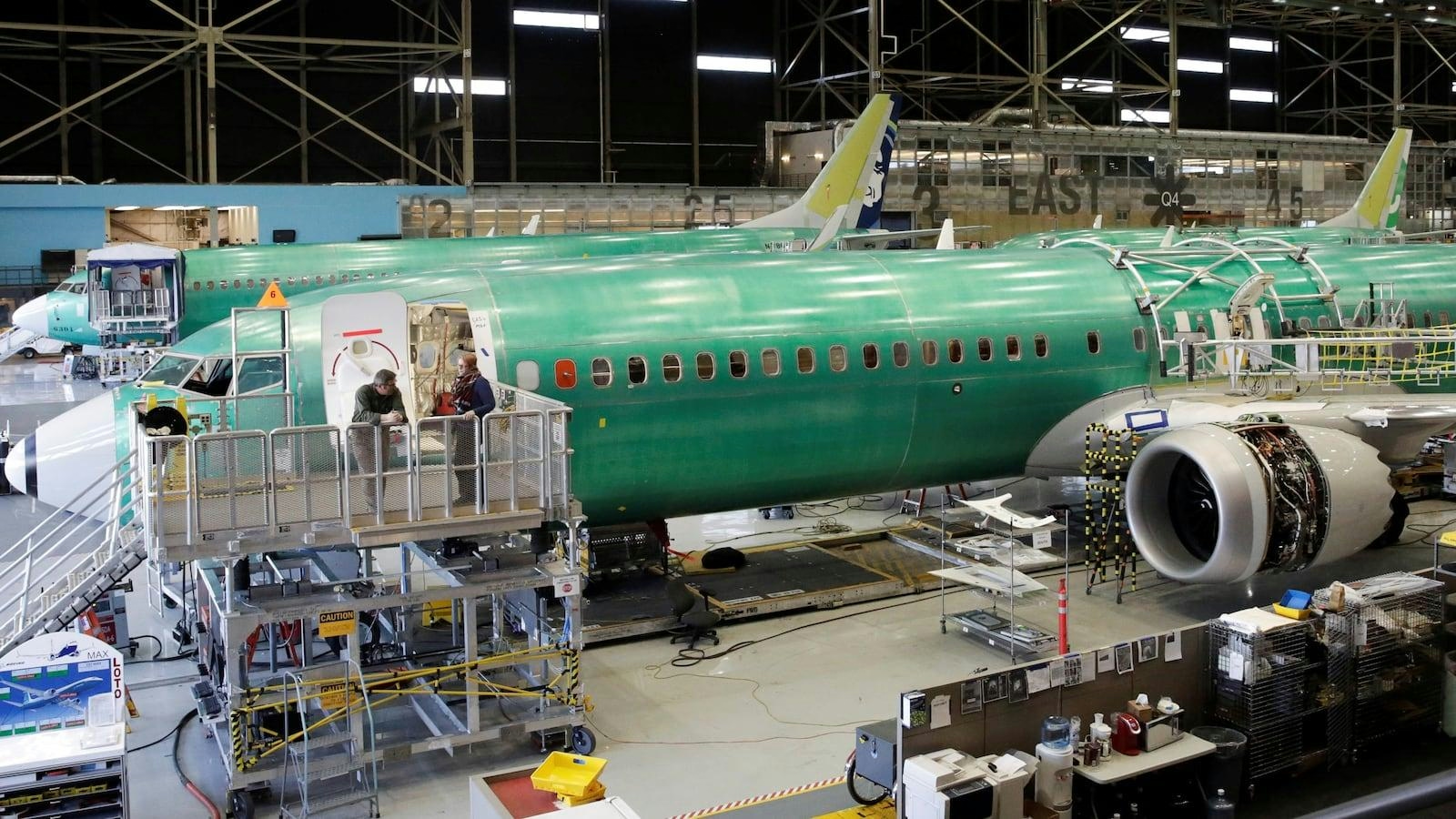
Boeing Developing Successor to the 737 Max
Boeing is reportedly in the initial stages of designing a new aircraft intended to succeed the 737 Max, according to a report by The Wall Street Journal. The project, which remains unnamed and in the planning phase, includes the development of a new flight deck for a next-generation narrowbody jet. This initiative suggests a strategic pivot for Boeing, which has heavily invested in the 737 Max program over the past decade.
Background and Challenges of the 737 Max
The 737 Max, an updated and more fuel-efficient iteration of Boeing’s best-selling 737 series, has achieved nearly 7,000 sales worldwide. However, the aircraft has been mired in controversy following two fatal crashes in Indonesia and Ethiopia in 2018 and 2019, which resulted in 346 deaths. Investigations attributed these accidents to flaws in the Maneuvering Characteristics Augmentation System (MCAS), a flight control software designed to prevent stalls. In response to these incidents, Boeing reached a non-prosecution agreement with the U.S. Department of Justice, admitting to conspiring to obstruct a federal investigation into MCAS and agreeing to pay $1.1 billion in penalties.
Despite these setbacks, the 737 Max continues to face scrutiny. In 2023, a door plug blew out mid-flight on an Alaska Airlines 737 Max 9, prompting lawsuits from passengers and intensified inspections by the Federal Aviation Administration (FAA). Additionally, Boeing has encountered delays in certifying the Max 7 and Max 10 variants due to persistent engine deicing system issues, postponing their entry into commercial service.
Market Response and Future Prospects
Market confidence in the 737 Max endures, as evidenced by Turkish Airlines’ recent order for additional jets, underscoring sustained demand among major carriers. Meanwhile, Boeing’s competitors remain watchful but have yet to publicly respond to the company’s plans for a new aircraft.
In pursuit of advanced propulsion options, Boeing CEO Kelly Ortberg reportedly engaged with Rolls-Royce Holdings officials in the United Kingdom earlier this year to explore potential new engine partnerships. Currently, the 737 Max is powered by the CFM International LEAP-1B engine, a joint development between GE Aerospace and Safran Aircraft Engines.
With the successor project still in its infancy, Boeing has not announced a development timeline or expected service entry date. The aviation industry is closely monitoring these developments, recognizing that any replacement for the 737 Max would represent a significant milestone for the world’s largest commercial airplane manufacturer.

Etihad Airways Suspends Airbus A380 Flights on Key Route

Aditya Birla Group Seeks Approval for Aircraft Leasing in GIFT City

Qatar Airways Highlights Innovation and Connectivity at Arabian Travel Market 2026

Hong Kong's Five-Year Plan Includes Andrew Fan's Aircraft Parts Processing Hub Proposal

ACIA Aero Leasing Delivers ATR72-600 to Air Nostrum

RTX Appoints Jill Albertelli as Head of Pratt & Whitney

TAT Technologies Joins Beyond Aero Hydrogen Aircraft Program

AURAK Study Highlights Barriers to Air Taxi Adoption in Emerging Economies

Xiamen Air Selects Altitude for 787 Maintenance at Heathrow

Etihad and Swissport Extend Global Partnership
