Image

Orchestrate AI insights into action

Join the AeroGenie waitlist today!

Trending

Categories

Boeing Surpasses Airbus Orders in 2025 as Deliveries Total 600
January 18, 2026By ePlane AI
Boeing Surpasses Airbus Orders in 2025 as Deliveries Total 600
0
0
Boeing Orders
Airbus Orders
737 MAX

Boeing Surpasses Airbus in 2025 Aircraft Orders as Deliveries Reach Seven-Year High

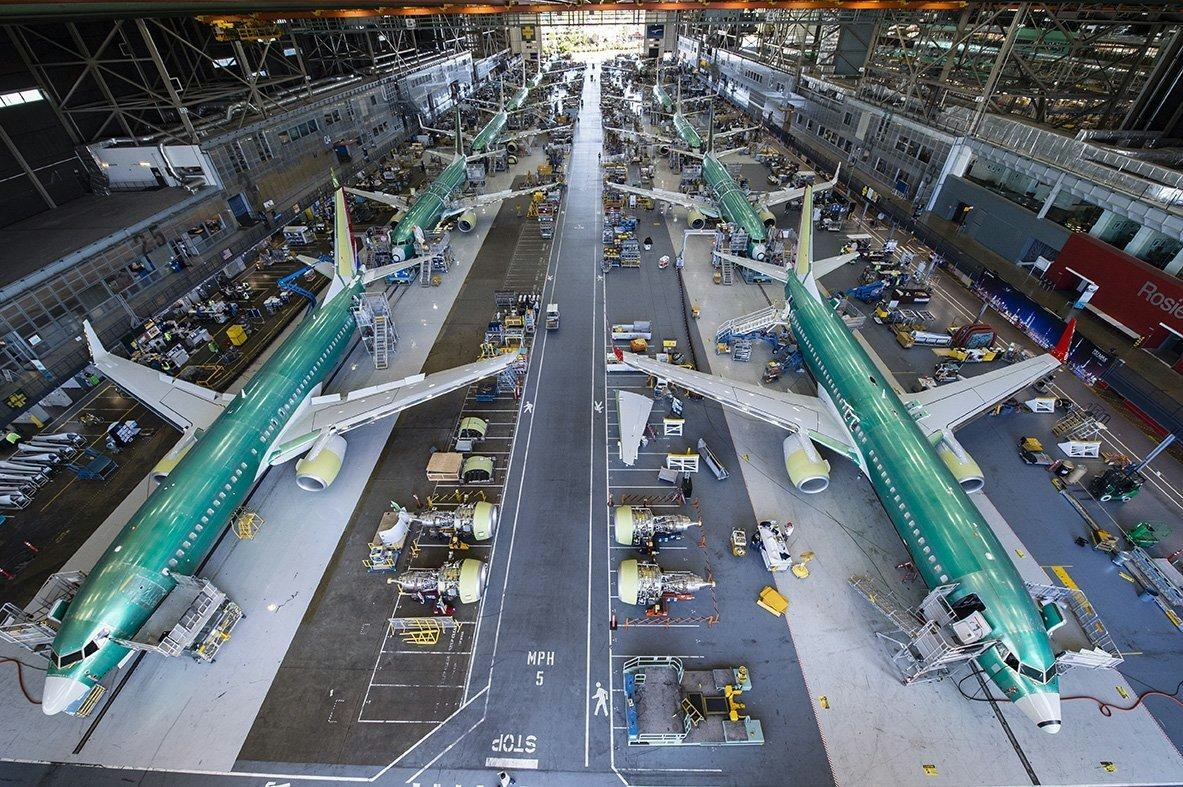
In a notable shift in the aerospace industry, Boeing has overtaken Airbus in aircraft orders for the first time since 2018, signaling a significant development in the longstanding competition between the two manufacturers. In 2025, Boeing secured 1,173 net orders, surpassing Airbus’s 889 net orders and ending a seven-year period of Airbus dominance in order volumes. Boeing’s gross orders reached 1,175, compared to Airbus’s 1,000.

Strong Demand for Boeing’s 737 MAX and 787 Dreamliner

The surge in Boeing’s orders was primarily driven by the popularity of its 737 MAX family, which accounted for 591 new orders and 447 of the company’s total 600 deliveries. The fourth quarter alone saw the delivery of 117 737 MAX aircraft. Alaska Airlines emerged as a significant customer, placing its largest-ever order in December for 105 Boeing 737-10s. This order increased Alaska’s total 737 MAX order book to 174 aircraft, alongside an additional purchase of five 787 Dreamliners.

Boeing’s 787 Dreamliner series also experienced strong demand, particularly from Middle Eastern carriers such as Qatar Airways and Etihad Airways. Overall, Boeing received orders for 381 aircraft in the 787 family, with other notable customers including Turkish Airlines, British Airways, Alaska Airlines, and Gulf Air. The momentum continued into 2026, with Delta Airlines ordering 60 Dreamliners and Aviation Capital Group acquiring 50 737 MAX jets.

Delivery Figures and Industry Challenges

Despite Boeing’s impressive order performance, Airbus maintained its lead in deliveries, delivering 793 aircraft in 2025 compared to Boeing’s 600. Nevertheless, Boeing’s delivery total represents its highest output in seven years. Both companies continue to grapple with challenges such as engine and supply chain constraints, which have impeded production and delivery schedules. Airbus, for example, revised its delivery targets last year following a major recall of its A320 family due to concerns over solar radiation affecting flight control data.

Boeing has faced intense scrutiny following several high-profile incidents, including two fatal 737 MAX crashes in Indonesia and Ethiopia, as well as the June 2024 Air India crash. The company also encountered renewed criticism after a door plug incident on an Alaska Airlines 737 MAX. However, after extensive safety evaluations, the Federal Aviation Administration (FAA) expressed renewed confidence in Boeing, permitting an increase in production from 38 to 42 jets per month. The 737 MAX 10 recently advanced to the second phase of FAA certification after delays related to engine de-icing issues.

Market Response and Competitive Outlook

The market has shown interest in Boeing’s recovery, though industry analysts and competitors remain cautious about the company’s ability to sustain its delivery momentum. Rival manufacturers are focusing on strategies to reclaim market share, particularly in the highly competitive narrowbody segment where Boeing has recently made significant gains.

As Boeing and Airbus continue to navigate operational and regulatory challenges, the competition for market leadership in the global aviation industry remains intensely contested.

More news
United Airlines Shifts Order to Airbus Amid Doubts Over Boeing’s Delivery Schedule

United Airlines Shifts Order to Airbus Amid Doubts Over Boeing’s Delivery Schedule

United Airlines Shifts Order to Airbus Amid Doubts Over Boeing’s Delivery Schedule A Strategic Shift in Fleet Composition Airbus has steadily increased its foothold among U.S. carriers, securing substantial orders for its A321 aircraft from Delta Air Lines and establishing American Airlines as the world’s largest operator of the A320 family. United Airlines, however, has historically remained aligned with Boeing, largely due to its 2010 merger with Continental Airlines, which left it with an extensive Boeing 737 fleet. For years, United continued to place significant orders for Boeing’s narrowbody jets, including the 737 MAX 8 and 9 models. Notably, United was an early advocate of the 737 MAX 10, committing to purchase 100 units in 2017. Despite this early commitment, nearly a decade later, United has yet to receive a single 737 MAX 10, as the model remains uncertified and delayed by several years. This growing uncertainty surrounding Boeing’s delivery schedule has compelled United to reassess its fleet strategy. The airline has gradually shifted its order portfolio toward the Airbus A321neo, initially supplementing its Boeing orders but increasingly converting MAX 10 commitments to MAX 9s and expanding its Airbus acquisitions. Modernization Amid Delivery Challenges United’s strategic pivot occurs at a pivotal moment. The airline plans to retire 80 older aircraft by 2027, making room for newer, more fuel-efficient Boeing 737 MAX 10s and Airbus A321XLRs. This fleet modernization effort aims to enhance fuel efficiency and operational performance but also introduces risks of disruption should delivery delays persist. Market reactions have been mixed: some investors express concern over Boeing’s reliability, while others regard United’s diversification as a prudent measure to improve fleet flexibility and efficiency. The narrowbody aircraft market remains fiercely competitive, with the Airbus A320neo and Boeing 737 MAX 8 offering comparable performance and economics. However, Boeing has lacked a direct competitor to the larger A321 since discontinuing the 757 in 2004. The 737-900 and MAX 9 models fall short in capacity and per-seat economics relative to the A321, a gap the MAX 10 was designed to address. Although the MAX 10 can accommodate nearly as many passengers as the A321neo and promises favorable economics, its prolonged certification delays have diminished its competitive edge. Implications for the Industry For airlines, the decision between the A321neo and 737 MAX 10 often hinges on price, delivery schedules, and contractual conditions, as operational differences are minimal. United’s initial order for 50 A321XLRs in December 2019—a long-range variant—was independent of Boeing’s setbacks. However, as Boeing’s delays have persisted, United has increasingly favored Airbus orders. Competitors are closely monitoring United’s shift, which could prompt other carriers to reevaluate their own procurement strategies or intensify pressure on Boeing to resolve its delivery challenges. Additionally, United’s introduction of new seating configurations on the A321XLRs may enhance passenger appeal, potentially influencing market dynamics as airlines compete for customer loyalty through upgraded cabins and improved reliability. In this evolving environment, United’s fleet decisions highlight the critical importance of manufacturer reliability and delivery certainty, as airlines strive to balance immediate operational demands with long-term strategic objectives.
UK May Miss MRO Growth Without National Strategy, NMIS Warns

UK May Miss MRO Growth Without National Strategy, NMIS Warns

UK May Miss MRO Growth Without National Strategy, NMIS Warns Strategic Importance of Aerospace MRO The United Kingdom faces the risk of losing ground in the rapidly expanding aerospace maintenance, repair, and overhaul (MRO) market unless it adopts a coordinated national strategy, according to the National Manufacturing Institute Scotland (NMIS). In a recently published whitepaper, NMIS highlights a significant imbalance in the UK’s aerospace sector. While the country commands approximately 13% of the global aerospace original equipment (OE) supply chain, it holds a mere 3% share of the worldwide MRO market. This disparity is attributed to a strong national emphasis on OE manufacturing, which has left the aftermarket segment underdeveloped and vulnerable. Coreen McCubbin, NMIS’s chief technical officer, emphasized the urgent need for a unified response. She called for an investment of £500 million over five years to support the MRO sector, noting that while Advanced Technology Institute (ATI) funding has successfully driven productivity and market share in OE production, the MRO segment has experienced decline and stagnation due to insufficient investment. The NMIS report underscores that without such funding, the UK risks falling behind in one of aviation’s fastest-growing markets. Market Dynamics and Competitive Challenges The urgency of addressing the MRO sector’s challenges is heightened by global market trends. Airlines are extending the operational life of aircraft, new aircraft deliveries remain constrained, and the introduction of new engine platforms is increasing maintenance demands. The NMIS whitepaper projects the global MRO market to reach $139 billion by 2026, with commercial aerospace MRO demand growing at a compound annual rate of 4.5% over the next decade. Currently valued at around £4 billion, the UK’s MRO market has the potential to expand to £9 billion by simply aligning with global growth trends. A more ambitious national strategy could elevate this figure to nearly £15 billion. McCubbin warned that critical decisions regarding infrastructure, skills development, and technology investment are being made now, and failure to act decisively could result in the UK losing valuable market share. Benchmarking against global MRO hubs reveals the UK ranks tenth, hindered by a weaker innovation ecosystem despite its established aerospace base. Leading countries such as France, Singapore, and the United States benefit from stronger innovation frameworks and more comprehensive national strategies, enabling them to capture greater market share and technological advancement. Operational and Energy Challenges The NMIS report also highlights operational challenges that threaten the UK’s competitiveness. Delays in grid connections and rising energy costs are impeding new projects and complicating the country’s energy transition plans. These factors increase operational expenses for manufacturers and reduce overall efficiency, further undermining the sector’s ability to compete internationally. While the whitepaper primarily addresses civil aerospace, it notes that many of the technologies and skills relevant to MRO could also enhance the defence sector. Without decisive government action and a clear national strategy, the UK’s aerospace industry may struggle to secure its position in the growing global MRO market and broader aerospace innovation landscape.
Naidu Says Government Working to Expedite AI-171 Crash Report

Naidu Says Government Working to Expedite AI-171 Crash Report

Government Accelerates Investigation into AI-171 Crash While Emphasizing Accuracy Civil Aviation Minister K Rammohan Naidu announced on Friday that the government is actively working to expedite the final report on the Air India flight AI-171 crash, which tragically claimed 260 lives in Ahmedabad on June 12, 2025. Speaking after attending the fourth convocation of Gati Shakti Vishwavidyalaya (GSV), Naidu underscored the importance of balancing the urgency of the investigation with the need for thoroughness and factual accuracy. “The investigation is ongoing. We are making every effort to complete it and release the final report as soon as possible,” Naidu stated. “But we must be mindful that rushing the process could lead us away from the truth.” He assured that the Aircraft Accident Investigation Bureau (AAIB) has been fully supported with the necessary resources to conduct a comprehensive and meticulous probe. Addressing the families of the victims, Naidu emphasized that justice depends on a careful and factual investigation. “Our primary focus is to ascertain the actual facts. We are relying entirely on the AAIB and supporting it fully. Our hope is that the report is finalized at the earliest,” he said. Complexities and Broader Implications of the Investigation The AAIB informed the Supreme Court on July 14 that a draft final report is expected by October. The bureau highlighted that investigations involving international flights must comply with the Chicago Convention and Annex 13 of the International Civil Aviation Organisation’s regulations, reflecting the complexity and stringent regulatory standards involved. Expediting the investigation of such a high-profile accident presents significant challenges, including the need for comprehensive data analysis, adherence to international protocols, and managing public expectations. The AI-171 crash has intensified scrutiny of aviation safety standards and increased demands for transparency in accident investigations. In response, industry competitors are enhancing their safety measures and, in some cases, advocating for regulatory reforms that could support technological advancements. Naidu also drew attention to the rapid transformation of India’s civil aviation sector. He noted that the country has expanded its airport infrastructure from 74 airports in 2014 to 165 today, a pace unmatched globally. Highlighting the sector’s growth, he remarked that three passenger aircraft take off every minute in India, and over 50,000 passengers are handled by Indian airports every two hours. This rapid expansion, Naidu explained, necessitates a new generation of skilled professionals. He cited the recent introduction of a harmonized curriculum for aircraft maintenance engineering, developed within four months following a memorandum of understanding between GSV and the Directorate General of Civil Aviation (DGCA). The minister’s comments come amid a broader governmental push for effective governance and standardized data practices, as artificial intelligence and digital technologies increasingly reshape public administration. The ongoing AI-171 investigation underscores the critical need for robust oversight and transparent processes to maintain public trust and ensure the safe integration of advanced technologies in aviation. As the government moves toward finalizing the AI-171 crash report, Naidu reaffirmed the commitment to both speed and accuracy, assuring the public that uncovering the truth and delivering justice for the victims remain the paramount objectives.
Middle East Advances AI Integration in Airports, Airlines, and Hotels

Middle East Advances AI Integration in Airports, Airlines, and Hotels

Middle East Advances AI Integration in Airports, Airlines, and Hotels The Middle East is rapidly establishing itself as a global leader in the integration of artificial intelligence across the tourism, aviation, and hospitality sectors. Regional airlines, airports, and hotel groups are moving beyond experimental AI initiatives to embed predictive intelligence, autonomous systems, and agentic AI into their daily operations. This strategic shift is driving significant investment in digital infrastructure and positioning the region at the forefront of next-generation travel innovation. From Pilot Projects to Enterprise-Wide AI Adoption Artificial intelligence in the Middle East’s travel industry has evolved from isolated pilot programs into a fundamental operational capability. Rather than relying on limited automation, organizations are now deploying AI across entire enterprises. Predictive engines and advanced AI agents are being integrated into airline networks, airport systems, and hotel management, enabling faster decision-making and more efficient service delivery. This transition represents a shift from reactive problem-solving to proactive, intent-driven management. AI systems are increasingly capable of identifying potential disruptions before they affect travelers, thereby enhancing operational resilience and improving customer satisfaction throughout the travel experience. Transforming Airline Operations with AI Middle Eastern airlines are harnessing AI to navigate the complexities of modern aviation operations. Large Language Models and intelligent agents support real-time decision-making related to aircraft assignments, crew scheduling, and fleet rotations, particularly during unforeseen disruptions. These AI systems rapidly analyze multiple scenarios to recommend the most efficient solutions, reducing dependence on manual planning processes. As airlines contend with airspace restrictions, variable weather conditions, and fluctuating passenger demand, AI’s capacity to optimize operations has become indispensable. Nonetheless, the region faces a "Reinvention Gap"—the challenge of advancing from basic automation to true co-intelligence, where human expertise and AI collaborate seamlessly to foster innovation. Smarter Airports Through AI Integration Airports across the Gulf Cooperation Council are accelerating the adoption of AI-driven systems to enhance operational performance. Scalable AI platforms now monitor aircraft movements, gate allocations, and passenger flows in real time. Industry data indicates that these systems have reduced ground delays by 6% and increased gate utilization by 25%, thereby maximizing infrastructure efficiency and smoothing passenger journeys during peak travel periods. To fully capitalize on AI’s potential, airports must unify disparate data sources, integrate AI across organizational silos, and orchestrate effective collaboration between human operators and machines. Competitors in the region are responding by emphasizing data unification and human-centric approaches, transforming technological challenges into competitive advantages. AI in Air Traffic and Cargo Management Beyond airports and airlines, AI is reshaping the broader aviation ecosystem. At the Global AI Aviation Summit 2026, innovations in AI-powered air traffic management and automated logistics corridors were highlighted, demonstrating how predictive intelligence can anticipate congestion before bottlenecks arise. These advancements are optimizing aircraft movements, improving cargo handling efficiency, and reducing delays across the supply chain. The Human Factor and Market Impact As the Middle East advances its AI integration, the emphasis on human talent and a people-first mindset remains paramount. Achieving a sustainable AI advantage requires not only cutting-edge technology but also skilled professionals capable of orchestrating the interplay between AI and human intelligence. Market responses underscore the importance of credible editorial coverage and third-party validation in establishing AI credibility. Organizations that prioritize both data integrity and human expertise are best positioned to lead in the evolving travel landscape. Through these strategic initiatives, the Middle East is not only transforming its tourism and aviation sectors but also setting new benchmarks for global travel innovation.
How the Hub-and-Spoke Model Enables Widebody Business Class on Short European Flights

How the Hub-and-Spoke Model Enables Widebody Business Class on Short European Flights

How the Hub-and-Spoke Model Enables Widebody Business Class on Short European Flights Traveling in business class within Europe is often characterized by modest comfort, typically involving the so-called Euro-business model—essentially an economy seat with the middle seat left empty to provide additional space. However, a distinctive operational nuance allows discerning travelers to experience genuine international luxury on flights lasting less than three hours. For the Summer 2026 season, this phenomenon has become increasingly common, offering passengers the opportunity to fly on widebody flagship aircraft equipped with authentic lie-flat suites, all at the cost of a standard regional ticket. This elevated level of comfort is not the result of airline generosity but rather a consequence of the rigid mathematical constraints inherent in the hub-and-spoke scheduling model combined with commercial imperatives. When widebody jets return from long-haul missions, they often face prolonged idle periods before their next departure. To avoid leaving these costly assets unused, network planners assign them to short European rotations, thereby creating a valuable opportunity for frequent flyers to enjoy premium cabins on brief sectors. The Economics Behind Short-Haul Widebodies At first glance, deploying widebody aircraft on short European routes appears economically counterintuitive. These twin-aisle planes are optimized for long-haul cruising, and frequent short cycles accelerate mechanical wear and tear. Despite the higher operational costs, legacy carriers such as Iberia and British Airways regularly allocate their largest aircraft to short-haul routes to address complex network requirements. The principal economic justification lies in the strong demand for under-floor belly cargo capacity between major industrial and logistics hubs. For instance, during the peak Summer 2026 schedule, Iberia operates its Airbus A350-900 between Madrid (MAD) and London Heathrow (LHR) to transport high-priority freight volumes that exceed the capacity of standard narrowbody aircraft cargo holds. The substantial cargo revenue generated offsets the elevated fuel consumption, enabling airlines to offer premium passenger seats as a profitable secondary product. In addition to cargo considerations, these short-haul widebody rotations play a critical role in maintaining crew training and adhering to maintenance schedules. Operating long-haul aircraft on brief sectors allows airlines to cycle flight crews through the required takeoffs and landings without resorting to empty positioning flights. British Airways, for example, utilized its Airbus A380 on the London–Frankfurt route in 2021 for crew familiarization purposes. These short runs also facilitate the return of aircraft to primary hubs for scheduled technical inspections, ensuring readiness for subsequent intercontinental operations. Market Shifts and Emerging Challenges Despite the current advantages, the future of this model faces significant challenges. The traditional hub-and-spoke system is increasingly under pressure as airlines and manufacturers, notably Airbus, promote a shift toward point-to-point services. This trend, combined with rising operating costs, geopolitical uncertainties, and growing sustainability demands, is reshaping the European aviation landscape. Major airline groups such as Lufthansa, Air France-KLM, and International Airlines Group are consolidating operations to adapt to these evolving conditions. Environmental regulations further complicate the outlook. The European Union’s planned extension of its emissions trading system to encompass flights up to 5,000 kilometers from the EU center by 2029 could substantially affect the economics of short-haul widebody operations. This regulatory change is expected to increase costs and compel airlines to reconsider their fleet deployment strategies. Competitors are also adjusting their approaches. For example, Gol’s intention to double its widebody fleet signals a strategic pivot toward more direct, point-to-point routes, potentially challenging the dominance of the hub-and-spoke model and the unique business class experiences it currently facilitates. The Future of Widebody Comfort on Short Routes While the hub-and-spoke model presently creates rare opportunities for travelers to enjoy widebody business class on short European flights, shifting market dynamics and regulatory pressures may soon render these experiences increasingly exclusive or obsolete. For the time being, aviation enthusiasts and frequent flyers can still capitalize on this operational loophole, but the window for such opportunities may be narrowing as the industry adapts to new realities.
Inside Delta TechOps’ Largest Engine Test Cell

Inside Delta TechOps’ Largest Engine Test Cell

Inside Delta TechOps’ Largest Engine Test Cell A Landmark Facility in Atlanta Atlanta is renowned for its impressive landmarks, from its sprawling airport to prestigious universities and the iconic Big Chicken. Yet, hidden within Delta TechOps lies another remarkable feat: the world’s largest production engine test cell. Airways recently toured this expansive facility with Duty Manager Mark Folsom, a former U.S. Marine and a 38-year veteran of Delta, who provided an in-depth look at its operations. A detailed model of the test cell highlights the engine preparation area alongside a vast exhaust vent, while a familiar Delta sign—once displayed atop Turner Field—serves as a nod to the site’s deep Atlanta heritage. Capabilities and Certification Delta TechOps’ facility, together with test cells three and four, is certified to service nearly every commercial engine currently in operation. This includes legacy models from Pratt & Whitney, GE, and CFM. Significantly, it is the only North American maintenance, repair, and overhaul (MRO) provider certified to work on all three major next-generation engine platforms: Rolls-Royce Trent 1000, 7000, and XWB; Pratt & Whitney GTF PW1100 and GTF 1500; and CFM LEAP-1B and LEAP-1A. Outside the facility, dozens of engines await testing or repair, their covers color-coded to indicate engine type. The decision to expand capabilities to service Rolls-Royce Trent engines in 2018 posed a considerable challenge. “We had to build a cell capable of handling those big engines,” Folsom explained. Existing test cells were limited to a maximum thrust of 70,000 pounds, insufficient for the larger Trent models and future engines. After securing necessary approvals, Delta broke ground and completed the new facility within 15 months. A State-of-the-Art Testing Hub Opened in 2019 at a cost of $65 million, the new test cell can accommodate engines producing up to 150,000 pounds of thrust. While Delta does not operate the Trent 1000 (used on the Boeing 787) or the GE90 (Boeing 777), the facility enables TechOps to provide services to third-party operators. Delta’s own Airbus A350 fleet utilizes the Rolls-Royce Trent XWB, which generates up to 97,000 pounds of thrust. The facility is a hive of activity. “We're running around 700 engines a year through all of our test cells,” Folsom noted. “In this cell, where we test the Rolls-Royce Trent 1000, 7000, and XWB, the volume ranges from 70 to 90 engines annually. With the recent certification of the LEAP engine, we anticipate that number will grow.” Engines are delivered by a dedicated move crew responsible exclusively for unloading, transporting, and reinstalling engines. The test crew then carefully positions each engine for adapter fitting and subsequent testing. Navigating Industry Challenges Delta TechOps is confronting rising demand for engine and component maintenance amid ongoing aircraft delivery delays and persistent supply chain disruptions—challenges mirrored by industry counterparts such as Turkish Technic. In response, Delta is leveraging its five-year sustainable aviation fuel contract with Shell to enhance its role in the evolving market for sustainable aviation solutions. Meanwhile, competitors like American Airlines are increasing flights to host cities ahead of the 2026 World Cup, reflecting a broader industry strategy to capitalize on major global events to drive traffic and revenue. As the aviation sector continues to evolve, Delta TechOps’ cutting-edge test cell stands as both a testament to Atlanta’s industrial scale and a vital strategic asset in a rapidly transforming industry.
American Airlines Cancels Flight Minutes After Pushback Over Suspected Engine Backfire

American Airlines Cancels Flight Minutes After Pushback Over Suspected Engine Backfire

American Airlines Cancels Fresno-Dallas Flight Following Suspected Engine Backfire An American Airlines flight scheduled from Fresno Yosemite International Airport (FAT) to Dallas/Fort Worth International Airport (DFW) was canceled abruptly early Friday morning after a suspected engine backfire triggered a fire warning shortly after pushback. The Boeing 737-800, operating as flight AA2653, remains grounded on the apron as investigations proceed. All passengers were safely rebooked onto alternative flights. Incident Details and Immediate Response The incident occurred just minutes after the aircraft departed the gate at 5:41 a.m. and began taxiing. Pilots received an alert indicating a possible engine fire, prompting an immediate response from the Fresno Fire Department. Emergency crews quickly surrounded the aircraft as it returned to the gate for inspection. No visible fire or smoke was detected, and authorities now believe the warning was caused by an engine backfire during taxi preparations. There were no injuries reported among passengers or crew. Flight AA2653 was scheduled to operate a nonstop, three-and-a-half-hour service to American Airlines’ largest hub in Dallas, covering a distance of 1,313 miles. The aircraft involved, registered N920NN, is a 13-year-old Boeing 737-800 delivered to American Airlines in 2013. Prior to this incident, the plane had been operating regularly without major disruptions and is configured to carry 172 passengers across two classes. Context and Industry Challenges Fresno Yosemite International Airport serves as the primary commercial gateway for California’s San Joaquin Valley and provides access to Yosemite, Kings Canyon, and Sequoia National Parks. American Airlines maintains daily nonstop flights from both Dallas/Fort Worth and Phoenix Sky Harbor International Airport. According to the Bureau of Transportation Statistics, American is the largest mainline carrier at Fresno, accounting for 25 percent of operations, while SkyWest Airlines, operating on behalf of several major carriers, handles 38 percent of all flights. This incident comes amid a period of heightened scrutiny and operational challenges within the airline industry. Just days earlier, on June 27, American Airlines Flight 308 aborted its takeoff in Miami after a business jet mistakenly entered the same runway, narrowly avoiding a collision. The near-miss led to a tense exchange between the business jet pilot and air traffic control, highlighting ongoing concerns about runway safety. These events coincide with broader industry developments, including the Federal Aviation Administration’s decision to extend flight caps at Chicago O’Hare International Airport for another year due to capacity constraints. Meanwhile, airlines have experienced a surge in demand, partly driven by the upcoming 2026 World Cup, prompting American Airlines to add extra flights to accommodate increased fan travel. As investigations into the Fresno engine backfire continue, American Airlines has reaffirmed its commitment to passenger safety and operational reliability during what is expected to be a busy and challenging summer travel season.
Chinese Airlines Place $17.8 Billion Order for 95 Airbus Jets

Chinese Airlines Place $17.8 Billion Order for 95 Airbus Jets

Chinese Airlines Place $17.8 Billion Order for 95 Airbus Jets Major Deal Highlights Growing Demand for European Aircraft Chinese airlines have placed orders for 95 Airbus jets valued at more than $17.8 billion, signaling a significant surge in demand for European aircraft within one of the world’s largest aviation markets. The announcement, made on Friday, underscores the expanding role of Airbus in China’s aviation sector and reflects broader trends in fleet modernization and capacity expansion. Air China, the nation’s flag carrier, disclosed plans to purchase 55 Airbus aircraft for itself and its subsidiary, Shenzhen Airlines, in a deal worth $12.44 billion. According to a filing with the Shanghai Stock Exchange, Air China will acquire 15 Airbus A350-900 wide-body jets, while Shenzhen Airlines is set to receive 40 aircraft from the A320neo family. Deliveries are scheduled to occur in batches between 2029 and 2032, marking a long-term commitment to fleet renewal. Strategic Implications for the Aviation Market This substantial order highlights China’s critical importance as a key export market for European manufacturers, particularly in sectors such as aviation, machinery, and automotive. The transaction reflects ongoing efforts by Chinese airlines to modernize their fleets, improve operational efficiency, and meet rising passenger demand amid a recovering global travel industry. Market analysts suggest that the size and scope of the order will bolster Airbus’s position in China, reinforcing its competitive edge in a market traditionally contested by American rival Boeing. The deal is expected to intensify competition among Chinese carriers as they seek to upgrade their fleets with newer, more fuel-efficient aircraft, potentially accelerating fleet expansion plans across the region. For Boeing, the announcement presents additional challenges in securing a larger share of the Chinese market, as Airbus continues to secure significant contracts. The ripple effects of this order may prompt other regional airlines to expedite their own modernization efforts, further intensifying competition within the aviation sector. China’s robust demand for new aircraft remains a critical indicator for the global aviation industry. As Chinese carriers continue to invest heavily in next-generation jets, the competitive dynamics between leading aircraft manufacturers are poised to remain highly contested in the years ahead.
Flight Navigation System Market Poised for Significant Growth, New Research Shows

Flight Navigation System Market Poised for Significant Growth, New Research Shows

Flight Navigation System Market Poised for Significant Growth The global flight navigation system market is set to experience substantial growth in the coming years, propelled by rapid technological advancements and increasing air traffic volumes. According to recent research from The Business Research Company, the aviation sector’s ongoing innovation and rising demand for air travel are key factors driving this expansion. As airlines and regulatory bodies seek to enhance safety and efficiency, the market for flight navigation systems is expected to grow steadily, reflecting broader trends in the aerospace industry. Market Size and Growth Projections The market value for flight navigation systems is projected to increase from $21.01 billion in 2025 to $22.64 billion in 2026, representing a compound annual growth rate (CAGR) of 7.8%. This upward trajectory is anticipated to accelerate, with the market forecasted to reach $30.8 billion by 2030, corresponding to a CAGR of 8.0%. This growth is largely driven by the integration of advanced navigation technologies, the rise of autonomous and semi-autonomous aircraft, and significant investments in next-generation satellite navigation infrastructure. Importance and Functionality of Flight Navigation Systems Flight navigation systems consist of sophisticated avionics hardware and software designed to provide precise monitoring and control over an aircraft’s position, speed, and direction. These systems are critical for ensuring flight safety, optimizing flight routes, and managing increasingly complex airspace environments. Their role extends across both commercial and military aviation, underpinning operational efficiency and regulatory compliance. Drivers of Market Expansion The primary impetus behind the market’s growth is the escalating demand for air traffic services, fueled by expanding global travel, rising disposable incomes, and enhanced international connectivity. Accurate and reliable navigation systems are essential as airlines and aviation authorities manage growing passenger and cargo volumes while adhering to stringent safety standards. The International Civil Aviation Organization’s report of 4.7 billion global passengers in 2024—a 7.9% increase from the previous year—underscores the direct correlation between rising air traffic and the need for advanced navigation solutions. Challenges and Competitive Dynamics Despite promising growth prospects, the flight navigation system market faces several challenges. Emerging competition from companies in adjacent sectors, such as Medtronic and Stryker in surgical robotics, may divert investment and innovation away from traditional avionics. This competitive pressure raises questions about the cost-effectiveness and reliability of new navigation technologies. In response, established industry players are adopting strategic measures to strengthen their market positions. For instance, Iridium’s acquisition of Aireon highlights efforts to enhance technological capabilities and broaden service offerings. Additionally, consolidation within the aviation sector—exemplified by Lufthansa’s acquisition of ITA in Europe—could reduce competition and potentially lead to higher prices for advanced navigation systems. Regional Market Trends North America held the largest share of the flight navigation system market in 2025, reflecting the region’s advanced aviation infrastructure and early adoption of cutting-edge technologies. However, ongoing consolidation and evolving competitive dynamics in Europe and other regions are expected to influence the future market landscape, potentially affecting pricing and market structure. Outlook As the aviation industry continues to evolve, the flight navigation system market is positioned for robust growth. Nevertheless, stakeholders must navigate a complex environment shaped by technological disruption, shifting investment priorities, and increasing consolidation. These factors will be instrumental in determining the market’s trajectory in the years ahead.
Vueling Launches AI Tool to Create Personalized Digital Keepsakes from Travel Memories

Vueling Launches AI Tool to Create Personalized Digital Keepsakes from Travel Memories

Vueling Introduces AI-Powered Tool to Transform Travel Memories into Personalized Digital Keepsakes Vueling has unveiled an innovative AI-driven feature designed to convert passengers’ travel memories into bespoke digital mementos. Developed in collaboration with Google, this initiative harnesses the capabilities of Google Gemini’s advanced artificial intelligence to offer travelers a novel way to commemorate their journeys, marking a significant step in digital travel innovation. From Memories to Custom Digital Art As part of Vueling’s summer campaign, passengers are invited to share their favorite summer memory through a virtual assistant interface. By responding to the prompt, “What is your favourite summer memory?”, travelers receive a uniquely generated digital magnet inspired by their personal story. The AI’s multilingual functionality ensures that users can express their experiences in their native language, making the tool accessible to a broad and diverse audience. This personalized approach distinguishes itself from conventional souvenirs by transforming individual narratives into original digital artwork. It reflects a broader shift within the airline industry, where enhancing emotional engagement with passengers is becoming as important as operational efficiency. Integrating the Experience In-Flight A notable feature of the campaign is its seamless integration into the onboard experience. Passengers on select Vueling flights equipped with Wi-Fi can scan a QR code located on the seatback to access the virtual assistant during the flight. Within minutes, they can create and receive their personalized digital keepsake, thereby enriching the journey itself and adding a memorable dimension to their travel. This initiative aligns with a growing trend in the travel sector, where airlines are increasingly leveraging digital tools to deepen customer engagement and differentiate their service offerings. By providing interactive and meaningful experiences, Vueling aims to enhance the overall travel experience well before passengers reach their destination. Embracing Innovation Amid Challenges The AI keepsake tool complements Vueling’s existing portfolio of digital services, which includes mobile ticketing, QR-code boarding passes, smartwatch check-in, and digital wallet payments. However, integrating sophisticated AI technology into these systems presents challenges, particularly regarding data privacy and security. As personalized digital experiences become more widespread, safeguarding passenger information remains a critical priority. Additionally, managing customer expectations concerning the uniqueness and quality of the digital keepsakes will be essential to the tool’s long-term success. Industry Implications and Market Reception Initial responses to Vueling’s AI-powered offering underscore its novelty and potential to enhance customer engagement. As airlines increasingly compete on the quality of passenger experience, Vueling’s initiative may encourage competitors to explore similar AI-driven solutions. The trend toward personalized travel experiences is expected to accelerate, with artificial intelligence playing a central role in fostering stronger connections between airlines and their customers. By merging technology with personal storytelling, Vueling’s new AI tool exemplifies a future in which travel memories are not only preserved but creatively reimagined, making the journey itself as memorable as the destination.
line









