
Orchestrate AI insights into action

Trending
Categories
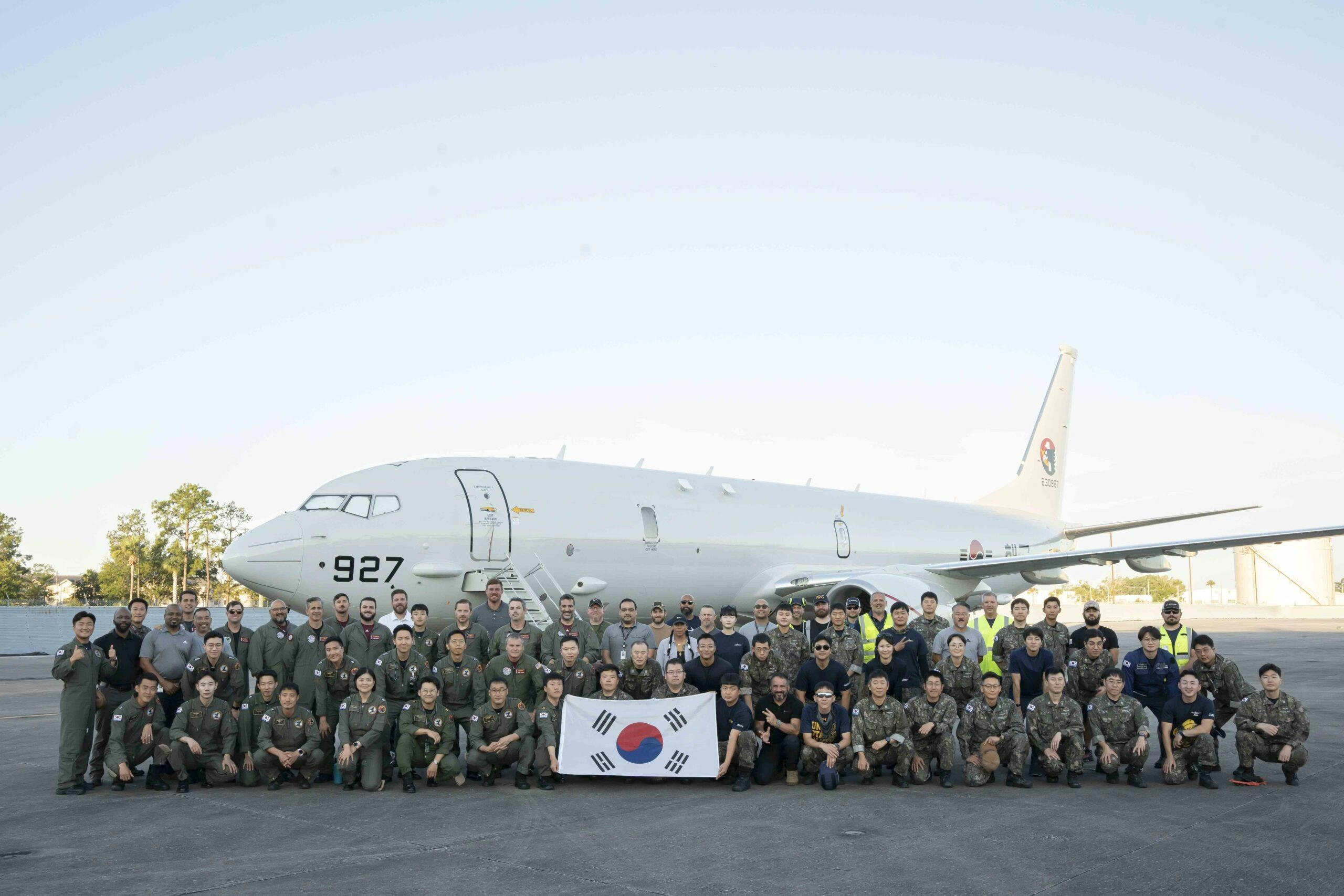
Boeing to Upgrade Software for South Korea’s Poseidon Fleet
Boeing to Upgrade Software for South Korea’s Poseidon Fleet
Boeing has been awarded a $38.7 million contract by the US Department of Defense to deliver mission software updates for South Korea’s fleet of P-8A Poseidon maritime patrol and reconnaissance aircraft. This initiative involves the development and installation of the latest Tactical Open Mission Software (TOMS) package, building upon a 2021 agreement focused on supporting the aircraft’s systems and ensuring their long-term sustainment.
Enhancements and Capabilities
The Pentagon has announced that the upgrade will introduce TOMS version 105K, which is designed to enhance overall system performance while addressing shortages related to aging components. A significant feature of the new software is the addition of Multi-Static Active Coherent processing, which will improve the Poseidon’s capability to detect and track submarines more effectively. Furthermore, the integration of the Harpoon II missile will expand the aircraft’s anti-ship and land-attack capabilities, thereby broadening its operational versatility.
Boeing’s TOMS utilizes an open systems architecture, facilitating future updates and the integration of emerging technologies. This modular approach supports ongoing modernization efforts for South Korea’s Poseidon fleet. The primary work will be conducted in Seattle, with additional activities taking place in California, Missouri, Maryland, and Pohang, South Korea. The project is scheduled for completion by January 2029, in coordination with the US Naval Air Systems Command.
Challenges and Industry Context
The software upgrade comes amid increased scrutiny of Boeing’s software reliability and integration processes. Industry analysts have noted that similar challenges have affected other major defense programs, such as the F-35, raising concerns about potential compatibility issues and their impact on operational readiness. Market observers are likely to focus on the performance and dependability of the updated TOMS, as Boeing’s reputation and prospects for future contracts may be influenced by the success of this upgrade. Competitors may also seize this opportunity to emphasize their own advancements in mission software, potentially shaping future defense procurement decisions.
Regulatory and safety considerations, including recent interventions by the National Transportation Safety Board (NTSB) involving Boeing and CFM International, could affect the timeline and execution of the Poseidon software upgrade. These factors highlight the complexities involved in modernizing military aircraft amid evolving technical and regulatory demands.
Boeing’s Broader Defense Portfolio
The Poseidon upgrade represents the latest in a series of significant defense projects for Boeing. The company is currently engaged in a $2.4 billion initiative to accelerate prototyping for the US Air Force’s E-7A Wedgetail program. Earlier this year, Boeing was tasked with upgrading infrared countermeasures for C-17 Globemaster III airlifters operated by Canada and Australia. Additionally, the company recently secured a contract exceeding $100 million to replenish guided munitions for the US Air Force’s B-2 Spirit bombers. Last month, Boeing also finalized a deal worth up to $2.8 billion to modernize South Korea’s F-15K Slam Eagle fleet.
As Boeing advances with the Poseidon software upgrade, it faces both technical and reputational challenges. The outcome of this project is poised to influence future defense technology procurements in South Korea and potentially on a broader international scale.

Etihad Airways Suspends Airbus A380 Flights on Key Route

Aditya Birla Group Seeks Approval for Aircraft Leasing in GIFT City

Qatar Airways Highlights Innovation and Connectivity at Arabian Travel Market 2026

Hong Kong's Five-Year Plan Includes Andrew Fan's Aircraft Parts Processing Hub Proposal

ACIA Aero Leasing Delivers ATR72-600 to Air Nostrum

RTX Appoints Jill Albertelli as Head of Pratt & Whitney

TAT Technologies Joins Beyond Aero Hydrogen Aircraft Program

AURAK Study Highlights Barriers to Air Taxi Adoption in Emerging Economies

Xiamen Air Selects Altitude for 787 Maintenance at Heathrow

Etihad and Swissport Extend Global Partnership
