
Orchestrate AI insights into action

Trending
Categories
Brisbane Airport Begins Using Sustainable Aviation Fuel
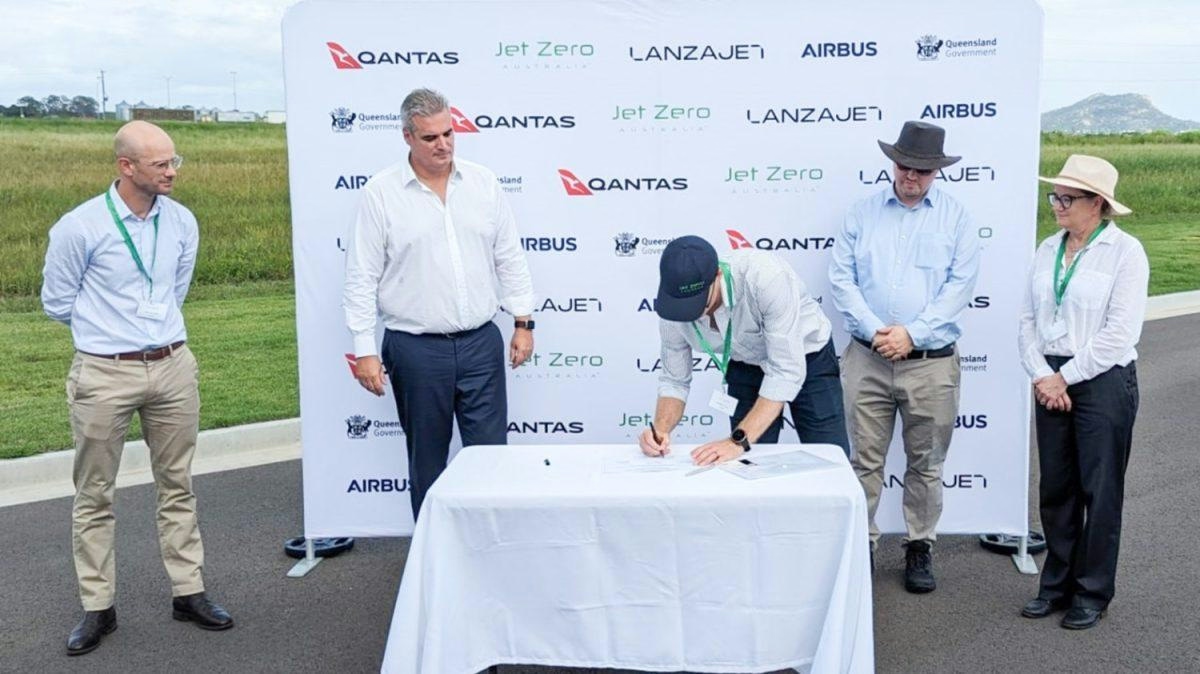
Brisbane Airport Initiates Use of Sustainable Aviation Fuel
Brisbane Airport has commenced the use of sustainable aviation fuel (SAF), marking a pivotal advancement in Australia’s commitment to decarbonising its aviation sector. This initiative, supported by the Australian Renewable Energy Agency (ARENA), arrives amid growing challenges in expanding SAF production and adoption within the industry.
Infrastructure Upgrades and Implementation
With funding from ARENA, Viva Energy Australia has completed the refurbishment of a storage tank at its Pinkenba Terminal. This upgrade enables the storage, blending, and supply of SAF directly to Brisbane Airport, allowing aircraft to be refuelled with this lower-emission alternative. Additionally, a “book and claim” system has been introduced, permitting airlines and corporate customers to purchase SAF and accurately track the associated emissions reductions.
ARENA’s CEO, Darren Miller, highlighted the significance of this development, noting the aviation sector’s complexity in achieving decarbonisation. He stated, “Sustainable aviation fuel will play a critical role in reducing emissions using today’s aircraft and infrastructure. This project demonstrates how we can begin supplying SAF through existing fuel systems, while laying the groundwork for a domestic industry.”
Challenges and Future Prospects
Despite this progress, the widespread adoption of SAF remains constrained by several obstacles. Globally, SAF constitutes only 0.8% of the jet fuel supply as of 2026, a figure that falls far short of the levels required to meet the aviation industry’s net zero emissions target by 2050. The high production costs of SAF continue to be a significant barrier, as evidenced by recent experimental efforts converting biogas from a California dairy farm into aviation-grade fuel. The market remains dominated by cheaper kerosene, and airlines face potential disruption if unprepared for forthcoming European Union regulations mandating sustainable fuel use from 2030.
In response to these challenges, ARENA is actively supporting a portfolio of projects designed to accelerate the development of a domestic SAF industry. This includes a $3.15 million investment in Wildfire Energy to pilot the integration of its MIHG technology with methanol synthesis. The project aims to produce methanol and conduct a feasibility study for a Queensland facility that would convert waste into SAF.
To date, ARENA has committed $36.7 million to six projects under its Sustainable Aviation Fuel Funding Initiative. The agency also manages the Future Made in Australia Innovation Fund, which allocates $250 million towards low-carbon liquid fuels. By supporting initiatives across the entire supply chain—from production to distribution and utilisation—ARENA seeks to facilitate Australia’s aviation sector transition to lower emissions, despite ongoing global supply and cost challenges.

Etihad Deploys Widebody Fleet to Meet Strong Demand

Korean Air Finalizes $36.2 Billion Deal with Boeing

Australia’s RFDS Queensland Section Orders Six King Air 260Cs

Korean Air Finalizes Order for 103 Boeing Jets and Engines

Embraer E195-E2 Features Distinctive Engine Placement Among Regional Jets

What Passengers Can Expect on Boeing’s New 777X Jet

How Ethiopian Airlines Became Africa’s Leading Carrier Amid Gulf Competition

Joby Aviation Extends Autonomous Flight Capabilities with Cross-Country Tour
Strengthening Europe's Aviation Supply Chain Amid Uncertainty
The Evolution of the Aircraft Maintenance Engineer Role
