
Orchestrate AI insights into action

Trending
Categories
CD Aviation Services Acquires STC for TPE331-5-252K Engine Installation on Twin Commander Aircraft
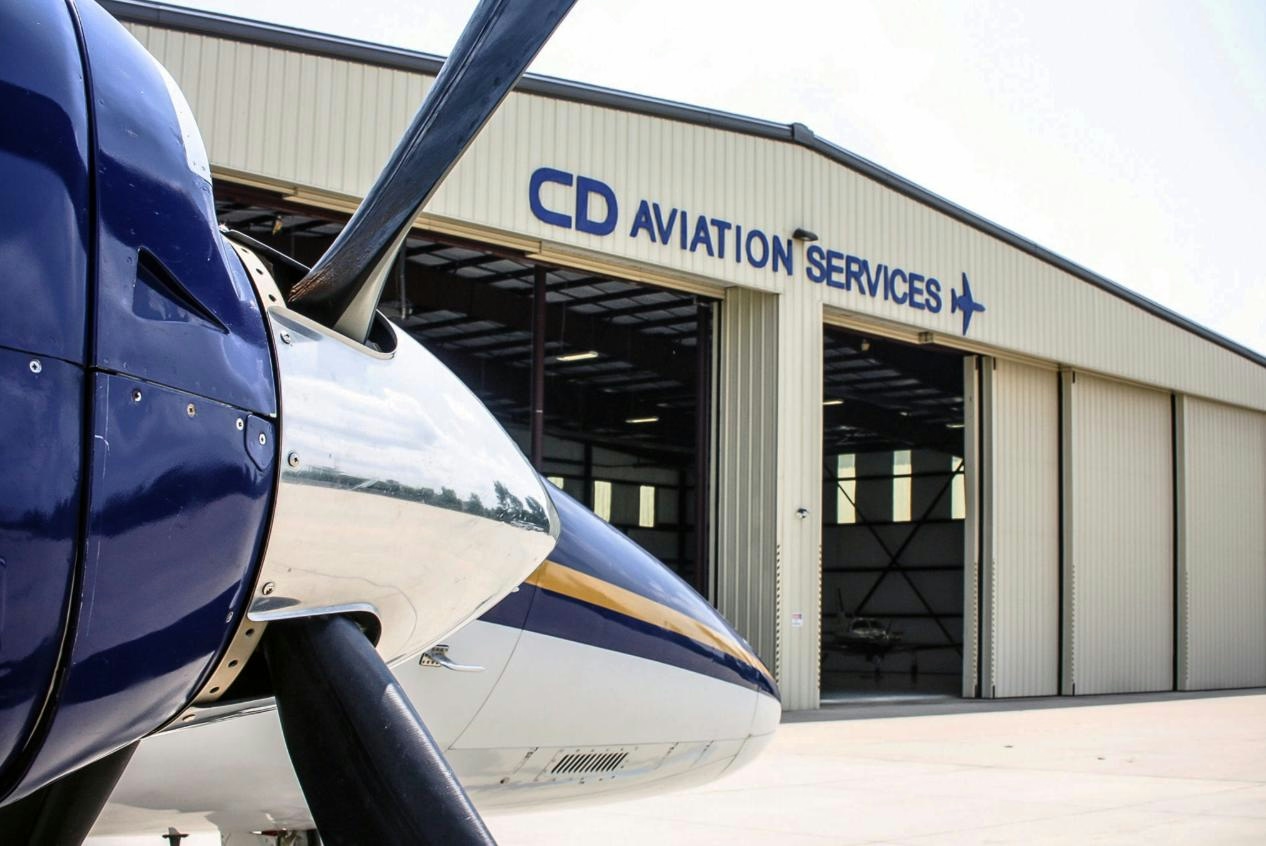
CD Aviation Services Secures STC for Honeywell TPE331-5-252K Engine Installation on Twin Commander Aircraft
CD Aviation Services (CDAS) has obtained Supplemental Type Certificate (STC) SA1024SO, authorizing the installation of Honeywell TPE331-5-252K engines on Twin Commander 690, 690A, and 690B aircraft models. This certification facilitates the conversion of existing aircraft from the TPE331-5-251K to the more advanced -252K engine configuration, which incorporates the Woodward fuel system. The upgrade offers operators a more widely supported and serviceable engine option, addressing growing concerns over parts availability and maintenance support for legacy systems.
Engine Upgrade and Technical Details
The conversion process adheres to Honeywell Service Bulletin SB 72-0216, which outlines the transition from the Bendix to the Woodward fuel control system as part of the engine upgrade. The STC provides the necessary airframe approval for these installations, enabling Twin Commander operators to replace aging Bendix-based configurations that face increasing challenges due to diminishing parts supply and limited overhaul capabilities.
CD Aviation Services highlights that the -252K engine configuration delivers enhanced parts availability, expanded overhaul options, and greater familiarity within the maintenance community. The company emphasized that this STC offers operators a practical and reliable pathway for engine upgrades or addressing long-term support issues. CDAS’s commitment centers on improving aircraft reliability, maintainability, and lifecycle support through this solution.
Industry Implications and Market Response
While the acquisition of this STC broadens CDAS’s capacity to support Twin Commander operators, it also introduces complexities related to regulatory compliance and integration with existing aircraft systems. This development aligns with a wider industry trend of strategic acquisitions aimed at expanding service capabilities and market presence. Recent analyses indicate that such moves often reflect a shift toward increased consolidation and specialization within the aviation services sector.
Market observers anticipate that CDAS’s acquisition may stimulate heightened interest among competitors in pursuing similar engine certification projects. This could prompt rival companies to enhance their own certification processes or expand service offerings to remain competitive. As operators continue to evaluate long-term maintenance strategies, the availability of the -252K engine configuration is expected to play a significant role in decision-making within the Twin Commander community.
The STC specifically applies to the Twin Commander 690, 690A, and 690B models. CD Aviation Services provides detailed information regarding installation availability, scheduling, and program specifics. Operators considering the conversion or planning maintenance activities are encouraged to contact CDAS directly for further details and quotations.
About CD Aviation Services
CD Aviation Services specializes in the maintenance, repair, and overhaul of Honeywell TPE331 engines and GTCP36 auxiliary power units. The company supports operators across agricultural, business, cargo, and regional aviation sectors. With facilities located in the United States and Europe, CDAS holds FAA and EASA certifications and brings over 30 years of industry experience to its operations.

Etihad Airways Suspends Airbus A380 Flights on Key Route

Aditya Birla Group Seeks Approval for Aircraft Leasing in GIFT City

Qatar Airways Highlights Innovation and Connectivity at Arabian Travel Market 2026

Hong Kong's Five-Year Plan Includes Andrew Fan's Aircraft Parts Processing Hub Proposal

ACIA Aero Leasing Delivers ATR72-600 to Air Nostrum

RTX Appoints Jill Albertelli as Head of Pratt & Whitney

TAT Technologies Joins Beyond Aero Hydrogen Aircraft Program

AURAK Study Highlights Barriers to Air Taxi Adoption in Emerging Economies

Xiamen Air Selects Altitude for 787 Maintenance at Heathrow

Etihad and Swissport Extend Global Partnership
