
Orchestrate AI insights into action

Trending
Categories
China Delays Airbus Deliveries Amid Pressure Over Comac Jets
China Delays Airbus Deliveries Amid Pressure Over Comac Jets
Delivery Hold-Ups Reflect Certification Disputes
China has been postponing approvals for Airbus SE aircraft deliveries, reflecting growing frustration over the protracted European certification process for Chinese-made jets. Sources familiar with the matter, speaking on condition of anonymity due to the sensitivity of the issue, revealed that the Civil Aviation Administration of China (CAAC) has withheld final clearances required for Airbus jets to enter service domestically for several months. This move has contributed to Airbus recording its lowest first-quarter commercial jet deliveries since 2009.
Airbus attributes the slowdown partly to an “administrative” issue that stalled the transfer of nearly 20 aircraft to China, compounded by a panel quality problem affecting production of the A320neo family. These factors have disrupted the synchronization between Airbus’s production and delivery schedules, creating further bottlenecks. Airbus CEO Guillaume Faury has expressed optimism that deliveries to China will normalize by the end of June, though he declined to elaborate. Data from Cirium indicates that Airbus delivered only 16 aircraft to Chinese airlines in the first five months of 2024, a sharp decline from 47 during the same period last year.
The ripple effects of these delays extend beyond China’s borders. For instance, Qantas has postponed plans for nonstop flights to London and New York after the delivery of its first A350-1000 was deferred to April 2027. Airbus has also cautioned some customers about potential further delays to A350 deliveries later this decade, raising concerns about supply chain issues linked to a recently acquired U.S. parts factory.
The Strategic Implications of Comac’s Certification Push
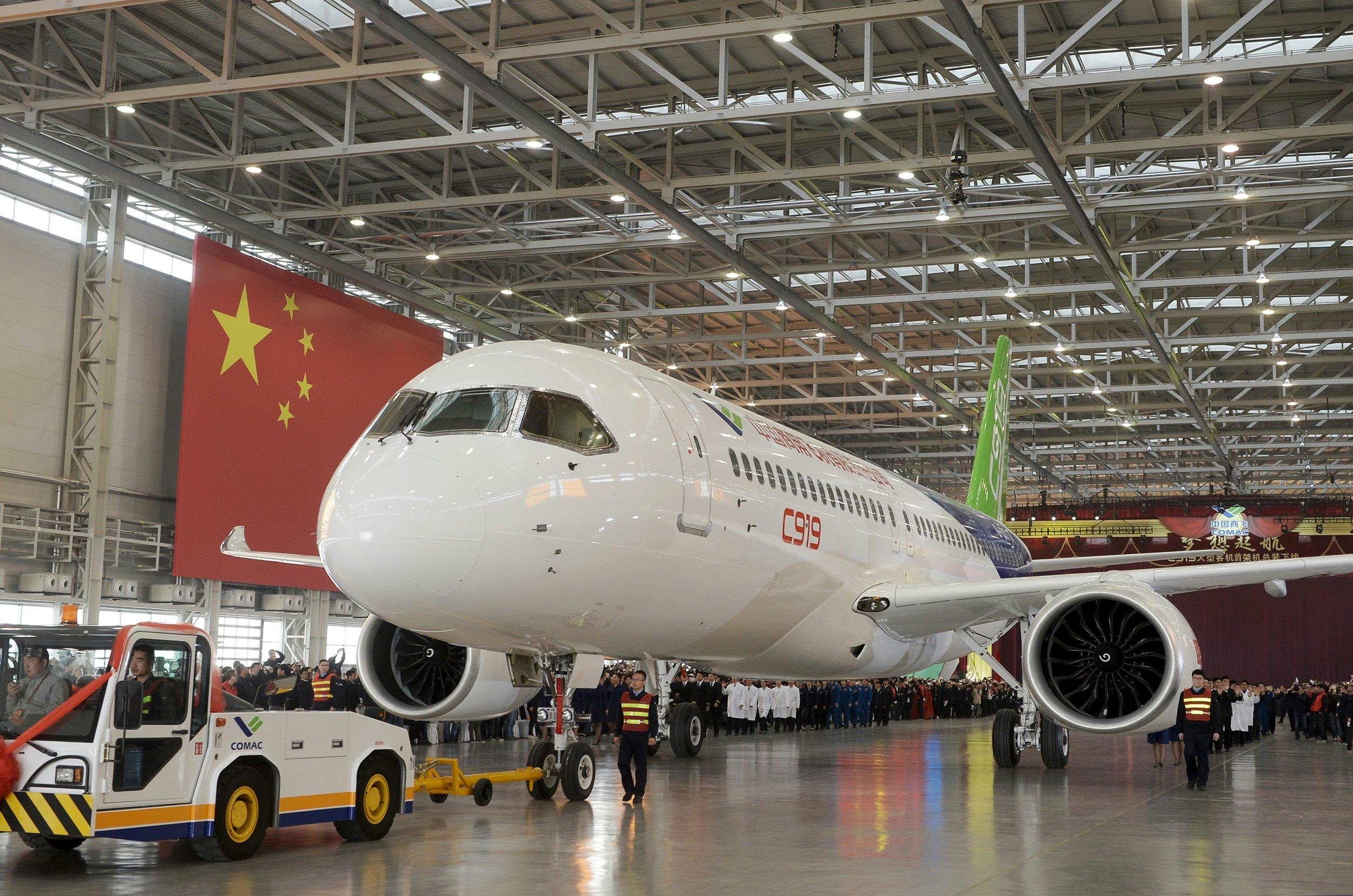
Central to the current tensions is China’s ambition to secure international certification for its domestically produced C919 jet, developed by the state-owned Commercial Aircraft Corporation of China (Comac). The C919, which accommodates up to 192 passengers and incorporates significant Western technology, is presently certified and operated only within China. Comac is actively pursuing certification from the European Union Aviation Safety Agency (EASA) to enable the aircraft to compete globally with Airbus’s A320 and Boeing’s 737 models. While the certification of a new aircraft type typically requires several years, Comac is seeking an accelerated process.
Should the certification impasse continue, Airbus’s dominant position in China—the world’s second-largest aviation market—could be jeopardized. China represents Airbus’s largest customer base by fleet size, with projections estimating a demand for approximately 9,570 new aircraft over the next two decades.
Boeing has also encountered challenges in China. Although the company recently secured a long-anticipated order for 200 jets during a summit between Chinese President Xi Jinping and U.S. President Donald Trump, the deal was smaller than expected and follows years of strained U.S.-China relations.
Requests for comment from EASA, CAAC, and Comac went unanswered. Airbus reiterated that the delivery issues were administrative in nature and have since been resolved.
The international certification of the C919 is pivotal to China’s strategy to penetrate the global commercial jet market, which remains dominated by Airbus and Boeing. Achieving Western approval would enable Comac to market the aircraft worldwide, extending its reach well beyond the domestic sphere.

Etihad Airways Suspends Airbus A380 Flights on Key Route

Aditya Birla Group Seeks Approval for Aircraft Leasing in GIFT City

Qatar Airways Highlights Innovation and Connectivity at Arabian Travel Market 2026

Hong Kong's Five-Year Plan Includes Andrew Fan's Aircraft Parts Processing Hub Proposal

ACIA Aero Leasing Delivers ATR72-600 to Air Nostrum

RTX Appoints Jill Albertelli as Head of Pratt & Whitney

TAT Technologies Joins Beyond Aero Hydrogen Aircraft Program

AURAK Study Highlights Barriers to Air Taxi Adoption in Emerging Economies

Xiamen Air Selects Altitude for 787 Maintenance at Heathrow

Etihad and Swissport Extend Global Partnership
