Image

Orchestrate AI insights into action

Join the AeroGenie waitlist today!

Trending

Categories

Commemorative Air Force Updates on FIFI B-29 Superfortress Engine Repairs
June 5, 2025By ePlane AI
Commemorative Air Force Updates on FIFI B-29 Superfortress Engine Repairs
0
0
Commemorative Air Force
B-29 Superfortress
Engine Repairs

Commemorative Air Force Updates on FIFI B-29 Superfortress Engine Repairs

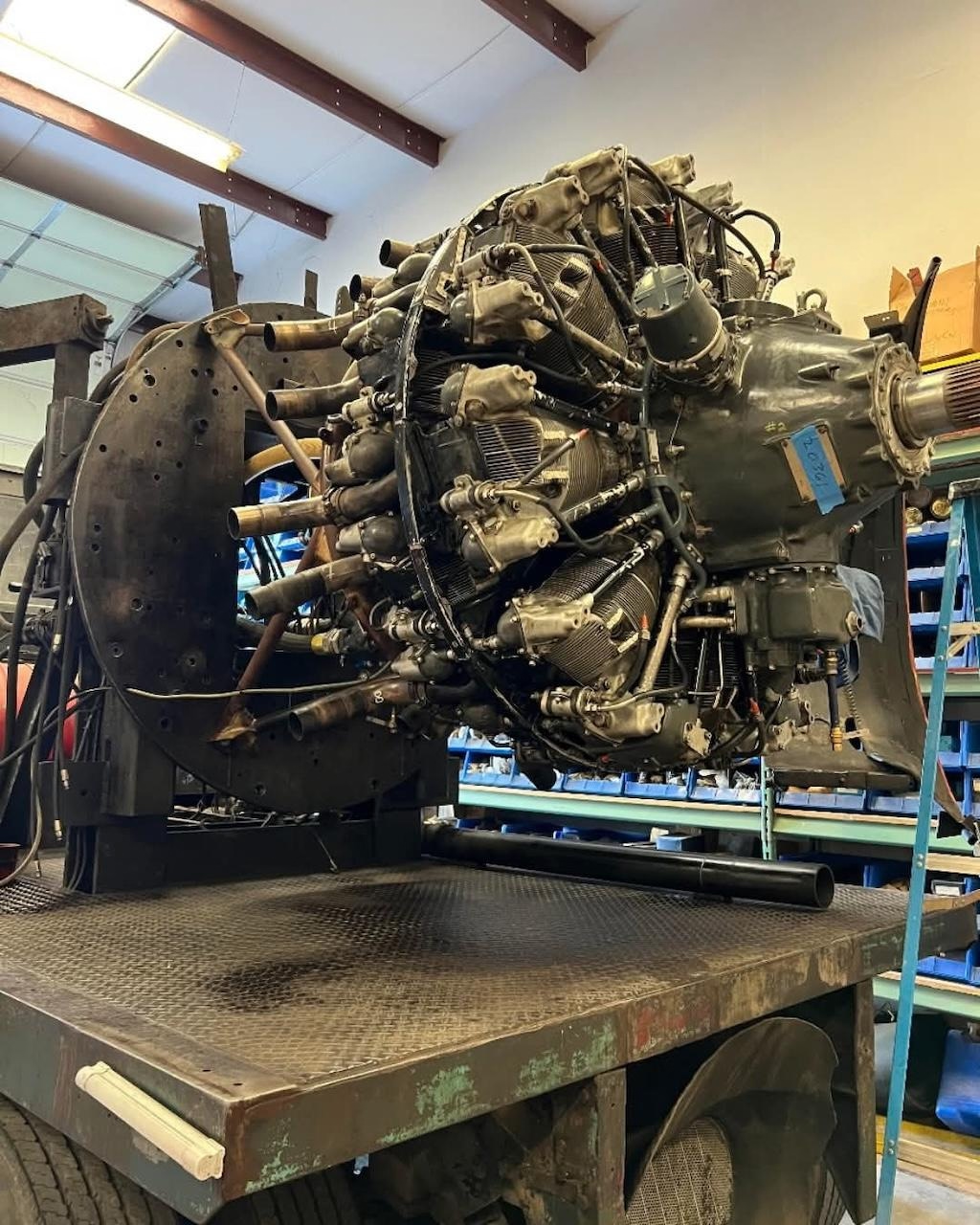
The Commemorative Air Force (CAF) has provided a detailed update on the ongoing restoration of FIFI, the historic B-29 Superfortress and one of only two airworthy examples remaining worldwide. Earlier this year, the CAF postponed the 2025 AirPower History Tour after identifying a critical engine issue that grounded the iconic aircraft, prompting an urgent and complex repair effort.

Challenges in Restoring a Vintage Warbird

The restoration of FIFI’s Curtiss-Wright R-3350 engines underscores the unique difficulties involved in maintaining vintage warbirds. The process demands not only specialized technical expertise but also the sourcing of rare components and strict adherence to historical accuracy. These challenges highlight the dedication of the CAF’s volunteers and maintenance crews, whose work extends beyond routine maintenance to preserving a living piece of aviation history.

In April, routine pre-flight inspections uncovered a malfunction in the impeller spinner discharge valve, a small yet essential component of the supercharger system. Following consultations with specialists, the CAF determined that engines number two and four required immediate removal and repair. The B-29/B-24 Squadron’s maintenance team responded swiftly, removing and shipping both engines to California within three and a half days.

Progress and Support for the Restoration

Repairs are currently underway at Vintage Radials, under the supervision of renowned engine expert Mike Nixon. The valve systems are being meticulously rebuilt and tested to meet manufacturer specifications, with each engine scheduled for rigorous test runs prior to reinstallation on FIFI.

Matthew Hood, Maintenance Officer for the B-29/B-24 Squadron, expressed pride in the team’s professionalism, emphasizing the reverence with which they treat the aircraft. “Every inspection and repair reflects deep respect for the aircraft and her legacy,” Hood stated.

While the restoration has received strong support from aviation enthusiasts and historians, the financial and logistical demands remain considerable. To address these challenges, the CAF has launched a fundraising campaign aimed at covering costs and ensuring FIFI’s timely return to flight. The project has been met with positive reactions within the preservation community, although some in the commercial aviation sector regard it as a highly specialized endeavor. Several other aviation preservation organizations have expressed interest in collaboration, reflecting a shared commitment to safeguarding aviation heritage.

Jeremy Lashbrook, B-29/B-24 Squadron Leader, highlighted the responsibility involved in maintaining FIFI. “Flying an aircraft like FIFI is a huge responsibility that requires time, resources, and unwavering dedication,” he said. “We couldn’t keep her flying without the passionate support of our fans who believe in preserving the legacy of the Greatest Generation.”

Supporters can contribute to the restoration and track progress through the CAF’s fundraising platform. The organization will continue to provide updates via email and social media as repairs advance, with the goal of returning FIFI to the skies to honor its legacy and inspire future generations.

More news
Airbus, MTU to develop emissions-free fuel cell engines for aircraft

Airbus, MTU to develop emissions-free fuel cell engines for aircraft

Airbus and MTU Collaborate on Emissions-Free Fuel Cell Engines for Aviation Airbus and German engine manufacturer MTU have announced a strategic partnership to develop emissions-free fuel cell engines for aircraft, marking a pivotal advancement in the pursuit of sustainable aviation. The two companies plan to establish a joint venture dedicated to the development and commercialization of hydrogen-powered engines, with operations anticipated to commence in 2027. Partnership Framework and Technological Ambitions The collaboration is set to formalize following the signing of a memorandum of understanding in 2025, after which the joint venture will be officially launched. Both Airbus and MTU have highlighted that the initiative remains subject to regulatory approvals and consultations with employee representative bodies. This partnership builds on the independent efforts both companies have made in fuel cell technology, aiming to accelerate the maturation of fuel cell propulsion systems and assert European leadership in advanced aviation technologies. Fuel cell engines operate by generating electricity onboard through a chemical reaction between hydrogen and oxygen, offering a promising alternative to conventional jet engines that emit significant greenhouse gases, particularly at high altitudes. While electric battery propulsion has been explored, it remains impractical for larger aircraft due to the weight constraints of current battery technologies. Hydrogen fuel cells, therefore, present a viable pathway toward zero-emission flight. Challenges and Industry Implications Despite its potential, the development of commercially viable hydrogen fuel cell powertrains faces considerable challenges. Significant technological innovation and substantial upfront investment will be required to bring these systems to market. Furthermore, aviation regulators must certify the new technology to ensure safety in commercial operations. The limited state of hydrogen infrastructure and questions surrounding the economic feasibility of such systems contribute to skepticism within parts of the aviation industry. Market responses to the announcement have been varied. Some airlines have expressed optimism about the potential for emissions reduction and alignment with tightening environmental regulations. Conversely, others remain cautious, citing concerns over the financial costs and the need to develop new fueling infrastructure at airports. The announcement by Airbus and MTU is likely to prompt competitors in the aerospace sector to intensify their research and development efforts in alternative propulsion technologies, including sustainable aviation fuels and hybrid-electric systems. This move occurs amid ongoing consolidation within the European aviation market and increasing pressure to adopt environmentally sustainable technologies. If successful, the joint venture could position Airbus and MTU at the forefront of the aviation industry's transition toward sustainability, contributing significantly to efforts aimed at reducing the sector’s environmental footprint.
Qantas Prepares to Launch New 22-Hour Flight Route

Qantas Prepares to Launch New 22-Hour Flight Route

Qantas to Launch Record-Breaking 22-Hour Nonstop Flight Between Sydney and London Next year, Qantas Airways is set to make aviation history by inaugurating the world’s longest nonstop commercial flight, linking Sydney and London in a journey that may extend up to 22 hours. Passengers aboard the specially modified Airbus A350-1000ULR will cover over 10,000 miles and cross nearly a dozen time zones, offering an unprecedented travel experience that could include witnessing the sunrise twice before arrival. Project Sunrise: A Decade in the Making This ambitious route, known as “Project Sunrise,” represents nearly ten years of development and underscores Qantas’ enduring commitment to bridging vast distances, particularly along the iconic Kangaroo Route. Aviation expert Jason Chun Yu Wong, Associate Professor at Babson College, highlights the strategic significance of this endeavor. He notes that Qantas has long sought to master ultra-long-haul travel, with the London–Sydney corridor forming a central part of the airline’s mission since its inception. Qantas is already a leader in long-haul innovation, operating three of the world’s ten longest flights by distance. However, the Sydney–London service pushes the limits of commercial aviation further than ever before. The airline’s A350-1000ULR aircraft incorporates advanced features designed to enhance passenger well-being, including a dedicated wellness zone, improved cabin pressurization, increased humidity levels, and scientifically developed amenities. These innovations aim to reduce jet lag and improve comfort during the marathon flight. Balancing Operational Challenges and Passenger Experience According to Wong, the success of this ultra-long-haul route hinges on balancing operational feasibility and profitability with passenger willingness to pay for the premium nonstop service. He emphasizes that the passenger experience is critical for a journey of this length, stating that Qantas must reach a “point of indifference” where travelers are sufficiently motivated to pay extra for the convenience of nonstop travel. The comfort features integrated into the new service are therefore essential to achieving this balance. The launch of such an extended nonstop flight presents considerable challenges. Ensuring passenger safety and comfort over nearly a full day in the air requires careful management of sleep patterns, physical movement, nutrition, and mental engagement. Additionally, the operational complexities of ultra-long-haul flights—including crew scheduling, fuel logistics, and the specialized maintenance demands of the modified A350-1000ULR—add further layers of difficulty. Market Implications and Future Prospects Qantas’ entry into this ultra-long-haul market is expected to intensify competition among global carriers. Other airlines may accelerate their own ultra-long-haul initiatives or enhance existing services to attract premium travelers, potentially sparking price competition in the lucrative long-haul segment. The emergence of new, smaller aircraft with extended range capabilities, such as the A321XLR and 737 MAX, could also enable additional nonstop routes catering to markets with lower demand. Looking ahead, Wong views this period as an exciting phase of innovation in aviation. He points to the growing experimentation with “long and skinny” routes—long-distance flights with relatively lower passenger volumes—and the potential for narrow-body aircraft to open new nonstop markets across transatlantic and transpacific corridors. This evolution will likely drive further advancements in passenger experience, seating configurations, and onboard service. As Qantas prepares to launch this historic flight, the global aviation industry will closely observe how the airline and its competitors navigate the challenges and opportunities of ultra-long-haul travel’s next frontier.
Geopolitical Tensions and Supply Chain Disruptions Affecting Aviation Management in 2026

Geopolitical Tensions and Supply Chain Disruptions Affecting Aviation Management in 2026

Geopolitical Tensions and Supply Chain Disruptions Affecting Aviation Management in 2026 The aviation industry is confronting significant challenges as it navigates persistent supply chain disruptions alongside escalating geopolitical tensions heading into 2026. Recovery within the sector’s supply chain remains sluggish, with global aircraft backlogs surpassing 17,000 units. This backlog has hindered fleet renewal initiatives, compelling airlines to continue operating older, less fuel-efficient aircraft for extended periods. Engine manufacturers are facing multi-year maintenance queues, which have contributed to rising costs for leasing and spare engines. Critical parts shortages persist across key components such as avionics, aircraft interiors, landing gear, and composite structures. These constraints have led to increased operational expenses and have forced airlines to implement new strategies aimed at mitigating risk in an increasingly volatile environment. Rising Operational Costs and Strategic Responses Industry projections for 2025 and 2026 estimate an additional $11 billion in operating costs. This increase is driven by several factors, including higher fuel consumption due to the prolonged use of aging aircraft, escalating maintenance expenses characterized by longer repair durations and increased material costs, and engine leasing premiums that have surged by 20 to 30 percent since 2019. Furthermore, inventory stockpiling has become a normalized risk management practice, adding to the financial burden. In this context, airlines face the complex task of balancing capital discipline with the urgent need to secure essential parts, engines, and maintenance capacity amid intensifying competition and uncertainty. The operational landscape demands a shift from reactive risk management toward building long-term resilience. Building Resilience Amid Volatility The 2026 State of Logistics report highlights that volatility has become a permanent feature of the aviation supply chain, necessitating continuous adaptation by logisticians and management teams. Companies are increasingly encouraged to proactively identify and manage supply chain dependencies to anticipate and mitigate the effects of ongoing disruptions and geopolitical instability. In response, industry players are adopting a range of strategic measures, including increased investment in workforce development, diversification of business operations, and fostering closer collaboration with key stakeholders. These initiatives are designed to reduce vulnerability to supply chain fluctuations and ensure operational continuity. As geopolitical tensions persist and supply chain challenges remain unresolved, the aviation sector’s capacity to adapt and enhance resilience will be pivotal in sustaining performance and meeting future demand.
U.S. Customs and Border Protection Orders 10 Airbus H125 Helicopters for Border Security

U.S. Customs and Border Protection Orders 10 Airbus H125 Helicopters for Border Security

U.S. Customs and Border Protection Expands Fleet with Airbus H125 Helicopters U.S. Customs and Border Protection (CBP) Air and Marine Operations has finalized a contract with Airbus to acquire ten H125 helicopters, a move aimed at enhancing the agency’s capabilities in law enforcement, border security, and public safety missions across the United States. This acquisition forms part of CBP’s broader strategy to modernize its operational fleet and improve mission readiness in increasingly complex environments. Enhancing Operational Capabilities with the H125 The H125 helicopter, produced at Airbus’ Columbus, Mississippi facility, is recognized for its versatility and reliability in multi-role homeland security operations. Equipped with advanced safety features such as dual-channel full authority digital engine control, an engine data recorder, and a dual hydraulic flight control system, the aircraft is designed to reduce pilot workload and improve safety during demanding tactical flights. Its superior visibility, multi-mission flexibility, and cost-effective operation have made it a preferred choice for airborne law enforcement agencies throughout North America. Bart Reijnen, Head of the North America Region for Airbus Helicopters, emphasized the significance of the contract, noting that the expansion of the H125 fleet reflects the enduring partnership between Airbus and CBP. He highlighted the trust placed in the H125 to perform critical public safety missions under challenging conditions and reaffirmed Airbus’ commitment to providing reliable aircraft and comprehensive support services to ensure continuous mission readiness. Industry Challenges and Market Implications Despite the strategic benefits of the acquisition, the integration of the new helicopters into CBP’s existing fleet may encounter challenges related to supply chain logistics, ongoing maintenance, and system compatibility. As law enforcement agencies across the country pursue fleet modernization, this high-profile purchase is expected to influence demand for similar helicopter models. Competing manufacturers are likely to intensify efforts to promote alternative aircraft, emphasizing distinctive features and capabilities to capture a share of the evolving market. The contract also underscores the increasing importance of private sector partnerships in national security and border enforcement. As technological advancements continue to shape the future of border security operations, the collaboration between government agencies and industry players remains critical to the successful deployment and sustainment of advanced aviation assets. According to Airbus, the H125 is the world’s leading light single-engine helicopter, and this latest order is anticipated to significantly enhance CBP Air and Marine Operations’ ability to conduct patrol, surveillance, and tactical missions under demanding conditions.
Entries Open for the 2026 RedCabin Trinity Award

Entries Open for the 2026 RedCabin Trinity Award

Entries Open for the 2026 RedCabin Trinity Award The 2026 RedCabin Trinity Award, a distinguished accolade recognizing innovation in aircraft cabin interiors, has officially opened for submissions. This esteemed program offers winners not only a prestigious trophy but also the exceptional opportunity to collaborate directly with an airline, facilitating the transformation of their concepts from initial ideas into operational realities. The award welcomes entries from both industry professionals and students, with no submission fees required. Navigating a Competitive Awards Landscape As the aviation and design industries continue to advance at a rapid pace, the RedCabin Trinity Award faces the challenge of attracting a broad and diverse array of entries that exemplify the sector’s most innovative and forward-thinking work. The competition for recognition is intensifying, with other prominent awards such as the 2027 AACTA Awards, Hospitality Design Awards 2026, and RG Retail Excellence Awards 2026 also inviting submissions. This increasingly crowded field places greater emphasis on the RedCabin Trinity Award’s selection criteria and judging process, as organizers endeavor to uphold the award’s relevance and prestige within the industry. Expert Judging Panel and Award Categories The judging panel for the 2026 edition is composed exclusively of senior representatives from leading airlines and aircraft leasing companies, ensuring that winning concepts are evaluated by experts deeply embedded in the sector. The panel includes Henry Buckley of Virgin Atlantic Airways, Peter Cooke from Riyadh Air, Joy Kelly representing Avolon, Guillaume Vivet of Cathay Pacific Airways, Katsunori Maki from ANA (All Nippon Airways), Jay Mapston of American Airlines, Mauricio Parise from Delta Air Lines, and Eerika Enne of Finnair. Entries will be considered across six distinct categories. The Passenger Experience Concept category focuses on innovations in hardware, software, or digital services designed to enhance the commercial passenger journey. The Cabin MRO Concept category highlights advancements in maintenance, repair, and overhaul through new service models or technological solutions. The Cabin Service Concept category recognizes novel service models or products that push the boundaries of commercial aviation. The Sustainability Concept category seeks ideas that contribute to achieving net zero emissions by 2050, including sustainable materials and processes that reduce weight, energy consumption, water use, or waste. The Collaboration Excellence category rewards projects involving at least three entities working together to create value for commercial aviation, emphasizing both the collaborative process and its outcomes. Lastly, the Newcomer / Startup category acknowledges startups, individuals, or student-led initiatives less than two years old that have developed impactful cabin innovation concepts. Submission Details and Award Ceremony Applicants are invited to submit their entries through the RedCabin website until 7 September 2026. Winners will be announced and celebrated on 9 December during the Aircraft Cabin Innovation Summit USA 2026, hosted by Boom Supersonic in Denver, Colorado. As the awards environment becomes increasingly competitive, the RedCabin Trinity Award remains committed to setting the standard for excellence and innovation in aircraft cabin design, even as rival programs evolve their categories and timelines to keep pace.
Mike Winston Explains Jet.AI’s Shift from Aviation to AI Infrastructure

Mike Winston Explains Jet.AI’s Shift from Aviation to AI Infrastructure

Mike Winston Explains Jet.AI’s Shift from Aviation to AI Infrastructure From Aviation Optimization to AI Infrastructure Challenges Private aviation is an industry characterized by narrow profit margins and stringent scheduling demands. Under the leadership of founder and investor Mike Winston, Jet.AI initially developed artificial intelligence tools aimed at optimizing these operational constraints. This unique vantage point allowed the company to gain early insight into the real-world demands of production AI workloads, well before concerns about data center power shortages entered mainstream discourse. Winston’s hands-on experience deploying AI tools within an active aviation business led to a critical realization: the primary bottleneck for AI infrastructure is not technological capability but power availability. The widening gap between electricity supply and the surging demand from AI workloads is projected to persist for years. This insight now drives Jet.AI’s strategic pivot, exemplified by its February 2025 agreement to transfer aviation operations to flyExclusive, the establishment of a data center pipeline through the Convergence Compute joint venture, and the $138 million capital raise via the SPAC AI Infrastructure Acquisition Corp. (NYSE: AIIA). Evolution Rooted in Operational Experience Jet.AI’s transformation from an aviation-focused enterprise to an AI infrastructure player is a coherent progression rather than a series of disconnected shifts. The company’s origins trace back to Jet Token, a blockchain-based private aviation startup shaped by Winston’s background in finance and investment. Regulatory challenges necessitated a move away from blockchain, prompting a focus on AI-driven solutions such as agentic booking software, route optimization for fuel and carbon efficiency, and dynamic pricing models for charter services. Each iteration responded to external pressures and yielded insights that informed subsequent developments. Developing AI software for aviation operations exposed the immense scale of computational requirements. Agentic booking systems must manage aircraft availability, pricing, and scheduling for customers with unpredictable, last-minute demands. Route optimization requires real-time modeling that incorporates weather, airspace, and fuel data. Dynamic pricing algorithms consume substantial compute power as transaction volumes and predictive complexity increase. Operating these workloads in a live business environment, rather than a research setting, underscored the significant power demands of AI at scale. “Through building AI tools for aviation, we saw firsthand the scale of transformation AI would bring,” Winston remarked in an April 2026 interview. “That led us to data centers, where the infrastructure opportunity is significant. Given my background in real estate finance and telecom, it was a natural transition. Today, we’re extending that into power generation using aero-derivative engines, another area with strong underlying demand.” Navigating Market Challenges and Industry Dynamics Jet.AI’s strategic shift unfolds amid a volatile market environment. The recent downturn in the technology sector, as reported by the BBC, has heightened skepticism regarding the sustainability of AI investment, contributing to a sharp decline in Jet.AI’s share price. Competition for electricity resources is intensifying, with AI data centers now rivaling Bitcoin mining operations in power consumption, according to CoinMarketCap. Concurrently, the rapid expansion and soaring valuations within the AI sector have sparked warnings of a potential bubble, as highlighted at the StrictlyVC event. These factors illustrate the multifaceted challenges Jet.AI confronts: managing market skepticism, competing for limited resources, and addressing the urgent need for global regulatory frameworks to ensure safe and sustainable AI deployment. Winston’s central thesis—that power availability is the defining constraint for AI infrastructure—has shifted from a niche operational insight to a focal point in broader industry discussions. As the market contends with these realities, Jet.AI’s evolution serves as a compelling case study in how operational experience can inform strategic direction within a rapidly evolving technological landscape.
Syrian President Plans to Order Eight Airbus Aircraft

Syrian President Plans to Order Eight Airbus Aircraft

Syrian President Announces Plans to Acquire Eight Airbus Aircraft Amid Reconstruction Syrian President Ahmad al-Sharaa has revealed intentions to order eight Airbus aircraft as part of the nation’s broader strategy to rebuild its infrastructure following years of civil conflict. The announcement was made during a visit by French President Emmanuel Macron, who led a delegation of investors and business representatives to Damascus, signaling renewed international engagement with Syria. Aviation Sector Revival and International Partnerships In an interview with French news channel BFMTV on July 6, 2026, President al-Sharaa emphasized the rapid delivery timeline for the aircraft, though he did not disclose specific models. He highlighted the government’s efforts to reconstruct state institutions and foster partnerships across multiple sectors, including aviation, tourism, agriculture, and industry. Al-Sharaa underscored France’s significant role in supporting Syria’s infrastructure development, industrial growth, financial sector reforms, and institutional restructuring. The planned acquisition aligns with Syria’s ambition to revitalize its aviation industry. The state-owned Syrian Airlines, known as SyriaAir, is poised to benefit from Qatari investments aimed at expanding its operations. Since resuming flights from Damascus International Airport in December 2024, following the removal of former President Bashar al-Assad, Syria has seen the return of major carriers such as Qatar Airways, Turkish Airlines, Emirates, Etihad, and flynas. According to the Qatari Civil Aviation Authority, Damascus International Airport handled over 148,000 passengers in May 2026, with 12 airlines currently operating routes to and from the country. Challenges Amid Sanctions and International Uncertainty Despite these developments, the proposed Airbus order faces significant challenges. Syria remains subject to a range of international economic and political sanctions that could complicate procurement and provoke diplomatic tensions. Although the European Union suspended several restrictive measures in February 2025—facilitating Airbus contracts and renewed flight operations to Europe—uncertainty persists regarding the broader international community’s stance. The EU described its suspension of sanctions as an effort to “facilitate engagement with Syria, its people, and businesses, in key areas of energy and transport.” Market responses to the announcement have been subdued. Airbus has not reported any cancellations of jet orders despite global pressures such as rising fuel prices. Meanwhile, competitors in the aviation sector, including American Airlines and Ethiopian Airlines, are reportedly considering substantial aircraft purchases from Airbus and Boeing to strengthen their market positions. As Syria advances its reconstruction agenda, the proposed Airbus order exemplifies both the opportunities and obstacles the country faces in reintegrating into the international aviation network and rebuilding its economy.
China’s J-10 Fighter Used Russian Engines for Two Decades Before Domestic Powerplant Was Developed

China’s J-10 Fighter Used Russian Engines for Two Decades Before Domestic Powerplant Was Developed

China’s J-10 Fighter: From Russian Engines to Domestic Power and Global Ambitions China’s Chengdu J-10 fighter has become a cornerstone of the nation’s air force and naval aviation, embodying decades of ambition, technological evolution, and strategic perseverance. Its origins can be traced back to the J-9, an ambitious Mach 2.4 interceptor project that spanned 16 years before being canceled in 1980 without ever achieving flight. Despite this setback, the innovative canard-delta wing design pioneered during the J-9 program endured. Chief designer Song Wencong carried this concept forward into what was designated Project No. 10. The J-10 received official approval from the State Council in 1986 and made its maiden flight on March 23, 1998—a date that Song personally adopted as his official birthday, underscoring his profound connection to the project. Today, over 600 J-10 fighters are operational within China’s air force and naval aviation units, with additional aircraft exported to countries such as Pakistan and Indonesia. In a significant development, Beijing recently confirmed combat successes involving an exported Chinese fighter for the first time, highlighting the J-10’s expanding international footprint. The Long Road to Indigenous Power For the first two decades of its operational life, the J-10 was powered by Russian engines, a reflection of the considerable challenges China faced in developing advanced military propulsion systems. The transition to a domestically produced engine was a complex and protracted process. The development of the indigenous PD-8 engine demanded rigorous certification procedures and substantial modernization of China’s aerospace manufacturing infrastructure. After years of dedicated effort, the J-10 began to be equipped with the homegrown WS-10B engine, marking a pivotal moment in China’s pursuit of self-reliance in military aviation technology. The initiation of serial production for the PD-8 engine is widely regarded as a landmark achievement for China’s aviation industry. This milestone not only signifies technological advancement but also demonstrates growing confidence in the country’s capacity to sustain and enhance its domestic aerospace sector. The accomplishment has attracted international scrutiny, with analysts closely monitoring China’s ability to maintain and further develop its indigenous fighter programs. Global Context and Competitive Pressures China’s drive for engine independence occurs against a backdrop of similar challenges faced by other nations. Turkey, for instance, has depended on American engines for its KAAN fighter but has encountered export restrictions that have complicated its aerospace ambitions. In Europe, the cancellation of the Franco-German New Generation Fighter (NGF) project has led to a strategic pivot toward the development of a new sixth-generation fighter under the Future Combat Air System (FCAS) program. These global developments underscore the strategic importance of domestic engine development, which is critical not only for operational autonomy but also for export potential and technological leadership. For China, the evolution of the J-10 from reliance on Russian engines to the adoption of indigenous powerplants epitomizes a broader national effort to achieve self-sufficiency in advanced military technology. A Legacy of Innovation The history of the J-10 is ultimately a narrative of resilience and adaptation. From the unrealized ambitions of the J-9 to the canard-delta designs that now characterize Chinese airpower—including the J-20 stealth fighter and the forthcoming J-36—the program reflects both the challenges and accomplishments of China’s aerospace industry. As the J-10 continues to serve domestically and abroad, its progression from imported engines to indigenous powerplants stands as a testament to China’s expanding capabilities and strategic ambitions on the global stage.
Eswatini Wet-Leases E145 During Jet Maintenance

Eswatini Wet-Leases E145 During Jet Maintenance

Eswatini Air Wet-Leases Embraer E145 Amid Jet Maintenance Eswatini Air has entered into a temporary wet-lease agreement with Namibia’s Westair Aviation to maintain its flight operations while one of its regional jets undergoes extensive maintenance. The arrangement, confirmed by the airline’s commercial director Getaneh Desta Woldemichael, is expected to last for at least two months, although ongoing supply chain challenges may prolong the maintenance period. The airline’s Embraer E145, registered as 3DC-EAB, was ferried from Manzini King Mswati III International Airport to Johannesburg O.R. Tambo International Airport on July 2 for a scheduled C-check. To ensure uninterrupted service, Eswatini Air leased Westair’s aircraft, registered V5-WEJ, under an ACMI (Aircraft, Crew, Maintenance, and Insurance) contract. The leased jet arrived from Windhoek Eros Airport on July 3 and immediately commenced operations on routes to Johannesburg, Durban King Shaka International, and Cape Town International Airport. V5-WEJ typically operates under Westair’s FlyNamibia brand. Woldemichael explained that the decision to wet-lease from Westair was partly influenced by the presence of Eswatini Air flight deck crew holding Namibian licenses, who are able to serve as co-pilots on the leased aircraft. This arrangement helps reduce accommodation and per diem expenses while allowing the airline to utilize its existing personnel resources efficiently. Eswatini Air currently operates two company-owned Embraer E145 jets, serving destinations across South Africa, Zimbabwe’s Harare International Airport, and Zambia’s Lusaka Airport. Regional Aviation Challenges and Market Dynamics The wet-lease arrangement underscores broader challenges facing the southern African aviation sector, particularly in regulatory compliance and logistical coordination. Eswatini Air’s strategy must navigate these complexities amid a competitive landscape where established Maintenance, Repair, and Overhaul (MRO) providers vie for market share. The decision to outsource maintenance and operations through wet-leasing may invite increased scrutiny from aviation authorities and industry stakeholders, especially concerning the quality and safety standards of outsourced services. Competitors with advanced facilities and strong reputations are poised to capitalize on the situation, seeking to attract business away from Eswatini’s temporarily leased E145. Globally, the business jet maintenance market is becoming increasingly competitive, with rising demand in regions such as Asia and growing workloads at prominent providers like ExecuJet. In this environment, Eswatini Air and its MRO partners face the challenge of differentiating their services to secure and retain clients amid intensifying competition and evolving industry standards.
Industries Affected by Global Political Tensions and Supply Chain Disruptions

Industries Affected by Global Political Tensions and Supply Chain Disruptions

Industries Grapple with Global Political Tensions and Supply Chain Disruptions The aviation management sector is currently confronting one of the most challenging periods in recent history, as global political tensions and supply chain disruptions converge to fundamentally reshape the industry. These difficulties extend beyond aviation, affecting a broad range of sectors including automotive and electronics. Governments worldwide are intensifying their focus on national security, supply chain resilience, and strategic resource management, creating a complex operational environment for businesses. Geopolitical Tensions Reshape Industry Operations Geopolitical instability has emerged as a significant disruptor across global industries. Trade disputes, tariffs, and cross-border certification hurdles are altering long-established supply chains and operational norms. In aviation, U.S. import tariffs have disrupted traditional air-freight routes, particularly between Asia and North America, resulting in reduced cargo volumes and compelling airlines to reconsider their routing strategies and fleet deployment. The sourcing of critical raw materials such as titanium, historically dependent on Russia, now faces increased geopolitical risk. This has slowed the approval of alternative suppliers and delayed aircraft production timelines. Similar challenges are evident in other sectors. The automotive industry, for instance, is contending with constraints in platinum supplies, a key component for catalytic converters and emerging hydrogen technologies. Meanwhile, the cobalt supply chain, essential for electric vehicle batteries, remains highly susceptible to geopolitical shocks. These vulnerabilities threaten the continuity of global production and underscore the urgent need for diversified sourcing strategies and enhanced long-term resilience. Supply Chain Disruptions and Financial Implications The aviation supply chain is under unprecedented pressure, with aircraft backlogs surpassing 17,000 units—significantly higher than pre-pandemic levels. This backlog delays fleet renewal efforts and forces airlines to continue operating older, less fuel-efficient aircraft. The International Air Transport Association (IATA) projects that supply chain challenges will cost airlines more than $11 billion in 2025. These costs are driven by several factors: excess fuel consumption estimated at $4.2 billion due to older aircraft, maintenance expenses of $3.1 billion as aging fleets require more frequent servicing, engine leasing costs of $2.6 billion resulting from extended maintenance queues, and inventory holding costs of $1.4 billion as airlines stockpile parts to mitigate unpredictable disruptions. These pressures are exacerbated by slow production rates, shortages of raw materials, and tight labor markets. Similar issues are reflected in the automotive and electronics industries, where companies must actively manage supply chains and adapt to evolving industrial policies to sustain operations. Rising Operational Costs and Workforce Challenges Operational costs are escalating across multiple dimensions. Fuel expenses increase as older aircraft consume more fuel, undermining sustainability objectives and compressing profit margins. Maintenance, repair, and overhaul (MRO) facilities face capacity constraints and longer turnaround times, while aircraft and engine leasing rates have risen by 20 to 30 percent since 2019. Additionally, capital-intensive inventory stockpiling has become a common practice to hedge against supply uncertainties. Labor markets remain tight, with shortages of pilots, technicians, and supply chain specialists. Original equipment manufacturers (OEMs) and engine producers are stretched thin, balancing the demands of new aircraft assembly alongside maintenance requirements. This strain results in extended maintenance cycles, higher labor costs, and increased burnout among frontline personnel. Impact on Customer Experience The cumulative effect of these disruptions ultimately affects passengers. In 2024, passenger demand increased by 10.4 percent, while capacity grew by only 8.7 percent, pushing load factors to a record 83.5 percent. The reliance on older aircraft and prolonged maintenance schedules has contributed to a rise in delays, cancellations, and aging cabin conditions. Concurrently, higher operational costs are being passed on to consumers through increased fares and reduced service flexibility. Across industries, companies are being urged to diversify their sourcing, invest in supply chain resilience, and navigate geopolitical uncertainties carefully to maintain operational continuity and preserve competitive advantage in an increasingly volatile global environment.
line









