
Orchestrate AI insights into action

Trending
Categories
Comparing the Staircases of the Airbus A380 and Boeing 747
Comparing the Staircases of the Airbus A380 and Boeing 747
The Boeing 747 and Airbus A380 are emblematic double-deck aircraft, each reflecting distinct design philosophies that extend even to their staircases. These differences are shaped by a combination of engineering challenges, regulatory requirements, and market demands, revealing broader trends in the evolution of commercial aviation.
Design Evolution and Engineering Challenges
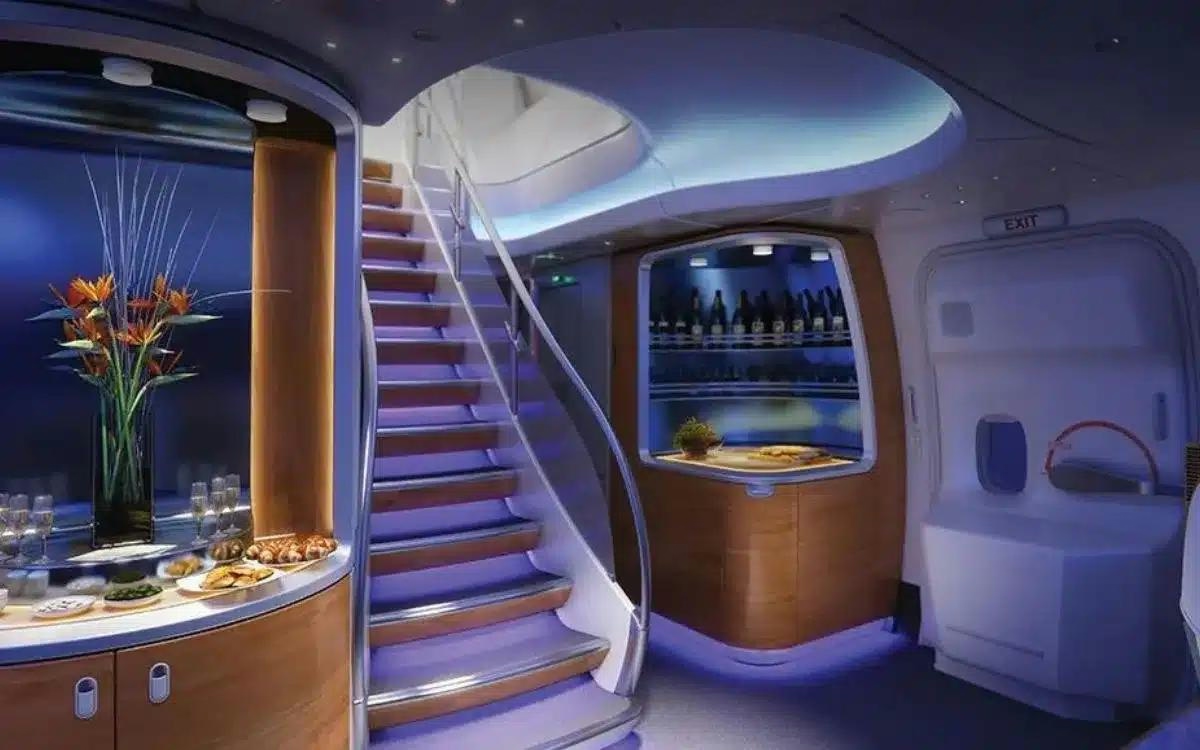
The original Boeing 747 featured a signature spiral staircase that was more than a mere functional element; it symbolized exclusivity and luxury. This staircase led to a premium upper-deck lounge designed to evoke the ambiance of a high-end hotel. Pan Am, the launch customer for the 747, championed this design to enhance the aircraft’s glamorous appeal. Over time, as the 747 evolved, so did its staircase. The introduction of the 747-300 replaced the spiral with a straight, wider staircase, reflecting a shift toward accommodating more passengers and improving crew efficiency. Despite this change, the 747’s staircase remained relatively compact, consistent with its partial upper deck and lower passenger capacity compared to the A380.
In contrast, the Airbus A380 was conceived from the outset to efficiently transport large numbers of passengers across two full-length decks. This scale allowed Airbus to incorporate two wide staircases—one at the front and one at the rear—each spacious enough to allow two passengers to pass comfortably side by side. The unprecedented size of these staircases required special regulatory considerations; the Federal Aviation Administration (FAA) issued unique conditions because existing rules were inadequate for an aircraft of the A380’s magnitude. These engineering and regulatory challenges underscore the complexity involved in designing safe and efficient staircases for modern superjumbo aircraft.
Reflecting Broader Industry Trends
The contrasting staircase designs also mirror broader shifts within the aviation industry. The 747’s upper deck was historically a symbol of exclusivity, catering to a premium passenger experience. By contrast, the A380 democratized this space, integrating the upper deck as a seamless part of the overall passenger environment. This is further reflected in the A380’s emphasis on comfort, with its upper deck noted for exceptional quietness—noise levels can be as low as 68 decibels—and stability, achieved through advanced insulation, strategic engine placement, and massive wings that reduce turbulence.
Market dynamics continue to influence the competitive landscape for these aircraft. Airbus recently reported a decline in first-quarter deliveries for 2026, while Boeing achieved a nine-year high in February deliveries, signaling shifting demand and operational performance. These trends are shaped not only by passenger preferences but also by broader geopolitical and economic factors. For example, Boeing’s sales to China remain complicated by ongoing trade negotiations, affecting its competitive position in the global market.
The global aircraft floor panels market further illustrates the bifurcated environment facing manufacturers. Intense cost competition characterizes the narrowbody fleet segment, while widebody and VIP completions offer higher profit margins. Although staircase design represents a small component of the overall aircraft, it exemplifies the engineering, regulatory, and market pressures that continue to shape the future of commercial aviation.
The staircases of the Boeing 747 and Airbus A380 thus serve as more than architectural features; they encapsulate decades of evolving design priorities, regulatory adaptation, and market realities, providing a unique perspective on the changing nature of long-haul air travel.

Etihad Airways Suspends Airbus A380 Flights on Key Route

Aditya Birla Group Seeks Approval for Aircraft Leasing in GIFT City

Qatar Airways Highlights Innovation and Connectivity at Arabian Travel Market 2026

Hong Kong's Five-Year Plan Includes Andrew Fan's Aircraft Parts Processing Hub Proposal

ACIA Aero Leasing Delivers ATR72-600 to Air Nostrum

RTX Appoints Jill Albertelli as Head of Pratt & Whitney

TAT Technologies Joins Beyond Aero Hydrogen Aircraft Program

AURAK Study Highlights Barriers to Air Taxi Adoption in Emerging Economies

Xiamen Air Selects Altitude for 787 Maintenance at Heathrow

Etihad and Swissport Extend Global Partnership
