
Orchestrate AI insights into action

Trending
Categories
Controversial Aircraft: Crashes, Groundings, and Investigations
Controversial Aircraft: Crashes, Groundings, and Investigations
Commercial aviation is widely recognized as one of the safest modes of transportation. According to the International Air Transport Association’s (IATA) 2025 safety report, there were only 51 accidents recorded across 38.7 million flights, equating to approximately one accident per 760,000 flights. Fatal accidents are even more infrequent, with just eight incidents reported, or roughly one fatal accident per five million flights. However, when tragedies do occur, they often reveal deeper systemic issues within the aviation industry. The sudden disappearance of a routine flight from radar triggers extensive investigations, relying on wreckage analysis, flight data, and maintenance records to reconstruct the events. Such incidents inevitably raise the question: how could this have happened?
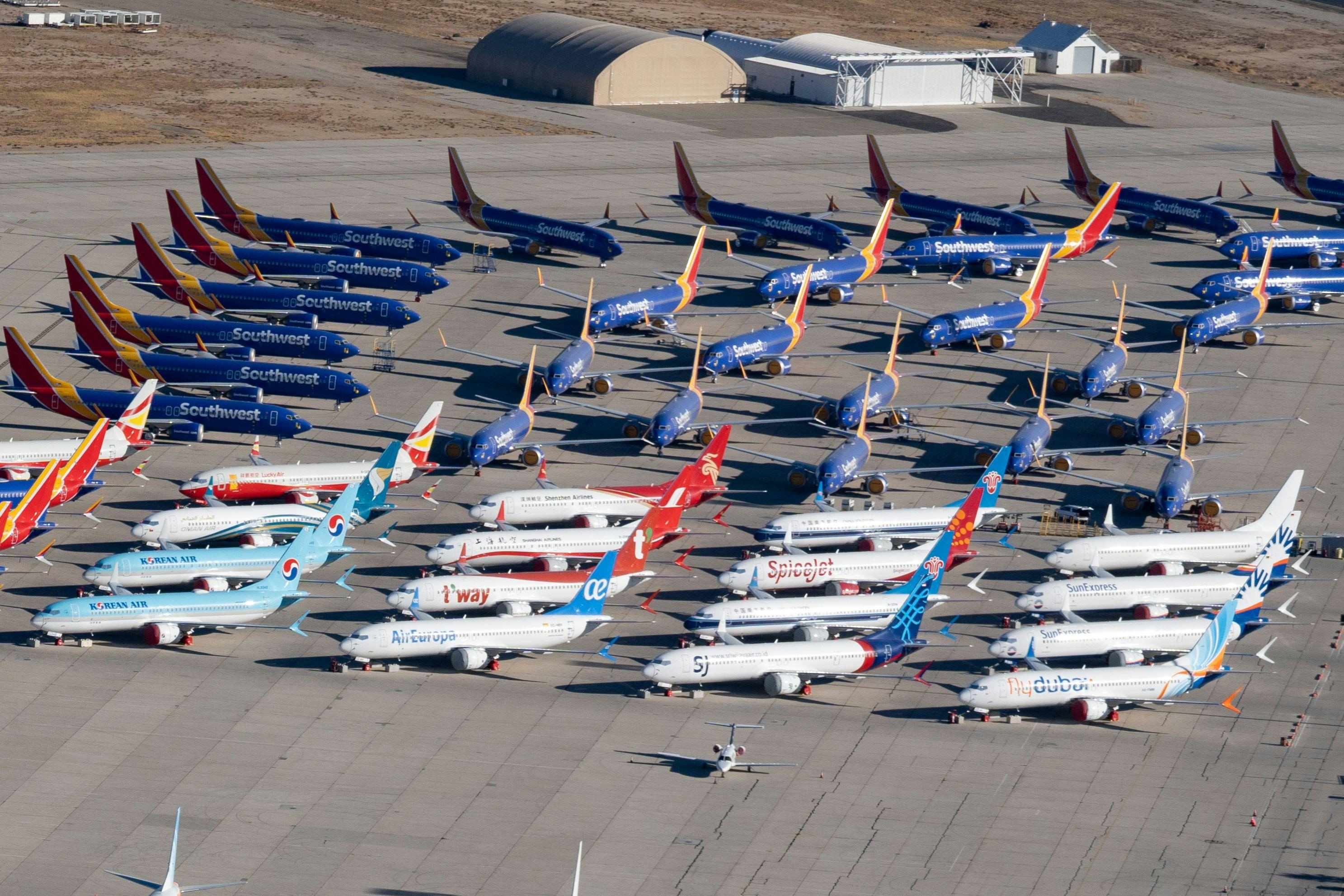
Certain aircraft, once celebrated as milestones of technological advancement, have become emblematic of controversy. These planes promised unprecedented speed, comfort, and a new era of air travel, yet they exposed critical design flaws, ignored warnings, and regulatory oversights. In some instances, the signs of impending disaster were apparent well before accidents occurred, prompting uncomfortable scrutiny of industry oversight and corporate decision-making.
The Comet: Triumph and Tragedy in the Jet Age
The de Havilland Comet, the world’s first commercial jet airliner, symbolized postwar optimism and innovation. It offered higher altitudes, faster speeds, and smoother flights than any previous airliner, briefly positioning Britain as a leader in the emerging jet age. However, this promise was shattered in the early 1950s. On January 10, 1954, BOAC Flight 781 disintegrated mid-flight near Elba shortly after departing Rome. Less than three months later, South African Airways Flight 201 crashed into the sea near Naples. Both accidents involved aircraft operating under normal conditions, indicating that the cause was internal rather than external.
Subsequent investigations uncovered a catastrophic design flaw: the Comet’s pressurized fuselage was susceptible to metal fatigue. Repeated pressurization cycles caused cracks to develop at the corners of the aircraft’s square windows, ultimately leading to structural failure after approximately 16,000 cycles. This revelation forced the aviation industry to confront the unprecedented risks associated with high-altitude jet travel, particularly the effects of repeated pressurization on aircraft integrity. The Comet’s failures fundamentally altered aircraft design and safety standards, serving as a sobering lesson on the consequences of unchecked technological ambition.
Ongoing Industry Challenges: Groundings, Investigations, and Market Responses
The legacy of controversial aircraft continues to influence the aviation sector today. Recent years have witnessed an increase in near-mid-air collisions and fatal accidents, prompting intensified scrutiny of safety protocols. Airlines such as Volaris have responded by pausing fleet expansion plans amid aircraft groundings and escalating fuel costs. Concurrently, regulatory investigations—like the International Trade Commission’s inquiry into Joby Aviation’s trade practices, which has raised concerns from major carriers including Delta—highlight the complex relationship between regulation, competition, and innovation.
The industry’s often reactive stance toward safety incidents underscores the enduring tension between technological progress and operational risk. Meanwhile, corporations like Textron are undertaking strategic restructuring, such as divesting their industrial divisions, to adapt to evolving market conditions shaped by government funding priorities and international business uncertainties.
Historically, the most controversial aircraft have not merely represented technological failures; they have acted as catalysts for reform, compelling the aviation industry to confront the true costs of advancement. As the sector continues to evolve, the lessons drawn from past crises remain essential reminders that safety, transparency, and vigilance must remain paramount.

Etihad Airways Suspends Airbus A380 Flights on Key Route

Aditya Birla Group Seeks Approval for Aircraft Leasing in GIFT City

Qatar Airways Highlights Innovation and Connectivity at Arabian Travel Market 2026

Hong Kong's Five-Year Plan Includes Andrew Fan's Aircraft Parts Processing Hub Proposal

ACIA Aero Leasing Delivers ATR72-600 to Air Nostrum

RTX Appoints Jill Albertelli as Head of Pratt & Whitney

TAT Technologies Joins Beyond Aero Hydrogen Aircraft Program

AURAK Study Highlights Barriers to Air Taxi Adoption in Emerging Economies

Xiamen Air Selects Altitude for 787 Maintenance at Heathrow

Etihad and Swissport Extend Global Partnership
