Image

AeroGenie — Your Intelligent Copilot.

Ask anything. Analyze everything. Act instantly.

Trending

Categories

Czech VTOL Developer Zuri Gains Investment from Former Lilium Executive
November 11, 2025By ePlane AI
Czech VTOL Developer Zuri Gains Investment from Former Lilium Executive
0
0
Zuri
Hybrid-Electric VTOL
Air Taxi Investment

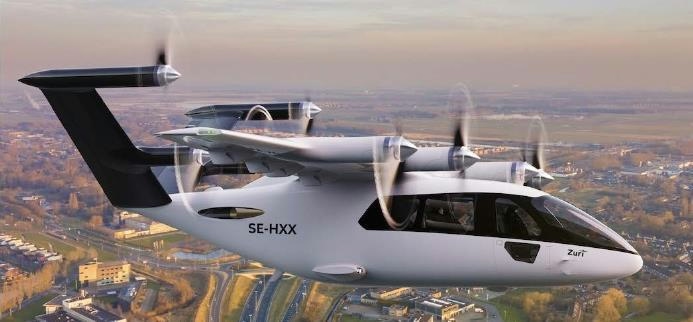
Czech VTOL Developer Zuri Secures Strategic Investment from Former Lilium Executive Amid Market Pressures

Dutch aerospace firm Ambitious Air Mobility Group (AAMG), following its unsuccessful attempt to acquire Lilium’s assets—which were ultimately purchased by Archer Aviation—has redirected its focus toward the Czech hybrid air taxi developer Zuri. AAMG has committed to an undisclosed investment in Zuri, establishing itself as a “long-term industrial and financial partner.” This collaboration also includes future purchase orders for Zuri’s hybrid-electric vertical take-off and landing (VTOL) aircraft, which will be offered in both uncrewed and optionally piloted configurations tailored for logistics, cargo, and defense sectors.

The final agreement is expected to be formalized by 16 December, with the investment amount to be disclosed in January. Zuri has not revealed the equity stake AAMG will acquire. This deal concludes Zuri’s Series A funding round and sets the stage for a Series B round anticipated in mid-2027. Earlier in 2024, Zuri’s pre-Series A round was oversubscribed, raising €4.4 million ($5.1 million), significantly exceeding its initial €1.5 million target.

While specific details regarding the number of aircraft ordered and delivery schedules remain confidential, the arrangement positions AAMG as both investor and customer. Zuri’s CEO, Michal Illich, emphasized the benefits of this dual role, stating, “They are doubly motivated for the aircraft to be aligned with their goals and to succeed.”

Advancing Hybrid-Electric VTOL Technology

Zuri is currently developing a four-passenger VTOL aircraft equipped with eight tilting propellers—four mounted on the wings and four on the V-tail—providing lift and propulsion. The company is constructing a second scaled demonstrator, with wing production slated for completion in December. An unmanned first flight is targeted for late 2026, following a series of ground tests planned for the summer. The primary goal of this 70%-scale demonstrator is to achieve a full transition to forward flight.

Distinguishing itself from many competitors that rely exclusively on battery technology, Zuri’s hybrid-electric powertrain is engineered to support longer routes, offering a range of up to 380 nautical miles (700 kilometers), including a 30-minute reserve. Robert Kamp, AAMG’s chief executive and senior partner, described the partnership as “a clear step toward delivering transformative long-range regional capabilities through hybrid-electric aviation.”

AAMG, which had previously been a customer for the Lilium Jet, praised the agreement on LinkedIn, highlighting that the investment and purchase orders will accelerate Zuri’s development milestones and secure its European manufacturing base. The firm also underscored Zuri’s strong return on investment relative to other players in the sector.

Navigating a Competitive and Evolving Market

Zuri’s new partnership with AAMG arrives amid intensifying competition in the advanced air mobility market. Archer Aviation’s acquisition of Lilium’s patents may provide it with a technological advantage, increasing scrutiny on Zuri’s innovations and financial resilience. As Zuri advances with AAMG’s support, it faces the dual challenge of fulfilling its ambitious development goals while contending with well-funded rivals leveraging recently acquired technologies.

More news
Aviation Cybersecurity Firm Identifies Critical Drone Software Vulnerability

Aviation Cybersecurity Firm Identifies Critical Drone Software Vulnerability

Aviation Cybersecurity Firm Identifies Critical Drone Software Vulnerability Discovery of a Significant Security Flaw New York-based aviation cybersecurity company CYVIATION has uncovered a critical vulnerability within the PX4 drone operating system, a widely adopted platform powering numerous consumer and commercial unmanned aerial vehicles (UAVs). This flaw potentially allows malicious actors to remotely seize control of drones during flight, raising serious concerns about the security of autonomous aerial technologies as their use becomes more pervasive across various sectors. Implications for Drone Security The increasing integration of drones into recreational, commercial, and industrial applications underscores the necessity for stringent cybersecurity measures to protect public safety and sensitive information. The vulnerability identified in PX4 highlights the pressing need for continuous security research and heightened vigilance within the industry. Experts caution that failure to address such weaknesses could jeopardize lives, property, and critical infrastructure reliant on these systems. Details and Response CYVIATION’s researchers discovered the security gap during an extensive audit of the open-source PX4 codebase on April 1, 2026. The flaw enables remote attackers to gain unauthorized access and control over drones mid-flight. Upon discovery, CYVIATION promptly informed the PX4 development team on April 3, 2026, triggering a coordinated effort to develop and deploy a patch to mitigate the risk. Industry Repercussions and Market Reaction The revelation is anticipated to prompt increased scrutiny from regulatory authorities, potentially leading to more rigorous cybersecurity standards for drone manufacturing and software development. Investor sentiment has already been affected, with cybersecurity stocks experiencing temporary volatility reminiscent of market reactions following recent reports on advanced AI model testing by Anthropic. In response, industry competitors and stakeholders are accelerating investments in cybersecurity technologies and fostering closer partnerships with specialized firms such as CYVIATION. These initiatives aim to bolster defenses and restore confidence in the rapidly evolving drone market. Perspectives from Industry Leaders John Smith, CEO of CYVIATION, emphasized the significance of the discovery, stating, “This discovery underscores the critical need for drone manufacturers and software developers to prioritize cybersecurity as these technologies become more prevalent.” Moving Forward CYVIATION has provided PX4 developers with detailed technical information regarding the vulnerability, and efforts are underway to release an updated, secure version of the software. Drone operators are advised to remain vigilant for forthcoming security updates and to apply them promptly to safeguard their systems. As regulatory attention intensifies and market pressures mount, this incident serves as a crucial reminder of the vital role cybersecurity plays in ensuring the safe and reliable operation of autonomous aerial systems.
Adani and Embraer Partnership Aims to Transform Global Air Travel

Adani and Embraer Partnership Aims to Transform Global Air Travel

Adani and Embraer Partnership Aims to Transform Global Air Travel For decades, the global aviation industry has been dominated by a duopoly comprising Airbus and Boeing. These two giants have largely shaped the experience of air travel, whether for long-haul international flights or major city connections. However, a new strategic alliance between India’s Adani Defence & Aerospace and Brazil’s Embraer seeks to challenge this established order. The partnership aims to revolutionize regional air travel, focusing on routes that have traditionally been underserved by the major manufacturers. A Strategic Alliance Focused on Regional Connectivity Formalized through a memorandum of understanding in early 2026, the collaboration unites Embraer, the world’s third-largest civil aircraft manufacturer known for its efficient E-Jet series, with the Adani Group, a dominant player in logistics and infrastructure that manages key Indian airports such as Mumbai and Ahmedabad. This marks Embraer’s first significant manufacturing venture in Asia, with plans to design, assemble, and service aircraft within India. The initiative is designed to transform India from a predominantly aviation technology consumer into a global producer, aligning with broader national ambitions. Addressing the “Missing Middle” in Air Travel While Airbus and Boeing have concentrated on large, long-haul aircraft, the Adani-Embraer partnership targets the 70-to-140-seat aircraft segment, which is crucial for connecting smaller cities and underserved regions. In 2025, India’s domestic air travel network carried nearly 167 million passengers, with demand surging particularly in Tier-2 and Tier-3 cities. Projections suggest that India will require approximately 500 aircraft in the 80-to-146-seat category over the next two decades. By focusing on these high-frequency, short-haul routes, the partnership aims to fill a critical gap often neglected by larger manufacturers, thereby enhancing regional connectivity. Building a Comprehensive Aviation Ecosystem The partnership’s ambitions extend well beyond aircraft assembly. It embraces a “Complete System” approach that includes the development of localized supply chains, which supports the “Make in India” initiative by fostering a robust network of Indian suppliers. This is expected to generate thousands of skilled jobs and reduce dependence on imported components. Additionally, the establishment of local maintenance, repair, and overhaul (MRO) hubs will reduce aircraft downtime, improving operational efficiency and turnaround times. The alliance also plans to invest heavily in human capital development, focusing on technical training and workforce expansion in engineering and aviation services. Collectively, these efforts aim to improve access to remote areas, boost employment in technical sectors, and position India as a hub for affordable air travel across Asia. Opportunities and Challenges Despite its promising outlook, the partnership faces considerable challenges. Brazil’s aviation market remains relatively underdeveloped, and both companies must overcome structural barriers while contending with intense competition from emerging electric vertical takeoff and landing (eVTOL) and business aviation firms. The global aviation landscape is rapidly evolving, with new technologies and players continuously reshaping market dynamics. Nonetheless, the Adani-Embraer alliance represents a significant and bold attempt to diversify the aviation industry and address the growing demand for regional air connectivity. If successful, it could redefine the way smaller cities are linked worldwide, offering a new model for accessible, efficient, and locally driven air travel.
Joby and Air Space Intelligence Collaborate to Manage U.S. Electric Air Taxi Operations

Joby and Air Space Intelligence Collaborate to Manage U.S. Electric Air Taxi Operations

Joby and Air Space Intelligence Collaborate to Manage U.S. Electric Air Taxi Operations Joby Aviation and Air Space Intelligence (ASI) have entered into a strategic partnership aimed at integrating artificial intelligence-driven airspace management into the burgeoning U.S. electric air taxi sector. This collaboration will utilize ASI’s Flyways AI platform to model and coordinate high-density electric vertical takeoff and landing (eVTOL) traffic, addressing the complex challenges of urban airspace management ahead of Joby’s planned commercial flight launch later this year. Advancing Airspace Management for eVTOL Operations Historically, the electric air taxi industry has concentrated on aircraft design elements such as wing configurations, battery endurance, and noise reduction. However, as Joby Aviation approaches Federal Aviation Administration (FAA) type certification and the White House’s eVTOL Integration Pilot Programme facilitates early commercial operations across ten U.S. states, the focus is shifting toward managing the simultaneous operation of potentially hundreds of air taxis in congested urban environments. Announced on April 7, 2026, the partnership between Joby and ASI aims to accelerate the integration of advanced air mobility into the U.S. National Airspace System (NAS). Central to this effort is ASI’s Flyways AI platform, which will provide predictive, real-time recommendations to air traffic controllers and operators. The companies intend to conduct joint demonstrations, including live operational exercises, before the end of 2026, aligning with Joby’s commercial launch timeline. Developing a New Operating System for Urban Airspace Founded in Boston in 2018, Air Space Intelligence has developed sophisticated digital tools for conventional aviation, including its PRESCIENCE platform. PRESCIENCE creates a four-dimensional digital twin of the airspace by assimilating live traffic, weather, and demand data. Building on this foundation, Flyways AI translates these simulations into actionable guidance, enabling controllers to proactively manage airspace flows and mitigate congestion. ASI’s technology is already employed by Alaska Airlines and the U.S. Department of Defense, providing the company with extensive operational data and regulatory credibility that newer entrants in advanced air mobility often lack. Bernard Asare, President of Civil Aviation at ASI, emphasized the significance of this approach: “Scaling advanced air mobility requires more than new aircraft—it requires a new operating system for the airspace. Our Flyways AI platform gives operators and controllers the predictive awareness to coordinate high-density operations proactively, not reactively. This partnership brings that same capability to eVTOL operations from day one.” Challenges and Competitive Dynamics Despite the promise of this collaboration, significant challenges remain. Regulatory hurdles persist as Joby and ASI work to integrate advanced air mobility into the NAS, and market sentiment remains divided. While some investors express optimism about the potential of electric air taxis, others remain cautious regarding the technology’s maturity and safety record. Competition within the sector is intensifying. Archer Aviation, a prominent rival, has accused Joby of fraud, alleging that the company concealed business ties to China and misrepresented itself as an American-made enterprise to secure U.S. government contracts. These allegations highlight the high stakes and scrutiny confronting the industry as it advances toward commercialization. The White House-backed eVTOL Integration Pilot Programme may accelerate Joby’s market entry but simultaneously raises the competitive bar for all electric air taxi developers. As the industry prepares for a new era of urban air mobility, the capacity to safely and efficiently manage increasingly crowded skies will be as critical as the aircraft themselves.
IndiGo Plane Sustains Minor Damage After Catering Truck Collision at Kolkata Airport

IndiGo Plane Sustains Minor Damage After Catering Truck Collision at Kolkata Airport

IndiGo Aircraft Sustains Minor Damage Following Catering Truck Collision at Kolkata Airport An IndiGo aircraft parked at Netaji Subhash Chandra Bose International Airport in Kolkata sustained minor damage on Tuesday after a catering truck collided with it. The incident took place at Bay No. 51 when the catering vehicle unexpectedly lurched forward upon startup, striking the engine of the stationary plane. Fortunately, no injuries were reported. Operational Impact and Safety Concerns Although the damage to the aircraft is described as minor, the collision has introduced immediate operational challenges for IndiGo, including the possibility of flight delays and disruptions at one of the airline’s principal hubs. The incident is expected to attract increased scrutiny from aviation authorities, who routinely investigate ground-handling accidents to ensure compliance with safety protocols. This event occurs amid a period of heightened attention on IndiGo’s operational reliability. India’s largest low-cost carrier has recently faced significant difficulties, including a major flight cancellation crisis and the resignation of CEO Pieter Elbers. These developments have raised concerns among passengers regarding the airline’s consistency and safety standards. Implications for IndiGo’s Reputation Industry observers suggest that such incidents may undermine passenger confidence and potentially affect IndiGo’s reputation. Competitors could leverage the situation to emphasize their own safety records and operational dependability. IndiGo has yet to release a detailed statement concerning the extent of the damage or the impact on its flight schedule. Meanwhile, airport authorities are expected to conduct a comprehensive review to determine the cause of the collision and to implement measures aimed at preventing similar incidents in the future. Passengers are advised to stay informed by checking with the airline for updates on any potential delays or changes to scheduled flights as investigations proceed.
Five Aircraft Featuring Innovative Cabin Designs

Five Aircraft Featuring Innovative Cabin Designs

Five Aircraft Featuring Innovative Cabin Designs Airline cabins are experiencing their most significant transformation in decades, with 2026 set to introduce substantial improvements in privacy, space, and onboard technology across flagship aircraft such as the Airbus A350-1000 and Boeing 777-300ER. Moving beyond traditional lie-flat seats, premium travel now embraces fully enclosed suites, adaptable layouts, and integrated digital systems. Innovations including 4K displays, Bluetooth audio, and advanced lighting tailored to different phases of flight are becoming standard features. Central to these developments is personalization, enabling passengers to control lighting, temperature, and entertainment in real time, thereby enhancing comfort and convenience. These advancements are already evident on long-haul routes connecting Europe, Asia, the Middle East, and Australia, with airlines such as Qatar Airways and Emirates leading the way. The following analysis highlights five of the most pioneering cabin designs currently in operation or soon to enter service, each redefining aspects of space, privacy, social interaction, or passenger wellbeing, and setting new benchmarks for long-haul travel. Qantas Airbus A350-1000 Project Sunrise “Wellbeing Zone” Qantas’s Project Sunrise A350-1000 introduces the Wellbeing Zone, a groundbreaking innovation tailored for ultra-long-haul flights lasting up to 20 hours. Acknowledging that even the most comfortable seats cannot fully address the challenges of such extended journeys, Qantas has created a dedicated space between premium economy and economy cabins where passengers can stand, stretch, and engage in guided exercises designed to reduce fatigue and improve circulation. This area features sculpted wall panels with stretch handles, hydration stations, and curated refreshments, all encouraging movement and active participation during the flight. The Wellbeing Zone is underpinned by scientific research, particularly in lighting design. Carefully calibrated variations in color and intensity help regulate passengers’ circadian rhythms and mitigate jet lag, facilitating adjustment to the destination’s time zone before arrival. This holistic approach transforms the cabin environment into one focused not only on comfort but also on overall passenger health and wellbeing. Emirates Airbus A380 Retrofitted Upper Deck Lounge The Emirates A380’s upper deck lounge remains one of commercial aviation’s most iconic spaces, serving as a social hub high above the clouds. Recent retrofits have enhanced this area with upgraded seating, refined mood lighting, and improved digital connectivity, seamlessly blending luxury with functionality. The lounge fosters social interaction and relaxation, establishing a new standard for inflight communal spaces and elevating the passenger experience beyond the individual seat. Industry-Wide Shifts and Challenges These cabin innovations reflect a broader competitive shift within the aviation industry, where the onboard experience has become a critical factor influencing airline choice. Airlines are increasingly investing in advanced digital systems, sustainable materials, and flexible cabin layouts to attract discerning travelers while improving operational efficiency. However, the path to widespread implementation is complex. Regulatory approval processes, integration with existing aircraft systems, and the imperative to maintain passenger comfort and safety present significant challenges. Market response has been largely positive, with heightened interest from carriers seeking to differentiate themselves. In turn, competitors are developing similar technologies or enhancing their own cabin offerings to remain competitive. The Future of Cabin Design Recent progress in digital connectivity and the adoption of sustainable materials are shaping the future of air travel, making cabins smarter, more comfortable, and environmentally responsible. As airlines continue to innovate, the passenger experience is poised to become increasingly personalized and holistic. This evolution signals a new era in which cabin design assumes a central role in airline strategy and customer satisfaction.
Airlines Extend Aircraft Service Life Through Cabin Refurbishments

Airlines Extend Aircraft Service Life Through Cabin Refurbishments

Airlines Extend Aircraft Service Life Through Cabin Refurbishments Navigating Supply Chain Challenges and Rising Costs Amid persistent supply chain disruptions and escalating operational expenses, airlines are increasingly opting to extend the service life of older aircraft by investing in cabin refurbishments. With new aircraft deliveries delayed, carriers are focusing on maintenance and interior upgrades to keep aging jets operational, some of which have been in service for over 25 years. This approach allows airlines to meet evolving passenger expectations while managing costs and maintaining fleet capacity. The aviation industry’s resilience is evident in this trend, as carriers strive to offer a modern flying experience on vintage aircraft. Balancing fuel efficiency and cost control with the demand for premium amenities has become a central challenge. The emphasis on updated interiors goes beyond mere aesthetics; it reflects a strategic shift aimed at attracting high-value travelers amid rising fuel prices and intensifying competition for premium passengers. Strategic Fleet Upgrades and Market Responses United Airlines exemplifies this strategy by continuing to operate Boeing 767-300ERs delivered in 1991, while simultaneously undertaking a significant fleet upgrade focused on enhancing premium cabins. This dual approach underscores the growing importance of high-end services as a means of differentiation in a competitive market. Other carriers are following suit, adapting their offerings to prioritize premium travel experiences that align with shifting customer preferences. However, modernization efforts face considerable obstacles. Supply chain delays are impeding the introduction of new cabin features, and the economics of maintaining older aircraft are becoming increasingly complex. For instance, United Airlines recently informed its pilots that it may need to ground a dozen older Boeing 777s during the summer of 2026 due to a shortage of spare parts. Meanwhile, aircraft asset managers such as EirTrade Aviation are acquiring relatively new planes, including 2021- and 2022-vintage Airbus A320neos, for disassembly. This activity highlights the ongoing demand for components necessary to support aging fleets. The market for aircraft components, including items like floor panels, illustrates the industry's dual challenge: airlines must navigate between commoditized procurement and the need for customized solutions that accommodate both legacy and modern aircraft models. Industry Perspectives on Durability and Economics Industry leaders emphasize the durability of aircraft and the economic considerations driving refurbishment decisions. Nathaniel Pieper, Chief Commercial Officer at American Airlines, remarks on the robust construction of airplanes, stating, “Airplanes are built incredibly durably.” George Dimitroff, Global Head of Aircraft Valuations at Cirium, highlights the critical importance of fuel efficiency on long-haul flights, noting, “When you fly long-haul, fuel burn becomes a major concern.” Bill Thompson, Director at EirTrade Aviation, underscores the economic calculus behind aircraft disassembly: “It really doesn't matter how old the aircraft is. Disassembly really comes down to the economics and whether it justifies doing it.” As airlines continue to navigate these complexities, their ability to modernize aging fleets through strategic refurbishments and targeted investments in premium services will be essential to sustaining competitiveness and fulfilling the expectations of contemporary travelers.
Safran Develops Hybrid-Electric Propulsion for Future Aircraft

Safran Develops Hybrid-Electric Propulsion for Future Aircraft

Safran Develops Hybrid-Electric Propulsion for Future Aircraft Advancing Hybrid Turbofan Technology Safran is pioneering a new era in aircraft propulsion with the development of a hybrid turbofan engine that incorporates high-power electrical machines on both the high-pressure (HP) and low-pressure (LP) spools of a conventional gas turbine. This innovative design allows for real-time energy exchange and power injection from an onboard battery, representing a significant advancement toward more efficient and versatile aircraft engines. Drawing on over twenty years of research, Safran’s program has achieved key milestones, including the anticipated 2025 EASA type certification of the ENGINeUS 100B—the first electric motor to receive such approval. This certification has laid the regulatory and industrial foundation for larger-scale 800V hybrid systems. As a central element of the CFM RISE initiative, Safran’s hybrid-electric propulsion technology is currently undergoing system-level testing, with the goal of equipping next-generation short- to medium-range aircraft expected to enter service in the mid-2030s. Technical Innovations and Operational Modes Traditional turbofan engines operate with the HP and LP spools functioning independently, each driven by combustion to power their respective compressor and turbine stages. Safran’s hybrid turbofan redefines this arrangement by integrating an electrical machine on each spool. These machines can operate as motors or generators, enabling multiple modes of operation that enhance engine flexibility and efficiency. Electrical power can be extracted from either or both spools and redirected to aircraft systems, providing a power balance function. Additionally, one electrical machine can act as a generator while the other functions as a motor, facilitating energy transfer between spools—a capability absent in conventional engine architectures. The onboard battery can also inject energy into either spool or serve as an auxiliary power source for the aircraft. An 800V electrical network interconnects these components, allowing for dynamic power management across the propulsion system. This multi-mode operation enables the engine to optimize performance throughout all flight phases, reducing fuel consumption over the entire mission profile rather than at a single operating point. Industry Landscape and Future Prospects Safran is emerging as a leader in hybrid-electric propulsion, though it faces competition from companies such as Collins Aerospace and Pratt & Whitney, which are accelerating their own hybrid-electric development programs. The aviation industry is witnessing increased investment and compressed development timelines as airlines express growing interest in these technologies for their potential to improve fuel efficiency and lower emissions. Despite the promise, significant challenges remain. Integrating large electrical systems into aircraft demands overcoming complex engineering obstacles, particularly in hybridizing gas-turbine engines and ensuring compatibility with existing aircraft infrastructure. Managing high-voltage networks safely and reliably at scale will be critical as these systems approach commercial deployment. Safran has announced plans for a full-scale hybrid turbofan test representative of next-generation short- to medium-range aircraft by early 2026. Success in this endeavor could signal a transformative shift in civil aviation, where enhanced fuel efficiency is achieved not through entirely new engine designs but by making the conventional turbofan smarter, more adaptable, and deeply integrated with advanced electrical systems.
IAC Launches New Project in Spain Amid Rising Paint Demand

IAC Launches New Project in Spain Amid Rising Paint Demand

IAC Expands Operations in Spain with New Widebody Hangar International Aerospace Coatings (IAC), a prominent provider of aircraft painting and coating services, has announced a major expansion at Teruel Airport (TEV) in Spain. The company plans to build a new widebody hangar adjacent to its existing facility to meet the increasing global demand for aircraft paint services. This development marks a significant step in IAC’s growth strategy, reflecting the rising needs of original equipment manufacturers (OEMs) and airlines expanding their fleets. The new hangar, which will be IAC’s 21st facility worldwide, is expected to be operational by the third quarter of 2026. Equipped with state-of-the-art painting technology, including advanced extraction pumps and a sophisticated air-recirculation system, the facility will increase IAC’s total number of paint lines from 30 to 32. The expansion is also projected to generate around 60 new full-time jobs, raising the company’s workforce in Teruel to over 130 employees. Martin O’Connell, IAC’s chief executive, highlighted the strategic value of the project, stating that the new hangar will enhance the scale and quality of services provided to key customers amid growing fleet expansions. Navigating Market Challenges and Industry Trends IAC’s expansion occurs against a backdrop of complex market conditions. The company must contend with volatile oil prices and rising mortgage rates, factors that are influencing broader economic stability and affecting demand in related sectors such as new housing. Additionally, uncertainties in the labor market present potential challenges for recruitment and operational continuity at the new facility. The coatings industry is also experiencing shifts driven by evolving consumer preferences. An increasing appetite for unique and customized car colors is impacting the broader coatings sector, which in turn influences demand for specialized paints and innovative finishes. Within the aircraft painting industry, competitors are responding by integrating automation technologies, including painting robots, to improve efficiency and maintain competitiveness. Despite these challenges, IAC’s investment in Teruel underscores its commitment to adapting to the aerospace sector’s evolving requirements. The new hangar is expected to reinforce the company’s position in the European market and support the continued expansion of its global network.
Federal Officials Cite Mechanical Failure and Low Altitude in 2024 Anaconda Helicopter Crash

Federal Officials Cite Mechanical Failure and Low Altitude in 2024 Anaconda Helicopter Crash

Mechanical Failure and Low Altitude Flight Cited in 2024 Anaconda Helicopter Crash A fatal helicopter crash in Anaconda-Deer Lodge County in April 2024 has been attributed to mechanical failure compounded by low-altitude flight, according to the National Transportation Safety Board’s (NTSB) final report. The investigation focused on the April 26 flight piloted by 28-year-old Justin Paul Price, revealing critical engine issues, including the disintegration of O-rings within the turbine-to-compressor coupling shaft. These O-rings, vital for maintaining a leak-free seal, failed for reasons that remain undetermined. The helicopter involved was a 2005 Bell 206-L4 powered by a Rolls-Royce engine, which depends on intact O-rings to prevent oil leaks. The manufacturer emphasized that damaged or incorrect O-rings could cause oil loss, potentially resulting in catastrophic engine failure. The NTSB report stated, “The initiating event for the disintegration of the O-rings could not be determined,” underscoring the unresolved nature of the mechanical failure. Circumstances of the Crash and Contributing Factors At the time of the accident, Price was engaged in contract remediation work for the Atlantic Richfield Company, addressing environmental damage from historic operations at the Anaconda Smelter site. He was conducting aerial fertilizer application, flying at low altitude with a spreader suspended beneath the helicopter. The NTSB highlighted that such low-level flight operations inherently limit a pilot’s ability to execute emergency maneuvers. Wes Van Dell, chief helicopter flight instructor at the University of North Dakota Aerospace, explained that low altitude restricts the possibility of autorotation—a controlled descent maneuver that allows a helicopter to glide safely to the ground following engine failure. The NTSB concluded that, given the helicopter’s altitude and speed at the time of engine power loss, Price likely lacked sufficient altitude to establish autorotation and perform a successful emergency landing. The report identified several probable contributors to the crash, including total engine power loss due to the loss of cooling oil to the turbine-to-compressor coupling shaft, fracture of the shaft at an altitude too low for autorotation, carbon buildup in the piccolo tube screen and nozzles, and the unexplained disintegration of the spur adapter gearshaft O-rings. The Federal Aviation Administration (FAA) has previously noted that maintenance issues frequently contribute to helicopter engine and tail rotor failures. The helicopter’s engine had last undergone overhaul in March 2019, approximately 1,141 flight hours before the accident. Industry Impact and Regulatory Response The crash has drawn significant attention from aviation safety regulators and may prompt revisions to safety protocols governing helicopter operations. Industry analysts suggest that such incidents often lead to increased insurance premiums for operators and raise concerns among investors, potentially affecting the stock valuations of companies involved in helicopter manufacturing and maintenance. In response, competitors within the industry may implement enhanced safety measures and launch public relations initiatives aimed at reassuring stakeholders and the public. The FAA’s recent suspension of visual separation requirements between helicopters and fixed-wing aircraft in congested airspace reflects ongoing efforts to mitigate risks and prevent similar tragedies in the future.
Royal Air Maroc Embraces Artificial Intelligence to Advance African Aviation

Royal Air Maroc Embraces Artificial Intelligence to Advance African Aviation

Royal Air Maroc Embraces Artificial Intelligence to Advance African Aviation Royal Air Maroc (RAM) is intensifying its digital transformation by integrating artificial intelligence (AI) across its operations, customer service, and cybersecurity frameworks. What initially began as isolated pilot projects has now matured into a comprehensive, cross-functional AI deployment, positioning the Moroccan national carrier as a technological frontrunner within Africa’s increasingly competitive aviation industry. Operational Enhancements Through AI RAM is harnessing AI-driven data analytics to refine flight planning, anticipate complex operational scenarios, and improve resource management. In an industry where punctuality, safety, and efficiency are critical, these AI capabilities provide the airline with a distinct competitive advantage. The carrier reports that AI applications have enabled it to better absorb operational shocks and reduce inefficiencies throughout its network, thereby enhancing overall performance. Transforming the Passenger Experience Customer experience remains a central pillar of RAM’s AI strategy. The airline is overhauling the entire passenger journey—from flight search and booking to check-in and post-travel support—focusing on speed, simplicity, and personalization. As traveler expectations evolve, delivering a seamless and digitally enhanced experience has become essential for airlines aiming to expand their market share in a dynamic environment. Innovation and Collaboration The RAM Open Innovation program, launched in 2022 to foster partnerships with startups and technology firms, is entering a more selective phase. The initiative now prioritizes projects that directly address operational challenges and align with the airline’s strategic objectives. This targeted approach seeks to ensure that innovation translates into practical, deployable solutions rather than remaining theoretical. Strengthening Cybersecurity Measures Alongside digitalization, cybersecurity has emerged as a critical priority for RAM. As an operator of vital infrastructure managing extensive sensitive passenger and operational data, the airline is continuously enhancing its security posture. It is deploying advanced security technologies, tightening protocols, and forging specialized partnerships to protect its systems against evolving cyber threats. Challenges in Workforce and Regulation Despite the benefits, RAM’s AI adoption presents significant challenges, particularly regarding workforce adaptation. Automation driven by AI could disrupt employment in areas such as data analysis, cybersecurity, and AI development. While some sectors within the airline and the broader market may embrace AI for its efficiency gains, concerns persist over potential job displacement. Competitors are expected to respond by either accelerating their own AI integration or investing in human capital to mitigate the impact of automation. Moreover, the evolving regulatory environment governing AI in aviation adds complexity. RAM must navigate emerging compliance requirements as authorities introduce guidelines to ensure the safety, privacy, and ethical use of AI technologies. By advancing these initiatives while addressing workforce, market, and regulatory challenges, Royal Air Maroc is determined to solidify its position as Africa’s leading aviation hub. Leveraging technology as the driving force behind its next growth phase, the airline is charting a forward-looking course for the future of African aviation.
line










