
Orchestrate AI insights into action

Trending
Categories
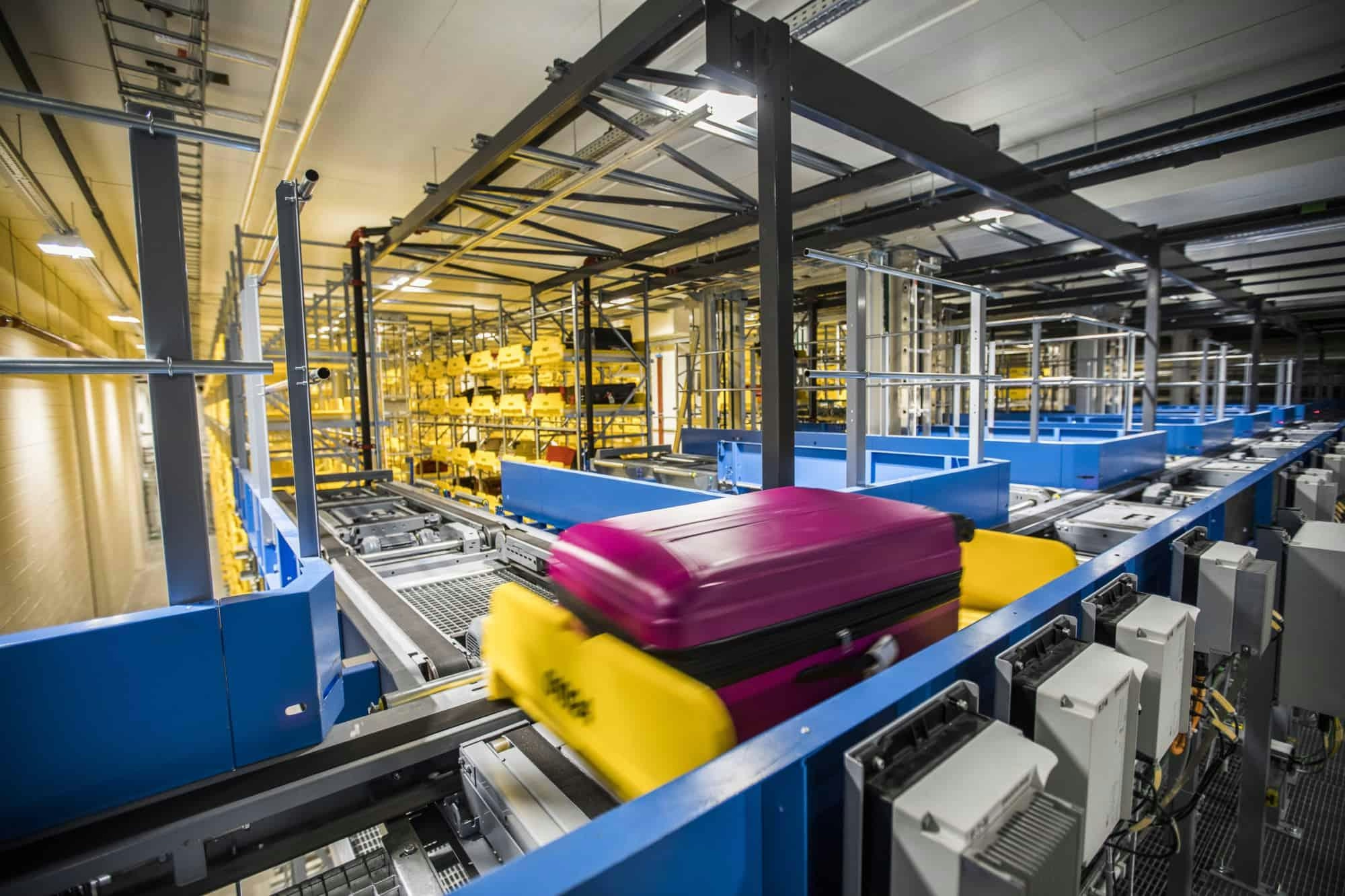
Delta Air Lines Trials AI Technology in Baggage Handling
Delta Air Lines Trials AI Technology in Baggage Handling
Delta Air Lines has launched a pilot program deploying an artificial intelligence-powered platform designed to enhance baggage handling efficiency at Hartsfield-Jackson Atlanta International Airport. The system, known as Baggage AI, assigns luggage to ramp workers and suggests optimal driving routes for baggage transfer vehicles across the airport. Accessible via smartphones, the platform provides handlers and drivers with real-time updates and prioritization capabilities, aiming to streamline operations and improve the overall passenger experience.
According to Delta ramp agent Michael Davis, the AI system helps organize tasks and allows prioritization of bags for timely delivery to aircraft. The airline reports that Baggage AI has already improved luggage handling efficiency by 30%. Richard Cox, Delta’s senior vice president of airport customer service, likened the platform to a rideshare app that optimizes routes for baggage transfer drivers, emphasizing the company’s commitment to ensuring customer peace of mind.
Broader AI Initiatives and Challenges
Delta’s investment in artificial intelligence extends beyond baggage handling. In October, the airline introduced Delta Concierge, an AI-powered personal assistant currently available in beta through the Fly Delta app for select SkyMiles members. The company is actively collecting user feedback before considering a wider rollout to all SkyMiles customers.
Despite the potential benefits, the integration of AI technology presents challenges. Delta must address possible resistance from employees adapting to new workflows and cultural changes driven by automation. The shift also raises questions about evolving employee roles and the necessity for ongoing training to facilitate a smooth transition.
Industry Context and Market Response
Reactions to AI-driven innovations in the travel and hospitality sectors remain mixed. While some consumers welcome advancements promising greater efficiency and reliability, others voice concerns regarding privacy, surveillance, and the growing role of automation in customer service. Airlines, including Delta, face the task of balancing these concerns while leveraging technology to maintain competitiveness.
Industry analysts anticipate that rival carriers will likely adopt similar AI solutions to keep pace, accelerating the integration of artificial intelligence in logistics and supply chain management. This trend emerges amid economic uncertainty, prompting airlines to seek cost-effective methods to enhance operational performance and customer satisfaction.
With an expected passenger volume of approximately 6.5 million during the Thanksgiving holiday period, Delta underscores the critical importance of reliable baggage handling and efficient airport operations. As AI continues to transform the travel industry, Delta’s pilot program may serve as a benchmark for broader adoption, contingent on the company’s ability to navigate both technological and cultural challenges.

Etihad Airways Suspends Airbus A380 Flights on Key Route

Aditya Birla Group Seeks Approval for Aircraft Leasing in GIFT City

Qatar Airways Highlights Innovation and Connectivity at Arabian Travel Market 2026

Hong Kong's Five-Year Plan Includes Andrew Fan's Aircraft Parts Processing Hub Proposal

ACIA Aero Leasing Delivers ATR72-600 to Air Nostrum

RTX Appoints Jill Albertelli as Head of Pratt & Whitney

TAT Technologies Joins Beyond Aero Hydrogen Aircraft Program

AURAK Study Highlights Barriers to Air Taxi Adoption in Emerging Economies

Xiamen Air Selects Altitude for 787 Maintenance at Heathrow

Etihad and Swissport Extend Global Partnership
