
Orchestrate AI insights into action

Trending
Categories
Delta and Shell Aviation Agree to Five-Year Sustainable Aviation Fuel Supply Deal
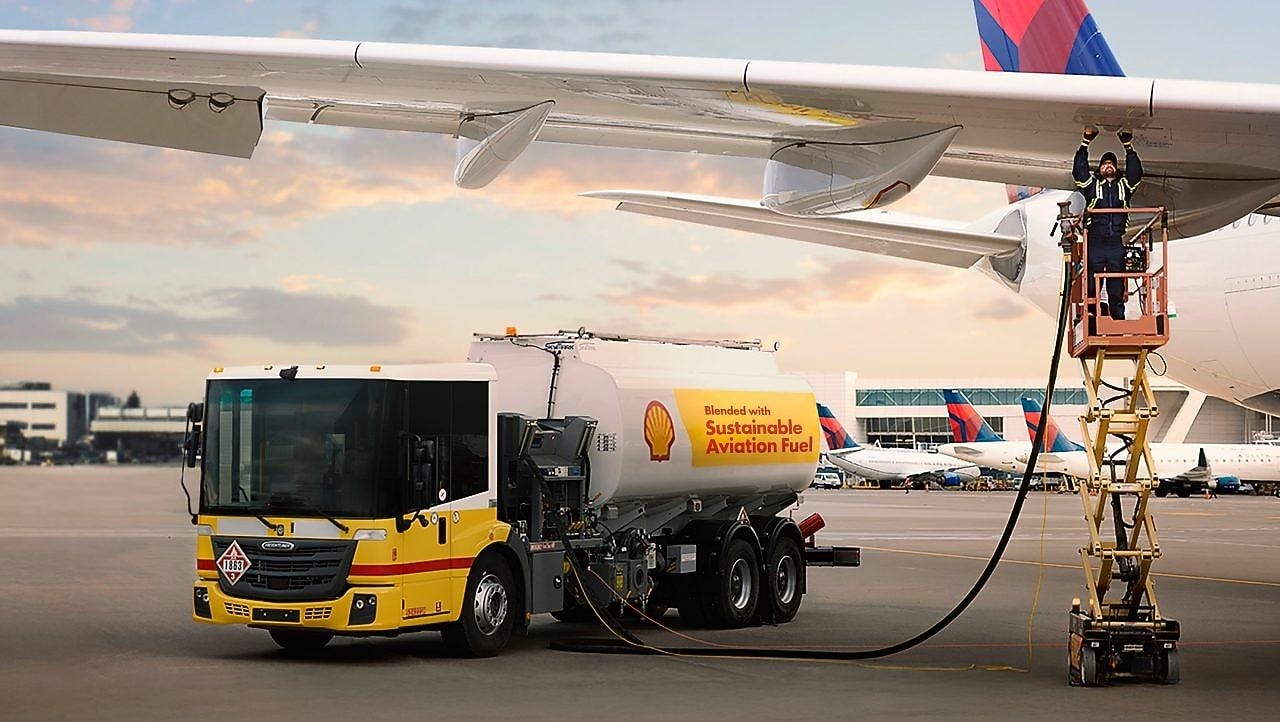
Delta and Shell Aviation Forge Five-Year Sustainable Aviation Fuel Supply Partnership
Delta Air Lines and Shell Aviation have entered into a five-year agreement to expand the supply and distribution of sustainable aviation fuel (SAF) across several major U.S. airports through 2030. This collaboration seeks to develop the necessary infrastructure and logistics networks to scale SAF supply chains at commercial airports, initially targeting five key hubs.
Addressing the Challenges of Sustainable Aviation Fuel Expansion
Sustainable aviation fuel, which can reduce carbon emissions by up to 80% compared to conventional jet fuel, is widely regarded as essential to the aviation industry’s ambition to achieve net-zero emissions by 2050. Despite its potential, SAF currently represents less than 1% of total jet fuel consumption, underscoring the significant obstacles in increasing production and distribution capacity.
The partnership between Delta and Shell aims to overcome these challenges by enhancing operational capabilities related to the transportation, blending, and distribution of SAF. Both companies stress that expanding access to sustainable fuels will require not only new infrastructure but also coordinated investment efforts across the aviation sector.
Industry Context and Competitive Dynamics
Market analysts highlight that the limited availability of SAF has spurred heightened investment activity, as airlines and fuel suppliers compete to secure future supplies. This urgency is intensified by the so-called "valley of death" phase, during which SAF projects often face difficulties in attracting sufficient funding to transition from pilot initiatives to commercial-scale operations.
Other industry players are also responding to the growing demand for sustainable fuels. For instance, International Airlines Group (IAG) has entered into long-term SAF offtake agreements and is participating in investment funds aimed at accelerating SAF production. These developments reflect a broader trend within the aviation sector to establish reliable, large-scale sources of low-carbon fuel.
Delta and Shell’s agreement represents a strategic effort to address the logistical and financial barriers that have thus far constrained SAF’s integration into commercial aviation. By concentrating on supply chain development and operational readiness, the partnership seeks to bridge the gap between current SAF availability and the volumes required to meet future climate objectives.

Etihad Deploys Widebody Fleet to Meet Strong Demand

Korean Air Finalizes $36.2 Billion Deal with Boeing

Australia’s RFDS Queensland Section Orders Six King Air 260Cs

Korean Air Finalizes Order for 103 Boeing Jets and Engines

Embraer E195-E2 Features Distinctive Engine Placement Among Regional Jets

What Passengers Can Expect on Boeing’s New 777X Jet

How Ethiopian Airlines Became Africa’s Leading Carrier Amid Gulf Competition

Joby Aviation Extends Autonomous Flight Capabilities with Cross-Country Tour
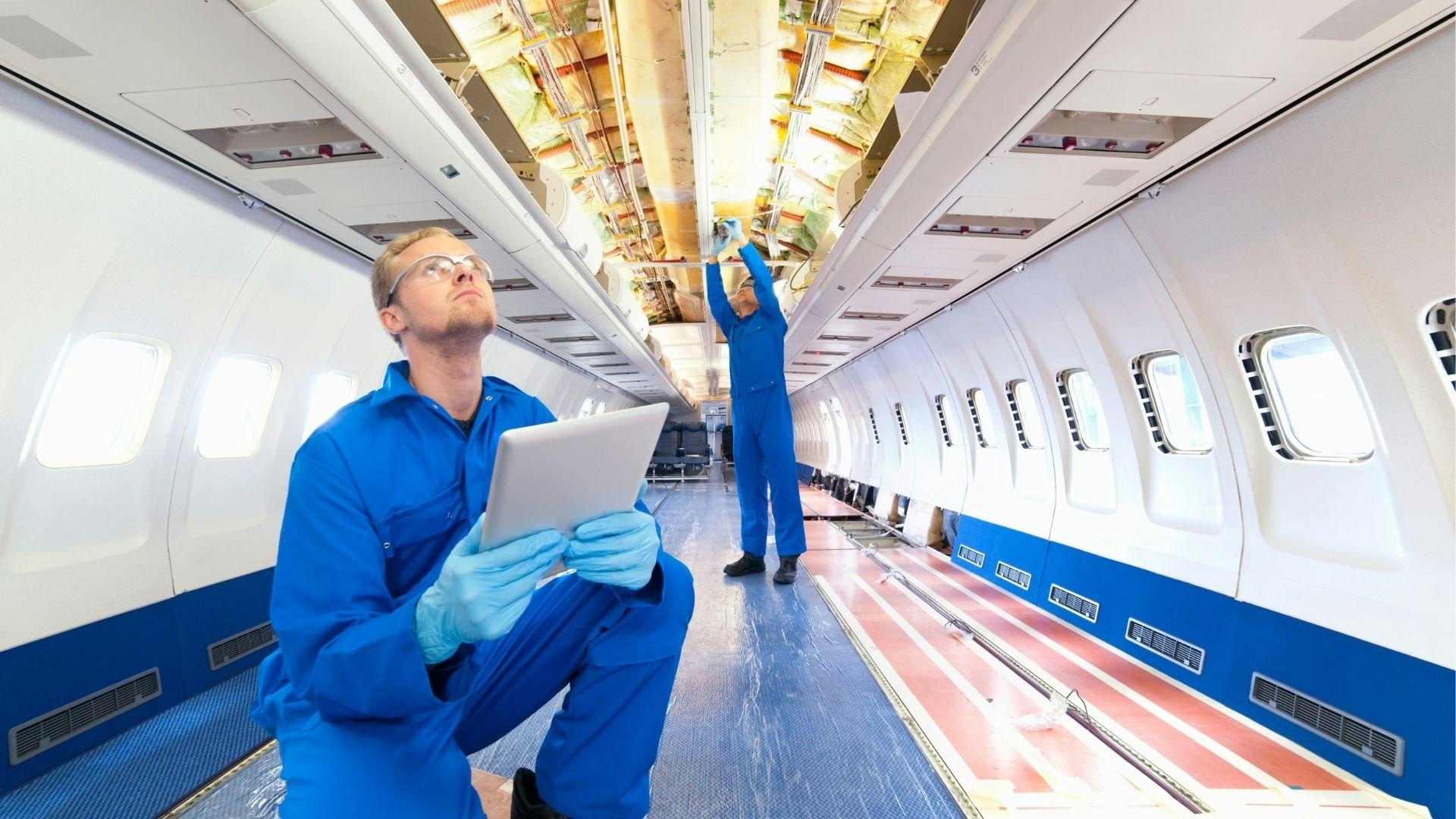
Strengthening Europe's Aviation Supply Chain Amid Uncertainty
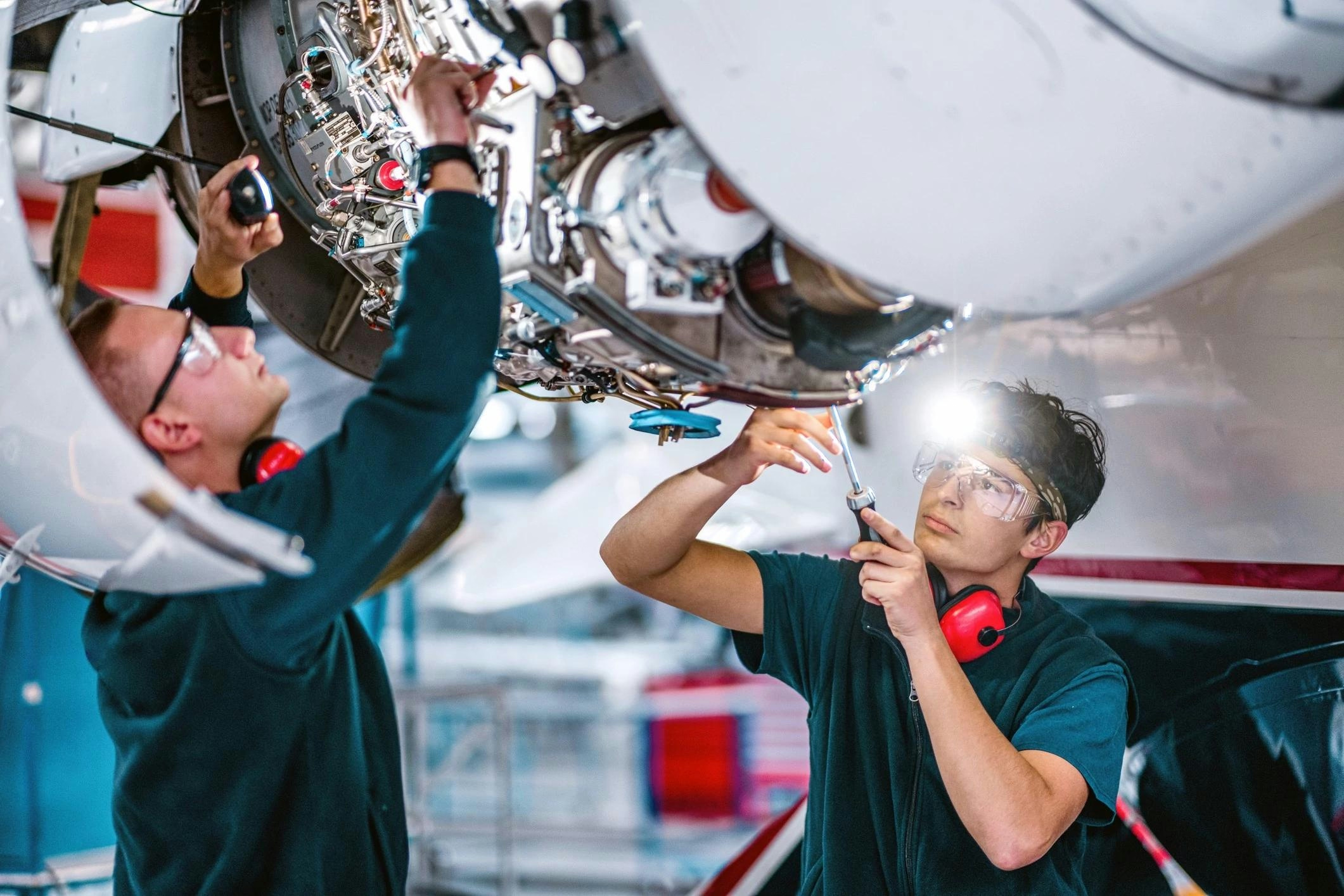
The Evolution of the Aircraft Maintenance Engineer Role
