
Orchestrate AI insights into action

Trending
Categories
Delta (DAL) Expands Fleet with New Airbus A321neo Order
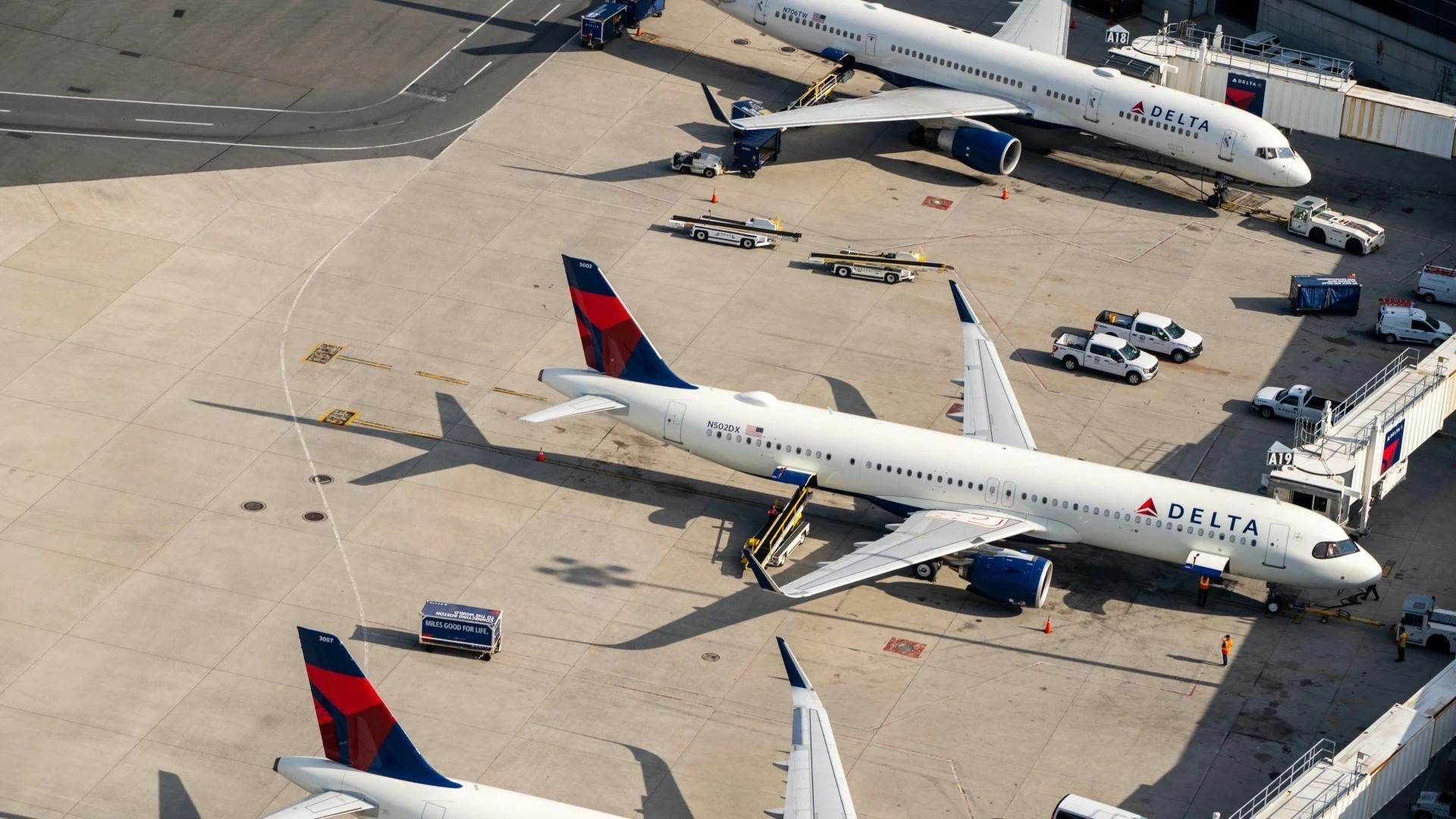
Delta Air Lines Advances Fleet Modernization with Airbus A321neo Acquisition
Delta Air Lines (NYSE: DAL) has announced a significant expansion of its fleet with an order for 34 new Airbus A321neo aircraft. This purchase marks the airline’s third major aircraft acquisition within a six-week period, underscoring its aggressive strategy to modernize and enhance operational efficiency. With this latest commitment, Delta’s total order for the fuel-efficient A321neo now stands at 189 units, including 92 already in service and 97 on firm order.
The Airbus A321neo is recognized for delivering a 20 to 30 percent improvement in fuel efficiency over previous models, alongside increased premium seating capacity. These features align closely with Delta’s dual objectives of reducing operational costs and elevating the passenger experience. This order complements recent investments in Boeing 787 Dreamliners and additional Airbus widebody jets, reflecting the airline’s broader initiative to refresh its fleet with next-generation aircraft.
Headquartered in Atlanta, Delta operates one of the world’s most extensive airline networks, serving over 300 destinations across more than 50 countries. Its hub-and-spoke system is anchored in key U.S. cities including Atlanta, New York, Salt Lake City, Detroit, Seattle, and Minneapolis-St. Paul. Historically, the airline has derived a substantial portion of its international revenue and profits from transatlantic routes.
Financial Performance, Market Position, and Risks
Delta’s recent financial results demonstrate robust operational performance. The airline reported revenues of $63.36 billion, with a three-year revenue growth rate of 7.1%. Its operating margin stands at 9.19%, while the net margin is 7.9%, indicating effective cost control and profitability. The company maintains a balanced capital structure, with a debt-to-equity ratio of 0.97. However, liquidity measures such as a current ratio of 0.4 and a quick ratio of 0.34 suggest potential short-term financial constraints. Furthermore, an Altman Z-Score of 1.5 places Delta within the distress zone, signaling possible financial stress within the next two years.
Insider trading activity has been notable for 14 selling transactions without any insider purchases over the past three months, a trend that may raise concerns among investors regarding internal confidence.
From a valuation perspective, Delta appears attractively priced. Its price-to-earnings ratio of 8.57, price-to-sales ratio of 0.69, and price-to-book ratio of 2.06 all fall below historical averages, suggesting potential undervaluation. Analyst sentiment remains moderately positive, with a recommendation score of 1.8 and a target price of $81.50. Technical indicators, including a relative strength index (RSI) of 52.11, reflect neutral market sentiment. Institutional ownership is strong at 82.49%, indicating considerable confidence from large investors.
Despite these strengths, Delta faces sector-specific risks inherent to the airline industry. Volatility in fuel prices and evolving regulatory frameworks continue to challenge profitability. The airline’s ambitious fleet expansion may also encounter obstacles such as supply chain disruptions, rising production costs, and intensified competition. Rivals, including Southwest Airlines, are likely to respond by adjusting their own fleet strategies to maintain competitive pricing and seating options.
Market analysts are closely monitoring how Delta’s long-term investments in fleet modernization will influence its competitive positioning and financial resilience amid the dynamic landscape of the global airline industry.

Etihad Airways Suspends Airbus A380 Flights on Key Route

Aditya Birla Group Seeks Approval for Aircraft Leasing in GIFT City

Qatar Airways Highlights Innovation and Connectivity at Arabian Travel Market 2026

Hong Kong's Five-Year Plan Includes Andrew Fan's Aircraft Parts Processing Hub Proposal

ACIA Aero Leasing Delivers ATR72-600 to Air Nostrum

RTX Appoints Jill Albertelli as Head of Pratt & Whitney

TAT Technologies Joins Beyond Aero Hydrogen Aircraft Program

AURAK Study Highlights Barriers to Air Taxi Adoption in Emerging Economies

Xiamen Air Selects Altitude for 787 Maintenance at Heathrow

Etihad and Swissport Extend Global Partnership
