
Orchestrate AI insights into action

Trending
Categories
EcoDemonstrator Explorer to Test Next-Generation Inlet

EcoDemonstrator Explorer to Test Next-Generation Inlet
Boeing, in collaboration with Rolls-Royce and Lufthansa, is preparing to commence flight tests later this month involving a Boeing 787-9 outfitted with a range of innovations designed to enhance fuel efficiency and reduce noise emissions. These trials will be conducted at Boeing’s facility in Glasgow, Montana, and are scheduled to continue through mid-August. The aircraft, designated as the 2026 ecoDemonstrator Explorer, will be delivered to Lufthansa following the completion of testing.
Advancements in Inlet Design
At the heart of this program is the evaluation of Next Generation Inlets installed on the twin Rolls-Royce Trent 1000 TEN engines. These advanced composite inlets are approximately 30 percent shorter—about 38 centimeters (15 inches)—than current production models. They feature an expanded acoustic liner that covers a larger portion of the inlet surface, enabling a more compact nacelle design while maintaining effective noise attenuation. This innovation is critical for meeting increasingly stringent regulatory noise standards and addressing community noise concerns.
The reduced length of the inlet is a significant step toward accommodating future fuel-efficient engines, such as Rolls-Royce’s UltraFan concept, on commercial aircraft. By decreasing both drag and weight, the new inlets are expected to contribute to overall improvements in aircraft efficiency. Earlier tests conducted earlier this decade, which involved a short-inlet-equipped Trent 1000 engine on a now-retired 747-200 testbed, suggested a potential fuel-burn reduction of approximately 0.5 percent. However, Boeing emphasizes that the current flight tests are primarily focused on assessing the acoustic performance of the new inlet design.
Operational Innovations and Regulatory Context
Beyond hardware developments, the ecoDemonstrator Explorer will also trial modified departure and arrival procedures, including “Intelligent Operations” flightpaths. These flightpaths are algorithmically generated using multiple data sources to identify opportunities for fuel savings and noise reduction in the vicinity of airports. Boeing asserts that these operational changes aim to further mitigate the impact of aircraft noise on surrounding communities.
These flight tests form part of the third phase of the Federal Aviation Administration’s CLEEN (Continuous Lower Energy, Emissions and Noise) program. Demonstrating the inlet’s effectiveness in reducing both noise and drag is essential to support future engine integration and ensure compliance with evolving regulatory requirements.
The aviation industry is closely monitoring the outcomes of these trials. Positive results could stimulate greater interest among airlines in adopting more fuel-efficient and quieter technologies, while also encouraging competitors to accelerate the development of similar innovations to maintain their market positions. Boeing and its partners face the dual challenge of meeting performance targets and aligning the new inlet design with regulatory and community expectations.
Lane Ballard, Boeing’s chief technology officer, remarked, “The more efficient inlet and Intelligent Operations flightpaths we’re evaluating on this year’s ecoDemonstrator Explorer are among the many promising concepts we’re working on.”
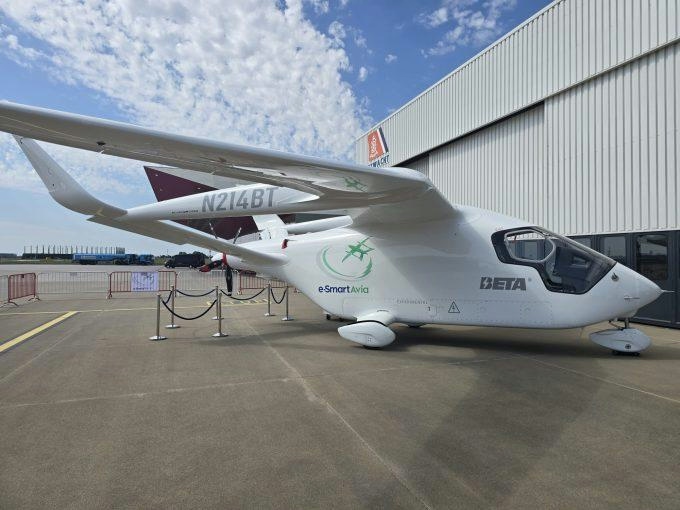
SLI and e-Smart Explore Electric Aircraft Leasing for Regional Cargo
Forum Markets Expands Aviation Portfolio with Engine Acquisition

Archer Aviation, BETA Technologies, and Macquarie Capital Launch ACES to Develop Electric Aviation Charging Network Across the U.S.
Forum Markets Acquires Aircraft Engine for $12 Million, Expands Aviation Portfolio

Aviation Claims Costs Rise in All Categories as MRO Labor Rates Surge
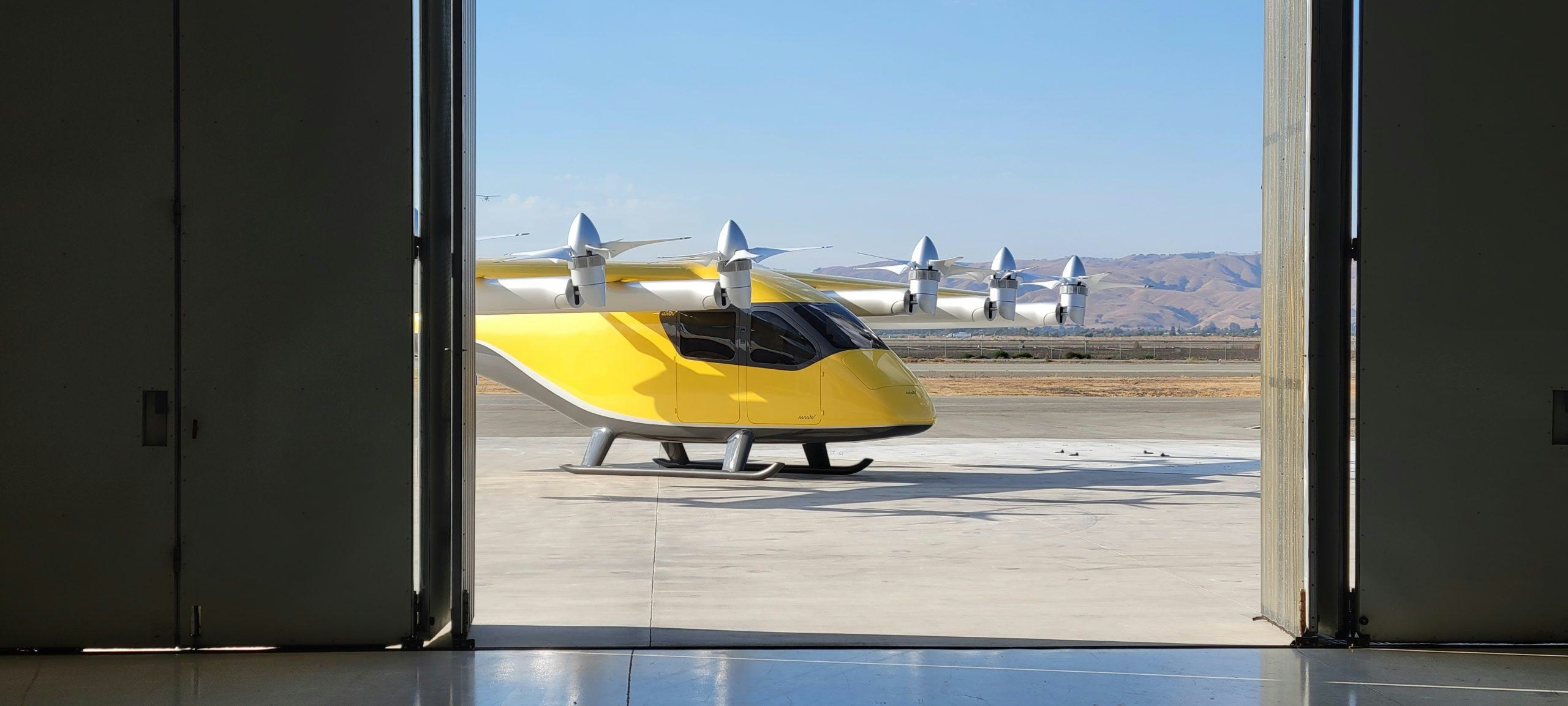
Wisk Tests Autonomous Air Taxi Operations with Single Supervisor
China Airlines Reports Increased Cargo Revenues and Volumes Driven by AI Demand
KAI Delivers Six Additional T-50i Jet Trainers to Indonesia, Expanding Fleet to 22
Porter Implements Flydocs Asset Management Platform
EASA Announces Major Overhaul of Flight Simulation Standards
