
Orchestrate AI insights into action

Trending
Categories
EHang VT35: First Pilotless Electric Flying Taxi Unveiled
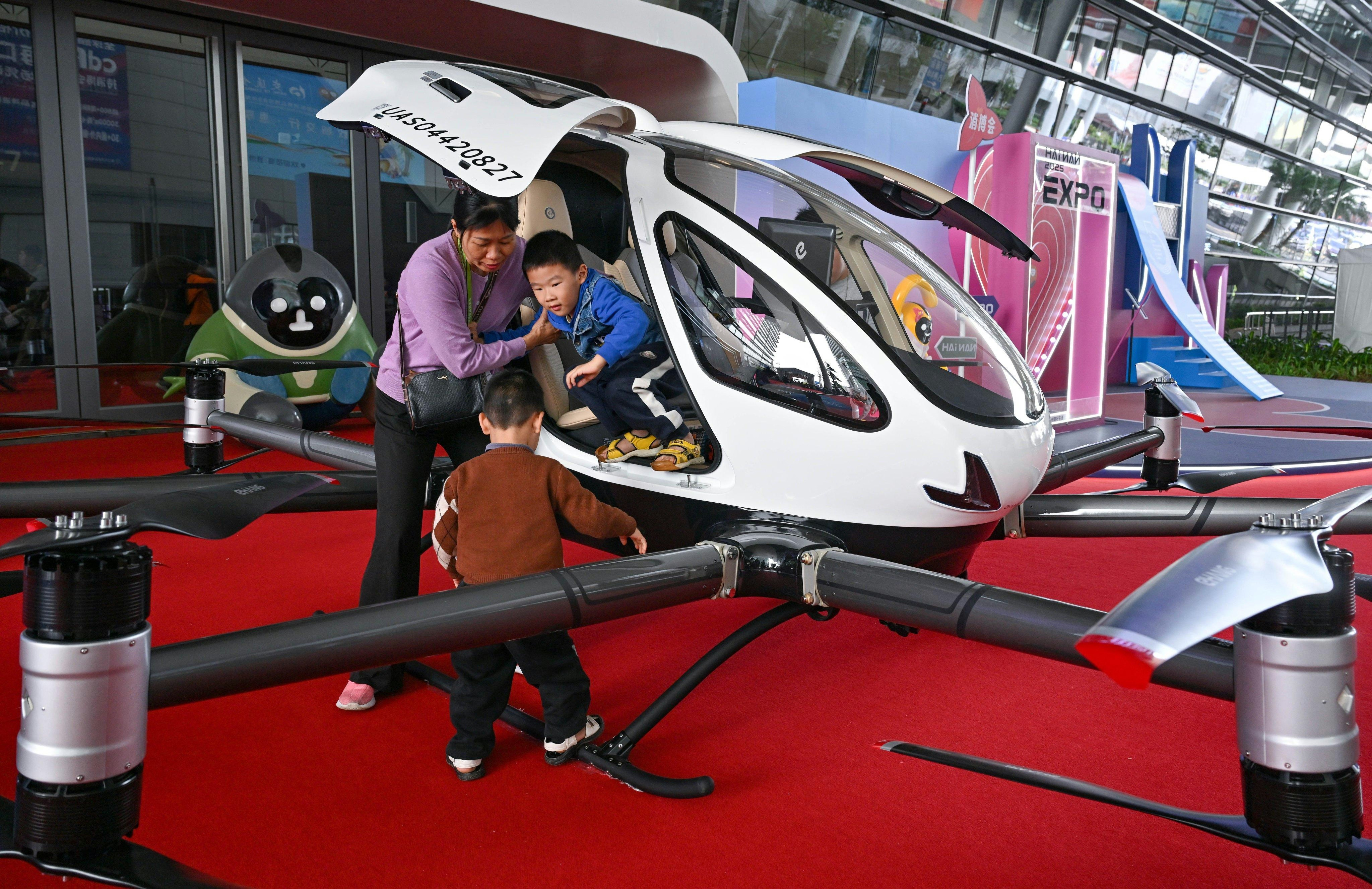
EHang VT35: First Pilotless Electric Flying Taxi Unveiled
A New Chapter in Urban Air Mobility
The concept of the flying car has long captured the imagination as a symbol of the future, alongside visions of robot butlers and futuristic meals. EHang, a pioneering Chinese company, has now brought this vision closer to reality with the unveiling of the VT35, a fully electric, pilotless flying taxi. Unlike traditional vehicles, the VT35 is designed to operate entirely autonomously, eliminating the need for a human pilot or steering controls. This innovative approach marks a significant departure from conventional personal transport, positioning the VT35 as a groundbreaking development in electric vertical takeoff and landing (eVTOL) technology.
Capabilities and Industry Impact
The VT35 has attracted considerable attention due to its impressive range and potential for intercity travel, sparking optimism about its role in transforming urban and regional mobility. Industry experts have responded positively, highlighting the aircraft’s promise to reshape how people move within and between cities. However, despite the excitement, the VT35 remains in the testing phase, with critical challenges ahead. Regulatory approval and airworthiness certification are major hurdles that must be overcome before pilotless passenger flights can become a routine feature of urban airspace. Authorities will need to thoroughly evaluate the safety and reliability of such autonomous operations to ensure public confidence.
Competitive Landscape and Future Prospects
The advanced air mobility sector is rapidly evolving, with competitors such as Vertaxi, Volant, and XPeng AeroHT advancing their own eVTOL projects. As EHang progresses with the VT35, these rival companies are expected to intensify their development efforts, potentially accelerating innovation across the industry. While the VT35 may not yet fulfill the full promise of the flying car popularized in science fiction, it represents a bold step toward a new era of autonomous, electric flight and a glimpse of the future of transportation.

Etihad Airways Suspends Airbus A380 Flights on Key Route

Aditya Birla Group Seeks Approval for Aircraft Leasing in GIFT City

Qatar Airways Highlights Innovation and Connectivity at Arabian Travel Market 2026

Hong Kong's Five-Year Plan Includes Andrew Fan's Aircraft Parts Processing Hub Proposal

ACIA Aero Leasing Delivers ATR72-600 to Air Nostrum

RTX Appoints Jill Albertelli as Head of Pratt & Whitney

TAT Technologies Joins Beyond Aero Hydrogen Aircraft Program

AURAK Study Highlights Barriers to Air Taxi Adoption in Emerging Economies

Xiamen Air Selects Altitude for 787 Maintenance at Heathrow

Etihad and Swissport Extend Global Partnership
