
Orchestrate AI insights into action

Trending
Categories
Embraer Leads in Twin-Engine Aircraft Deliveries
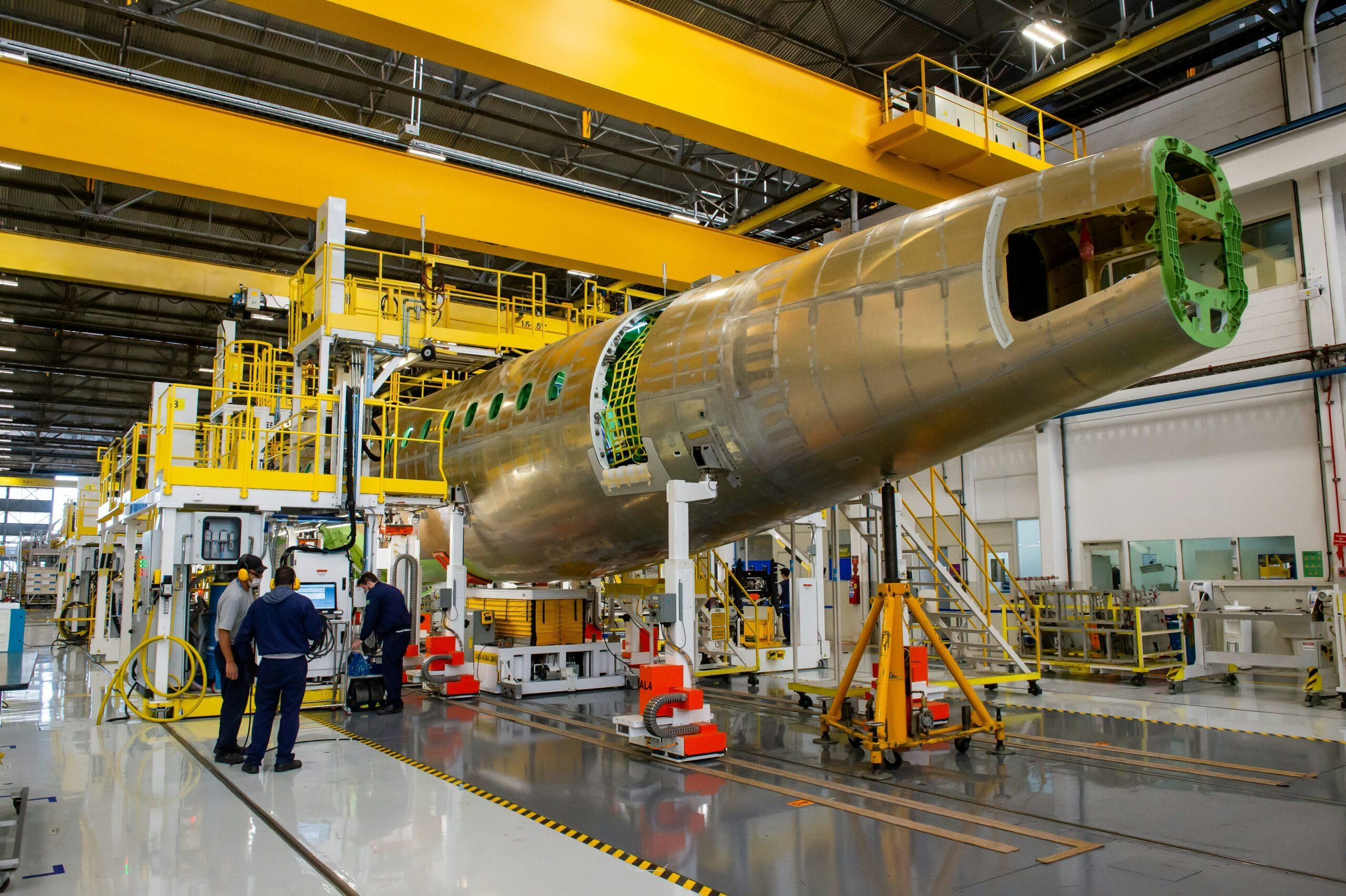
Embraer Maintains Leadership in Twin-Engine Aircraft Deliveries
Embraer has reaffirmed its dominant position in the light jet market, with its Phenom 300 series recognized as the world’s best-selling light jet for the 14th consecutive year. Data released by the General Aviation Manufacturers Association (GAMA) during its State of the Industry press conference in Washington, DC, also confirmed that the Phenom 300 remains the most delivered twin-engine jet for the sixth consecutive year.
In 2025, Embraer delivered 72 units of the Phenom 300 series, marking the highest annual total for the model this decade. The company reports that over 900 jets from this series are currently in service across 70 countries, collectively accumulating more than 2.9 million flight hours. Total executive aviation deliveries for the year reached 155 aircraft, aligning with the upper range of Embraer’s guidance.
Advancements in the Phenom 300E and Praetor Series
The latest iteration, the Phenom 300E, incorporates advanced avionics including the Runway Overrun Awareness and Alerting System, autothrottle, synthetic vision, and emergency descent capability. It also offers amenities typically found in larger business jets, such as single-point refueling and an external servicing system, enhancing operational efficiency and passenger comfort.
Beyond the light jet segment, Embraer delivered 69 aircraft from its Praetor line in 2025, increasing the global Praetor fleet to over 400 aircraft. Michael Amalfitano, President and CEO of Embraer Executive Jets, emphasized the Phenom 300E’s continued dominance in the light jet category, attributing its success to unmatched performance, advanced technology, and an exceptional ownership experience. He noted that the model remains the benchmark in its class, reinforcing Embraer’s leadership and the trust placed in the brand by customers worldwide.
Navigating a Competitive and Evolving Market
Embraer’s sustained success unfolds amid a competitive landscape shaped by major aerospace players such as Airbus and Boeing, both of which are intensifying efforts to increase production rates and refine market strategies. While Embraer has focused on E2 sales rather than launching new airliner programs, Airbus and Boeing face challenges including supply chain constraints and shifting market demands as they approach 2026. Regional aircraft manufacturer ATR is targeting growth in the Asia-Pacific market, and Textron Aviation recently reported record revenues, highlighting the sector’s dynamic nature.
Despite these pressures, Embraer remains optimistic about its E-Jet prospects, particularly in the Asia-Pacific region where demand for regional connectivity continues to rise. The company’s emphasis on innovation and customer experience has helped it maintain a competitive edge, even as rivals accelerate production and explore future aircraft developments.
As the global aviation industry contends with evolving market dynamics and heightened competition, Embraer’s consistent performance in twin-engine aircraft deliveries underscores its resilience and enduring appeal to operators worldwide.

Etihad Airways Suspends Airbus A380 Flights on Key Route

Aditya Birla Group Seeks Approval for Aircraft Leasing in GIFT City

Qatar Airways Highlights Innovation and Connectivity at Arabian Travel Market 2026

Hong Kong's Five-Year Plan Includes Andrew Fan's Aircraft Parts Processing Hub Proposal

ACIA Aero Leasing Delivers ATR72-600 to Air Nostrum

RTX Appoints Jill Albertelli as Head of Pratt & Whitney

TAT Technologies Joins Beyond Aero Hydrogen Aircraft Program

AURAK Study Highlights Barriers to Air Taxi Adoption in Emerging Economies

Xiamen Air Selects Altitude for 787 Maintenance at Heathrow

Etihad and Swissport Extend Global Partnership
