
Orchestrate AI insights into action

Trending
Categories
Emirates Uses AI and Real-Time Data to Reduce Turbulence
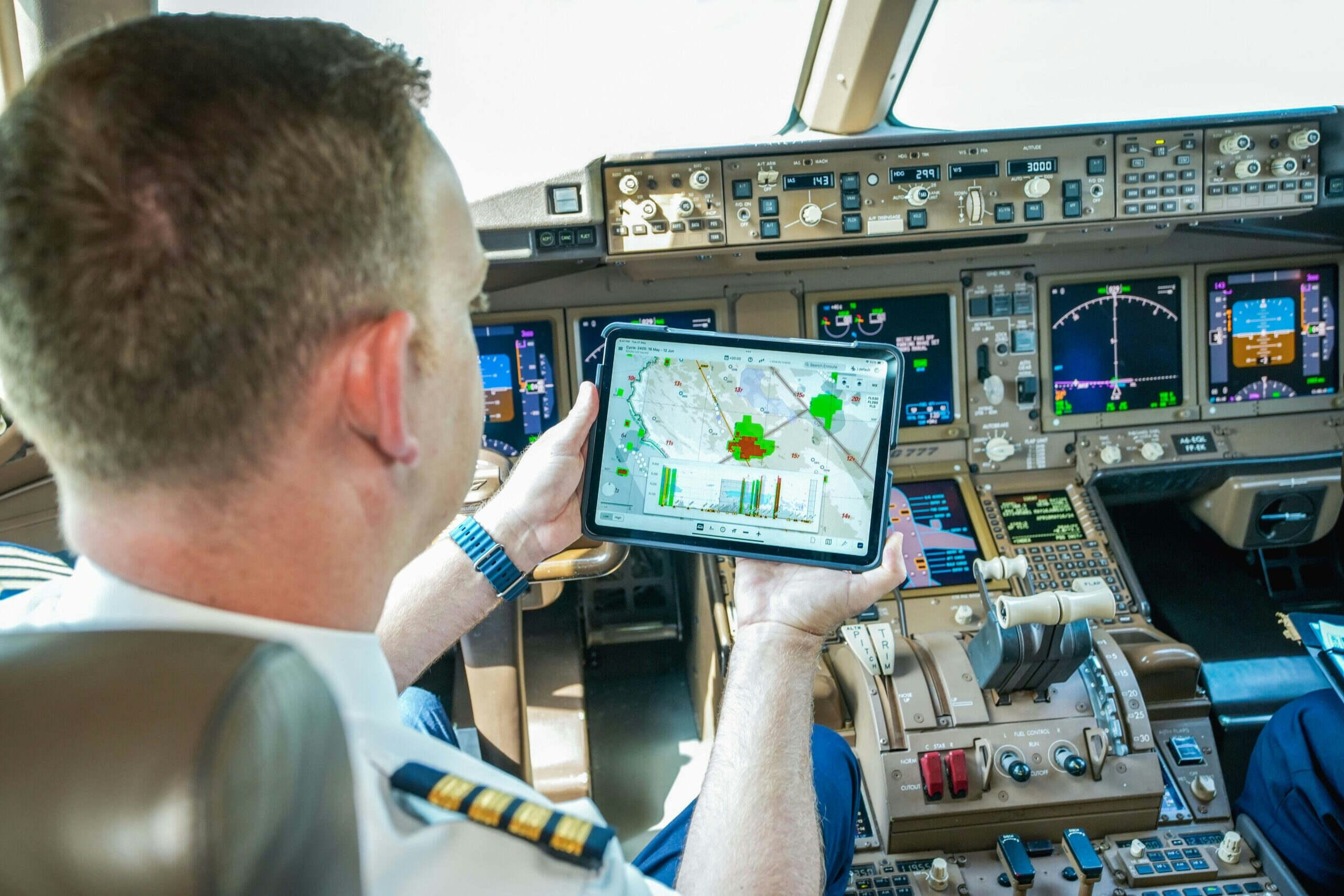
Emirates Employs AI and Real-Time Data to Mitigate Turbulence
Emirates has introduced an advanced technology initiative designed to reduce severe turbulence incidents across its extensive global flight network. By harnessing artificial intelligence, machine learning, and real-time data, the airline aims to enhance passenger safety and comfort. Launched last year, this multi-faceted approach integrates sophisticated weather prediction tools alongside live turbulence data, resulting in fewer unexpected turbulence encounters and a noticeably improved experience for both passengers and crew.
Innovative Systems Enhancing Turbulence Prediction
At the core of Emirates’ strategy is a combination of cutting-edge systems that collectively improve turbulence detection and avoidance. One such system is SkyPath, developed in partnership with the airline. SkyPath employs AI and machine learning to identify turbulence zones that conventional methods might miss. It aggregates real-time turbulence reports from thousands of aircraft, utilizing data points such as Eddy Dissipation Rate (EDR), ADS-B transponder signals, and proprietary iPad accelerometer technology. This comprehensive, multi-source data collection ensures global coverage and high prediction accuracy, even in areas with sparse flight activity or where clear-air turbulence is difficult to detect.
Complementing this is Emirates’ collaboration with Lufthansa Systems through the Lido mPilot application. This customized mobile navigational charting tool provides pilots with high-precision weather updates, live cloud and convection data, as well as turbulence and icing forecasts sourced from reputable partners like the German Weather Service. Continuous cooperation between Emirates and Lufthansa Systems ensures the data remains accurate and widely applicable, thereby enhancing pilot situational awareness during flights.
Further strengthening its turbulence management capabilities, Emirates participates in the International Air Transport Association’s (IATA) Turbulence Aware Programme. This initiative facilitates the sharing of real-time turbulence data among member airlines, which Emirates integrates into pilots’ electronic flight bag applications. The live turbulence visualizations offered through this platform support more informed decision-making in the cockpit, contributing to improved passenger comfort, operational safety, and fuel efficiency.
Challenges and Industry Implications
Despite the promising results, Emirates acknowledges that the technology is still in its early stages and that turbulence-free flights cannot be guaranteed. Captain Hassan Alhammadi, divisional senior vice-president of flight operations, emphasized that while the airline has seen a significant reduction in unexpected severe turbulence incidents over the past year, ongoing efforts are necessary to maintain consistent passenger comfort and comply with regulatory standards.
The adoption of these advanced systems also presents challenges, including potential passenger skepticism regarding their effectiveness and concerns about possible increases in ticket prices due to the investment in new technologies. Moreover, the broader aviation industry is closely observing Emirates’ progress. Competitors may accelerate their own deployment of similar technologies to remain competitive, while some stakeholders may question the implications for operational transparency and cost structures.
Emirates’ active engagement in industry-wide initiatives such as the IATA Turbulence Aware Programme positions the airline as a contributor to collective efforts aimed at addressing turbulence challenges globally. By collaborating with technology partners and regulatory bodies, Emirates continues to refine its approach, striving to set new benchmarks for safety and comfort in air travel.

Etihad Airways Suspends Airbus A380 Flights on Key Route

Aditya Birla Group Seeks Approval for Aircraft Leasing in GIFT City

Qatar Airways Highlights Innovation and Connectivity at Arabian Travel Market 2026

Hong Kong's Five-Year Plan Includes Andrew Fan's Aircraft Parts Processing Hub Proposal

ACIA Aero Leasing Delivers ATR72-600 to Air Nostrum

RTX Appoints Jill Albertelli as Head of Pratt & Whitney

TAT Technologies Joins Beyond Aero Hydrogen Aircraft Program

AURAK Study Highlights Barriers to Air Taxi Adoption in Emerging Economies

Xiamen Air Selects Altitude for 787 Maintenance at Heathrow

Etihad and Swissport Extend Global Partnership
