
Orchestrate AI insights into action

Trending
Categories
F-35 Program Faces Rising Costs, TR-3 Delays, and Engine Modernization Issues
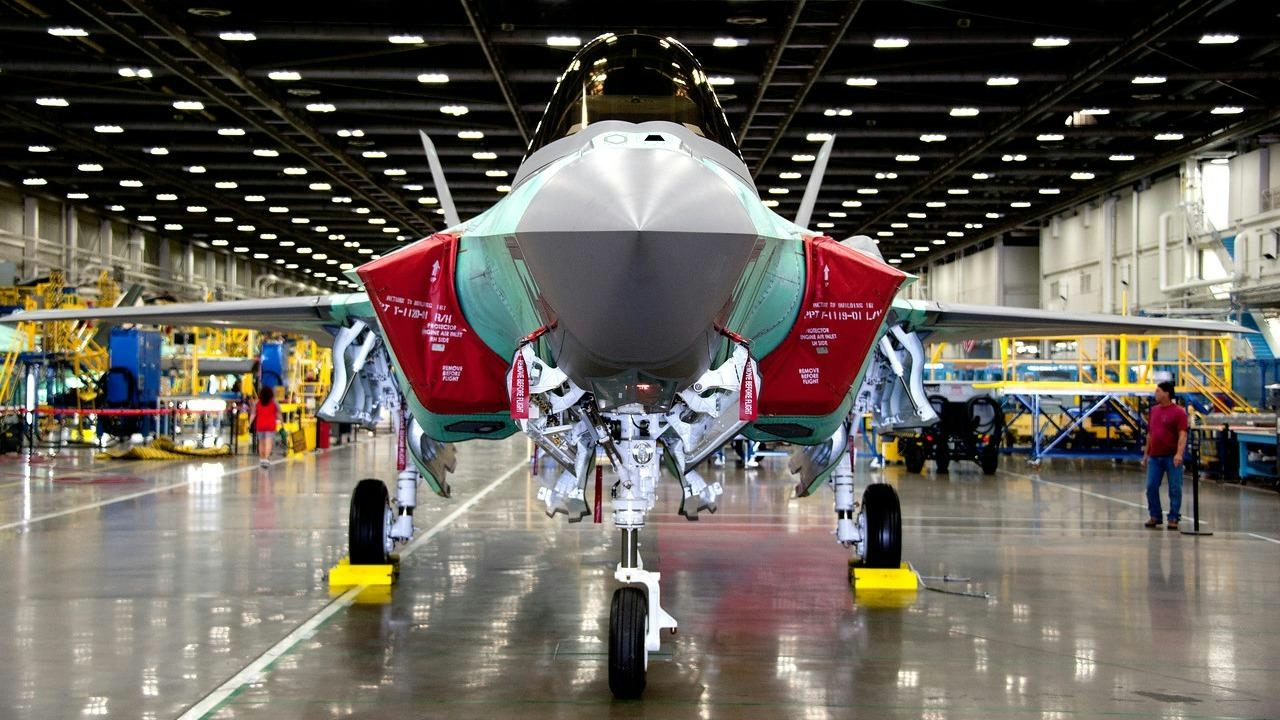
F-35 Program Faces Rising Costs and Delays in Modernization Efforts
The Lockheed Martin F-35 Lightning II modernization program is encountering substantial challenges as costs continue to escalate and implementation delays persist. The initiative to upgrade the fighter’s avionics to the TR-3/Block 4 standard has surpassed its original budget by more than $6 billion and is now five years behind schedule. In response to these setbacks, the Pentagon is scaling back the scope of the modernization effort, resulting in a reduced TR-3/Block 4 package for the operational fleet.
Avionics and Engine Upgrades Under Strain
The Department of Defense is prioritizing the F-35’s avionics upgrade to the Block 4 standard alongside plans to modernize the Pratt & Whitney F135 engines that power the aircraft. The Block 4 upgrade, centered on the TR-3 (Tech Refresh 3) package, encompasses several key hardware improvements. These include a new onboard computer supplied by L3Harris, an updated multifunction cockpit display, an enhanced Northrop Grumman AN/APG-85 radar, the Next Generation Distributed Aperture System (NGDAS), and upgraded components for the BAE Systems AN/ASQ-239 electronic warfare suite. These hardware enhancements are intended to be supported by new 40-series avionics software, which will replace the older TR-2/Block 3F systems.
Despite these ambitious plans, progress on both the avionics and engine upgrades has been limited. A September report from the US Government Accountability Office (GAO) revealed that deliveries of F-35s equipped with the TR-3 package will not commence before 2026, marking a three-year delay from the original schedule. Furthermore, these aircraft will initially lack the full complement of avionics software, restricting their combat capabilities. Production of critical components for the engine upgrade—including the Engine Core Upgrade (ECU) and Power Thermal Management Upgrade (PTMU)—is not expected to begin until between 2031 and 2033.
Impact on Production and Strategic Considerations
These delays and cost overruns have contributed to a mounting backlog in F-35 deliveries, which now totals approximately $179 billion. Lockheed Martin aims to deliver up to 200 aircraft in 2025, but the ongoing challenges threaten to further disrupt production timelines. On September 29, the F-35 Joint Program Office awarded Lockheed Martin a $24.29 billion contract covering 296 F-35s under production Lots 18 and 19, with initial deliveries scheduled for 2026. Lot 18 will include 148 aircraft, matched by another 148 jets in Lot 19, allocated among the US Air Force, Navy, Marine Corps, international partners, and foreign military sales customers.
The US Air Force, which considers the F-35 the cornerstone of its fighter fleet, is facing the dual pressures of constrained budgets and modernization delays. In response, the service has begun reducing F-35 procurement to accelerate development of the next-generation F-47 NGAD (Next Generation Air Dominance) fighter, expected to conduct its maiden flight in 2028. Strategic concerns are also intensifying, as analysts caution that the Air Force’s dependence on fixed air bases—vulnerable in potential conflicts such as a confrontation over Taiwan—could undermine operational effectiveness.
As the F-35 program grapples with rising costs, technical setbacks, and shifting strategic priorities, its trajectory remains uncertain, posing significant challenges for both US and allied air forces worldwide.

Etihad Airways Suspends Airbus A380 Flights on Key Route

Aditya Birla Group Seeks Approval for Aircraft Leasing in GIFT City

Qatar Airways Highlights Innovation and Connectivity at Arabian Travel Market 2026

Hong Kong's Five-Year Plan Includes Andrew Fan's Aircraft Parts Processing Hub Proposal

ACIA Aero Leasing Delivers ATR72-600 to Air Nostrum

RTX Appoints Jill Albertelli as Head of Pratt & Whitney

TAT Technologies Joins Beyond Aero Hydrogen Aircraft Program

AURAK Study Highlights Barriers to Air Taxi Adoption in Emerging Economies

Xiamen Air Selects Altitude for 787 Maintenance at Heathrow

Etihad and Swissport Extend Global Partnership
