
Orchestrate AI insights into action

Trending
Categories
FAA Initiates Pilot Program for Air Taxi Testing
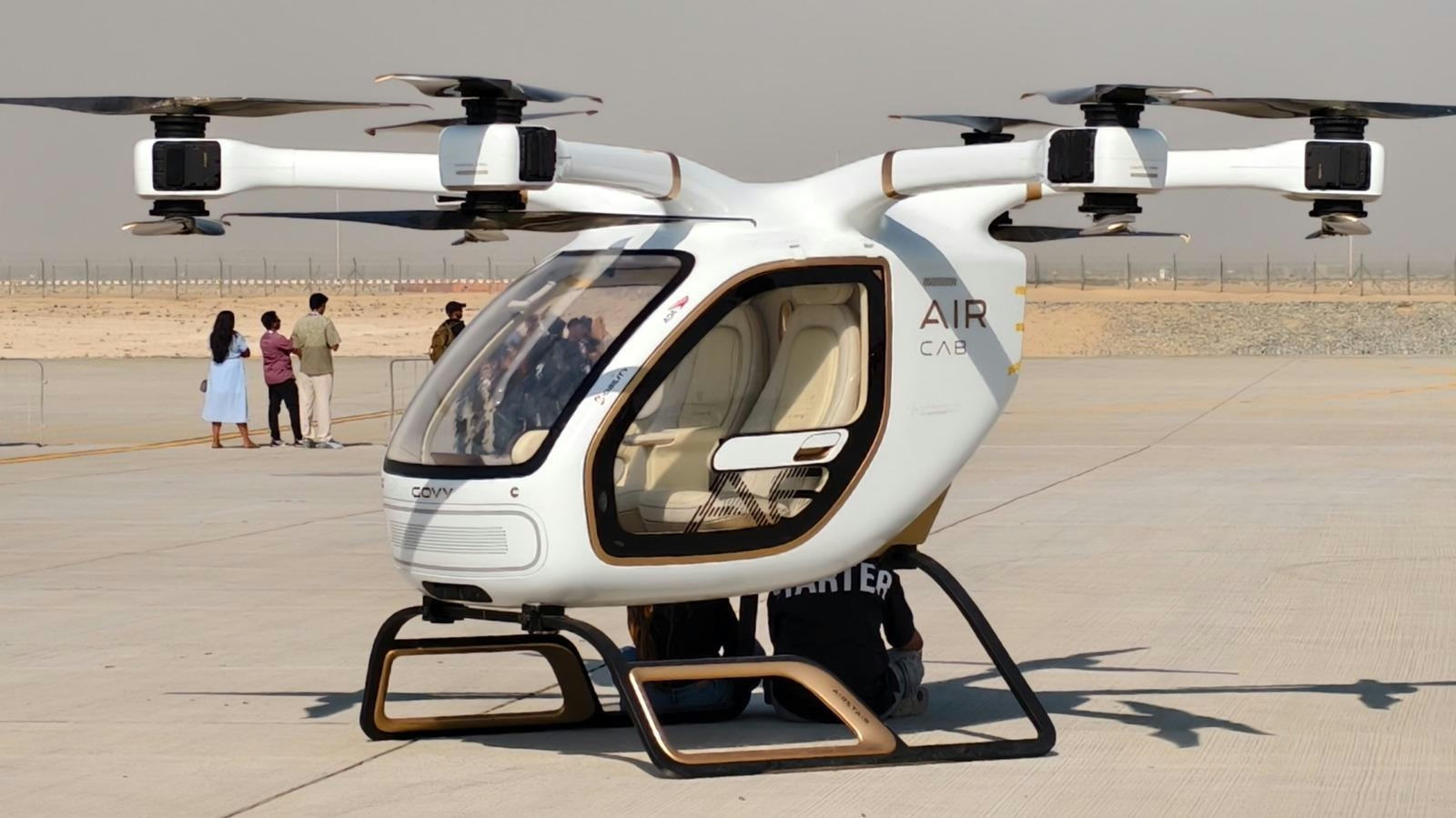
FAA Initiates Pilot Program to Advance Air Taxi Integration
The Federal Aviation Administration (FAA) has announced a landmark pilot program aimed at accelerating the development and integration of electric vertical takeoff and landing (eVTOL) aircraft into the United States airspace. Set to commence in the summer of 2026, this initiative represents a critical step toward establishing air taxis as a viable mode of civilian transportation. The program will focus on training pilots and rigorously testing these next-generation vehicles to ensure their safe and efficient operation.
Scope and Objectives of the eVTOL Integration Pilot Program
The eVTOL Integration Pilot Program is designed to create a regulatory and operational framework for the safe incorporation of air taxis into the national airspace system. It will support a variety of applications, including passenger transport, cargo delivery, and emergency medical services. To date, the U.S. government has approved eight pilot training courses to underpin this effort, with 26 states selected as testing grounds. Among these are Texas, Utah, North Carolina, and Pennsylvania, which will serve as key sites for evaluating the technology and operational protocols.
Leading aerospace companies such as Electra, Beta, Reliable Robotics, and Joby Aviation have partnered with the FAA to advance eVTOL technology. Their collaboration encompasses testing proprietary aircraft models and developing innovations in propulsion and automated piloting systems. Joby Aviation, in particular, has reached a significant milestone by producing an aircraft that conforms to FAA standards, marking a crucial step toward full certification.
Regional Developments and Industry Challenges
Florida is emerging as a prominent hub for eVTOL operations, with St. Petersburg preparing to install vertiports and charging infrastructure in anticipation of air taxi testing this summer. This development underscores the growing momentum behind urban air mobility initiatives. However, the exclusion of Los Angeles from the list of test sites has sparked concern among local companies eager to participate in the burgeoning market, highlighting regional disparities in access to emerging aviation technologies.
The FAA’s pilot program aims not only to address regulatory and safety challenges but also to position the United States as a global leader in next-generation aviation. The agency faces significant hurdles, including the establishment of clear safety standards, overcoming technological limitations, and ensuring comprehensive regulatory oversight. Meanwhile, the market is responding with increased investor interest in eVTOL ventures, prompting companies to accelerate research, development, and strategic partnerships to maintain a competitive advantage.
As pilot training and aircraft testing expand nationwide, the presence of eVTOL vehicles is expected to become increasingly common. The coming years will be pivotal in determining the pace and safety of integrating air taxis into everyday transportation, potentially transforming urban mobility and the movement of goods across cities and regions.

Bangladesh Launches Initiative to Become Regional Aviation Hub
Russia Transports PD-8 Engine to India for International Certification

Kyrgyzstan to Adopt EMPIC GmbH Software for Flight Safety Oversight

Why Hawaiian Airlines Is Waiting Until 2028 To Add A Premium Economy Cabin To Its Airbus A330 Fleet

Engine Fault Causes Royal Navy Helicopter Crash Fatality

Joby Aviation Begins Texas Air Taxi Test Flights Amid Stock Decline

Iberia Receives Full Approval for Airbus A350 Heavy Maintenance

NetJets to Construct Terminal and Hangar at Dallas Love Field

Using AI in Aircraft Purchases

CIAM Unveils RPD-150T Engine to Replace Rotax 150 hp Model
