Image

AeroGenie — Your Intelligent Copilot.

Ask anything. Analyze everything. Act instantly.

Trending

Categories

FTAI Aviation Details Engine Leasing Strategy and Associated Risks
February 27, 2026By ePlane AI
FTAI Aviation Details Engine Leasing Strategy and Associated Risks
0
0
FTAI Aviation
Engine Leasing
Module Repair

FTAI Aviation Details Engine Leasing Strategy and Associated Risks

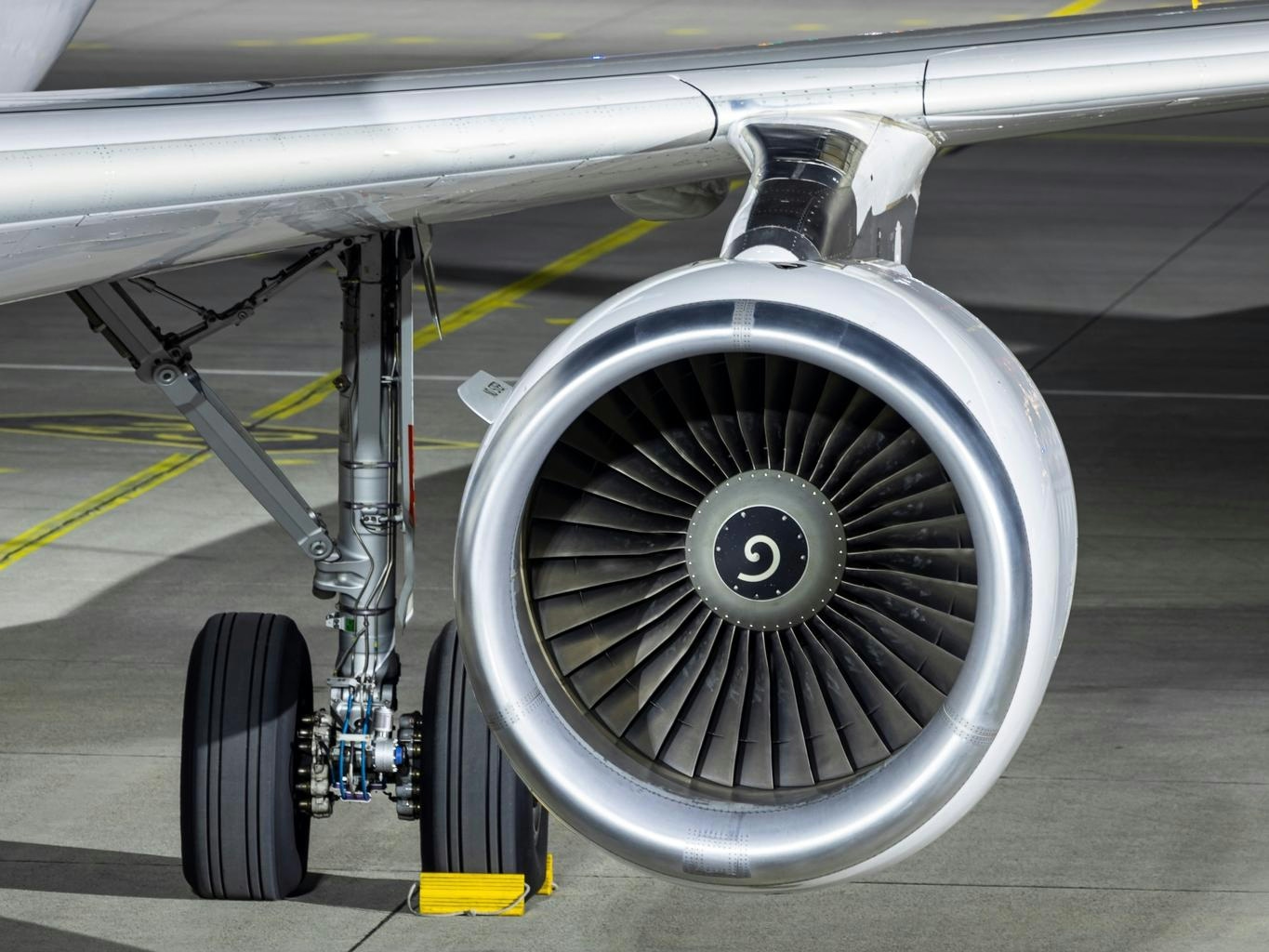
FTAI Aviation has articulated its engine leasing strategy, highlighting both its significant growth and the challenges posed by an increasingly competitive market. Specializing in aircraft engine leasing and maintenance services, the company has experienced remarkable expansion in its module repair business. Over the past two years, this segment has seen its EBITDA quadruple, reaching $180 million, reflecting a strong demand for efficient engine maintenance solutions.

Market Competition and Emerging Challenges

Despite this growth, FTAI Aviation faces intensifying competition, particularly with Willis Lease Finance’s recent entry into the module repair sector. Willis’s move directly targets a market segment where FTAI Aviation has established a solid foothold, signaling a shift that could prompt airlines to reevaluate their engine maintenance and leasing partnerships. This increased competition is likely to exert pressure on profit margins as pricing becomes more contested. Additionally, airlines may diversify their maintenance and leasing providers in pursuit of better value and service, posing risks to FTAI Aviation’s customer retention.

In response to these challenges, FTAI Aviation may need to capitalize further on its established module repair capabilities and consider expanding its service offerings to maintain a competitive edge. The company’s management acknowledges that sustaining growth will require continued investment in technology, operational efficiency, and strengthening customer relationships.

Strategic Outlook and Industry Position

FTAI Aviation’s recent financial performance demonstrates resilience, with its ability to scale the module repair business and deliver strong EBITDA growth positioning it well amid evolving market conditions. Looking forward, the company’s strategy is expected to focus on consolidating market share through innovation and leveraging operational strengths. It remains attentive to industry trends and competitor activities, recognizing that the engine leasing sector is undergoing significant transformation as airlines and lessors adjust to new market dynamics.

While FTAI Aviation has shown robust growth in its engine leasing and module repair operations, it must navigate the challenges of heightened competition and shifting customer preferences. Its continued success will depend on adaptability, innovation, and maintaining the confidence of its airline partners in a rapidly changing industry landscape.

More news
GE Aerospace to Establish Engine Support Hub in India for F404-IN20

GE Aerospace to Establish Engine Support Hub in India for F404-IN20

GE Aerospace to Establish Engine Support Hub in India for F404-IN20 GE Aerospace has entered into a contract with the Indian Air Force (IAF) to establish a domestic depot facility dedicated to the F404-IN20 engines that power the Tejas light combat aircraft. This development marks a significant advancement in India’s pursuit of defence self-reliance. The new facility, to be operated by the IAF with technical support from GE Aerospace, will offer comprehensive training, maintenance support, spare parts, and specialised equipment. Once operational, the depot is expected to eliminate reliance on foreign repair centres, thereby reducing maintenance turnaround times and enhancing fleet availability. Strengthening Indigenous Defence Capabilities This initiative builds upon a longstanding partnership between GE Aerospace and the IAF, which has spanned over four decades. It aligns closely with India’s broader strategic objective of developing indigenous defence infrastructure. The establishment of the support hub is intended to bolster local sustainment capabilities for the Tejas programme, which has encountered challenges such as engine delivery delays and concerns over supply chain reliability. By localising maintenance and support, the facility aims to mitigate these issues, although GE Aerospace may face heightened scrutiny regarding its delivery schedules and logistical efficiency. Market analysts suggest that this move could intensify competition within India’s expanding defence sector, potentially prompting rivals like GKN Aerospace to enhance their offerings. Additionally, GE Aerospace will need to navigate complex logistical and regulatory frameworks as it establishes operations in India. Rita Flaherty, Vice President of Sales and Business Development for Defense & Systems at GE Aerospace, highlighted that the agreement reaffirms the company’s commitment to supporting India’s armed forces. She noted that the depot will ensure improved availability of the F404-IN20 engines and provide the IAF with dependable access to advanced propulsion technology. Broader Contributions to India’s Aerospace Ecosystem Beyond the F404-IN20 engine programme, GE Aerospace continues to play a pivotal role in the development of India’s aerospace sector across design, manufacturing, and sustainment domains. The company has made significant investments in skills development, having trained over 5,000 individuals in core manufacturing capabilities at its Pune facility. Its Edison Engineering Development Programme has produced 150 locally trained engineering graduates. In addition, the GE Aerospace Foundation, in partnership with United Way, launched the “Next Engineers” initiative in Bengaluru in September 2025. This four-year programme is designed to support 4,000 aspiring engineers through college and career readiness pathways, further contributing to the country’s talent pipeline. GE Aerospace’s engines power multiple Indian military platforms beyond the Tejas, including the Navy’s P-8I maritime patrol aircraft and MH-60R helicopters, as well as the Air Force’s AH-64 Apache helicopters. Its LM2500 marine gas turbines also provide propulsion for key naval assets such as the INS Vikrant aircraft carrier and the P-17 Shivalik-class frigates. As GE Aerospace advances with the establishment of the engine support hub, its capacity to resolve supply chain challenges and comply with India’s regulatory environment will be closely monitored by industry stakeholders and competitors alike.
Textron secures extension for T-6 trainer support

Textron secures extension for T-6 trainer support

Textron Secures Five-Year Extension for T-6 Trainer Support Textron Aviation Defense LLC, a subsidiary of Textron Inc., has been awarded a five-year contract extension by the U.S. Government to continue providing Sustaining Engineering and Program Management (SEPM) services for the T-6 trainer fleets operated by the U.S. Air Force, Navy, and Army. Originally granted in 2021, this contract now extends through 2029, ensuring ongoing systems engineering, program oversight, and support for maintenance, repairs, modifications, and structural integrity programs for the T-6A, T-6B, and T-6D aircraft. All related work will be carried out at Textron’s Wichita, Kansas facility. Travis Tyler, President and CEO of Textron Aviation Defense, highlighted that the contract extension reflects the government’s sustained confidence in Textron’s capabilities. He underscored the company’s dedication to maintaining aircraft availability and ensuring the T-6 fleet remains mission-ready, thereby supporting the training of future military pilots. The T-6 Texan II: A Leading Military Trainer Amidst Growing Competition The Beechcraft T-6 Texan II is widely regarded as a premier military training platform, noted for its relatively low acquisition, operating, and sustainment costs. Backed by Textron’s extensive aviation manufacturing heritage—spanning nearly a century and more than 255,000 aircraft delivered worldwide—the T-6 has established a reputation for reliability and efficiency. With an installed base that significantly surpasses its nearest competitor, the T-6 family has served as the world’s leading integrated training system for over two decades. Its active production line, supported by a Manufacturing Readiness Level of 10 and a resilient supply chain, further ensures its long-term viability. Despite this strong position, Textron faces increasing competition from major defense contractors such as Boeing and Lockheed Martin. Both companies are actively pursuing opportunities to replace the aging T-45 Goshawk with advanced training systems, particularly as the U.S. Navy seeks to modernize its training fleet. This competitive landscape poses challenges for Textron, as Boeing and Lockheed Martin are expected to leverage their existing capabilities and strategic partnerships in bids for the Navy’s forthcoming Undergraduate Jet Training System contract. Market responses to Textron’s contract extension have been mixed. While some stakeholders view the continuation of support as a positive measure to guarantee uninterrupted pilot training and fleet readiness, others regard it as a temporary solution that may delay broader modernization efforts for the Navy’s training aircraft. As competition intensifies, Textron’s ability to maintain its leadership will depend on its ongoing performance and adaptability within a rapidly evolving defense environment.
China Southern Airlines Receives New Boeing 737-8

China Southern Airlines Receives New Boeing 737-8

China Southern Airlines Expands Fleet with New Boeing 737-8 Delivery CDB Aviation, the Irish leasing subsidiary of China Development Bank Financial Leasing Co., has delivered a new Boeing 737-8 aircraft to China Southern Airlines, marking a significant addition to the carrier’s modern fleet. This latest delivery follows the arrival of two Airbus A321-251NX aircraft from CDB Aviation’s orderbook in August 2025, bringing the total number of aircraft leased long-term from the lessor to three. The transaction underscores the deepening partnership between China Southern and CDB Aviation, reflecting a shared commitment to fleet modernization and operational efficiency. Michelle Wu, Head of Commercial for Greater China at CDB Aviation, emphasized the strategic importance of the deal, highlighting the company’s dedication to providing customized financing solutions tailored to the needs of airline partners across the Greater China region. The introduction of the next-generation Boeing 737-8 is expected to bolster China Southern’s growth strategy, supporting both domestic and international expansion by enhancing fuel efficiency and overall performance. Navigating Market Challenges and Competitive Pressures The delivery of the Boeing 737-8 comes amid ongoing geopolitical tensions between the United States and China, which pose potential risks to Boeing’s production schedules and order fulfillment in the region. Despite these uncertainties, China Southern has demonstrated relative financial resilience, reporting the only profitable result among China’s three major airline groups in 2025. In contrast, competitors such as Air China have faced widening losses, highlighting the divergent fortunes within the Chinese aviation sector. The competitive landscape in the Asia-Pacific region continues to evolve as airlines respond to shifting market dynamics. Shandong Airlines recently leased 10 Boeing 737s from Chinese lessors, signaling growing regional demand for the model. Meanwhile, United Airlines’ decision to upgrade its Guam hub fleet with 737 MAX aircraft may intensify competition in the area. As China Southern integrates the new Boeing 737-8 into its operations, the airline aims to enhance its service offerings and maintain its competitive position amid these external pressures shaping the aviation industry.
Air India Secures IFC Financing for Widebody Aircraft Purchase

Air India Secures IFC Financing for Widebody Aircraft Purchase

Air India Advances Widebody Fleet Connectivity with Hughes IFC Partnership HAMBURG — Air India has selected Hughes Network Systems to provide high-capacity Ka-band satellite-based inflight connectivity (IFC) across a portion of its widebody aircraft. The announcement, made at the Aircraft Interiors Expo in Hamburg, outlines plans to install Hughes’ In-Flight-branded IFC service on new Airbus A350-1000 jets through Airbus’s HBCplus program, as well as retrofit the system on existing Boeing 787-8 and 777-300ER aircraft. The connectivity solution will utilize the RAVE Aerospace Ka-band terminal, which incorporates ThinKom Solutions’ 2517 VICTS hardware—a critical element of Airbus’s HBCplus platform—on both Airbus and Boeing models. While financial details of the agreement remain confidential, Hughes confirmed that the initial deployment will cover both new and current widebody aircraft within Air India’s fleet. Diversifying Connectivity Amid Industry Challenges This initiative reflects Air India’s broader strategy to diversify its IFC suppliers. The airline already employs Panasonic Avionics’ Ku-band system on select aircraft through a partnership with Tata Group’s Nelco. Hughes’ Ka-band service, operating via the JUPITER satellite network, aims to deliver a uniform onboard connectivity experience and operational framework across the fleet. The Ka2517 VICTS antenna is also compatible with forthcoming multi-orbit satellite services, including Telesat’s Lightspeed Low Earth Orbit (LEO) network, positioning Air India to adopt future connectivity enhancements. Dr. Satya Ramaswamy, Air India’s Chief Digital & Technology Officer, emphasized the growing passenger demand for seamless broadband connectivity. He stated, “Our strategic vision is to provide connectivity with home-broadband-like bandwidth and latency on Air India’s international and domestic flights so that connecting from our flights feels the same as connecting from home.” Dr. Ramaswamy further noted that partnering with Hughes as a global launch customer enables the airline to address regulatory and coverage challenges, with a goal to achieve home-broadband service levels within two years. Navigating Market and Geopolitical Headwinds Air India’s IFC expansion and fleet modernization plans come amid significant industry challenges. The rising cost of sustainable aviation fuel poses financial pressures on widebody acquisitions and connectivity upgrades, a concern underscored by incoming IndiGo chief Willie Walsh. Competitive dynamics are also shifting, with American Airlines’ relatively modest widebody order backlog raising questions about its long-haul strategy compared to Delta and United. Geopolitical tensions, particularly between the United States and China, add complexity to the aviation landscape, potentially affecting Boeing’s delivery schedules and order volumes in the Asia-Pacific region—a critical market for Air India’s growth ambitions. Additionally, regulatory scrutiny of India’s largest online travel agency, MakeMyTrip, may indirectly influence aviation market conditions and consumer demand. Despite these challenges, Air India’s collaboration with Hughes signals a firm commitment to fleet modernization and enhancing passenger experience. Hughes, though a newer entrant in the IFC sector, has rapidly expanded its presence with multi-orbit, multi-network solutions, including recent deployments with Delta Air Lines. As Air India advances its connectivity strategy, the airline faces the dual task of leveraging technological innovation while managing evolving market risks to sustain its competitive position in the global aviation industry.
SES and JAL Collaborate on Expanded Multi-Orbit In-Flight Connectivity

SES and JAL Collaborate on Expanded Multi-Orbit In-Flight Connectivity

SES and Japan Airlines Expand Multi-Orbit In-Flight Connectivity Across Widebody Fleet Japan Airlines (JAL) is set to enhance its in-flight internet capabilities by equipping over 40 widebody aircraft with SES’s advanced multi-orbit connectivity solution. This significant upgrade will be implemented across both new Airbus A350-900 and Boeing 787-9 aircraft, involving a combination of line-fit installations and retrofits. The initiative builds on a partnership between the two companies that has spanned more than a decade. Deployment Across Boeing and Airbus Fleets The rollout includes fitting 21 Boeing 787-9s with SES’s multi-orbit system, featuring the Gilat Sidewinder antenna. Of these, ten aircraft will be equipped during production, while the remaining eleven will undergo retrofitting. The retrofit program, initially previewed at the Singapore Air Show in February 2026, will enable these aircraft to connect to enhanced low Earth orbit (LEO) satellite constellations via the Eutelsat OneWeb network, while retaining access to SES’s geostationary (GEO) satellites. In parallel, JAL will install SES’s connectivity kit on 20 forthcoming Airbus A350-900 deliveries. These aircraft will be factory-fitted with the Sidewinder electronically steered antenna (ESA), ensuring they are online from the moment of delivery. This represents a notable development as a non-HBCplus line-fit option for Airbus, addressing previous challenges in integrating Ku-band solutions into the program, a necessity SES’s Rob Baird had anticipated. These 41 widebody aircraft commitments complement JAL’s earlier announcement to equip its future Boeing 737-8 single-aisle fleet with multi-orbit in-flight connectivity, with deliveries expected to begin in 2027. Achieving line-fit offerability with Boeing marks a major milestone for SES, following efforts initiated by Stellar Blu in 2023 to introduce the Sidewinder terminal to Boeing aircraft under a Technical Services Agreement. While the program remains in final stages, Boeing will deliver these aircraft fully outfitted with the new system. Strategic Importance and Industry Challenges Junko Sakihara, JAL’s Deputy Senior Vice President for Customer Experience, highlighted the airline’s commitment to reliability and innovation, stating, “Our decision to provide the SES inflight connectivity to our long-haul passengers is due to the multi-orbit redundancy, reliability, and continuous innovation.” Despite the promising expansion, SES and JAL face several challenges. SES CEO Adel Al-Saleh has pointed to the complexities of navigating diverse regulatory environments across global markets and managing supply chain issues as significant hurdles. The evolving geopolitical landscape presents both commercial opportunities and obstacles. Additionally, the competitive environment is intensifying, with airlines increasingly adopting multi-provider and multi-orbit strategies to enhance passenger connectivity. For instance, JetBlue and Delta Air Lines plan to incorporate Amazon’s LEO services alongside existing providers, reflecting a broader industry trend toward diversified satellite connectivity solutions. SES’s strategic partnership with OneWeb for LEO access positions the company advantageously against traditional satellite operators, which are increasingly focusing on government and enterprise markets rather than competing directly with new entrants such as Starlink and Amazon. As airlines strive to deliver seamless, high-speed connectivity, the ability to offer flexible, multi-orbit solutions is emerging as a critical differentiator. The expanded collaboration between SES and JAL underscores both companies’ dedication to advancing in-flight service innovation and enhancing the customer experience amid a rapidly evolving and competitive market for in-flight connectivity.
IdeaNova Introduces Inplay AI for Offline Personalization

IdeaNova Introduces Inplay AI for Offline Personalization

IdeaNova Launches Inplay AI to Revolutionize Offline Personalization in Aviation At the Aircraft Interiors Expo 2026, IdeaNova unveiled Inplay AI, a pioneering artificial intelligence platform designed to deliver personalized inflight entertainment, shopping, and destination content without relying on continuous connectivity. This innovation addresses a critical gap in the aviation industry, where passenger personalization often disappears once aircraft lose internet access. Enhancing Passenger Experience Without Connectivity Inplay AI tackles the persistent challenge of limited or intermittent inflight connectivity by embedding intelligence directly onboard the aircraft. Unlike conventional systems that cease personalized services when Wi-Fi is unavailable, Inplay AI dynamically adapts recommendations, user interfaces, and content in real time for each passenger. Film enthusiasts receive mood-based movie suggestions, culinary aficionados are presented with curated dining options at their destination, and shoppers encounter offers tailored to their preferences rather than generic promotions. Additionally, travelers can explore attractions and points of interest along their flight path, transforming the inflight portal into a personalized travel companion. This development arrives amid significant airline investments in connected cabin services and digital passenger engagement. Although onboard Wi-Fi coverage is expanding, bandwidth limitations and inconsistent connectivity continue to restrict the delivery of personalized experiences. By shifting AI processing onto the aircraft itself, Inplay AI enables airlines to sustain tailored engagement without dependence on continuous internet access. Crucially, passenger profiles remain stored locally, never transmitted to external servers, offering enhanced data privacy—an important consideration for business travelers and VVIP passengers. Designed for Aviation Realities and Seamless Integration Inplay AI is engineered as an offline-first, aviation-optimized AI engine. Prior to departure, it generates personalized recommendations using route information, loyalty data, and historical passenger behavior. During flight, lightweight onboard models adjust suggestions dynamically based on passengers’ viewing, browsing, and purchasing activities. When connectivity is restored, the system synchronizes insights in the background to refine future personalization without interrupting the inflight experience. The platform operates on existing onboard hardware, allowing airlines to implement AI-driven personalization across their fleets without costly cabin retrofits or increased satellite bandwidth expenses. It integrates smoothly with current inflight entertainment portals, wireless streaming systems, and connected cabin platforms, facilitating adoption without the need to replace existing IFEC infrastructure. Inplay AI is also well-suited for portable inflight entertainment systems where connectivity is often inconsistent, expensive, or unavailable. Market Challenges and Industry Implications Despite its innovative approach, Inplay AI faces notable challenges. Competition from established AI providers, the imperative to maintain stringent data privacy and security standards, and the technical complexity of integrating with diverse offline systems present significant hurdles. Industry skepticism regarding the efficacy of AI in offline environments may also temper initial market reception. Competitors are expected to respond by enhancing their own offline AI capabilities or pursuing strategic partnerships to bolster their offerings. Industry data highlights the increasing importance of AI-driven personalization, signaling a shift toward more sophisticated offline solutions in inflight services. As airlines strive to transform inflight portals into valuable engagement and revenue channels, the ability to deliver seamless, personalized experiences regardless of connectivity is poised to become a critical differentiator. With Inplay AI, IdeaNova seeks to redefine inflight passenger engagement by providing airlines with a practical and privacy-conscious path to personalization that aligns with the operational realities of aviation and evolving passenger expectations.
USF Researcher Advances Flying Taxi Project in Florida

USF Researcher Advances Flying Taxi Project in Florida

USF Researcher Advances Flying Taxi Project in Florida Flying taxis are edging closer to becoming a practical component of daily transportation as Tampa joins a statewide initiative to incorporate air travel into routine commutes. This effort seeks to utilize low-altitude airspace to alleviate congestion on Florida’s heavily trafficked roads and bridges. While limited service may commence in the near future, a comprehensive rollout will require time for the necessary technology and infrastructure to mature. Pioneering Urban Air Mobility in Florida At the forefront of this initiative is a University of South Florida researcher leading efforts to integrate electric vertical takeoff and landing aircraft, or eVTOLs, into the state’s transportation network. These aircraft are designed to operate between 500 and 3,000 feet above ground, traveling at speeds ranging from 100 to 200 miles per hour. They offer a promising alternative to the gridlock that frequently plagues Florida’s highways. Florida’s rapidly expanding population is placing increasing strain on existing transportation systems, particularly in the Bay Area, where limited bridge access often creates significant bottlenecks. In the absence of a high-speed rail system, experts emphasize the need for innovative solutions. Flying taxis have the potential to reduce commute times and ease the burden on current infrastructure. Dr. Yu April Zhang, who directs the Advanced Air Mobility program at USF, is spearheading efforts to capitalize on underutilized low-altitude airspace for urban travel. “Can we utilize the low altitude airspace so that people can avoid the congestion on the ground?” Zhang remarked. She anticipates a gradual adoption process, noting, “I envision it will have a slow start… but later, the maturity level will increase.” USF researchers have identified several potential vertiport locations—dedicated takeoff and landing hubs for air taxis—including Downtown Tampa, Westshore, and Downtown St. Petersburg. Dr. Zhang has also developed AI-driven tools to simulate passenger demand and flight patterns throughout the region, providing critical data to guide implementation. Regulatory and Market Challenges Despite the promise of flying taxis, significant challenges remain. Regulatory approval stands as a major hurdle, with multiple companies awaiting federal clearance to launch air taxi services in Florida. The Federal Aviation Administration (FAA) is still finalizing airworthiness certifications for eVTOL aircraft, leaving the timeline for commercial operations uncertain. The competitive landscape is intensifying, with firms such as Archer Aviation and Joby Aviation embroiled in legal disputes over alleged trade secret theft and concerns regarding foreign affiliations. Other contenders, including Vertical Aerospace and Doroni Aerospace, are preparing to introduce air taxi services in South Florida, contingent upon certification. Meanwhile, the federal government’s pilot program aims to accelerate eVTOL integration, but the development of vertiports and charging infrastructure remains a formidable challenge. If the FAA grants the necessary approvals, limited flying taxi services could begin as early as the end of this year, with gradual expansion expected as technology advances and infrastructure is established. For now, the Tampa Bay Area stands at the forefront of a transportation revolution that may soon elevate commuters above the persistent traffic below.
Aviation Leasing Firms Connected to Saudi Travel Tycoon Shut Down

Aviation Leasing Firms Connected to Saudi Travel Tycoon Shut Down

Aviation Leasing Firms Linked to Saudi Travel Tycoon Nasser Al Tayyar Shut Down Two Irish aircraft leasing companies associated with Saudi travel and aviation magnate Nasser Al Tayyar are currently being wound up after several years of inactivity. Sara Aircraft Leasing and Tara Aircraft Leasing, both established over a decade ago, have not submitted financial accounts for more than four years. The last available filings reveal that the companies were originally formed to acquire a narrow-body Airbus aircraft intended for leasing to a client, with delivery initially scheduled for 2022. However, neither firm appears to have advanced these plans, and both are now undergoing liquidation. Industry Context and Market Pressures The closure of these firms occurs amid broader challenges confronting the aviation leasing sector, particularly for companies linked to prominent industry figures. A decline in demand for leased aircraft in recent years has intensified scrutiny on lessors, raising concerns about their financial stability and prompting many to reevaluate their business models. The prolonged inactivity and subsequent shutdown of Sara and Tara Aircraft Leasing exemplify these pressures, reflecting the shifting dynamics within the global aviation market. Industry analysts suggest that the departure of leasing firms connected to Al Tayyar may provoke a competitive response from rival companies. Competitors are likely to seek opportunities to capture the market share left vacant by offering more favorable leasing terms or expanding their fleets through alternative financing arrangements. This evolving landscape is expected to drive a reassessment of leasing strategies across the sector as firms adapt to fluctuating demand and changing market conditions. Regulatory Compliance and Strategic Implications The winding up of Sara and Tara Aircraft Leasing also highlights the critical importance of regulatory compliance and timely financial reporting within the aviation leasing industry. As market participants navigate ongoing uncertainty, the fate of these companies serves as a cautionary example of the risks associated with prolonged inactivity. It underscores the necessity for agile and responsive business strategies in a sector characterized by rapid change and volatility.
Fuel Shortage Disrupts Flights in Sydney, Melbourne, and Brisbane

Fuel Shortage Disrupts Flights in Sydney, Melbourne, and Brisbane

Fuel Shortage Grounds Flights Across Sydney, Melbourne, and Brisbane A severe jet fuel shortage has caused significant disruption at Australia’s busiest airports, grounding 33 flights and delaying 385 others as airlines struggle to cope with rapidly diminishing supplies. Sydney, Melbourne, and Brisbane airports have been the most affected, revealing the fragility of global aviation supply chains amid rising geopolitical tensions and escalating fuel prices. Impact on Australian Airports and Airlines Sydney Airport, the nation’s primary international gateway, has experienced the most severe consequences, with 245 delays and 12 cancellations reported. Melbourne Tullamarine and Brisbane airports have also faced substantial operational challenges. Major carriers including Qantas, Jetstar, QantasLink, and Virgin Australia have been compelled to implement emergency measures, such as flight cancellations and reduced schedules, leaving thousands of passengers stranded and raising concerns about prolonged disruptions in the days ahead. The shortage originates from a breakdown in fuel distribution networks, exacerbated by soaring global oil prices and the intensifying conflict in the Middle East. This geopolitical instability has tightened jet fuel supplies worldwide, with industry experts warning that key international hubs, including those in Australia, are at risk of critical shortages. Sydney Airport management has issued a cautionary statement regarding the uncertainty of receiving scheduled jet fuel shipments next week, heightening fears of further operational interruptions. Jetstar has reported nine cancellations and 121 delays, primarily affecting domestic routes. Qantas has faced six cancellations and 107 delays across both domestic and international flights. QantasLink’s regional services have seen six cancellations and 57 delays, while Virgin Australia has experienced one cancellation and 100 delays. In response, airlines are prioritizing essential flights and enacting contingency plans such as fuel rationing and selective cancellations to manage the crisis. Global Implications and Market Responses The fuel shortage in Australia reflects a broader global challenge. International carriers are similarly impacted, with Scandinavian Airlines having canceled 1,000 flights in April due to rising oil and jet fuel costs. Etihad Airways has responded by reducing long-haul fares by up to 50 percent in an effort to sustain passenger demand amid soaring expenses. Within Australia, airlines face mounting pressure to absorb increased operational costs, with fuel now accounting for as much as 30 percent of major carriers’ expenditures. Passengers may encounter higher ticket prices, additional surcharges, and changes to baggage fees as airlines adjust their pricing strategies to mitigate financial losses. This crisis may also accelerate the industry’s transition toward more fuel-efficient aircraft and alternative energy sources. Industry Outlook Australia’s aviation sector, dominated by the Qantas Group and Virgin Australia, confronts escalating challenges stemming from fuel price volatility and supply chain vulnerabilities. As domestic disruptions continue, competitors such as Air New Zealand and other international carriers may capitalize on shifting market dynamics. The ongoing fuel shortage underscores the precarious nature of global aviation logistics and the urgent need for more resilient supply strategies in an increasingly uncertain geopolitical environment.
Lufthansa at 100: A Century of Fleet Evolution to the Airbus A350-900 and Boeing 777X

Lufthansa at 100: A Century of Fleet Evolution to the Airbus A350-900 and Boeing 777X

Lufthansa at 100: A Century of Fleet Evolution to the Airbus A350-900 and Boeing 777X On April 6, a deep-blue Airbus A350-900, adorned with a striking super crane emblem and the years 1926 | 2026 in silver, taxied across Berlin Brandenburg Airport. This flight to Zurich was far from routine; it served as a high-tech tribute to a century of German aviation history. Exactly 100 years earlier, a Fokker-Grulich F II had taken off from Berlin-Tempelhof, marking the founding of Deutsche Luft Hansa AG. From these modest origins, Lufthansa has grown into a global aviation powerhouse, now defined by the advanced carbon-fiber wings of the A350 and the anticipated folding wingtips of the Boeing 777X. Humble Beginnings German commercial aviation began with bold ambition on April 6, 1926. From the grassy fields of Berlin-Tempelhof, Deutsche Luft Hansa AG launched its inaugural services to Zurich and Cologne using the Fokker-Grulich F II and Dornier Komet III aircraft. These early flights were a stark contrast to today’s sophisticated air travel: pilots navigated visually, and passengers were seated on wicker chairs inside wood-and-fabric fuselages. With cruising speeds of just 140 km/h (87 mph), the Berlin-Zurich route was an all-day journey, and unpressurized cabins left travelers exposed to the elements. Despite the absence of modern comforts, this pioneering era established the operational framework for European connectivity. By the late 1920s, Lufthansa’s fleet had transitioned to all-metal aircraft such as the Junkers G 24 and the iconic Ju 52, enhancing durability and passenger capacity. These three-engine workhorses enabled the airline to expand its reach toward the Far East and South America, laying the groundwork for a global network well before the advent of the jet age. Postwar Rebirth and Jet Age Transformation Following a wartime hiatus, Lufthansa resumed operations in 1955. The airline’s true transformation occurred five years later with the introduction of the Boeing 707, which revolutionized transatlantic travel by reducing journey times from several days to approximately ten hours. This milestone marked Lufthansa’s emergence on the global stage and set the pace for decades of innovation and expansion. Modern Challenges and Fleet Evolution Lufthansa’s fleet evolution continues today with the integration of the Airbus A350-900 and the forthcoming Boeing 777X. These aircraft embody the airline’s commitment to efficiency and sustainability, incorporating advanced materials and cutting-edge technology. However, this new era has not been without challenges. Recent consecutive strikes by pilots and flight attendants have disrupted operations for five out of seven days, testing Lufthansa’s ability to maintain its ambitious schedule. The competitive landscape is also undergoing significant shifts. Taiwan’s China Airlines is scaling back its Airbus orders, while Austrian Airlines, a member of the Lufthansa Group, is considering expanding its Boeing 787 long-haul fleet. In response, Lufthansa Group executives are implementing rapid market response strategies, adjusting capacity and flight schedules on a daily basis to navigate ongoing labor unrest and evolving market dynamics. A Century of Adaptation From open-cockpit biplanes to state-of-the-art widebody jets, Lufthansa’s history is one of continuous adaptation. Over the course of ten decades, the airline has endured industrial revolutions, economic crises, and the complete transformation of global air travel. As Lufthansa celebrates its centenary, its journey encapsulates both the triumphs and challenges of aviation itself—constantly evolving and perpetually reaching for new horizons.
line










