
Orchestrate AI insights into action

Trending
Categories
How Aircraft Engine Leasing Has Become One of the Most Reliable Income-Generating Asset Classes in Alternative Finance
How Aircraft Engine Leasing Has Become a Reliable Income-Generating Asset in Alternative Finance
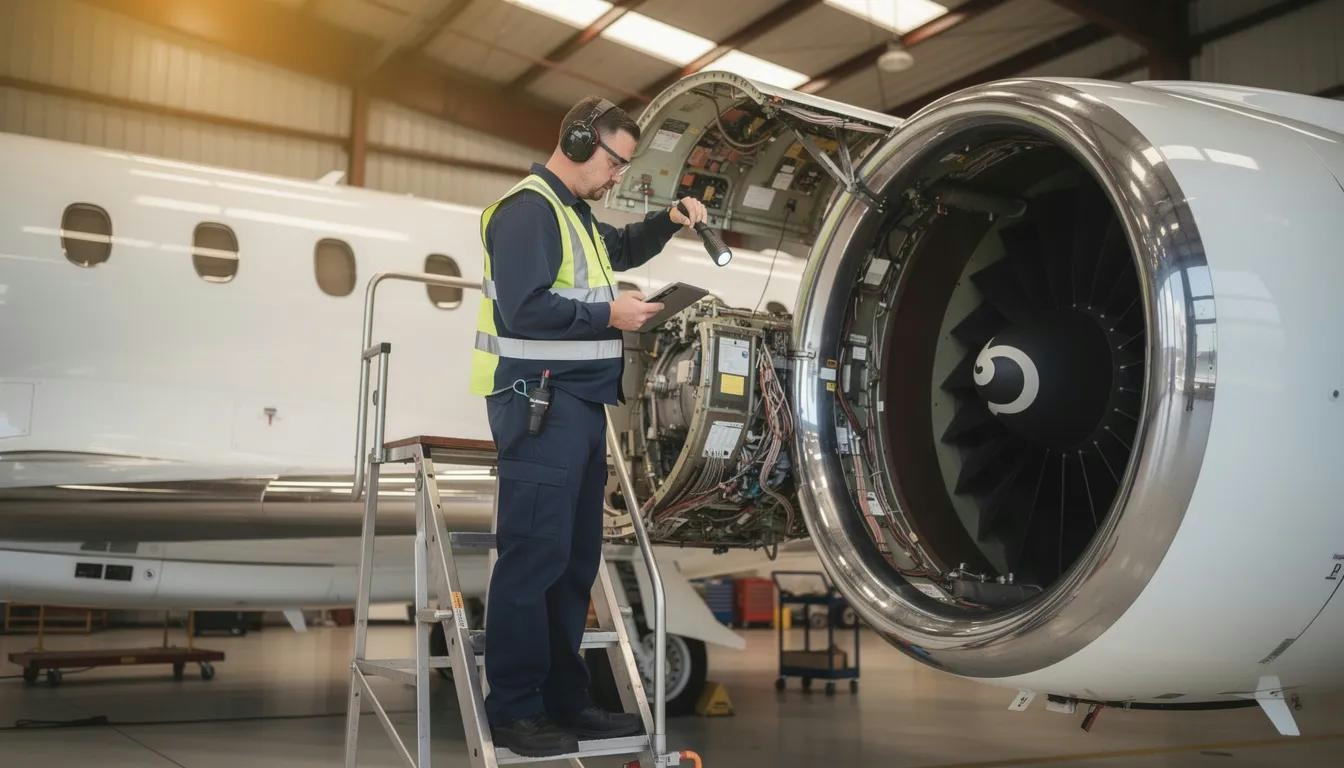
In the specialized realm of aviation finance, aircraft engine leasing has quietly established itself as one of the most dependable income-generating asset classes within alternative finance. While the spotlight has traditionally been on leasing entire aircraft, it is the engines—housed in maintenance facilities from Miami to Singapore to Dublin—that are driving significant growth in this sector. These engines, often valued higher than prime commercial real estate, provide consistent rental income even when grounded, making them highly attractive to investors seeking stable and resilient cash flows.
Institutional Investment and Market Dynamics
Over the past five years, institutional capital has increasingly flowed into engine leasing. Pension funds, which once approached aviation assets with caution, now hold substantial stakes in engine portfolios. Sovereign wealth funds from the Gulf region have made significant investments in spare-engine pools, while family offices, traditionally conservative in their approach, are backing green-time leasing platforms. The appeal lies in the predictable revenue model: leased engines generate monthly rental income under multi-year contracts, complemented by quarterly maintenance reserve payments from airlines to cover future overhauls. This financial structure has demonstrated remarkable stability, even amid industry disruptions. For instance, during the COVID-19 pandemic, while passenger aircraft remained largely grounded, cargo operators continued flying, allowing engine lessors to maintain steady payment streams and underscoring the asset class’s resilience.
A distinct advantage of engine leasing is the inherent mobility of the asset. Unlike entire aircraft, which face complex certification, configuration, and registration hurdles, engines can be rapidly redeployed across different fleets and geographic regions. An engine from a Boeing 737 operating in Indonesia can be installed on another 737 in Brazil within weeks. This flexibility enables lessors to treat engines as independent financial instruments, each with its own revenue stream, residual value trajectory, and remarketing strategy.
The adoption of power-by-the-hour (PBH) contracts has further enhanced the predictability of returns. Under these agreements, airlines pay a fixed rate per flight hour, effectively converting unpredictable overhaul expenses into manageable, utility-like costs. For investors, this arrangement mitigates the risk of sudden, costly maintenance events that could otherwise diminish returns.
Challenges and Industry Developments
Despite its strengths, the engine leasing model faces several challenges. Industry participants continue to debate whether maintenance reserves adequately reflect current inflationary pressures on parts and labor. Mispricing PBH contracts can quickly erode profit margins. Additionally, broader risks such as supply chain disruptions, regulatory changes, and volatile fuel prices can impact engine availability and operating costs. Nevertheless, the market response remains overwhelmingly positive, driven by the sector’s predictable revenue streams and relatively modest capital requirements.
Competition within the sector is intensifying. Companies like AerFin are expanding their service offerings and technical capabilities, while DTX Aerospace’s recent partnership with Liebherr-Aerospace signals a trend toward integrated maintenance, repair, and overhaul (MRO) solutions. Despite ongoing geopolitical tensions and persistent supply chain challenges, the MRO sector anticipates continued growth and a stable operating environment in the near term.
As legacy engines such as the CFM56 and V2500—once expected to become obsolete—continue to deliver strong returns, aircraft engine leasing has emerged as a discreet yet powerful pillar in alternative finance. It offers investors a unique combination of resilience, asset mobility, and contractual cash flow stability.

Etihad Airways Suspends Airbus A380 Flights on Key Route

Aditya Birla Group Seeks Approval for Aircraft Leasing in GIFT City

Qatar Airways Highlights Innovation and Connectivity at Arabian Travel Market 2026

Hong Kong's Five-Year Plan Includes Andrew Fan's Aircraft Parts Processing Hub Proposal

ACIA Aero Leasing Delivers ATR72-600 to Air Nostrum

RTX Appoints Jill Albertelli as Head of Pratt & Whitney

TAT Technologies Joins Beyond Aero Hydrogen Aircraft Program

AURAK Study Highlights Barriers to Air Taxi Adoption in Emerging Economies

Xiamen Air Selects Altitude for 787 Maintenance at Heathrow

Etihad and Swissport Extend Global Partnership
