
Orchestrate AI insights into action

Trending
Categories
IATA Warns Supply Chain Issues Will Continue to Affect Airlines
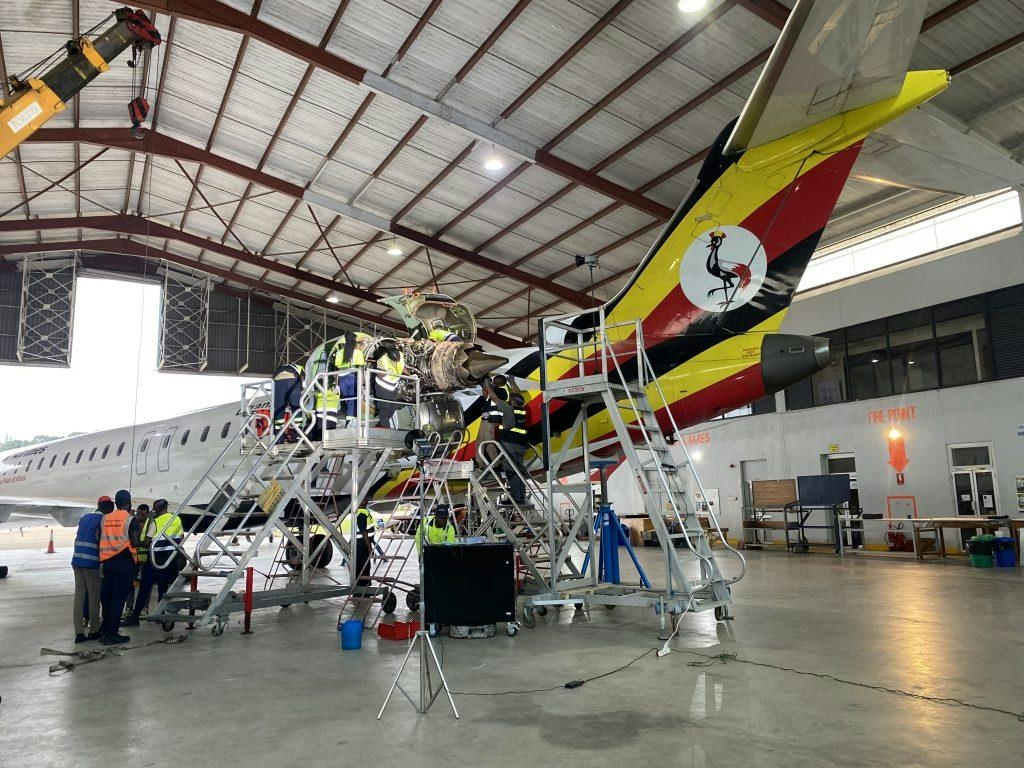
IATA Warns Supply Chain Issues Will Continue to Affect Airlines
Persistent Disruptions Impacting Global Aviation
The International Air Transport Association (IATA) has issued a stark warning that ongoing supply chain disruptions will continue to pose significant challenges for the global airline industry. Speaking at the Changi Aviation Summit in Singapore, IATA Director General Willie Walsh highlighted the enduring nature of these operational difficulties, which have persisted since the onset of the COVID-19 pandemic.
Airlines worldwide have struggled with delays and shortages as major aircraft manufacturers, including Airbus and Boeing, along with engine producers such as GE Aerospace and Pratt & Whitney, face continued obstacles in sourcing critical components and maintaining production schedules. These issues have been further compounded by geopolitical tensions and broader economic uncertainties, factors that analysts believe will extend the duration of supply chain bottlenecks.
Consequences for Industry Growth and Response Measures
The repercussions of these disruptions are evident across the aviation sector. Delays in aircraft deliveries and maintenance have slowed the pace of traffic growth, with IATA noting that after a robust post-pandemic recovery, industry expansion has now reverted to historical norms, in part due to these supply constraints.
In response, some industry stakeholders are taking proactive measures to enhance competition and stability. Notably, CFM International, a prominent engine manufacturer, has extended its aftermarket competition agreement with IATA through 2033. This initiative aims to encourage greater competition in aircraft maintenance and repair services, potentially mitigating some operational challenges.
Despite these efforts, IATA underscores the necessity for coordinated action among airlines, manufacturers, and regulators. The association stresses that addressing the root causes of supply chain disruptions is essential to support the sector’s recovery and ensure its long-term resilience.

Etihad Airways Suspends Airbus A380 Flights on Key Route

Aditya Birla Group Seeks Approval for Aircraft Leasing in GIFT City

Qatar Airways Highlights Innovation and Connectivity at Arabian Travel Market 2026

Hong Kong's Five-Year Plan Includes Andrew Fan's Aircraft Parts Processing Hub Proposal

ACIA Aero Leasing Delivers ATR72-600 to Air Nostrum

RTX Appoints Jill Albertelli as Head of Pratt & Whitney

TAT Technologies Joins Beyond Aero Hydrogen Aircraft Program

AURAK Study Highlights Barriers to Air Taxi Adoption in Emerging Economies

Xiamen Air Selects Altitude for 787 Maintenance at Heathrow

Etihad and Swissport Extend Global Partnership
