Image

Orchestrate AI insights into action

Join the AeroGenie waitlist today!

Trending

Categories

IndiGo, Air India, and Akasa to Lease Over 200 Aircraft via GIFT City

May 8, 2026By ePlane AI
IndiGo, Air India, and Akasa to Lease Over 200 Aircraft via GIFT City
0
0
Aircraft Leasing
GIFT City
IndiGo

IndiGo, Air India, and Akasa to Lease Over 200 Aircraft via GIFT City

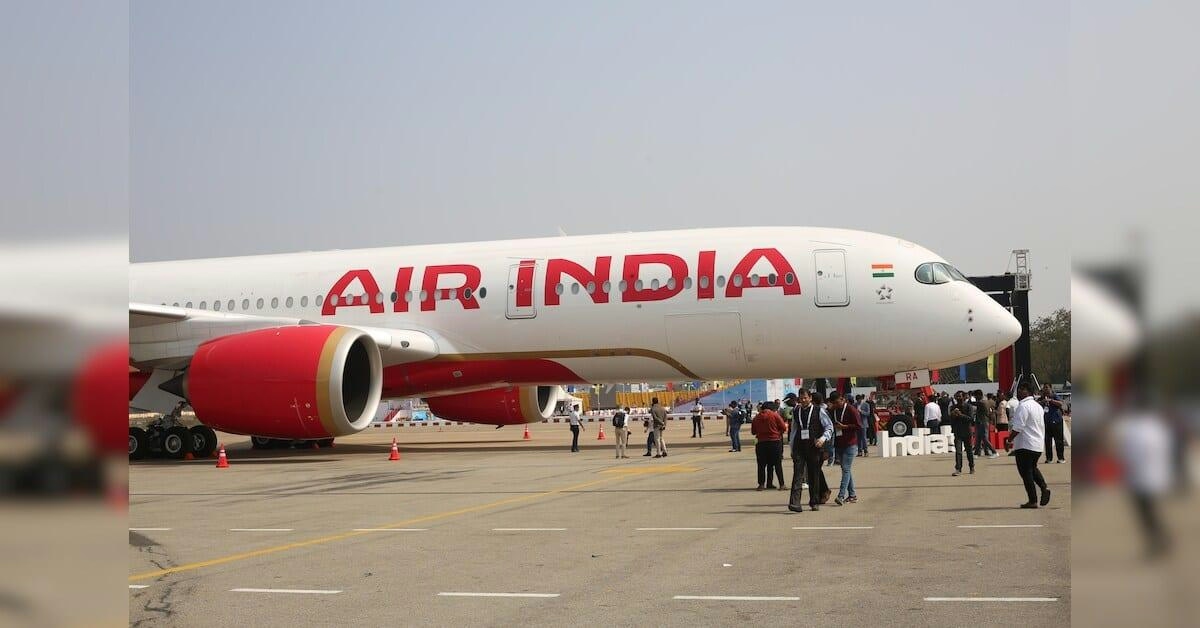
Major Indian airlines, including IndiGo, Air India, Akasa Air, and Star Air, are poised to lease over 200 additional aircraft through their leasing subsidiaries based in Gujarat’s GIFT City. This move, announced at the Aircraft Leasing and Financing Summit 2.0 held in GIFT City, represents a nearly threefold increase in the number of commercial aircraft leased via the International Financial Services Centre (IFSC). The expansion highlights India’s growing ambition to establish itself as a global aviation hub.

Ambitious Fleet Expansion Plans

IndiGo’s leasing arm, InterGlobe Aviation Financial Services IFSC, aims to nearly double its fleet from 78 aircraft as of March 2026 to 150 by March 2027, managing assets valued between $3.5 billion and $4 billion. Air India’s AI Fleet Services plans to increase its leased aircraft from 16 to as many as 75 by the fiscal year 2027, with assets estimated at $2.5 billion to $3 billion. Akasa Air, having recently received approval to establish Akasa Air Leasing IFSC Pvt Ltd, intends to lease 60 aircraft over the next five years through GIFT City’s leasing framework. Star Air’s Ghodawat Aviation IFSC Pvt Ltd will add six to eight regional aircraft to the leasing pool.

This surge in leasing activity coincides with one of the largest fleet expansions globally by Indian carriers. Collectively, Indian airlines have placed orders for 1,631 aircraft, comprising 1,245 Airbus and 386 Boeing jets. IndiGo alone accounts for 901 of these orders, while the Air India Group has 541 aircraft on order. Akasa Air has separately committed to acquiring 189 Boeing 737 Max aircraft.

Current Leasing Landscape and Financial Backing

According to the International Financial Services Centres Authority (IFSCA), a total of 101 commercial aircraft have been leased through GIFT IFSC to date. This fleet includes 82 narrow-body, 14 wide-body, four ATR turboprops, and one cargo aircraft. IndiGo leads with 78 leased aircraft, followed by Air India with 16, while the remainder is leased by entities such as Vman Aviation Services and Willis Lease Finance India. The GIFT IFSC ecosystem now encompasses 203 aircraft and 84 aircraft engines, amounting to over 373 aviation assets. International banking units operating within GIFT IFSC have extended nearly $855 million in aviation debt financing.

Challenges Amid Rapid Growth

Despite the aggressive leasing strategy, the sector faces significant challenges. High operational costs remain a pressing concern, particularly as geopolitical tensions—such as those in the Middle East—continue to disrupt flight routes and elevate expenses. Market reactions have been sensitive to these developments; for example, IndiGo’s shares experienced a notable surge following reports of a potential U.S.-Iran ceasefire, reflecting investor optimism about easing geopolitical risks.

Competition among Indian carriers is intensifying, with airlines exploring new routes and airports to expand their reach. IndiGo recently commenced its first commercial flights from Noida Airport, while Air India has introduced performance-linked stock options aimed at incentivizing employees and accelerating its turnaround efforts. However, the shortage of wide-body aircraft in India remains a significant obstacle, as highlighted by IndiGo’s incoming chief, potentially limiting the sector’s capacity for long-haul growth.

Policy Perspectives and Future Outlook

At the summit, Civil Aviation Secretary Samir Kumar Sinha underscored the importance of access to low-cost, long-tenure domestic capital. He emphasized that as India’s aviation sector evolves from leasing towards large-scale aircraft ownership, securing affordable financing will be critical to sustaining growth and supporting the next phase of the country’s aviation financing journey.
More news
Airline Updates — June 17, 2026

Airline Updates — June 17, 2026

Airline Industry Developments — June 17, 2026 Vietnam Airlines Launches Direct Hanoi-Amsterdam Service Vietnam Airlines has commenced its first nonstop flight connecting Hanoi and Amsterdam, marking a historic milestone as the first Vietnamese carrier to establish a direct link between Vietnam and the Netherlands. The inaugural flight, VN83, departed Noi Bai International Airport at 3:50 AM on June 16, carrying nearly 300 passengers aboard an Airbus A350. After a journey exceeding 12 hours, the aircraft arrived at Amsterdam Schiphol Airport. The return flight, VN82, left Amsterdam for Hanoi at 2:00 PM local time the same day. The airline plans to operate three round-trip flights weekly on Tuesdays, Thursdays, and Saturdays, utilizing Airbus A350 aircraft. This new route represents a significant step in Vietnam Airlines’ international expansion strategy, enhancing direct connectivity between Vietnam and Europe and providing passengers with improved access to destinations across the continent. Global Aviation Faces Economic Pressures Amid Expansion The launch of new routes such as Vietnam Airlines’ comes at a time when the global airline industry is confronting considerable challenges. The International Air Transport Association (IATA) projects that industry profitability will be halved this year, largely due to ongoing disruptions in the Middle East and persistently high fuel prices. These factors are compelling airlines to reevaluate their route networks and operational efficiencies as they pursue international growth. In the United Kingdom, Pegasus Airlines has expanded its footprint with the introduction of a direct summer service between London Gatwick and Istanbul Sabiha Gökçen International Airport, inaugurated on June 15. This route complements Pegasus’s existing daily flights from London Stansted, offering travelers in London and the Southeast enhanced flexibility for travel between the UK and Türkiye. Operating through its Istanbul hub, Pegasus connects passengers to 160 destinations across 56 countries, including 39 cities within Türkiye such as Antalya, Bodrum, and Dalaman. London Gatwick now stands as the sixth UK airport served by Pegasus, underscoring the airline’s ongoing investment in a key market. However, as carriers expand, they face logistical complexities and heightened competition, illustrated by new routes like Riyadh Air’s service to Manchester and Air New Zealand’s seasonal flights to Queenstown. Expanding Connectivity in India and Industry Maintenance Developments In India, Air India Express has inaugurated direct flights between Pune and Amritsar, with the first service departing Pune on June 15. This new connection facilitates travel for leisure passengers, pilgrims, students, and business travelers. Amritsar, famed for the Golden Temple and its cultural heritage, is now more accessible from Pune. Air India Express currently operates approximately 105 weekly flights from Pune, linking the city to 12 destinations including Abu Dhabi. From Amritsar, the airline offers 24 weekly flights to Delhi, Dubai, Pune, and Sharjah. Simultaneously, Akasa Air, India’s fastest-growing airline, has commenced operations from Noida International Airport, further enhancing domestic connectivity. Alongside network expansion, the aviation industry is witnessing increased activity in maintenance, repair, and overhaul (MRO) sectors. Advances in aviation materials support and asset management are influencing maintenance strategies and cost structures. In the United States, the Federal Aviation Administration (FAA) has awarded substantial infrastructure grants to several airports, which are expected to affect airline operations and maintenance schedules in the near future. Despite the ongoing economic and operational challenges, airlines worldwide continue to invest in new routes and infrastructure, striving to improve connectivity and passenger convenience within a rapidly evolving global aviation environment.
Japan’s First Airbus ACH130 Aston Martin Edition Helicopter Takes Flight

Japan’s First Airbus ACH130 Aston Martin Edition Helicopter Takes Flight

Japan’s First Airbus ACH130 Aston Martin Edition Helicopter Takes Flight Japanese hospitality company NOT A HOTEL has taken delivery of the country’s first Airbus ACH130 Aston Martin Edition helicopter, marking a significant advancement in Japan’s luxury aviation sector. With a second unit already on order, this acquisition underscores NOT A HOTEL’s commitment to redefining high-end guest experiences and mobility across the nation. Integration into Exclusive Mobility Service The ACH130 Aston Martin Edition will be incorporated into NOT A HOTEL’s exclusive “NOT A GARAGE” mobility service, which connects guests to premier destinations such as Nasu, Kita-Karuizawa, and Minakami within an hour. This initiative aims to transform travel by offering seamless and scenic journeys that elevate the hospitality experience beyond conventional transportation methods. Hiromune Eto, Co-CEO of NOT A HOTEL, emphasized the company’s innovative approach, stating, “NOT A HOTEL has consistently proposed new lifestyles through its unique architecture. Our mobility service ‘NOT A GARAGE’ received over 200 inquiries on its first day. The ACH130 Aston Martin Edition fractional ownership slots have already sold out, reflecting strong customer demand. This helicopter, blending Airbus technology with Aston Martin aesthetics, enables guests to share beautiful architecture and breathtaking scenery from above. We are working towards launching this new form of luxury in September.” Design and Industry Significance The ACH130 Aston Martin Edition distinguishes itself through bespoke interior and exterior design elements crafted by Aston Martin and meticulously applied by Airbus Helicopters’ team in Oxford, UK. This model appeals to aviation enthusiasts who value both the exhilaration of flight and the refinement associated with high-end sports cars. Jean-Luc Alfonsi, Managing Director of Airbus Helicopters in Japan, remarked, “We are delighted to welcome NOT A HOTEL into the Airbus family with the delivery of Japan’s first ACH130 Aston Martin Edition. This milestone reflects the extraordinary appeal of a helicopter that marries Airbus engineering excellence with Aston Martin’s iconic design. The ACH130 sets a new standard for safety, comfort, and efficiency, perfectly aligning with NOT A HOTEL’s vision for luxury hospitality.” Market Challenges and Competitive Landscape Despite the enthusiasm surrounding the ACH130 Aston Martin Edition, its introduction into the Japanese market faces regulatory challenges. Authorities continue to evaluate safety and operational standards for luxury helicopter services, which remain a critical hurdle. Furthermore, competition within the sector is intensifying. Domestic companies such as Honda are advancing their electric vertical takeoff and landing (eVTOL) projects, while firms like SkyDrive are developing next-generation urban air mobility solutions. The market’s reception of ultra-luxury helicopters will be closely monitored, as growing consumer interest in premium aviation services may prompt competitors to enhance their offerings or adjust pricing strategies. As NOT A HOTEL prepares to launch its new mobility service, the ACH130 Aston Martin Edition is positioned to set a new benchmark for luxury travel in Japan, potentially reshaping expectations within both the hospitality and private aviation industries.
US and Leading Nations to Host Aviation Forum 2026 in Munich

US and Leading Nations to Host Aviation Forum 2026 in Munich

US and Leading Nations to Host Aviation Forum 2026 in Munich The global aerospace industry is set to converge in Munich, Germany, as the city prepares to host the Aviation Forum 2026. This event is anticipated to become one of Europe’s most significant aviation gatherings, with the United States joining Germany, France, the United Kingdom, Canada, Italy, India, China, and other leading nations in supporting the forum. The event is expected to attract hundreds of international companies, procurement leaders, manufacturers, airlines, and supply chain executives, underscoring its importance on the global aviation calendar. Building on the momentum generated by ILA Berlin, the Aviation Forum 2026 represents a strategic shift from traditional exhibition showcases toward fostering business collaboration. Executives from North America, Asia, the Middle East, and Europe will convene in Bavaria, reinforcing Munich’s reputation as a premier destination for international conventions. The forum is projected to welcome more than 950 participants, over 100 exhibitors and sponsors, and upwards of 70 speakers, generating significant business travel and providing a substantial boost to Munich’s hospitality and tourism sectors. A Platform for Global Collaboration and Industry Challenges The forum will be held under the theme “Shaping aviation excellence in a dynamic world: Resilient operations, smart technologies & strategic collaboration.” It aims to connect aircraft manufacturers, airlines, procurement executives, digital technology firms, AI innovators, and suppliers across the aviation value chain. The event’s strong international representation—including decision-makers from the US, Canada, Germany, France, Italy, Spain, the UK, Japan, South Korea, India, and China—positions it as a catalyst for cross-border investment, supplier partnerships, and long-term commercial relationships. The forum arrives amid ongoing industry challenges. Engine delays, highlighted by airline executives at the International Air Transport Association’s annual meeting, continue to impact aircraft availability and fleet planning. Additionally, the sector’s dependence on jet fuel, a major operational cost, is under increased scrutiny due to volatile energy markets and growing environmental concerns. These issues are expected to be central to discussions, with market participants closely monitoring how manufacturers and airlines address these challenges. Strategic Stakes and Broader Impacts The Aviation Forum 2026 will also serve as a platform for competing nations to secure roles in future aircraft programs. Germany, for instance, is actively pursuing a significant share in Airbus’ Next-Generation Single-Aisle project. The event’s agenda is anticipated to address broader concerns, including the environmental impact and logistical complexities of hosting large-scale gatherings—topics of particular relevance as Munich prepares to host the 2026 FIFA World Cup. Boost for Munich’s Convention Economy The forum is expected to provide a substantial boost to Munich’s meetings and convention market. International delegates arriving through Munich Airport, one of Europe’s busiest aviation hubs, will drive demand for premium hotels, serviced apartments, and local hospitality services. This influx of global visitors will further cement Munich’s status as a leading center for business tourism and international events. As the aerospace industry navigates a period of rapid transformation and mounting challenges, the Aviation Forum 2026 in Munich emerges as a pivotal event shaping the future of global aviation, business travel, and international collaboration.
Brazil’s Embraer Highlights Indian Assembly Line in Bid for IAF Transport Aircraft

Brazil’s Embraer Highlights Indian Assembly Line in Bid for IAF Transport Aircraft

Brazil’s Embraer Highlights Indian Assembly Line in Bid for IAF Transport Aircraft Brazilian aerospace leader Embraer has unveiled plans to establish a comprehensive assembly line for its C-390 Millennium military transport aircraft in India, contingent on the platform’s selection for the Indian Air Force’s (IAF) Medium Transport Aircraft (MTA) programme. This initiative, developed in partnership with Indian conglomerate Mahindra, aims to significantly enhance India’s participation in the global military aviation supply chain. It also aligns closely with the Indian government’s Make in India and Aatmanirbhar Bharat policies, which emphasize domestic manufacturing and self-reliance. Strategic Manufacturing Partnership and Technology Transfer Marcio Monteiro, chief marketing officer of Embraer Defence & Security, confirmed the company’s commitment to transferring substantial manufacturing capabilities to India as part of its bid. “We are willing to transfer everything, as much as possible,” Monteiro stated, noting that Embraer is actively consulting its supply chain to identify components and processes that can be relocated to India, depending on the scale of the order. This approach reflects a strategic effort to embed Indian industry deeply within Embraer’s global production network. To reinforce its proposal, Embraer has forged partnerships not only with Mahindra for local assembly but also with Bharat Forge, which will supply forged raw materials. This collaboration further integrates Indian suppliers into the production ecosystem. Francisco Gomes Neto, Embraer’s chief executive, emphasized the company’s readiness to replicate its existing production model in India, mirroring the structural and final assembly operations currently conducted at its Gavião Peixoto facility in Brazil. Depending on government requirements, Embraer may also establish facilities for manufacturing major structural components, thereby increasing indigenous content and supporting India’s defence manufacturing ambitions. Positioning India as a Regional Production Hub Beyond fulfilling domestic requirements, Embraer envisions the Indian assembly line as a potential export hub for the C-390, enabling production for international markets. This proposal aligns with New Delhi’s strategic objectives to enhance technology transfer, boost domestic manufacturing capabilities, and promote export-oriented defence production. By positioning India as a regional centre for military aircraft manufacturing, Embraer aims to contribute to the country’s growing stature in the global aerospace sector. Competitive Context and IAF Modernization Efforts The C-390 Millennium is a leading contender in the IAF’s MTA competition, which seeks to replace the ageing fleet of Soviet-era AN-32 transport aircraft that have long served as the backbone of India’s tactical airlift capability. The programme is expected to procure up to 80 aircraft, marking one of the most significant air mobility acquisitions in recent years. The C-390 offers a compelling combination of speed, payload capacity, and operational flexibility, powered by jet engines that enable a cruise speed of approximately 870 km/h—substantially faster than both the AN-32 and the Lockheed Martin C-130J Super Hercules, another competitor in the race. The Airbus A400M Atlas also remains in contention. The competitive landscape is further complicated by recent developments in the aerospace sector. Airbus has informed some customers of delays in the delivery of A320neo series jets scheduled for 2027 and 2028, which may have ripple effects on military transport aircraft production and availability. Concurrently, the IAF has introduced its first Tata-built C295 tactical transport aircraft, underscoring ongoing efforts to modernize and diversify its airlift capabilities. With the MTA programme poised to shape the IAF’s transport fleet for decades, Embraer’s proposal to localize production and integrate Indian suppliers could prove decisive in the final selection process.
Airbus Faces Engine Delays Amid Record Order Backlog

Airbus Faces Engine Delays Amid Record Order Backlog

Airbus Faces Engine Delays Amid Record Order Backlog Expansion Efforts and Production Challenges Airbus recently inaugurated a new A320neo final assembly line in Toulouse, repurposing the expansive hall previously dedicated to the A380 program. This development marks the addition of a tenth global assembly site, reflecting Airbus’s ambitious strategy to increase monthly production of its best-selling single-aisle aircraft to 75 units by the end of 2027. Despite these efforts, the company continues to grapple with significant supply-chain disruptions, most notably a shortage of Pratt & Whitney engines. CEO Guillaume Faury has identified this bottleneck as a primary obstacle impeding delivery schedules. The tension between soaring demand and constrained supply was clearly illustrated in May’s delivery statistics. Airbus delivered 81 aircraft to 45 customers, representing a 59% increase compared to the same period last year. This surge was largely driven by the resumption of shipments to Chinese carriers following the resolution of an administrative backlog. Year-to-date deliveries have reached 262, slightly surpassing Boeing’s 250. Nevertheless, Airbus’s ambitious full-year target of approximately 870 deliveries—underpinned by a forecasted adjusted EBIT of €7.5 billion and free cash flow of €4.5 billion—remains dependent on overcoming the engine supply challenges. Backlog and Market Impact Airbus’s order backlog has expanded to an unprecedented 9,247 aircraft as of the end of May, equating to more than a decade of production at current output levels. This extraordinary pipeline is the driving force behind the accelerated expansion of assembly capacity. Faury acknowledged the immense pressure created by this record backlog but noted that ongoing engine delays have repeatedly forced the company to defer its goal of achieving a 75-aircraft monthly production rate. Compounding these difficulties, Airbus has recently informed customers of further delivery postponements affecting both A350 and A320neo models scheduled for 2027 and 2028. The announcement unsettled markets, with Airbus shares declining 2.9% in early European trading following reports of A350 delivery setbacks. Industry leaders, including United Airlines CEO Scott Kirby, have expressed concern over the persistent engine shortages, describing them as a significant constraint on the sector. These issues have also influenced customer preferences; for instance, Emirates has opted for the Boeing 777X over the Airbus A350-1000, citing apprehensions about engine durability. Additional production complications have arisen, such as quality control problems with A320neo fuselage panels. Airbus has committed to restoring the delivery schedule to normal by the end of June, although it has yet to confirm whether this timeline will be met. Future Prospects and Diversification Looking ahead, Airbus’s A350F freighter program remains on track, with a maiden flight anticipated in the third quarter of 2026 and first deliveries planned for the latter half of 2027. The freighter variant has secured orders for 101 units from 14 customers, with certification processes underway in both Europe and the United States. Meanwhile, key customers continue to advance their fleet renewal plans. KLM Royal Dutch Airlines will name its forthcoming A350-900 aircraft after iconic Dutch artworks, beginning with “Die Nachtwache” (The Night Watch) in homage to Rembrandt. The first of these aircraft is currently being assembled and painted in Toulouse, with entry into service expected in September. However, certification issues with new business class seats mean the initial jets will launch without the upgraded cabin configuration. Beyond its commercial aviation activities, Airbus’s helicopter division has recently secured new contracts, including an order from Romania’s interior ministry for twelve multi-role helicopters intended for disaster relief and air rescue operations.
South Korea Begins Local Production of Key Aircraft Engine Materials, Challenging GE and Rolls-Royce Dominance

South Korea Begins Local Production of Key Aircraft Engine Materials, Challenging GE and Rolls-Royce Dominance

South Korea Advances Domestic Production of Critical Aircraft Engine Materials South Korea has embarked on a significant initiative aimed at reducing its dependence on foreign suppliers for aircraft engine components. The Korea Aerospace Administration (KASA) has launched a five-year, 42.9 billion won ($31 million) project focused on developing essential heat-resistant materials and core engine parts. This ambitious effort seeks to challenge the longstanding dominance of established industry leaders such as General Electric, Pratt & Whitney, Rolls-Royce, and Safran. Strategic Development of Advanced Materials and Components Announced on June 17, the project titled "Development of High-Strength Materials and Components for Aircraft Gas Turbine Engine Structures" unites 20 organizations, including nine materials companies alongside 11 universities and research institutes. The collaboration aims to advance technologies in forged lightweight materials, high-strength alloys, super heat-resistant substances, and precision casting. Aircraft engines demand materials capable of withstanding extreme temperatures and pressures while complying with rigorous certification standards. Until now, only a select group of countries—the United States, United Kingdom, and France—have possessed the technological infrastructure to produce these sophisticated materials and components, leaving South Korea reliant on costly imports and limiting its domestic expertise. Over the course of the project, efforts will concentrate on developing five types of lightweight, heat-resistant materials and four core engine components. KASA’s approach extends beyond mere localization; it aspires to establish a comprehensive technological framework encompassing material design, manufacturing, testing, evaluation, data accumulation, and product application. This full-cycle strategy is designed to underpin independent aircraft engine development and enhance the technological competitiveness of South Korea’s aviation industry. Potential Impact on the Global Aircraft Engine Market South Korea’s entry into this high-barrier sector could have significant implications for the global market. The emergence of a new competitor may compel established players like GE and Rolls-Royce to accelerate innovation and explore new strategic partnerships to safeguard their market positions. Airlines, grappling with ongoing concerns about engine shortages—as underscored recently by the United Airlines CEO—might reconsider their supplier options amid evolving competitive dynamics and potential cost reductions. KASA Administrator Tae Seog Oh underscored the strategic importance of the initiative, stating, "Aircraft engines are a core sector that determines the competitiveness of the national aviation industry. The materials and components technologies supporting this are the starting point for independent engine development and for creating industrial added value." He further emphasized that the project will serve as a foundation for expanding aerospace materials research and gradually achieving full independence in aircraft engine technology. As South Korea intensifies its efforts, the global aircraft engine market may witness increased innovation, shifting alliances, and a more diversified supply chain, potentially reshaping the competitive landscape in the years ahead.
Airbus Confirms Cancellation of AirAsia X Order for 15 A330-900 Jets

Airbus Confirms Cancellation of AirAsia X Order for 15 A330-900 Jets

Airbus Confirms Cancellation of AirAsia X Order for 15 A330-900 Jets Airbus has officially confirmed the cancellation of AirAsia X’s order for 15 A330-900 aircraft, a decision reached through mutual agreement as the airline revises its fleet strategy. An Airbus spokesperson conveyed to Bernama that the cancellation was consensual, while AirAsia X has chosen not to comment on the matter. Shift in AirAsia Group’s Fleet Strategy The cancellation reflects a broader strategic shift within the AirAsia Group towards long-range narrowbody aircraft. Earlier this year, the group placed an order for 50 Airbus A321XLR jets, signaling a preference for more versatile and fuel-efficient models to support its network expansion. The A330-900, part of Airbus’s A330neo family, was originally intended to facilitate non-stop services to Europe, including routes between Kuala Lumpur and London. This change underscores the airline’s evolving operational priorities in response to market demands. Market Context and Industry Challenges This development occurs amid a complex market environment for Airbus. Despite the cancellation by AirAsia X, Airbus CEO Guillaume Faury has emphasized that there are no widespread signs of jet order cancellations, even as the industry contends with persistent fuel price pressures. Nonetheless, Airbus faces other significant challenges. The company’s shares recently declined following reports of delays in A350 aircraft deliveries. Additionally, supply chain disruptions have affected key customers such as Qantas, which has postponed plans for non-stop flights to London and New York. While Airbus’s A320-family orders have surpassed 20,000 units, the loss of the AirAsia X order highlights the competitive pressures and shifting preferences within the aerospace sector. Airlines are increasingly favoring flexible, long-range narrowbody jets over larger widebody models, a trend that is influencing manufacturers’ order books and strategic planning. The cancellation thus illustrates both the changing priorities of airlines in a dynamic aviation landscape and the ongoing challenges faced by aircraft manufacturers as they navigate evolving market conditions and supply chain constraints.
Lufthansa Supports Philippines’ Efforts to Develop MRO Hub

Lufthansa Supports Philippines’ Efforts to Develop MRO Hub

Lufthansa Supports Philippines’ Efforts to Develop MRO Hub Strengthening German-Philippine Economic Ties On June 16, 2026, German President Frank-Walter Steinmeier and Philippine President Ferdinand Marcos Jr. convened at Malacañan Palace, marking a significant advancement in bilateral economic cooperation. Central to their discussions was Lufthansa Technik Philippines’ initiative to establish a cutting-edge aircraft maintenance, repair, and overhaul (MRO) facility at Clark International Airport. President Marcos emphasized the importance of the partnership, noting that the collaboration with Germany spans multiple sectors and has consistently contributed to the Philippines’ national development. Lufthansa Technik Philippines, a joint venture between Lufthansa Technik AG and MacroAsia Corporation, plans to invest several million dollars in the new Clark facility. The expansive 157,000-square-meter site is designed to accommodate up to nine widebody aircraft and is projected to commence operations by 2028. This development is expected to create approximately 1,200 highly skilled jobs for Filipinos, complementing Lufthansa Technik’s established presence in Manila, where it has operated for over 25 years. Economic Impact and Strategic Significance The investment aligns closely with the Marcos administration’s broader strategy to attract strategic foreign capital, generate quality employment, and stimulate regional economic growth through the cultivation of globally competitive industries. Finance Secretary Frederick D. Go described the project as a clear indicator of rising international confidence in the Philippine economy and workforce. He highlighted that Lufthansa Technik’s expansion would not only create quality jobs but also enhance local capabilities, facilitate technology transfer, and deepen the country’s integration into global aviation and supply chains. Holger Beck, CEO of Lufthansa Technik Philippines, underscored the company’s long-term commitment to positioning the Philippines as a strategic aviation hub within the Asia-Pacific region. He noted that the new base maintenance facility in Clark would significantly expand Lufthansa Technik’s network in the country, with the Manila and Clark sites serving as complementary pillars for future growth. The Bases Conversion and Development Authority (BCDA), responsible for overseeing the Clark growth corridor, also recognized the project’s potential to advance Clark as a center for aviation, logistics, and high-value industries. BCDA President Joshua M. Bingcang described Lufthansa Technik’s expansion as a strong endorsement of the Philippines’ workforce and the strategic advantages offered by Clark as an investment destination. Challenges and Regional Implications Despite the promising outlook, the development of the MRO hub faces several challenges. Regulatory complexities, competition from established MRO centers across Asia, and the necessity for substantial investments in infrastructure and skilled labor present potential obstacles. The project is anticipated to attract increased interest from Asia-Pacific airlines seeking maintenance services at Clark, while competitors may respond by expanding their own regional operations to safeguard market share. Lufthansa Technik’s broader strategic initiatives, including recent ventures into defense activities and collaboration with Airbus on AeroShark riblet technology, suggest a wider ambition that could further influence the company’s MRO operations in the Philippines and the surrounding region.
Airbus Opens 10th A320 Assembly Line at Former A380 Facility

Airbus Opens 10th A320 Assembly Line at Former A380 Facility

Airbus Opens 10th A320 Assembly Line at Former A380 Facility Airbus has reached a pivotal milestone with the inauguration of its 10th global A320 Family Final Assembly Line (FAL) at the Toulouse manufacturing center in southern France. This new assembly line is situated within the Jean-Luc Lagardère complex, a facility originally constructed for the now-discontinued A380 superjumbo program. Rather than building a new plant, Airbus chose to repurpose this iconic site, reflecting the rapid transformation of the commercial aircraft market. Transition from A380 to A320 Production The shift from the A380 era, which focused on large aircraft transporting passengers between major hubs such as London Heathrow, Dubai International, Singapore Changi, and Frankfurt, to the current emphasis on fuel efficiency and point-to-point connectivity is clearly illustrated by this change. The A320 Family, particularly the larger A321neo and the long-range A321XLR variants, has become central to airline fleet strategies worldwide. Airbus aims to leverage its expanded industrial network to achieve an ambitious production target of 70 to 75 A320 Family aircraft per month by the end of 2027. However, CEO Guillaume Faury has acknowledged significant challenges in scaling up production amid ongoing global supply chain disruptions and increasing regulatory costs in Europe. These factors may complicate efforts to meet delivery schedules and maintain profitability, especially as Airbus also contends with market concerns over potential delays in A350 deliveries and the necessity for cost-cutting measures in response to global uncertainties. The Jean-Luc Lagardère Facility: A Symbol of Airbus’s Evolution The Jean-Luc Lagardère site holds a prominent place in Airbus’s history. Built between 2002 and 2004 for the A380 program, the complex covers approximately 124 acres (50 hectares) and features a central hangar measuring 490 meters in length, 250 meters in width, and 46 meters in height—an internal space comparable to 500 tennis courts. The cessation of A380 production left the future of this vast facility uncertain, as market demand shifted toward smaller, more versatile aircraft. Adapting the site for A320 Family production involved more than a simple change of aircraft type. The assembly of narrowbody jets requires a significantly faster manufacturing pace and higher output, necessitating a comprehensive redesign of production systems, logistics, and manufacturing technologies. The revamped facility now prioritizes efficiency and flexibility, aligning with Airbus’s broader global production strategy. “This facility provides the necessary flexibility and capacity to meet strong market demand, especially for the A321neo, and supports our production ramp-up trajectory towards 75 A320 Family aircraft a month,” Faury stated. “Operating in coordination with our assembly sites in Hamburg, Mobile, and Tianjin, this advanced line is part of our commitment to deliver aircraft of the highest quality standards to our customers globally.” Competitive Landscape and Industry Implications As Airbus expands its A320 Family manufacturing footprint, competitors are closely monitoring its progress. Embraer, for example, may seek to capitalize on any delays or strategic shifts by Airbus, particularly if the European manufacturer hesitates to develop a larger variant of the A220. This evolving competitive environment highlights the high stakes and dynamic nature of the commercial aviation industry’s future.
Rest and Sleep Facilities for Cabin Crew on the Airbus A350-1000

Rest and Sleep Facilities for Cabin Crew on the Airbus A350-1000

Rest and Sleep Facilities for Cabin Crew on the Airbus A350-1000 Dedicated Crew Rest Areas on Ultra-Long-Haul Flights On ultra-long-haul flights, the rest arrangements for cabin crew extend far beyond simply occupying an empty passenger seat. Modern widebody aircraft such as the Airbus A350-1000 are specifically designed with dedicated rest compartments for crew members. These facilities enable staff to rotate through scheduled breaks, ensuring they remain alert and effective in both service delivery and emergency response during flights that can exceed 18 hours in duration. These rest areas are deliberately concealed from passengers. On the A350-1000, crew rest compartments are typically accessed through unmarked doors located near or within the rear galley. Rather than entering at aisle level, crew members ascend a compact staircase into a compartment situated above the passenger cabin, commonly known as the “crown area.” This vertical separation provides a quiet and private environment without compromising valuable cabin space. Design and Functionality of Crew Rest Compartments Inside the rest area, the environment is functional and subdued, featuring a series of bunks separated by curtains, basic lighting, climate controls, and essential safety equipment such as seatbelts and oxygen masks. The design adheres to stringent safety regulations that govern everything from bunk dimensions to emergency access protocols. Notably, these compartments contain no avionics and serve no flight control functions. The proximity of these rest areas to the galley is strategically chosen for operational efficiency. Crew members can seamlessly hand over their duties, take their scheduled rest, and return to service discreetly, without passengers becoming aware of their absence. The doors to these compartments are intentionally plain, preserving the illusion that no additional space lies behind them. Passengers passing by are unlikely to suspect the presence of a hidden sleep area just steps away. Variations and Operational Challenges The configuration of crew rest facilities on the A350-1000 varies among airlines. Some place bunks above the main cabin, while others locate them below deck, accessible via ladders or stairs. This flexibility allows airlines to customize the layout according to their operational requirements and service models. The integration of advanced crew rest facilities presents certain challenges. The A350-1000’s luxury-focused cabins, which include first-class suites with private bathrooms, underscore the increasing emphasis on passenger comfort but also raise questions about balancing space allocation for crew welfare. Airlines such as Emirates have expressed interest in incorporating similar amenities for their crews; however, operational difficulties persist. Emirates, for example, is currently contending with engine durability issues on the A350-1000, which have delayed both the aircraft’s adoption and the introduction of new crew rest features. Similarly, Qantas’s Project Sunrise, an ambitious initiative to launch nonstop ultra-long-haul flights, has encountered repeated delays due to supply chain disruptions affecting the delivery of specially modified A350-1000 aircraft. These setbacks directly impact the rollout of enhanced crew rest areas, highlighting the complexities involved in integrating such amenities while maintaining aircraft reliability and adhering to delivery schedules. The concealed rest facilities on the Airbus A350-1000 exemplify the delicate balance between operational efficiency, crew welfare, and passenger experience—a dynamic challenge as airlines continue to expand the frontiers of ultra-long-haul travel.
line