
Orchestrate AI insights into action

Trending
Categories
JetBlue Becomes First U.S. Airline to Operate Transatlantic Flights Using Single-Aisle Jets
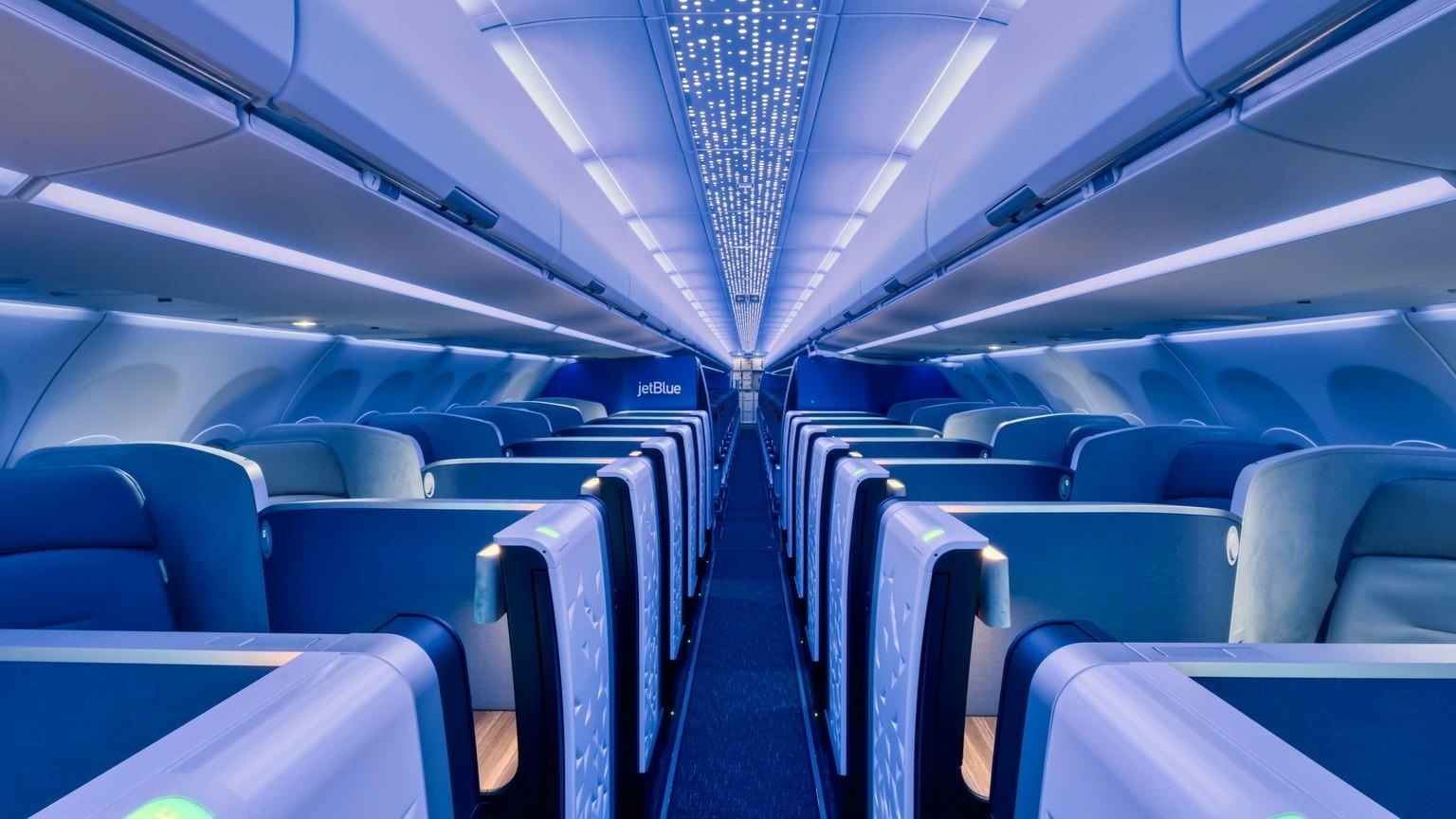
JetBlue Pioneers Transatlantic Service with Single-Aisle Jets
In 2021, JetBlue Airways redefined transatlantic air travel by becoming the first U.S. airline to operate long-haul flights across the Atlantic using single-aisle aircraft. Departing from the longstanding industry practice of deploying widebody jets such as the Boeing 777 or Airbus A330 on these routes, JetBlue instead centered its expansion on the Airbus A321LR. This next-generation narrowbody aircraft offers sufficient range to connect the U.S. East Coast with Western Europe, while maintaining lower operating costs and fewer seats compared to traditional widebody planes. This strategic choice not only distinguished JetBlue from other major American carriers but also altered the economic framework of its international operations.
A Strategic Shift in Transatlantic Aviation
Historically, transatlantic flights have been dominated by widebody aircraft, which provide the necessary range and passenger capacity to sustain profitability on long-haul routes. Major network carriers have relied on funneling large numbers of passengers through hub airports to justify the high expenses associated with operating these large jets. JetBlue, which has never operated widebody aircraft, capitalized on advancements in aircraft technology to challenge this model. The Airbus A321LR’s extended range enabled JetBlue to serve premium business markets across the Atlantic without incurring the financial risks tied to acquiring or leasing widebody fleets.
JetBlue’s approach also leveraged its existing operational expertise with the Airbus A320 family. The airline’s pilots, maintenance teams, and systems were already familiar with the A320 platform, allowing for a seamless transition to the A321LR with minimal retraining. This commonality reduced costs and simplified scheduling complexities. By expanding internationally with aircraft that aligned closely with its domestic fleet, JetBlue avoided the need to establish a separate long-haul division, streamlining its growth strategy.
Overcoming Challenges Amidst Intensifying Competition
JetBlue’s innovative strategy is not without challenges. Securing regulatory approval for new transatlantic routes, maintaining operational efficiency on longer flights, and contending with established carriers present ongoing obstacles. Competitors may respond by adjusting their own transatlantic services or forging strategic alliances to bolster their market positions. Industry analysts are closely monitoring JetBlue’s ability to sustain profitability and customer satisfaction as it scales its single-aisle transatlantic operations.
Recent developments have further influenced JetBlue’s competitive stance. The airline’s acquisition of Spirit Airlines’ slots at New York’s LaGuardia Airport, coupled with its planned relocation to the Marine Air Terminal, is expected to enhance its presence in a critical market. Additionally, JetBlue’s initiatives to improve in-flight connectivity—through partnerships with SpaceX for satellite internet and Amazon for onboard entertainment—aim to differentiate its transatlantic offering and attract premium travelers.
The Airbus A321LR: Expanding the Reach of Narrowbody Jets
The Airbus A321LR, an extension of the A321neo family, delivers improved fuel efficiency and a range of approximately 4,000 nautical miles. This capability brings numerous North America–Europe city pairs within reach of a single-aisle aircraft, transforming routes that traditionally required widebody jets into commercially viable opportunities for JetBlue.
As JetBlue continues to broaden its transatlantic network, including plans to introduce the even longer-range A321XLR, its pioneering use of narrowbody aircraft is reshaping the approach of U.S. carriers to long-haul travel. This innovation challenges entrenched industry norms and compels competitors to reconsider their own strategies in the evolving transatlantic market.

Etihad Deploys Widebody Fleet to Meet Strong Demand

Korean Air Finalizes $36.2 Billion Deal with Boeing

Australia’s RFDS Queensland Section Orders Six King Air 260Cs

Korean Air Finalizes Order for 103 Boeing Jets and Engines

Embraer E195-E2 Features Distinctive Engine Placement Among Regional Jets

What Passengers Can Expect on Boeing’s New 777X Jet

How Ethiopian Airlines Became Africa’s Leading Carrier Amid Gulf Competition

Joby Aviation Extends Autonomous Flight Capabilities with Cross-Country Tour

Strengthening Europe's Aviation Supply Chain Amid Uncertainty

The Evolution of the Aircraft Maintenance Engineer Role
