
Orchestrate AI insights into action

Trending
Categories
Keyamo Highlights $2.5 Billion Maintenance Cost After United Airlines' Fifth Bird Strike
Keyamo Highlights $2.5 Billion Maintenance Cost After United Airlines' Fifth Bird Strike
African Aviation Faces Significant Maintenance Cost Challenges
Nigeria’s Minister of Aviation and Aerospace Development, Festus Keyamo, has drawn attention to the substantial financial burden African airlines face due to reliance on foreign maintenance providers. Speaking at the 2026 Ethiopian Aviation Forum in Addis Ababa, where he was represented by Olubunmi Kuku, Managing Director of the Federal Airports Authority of Nigeria (FAAN), Keyamo revealed that African carriers lose over $2.5 billion annually to overseas Maintenance, Repair, and Overhaul (MRO) services. This outflow of capital, he argued, hampers the continent’s economic and industrial growth and underscores the urgent need for investment in local MRO capabilities.
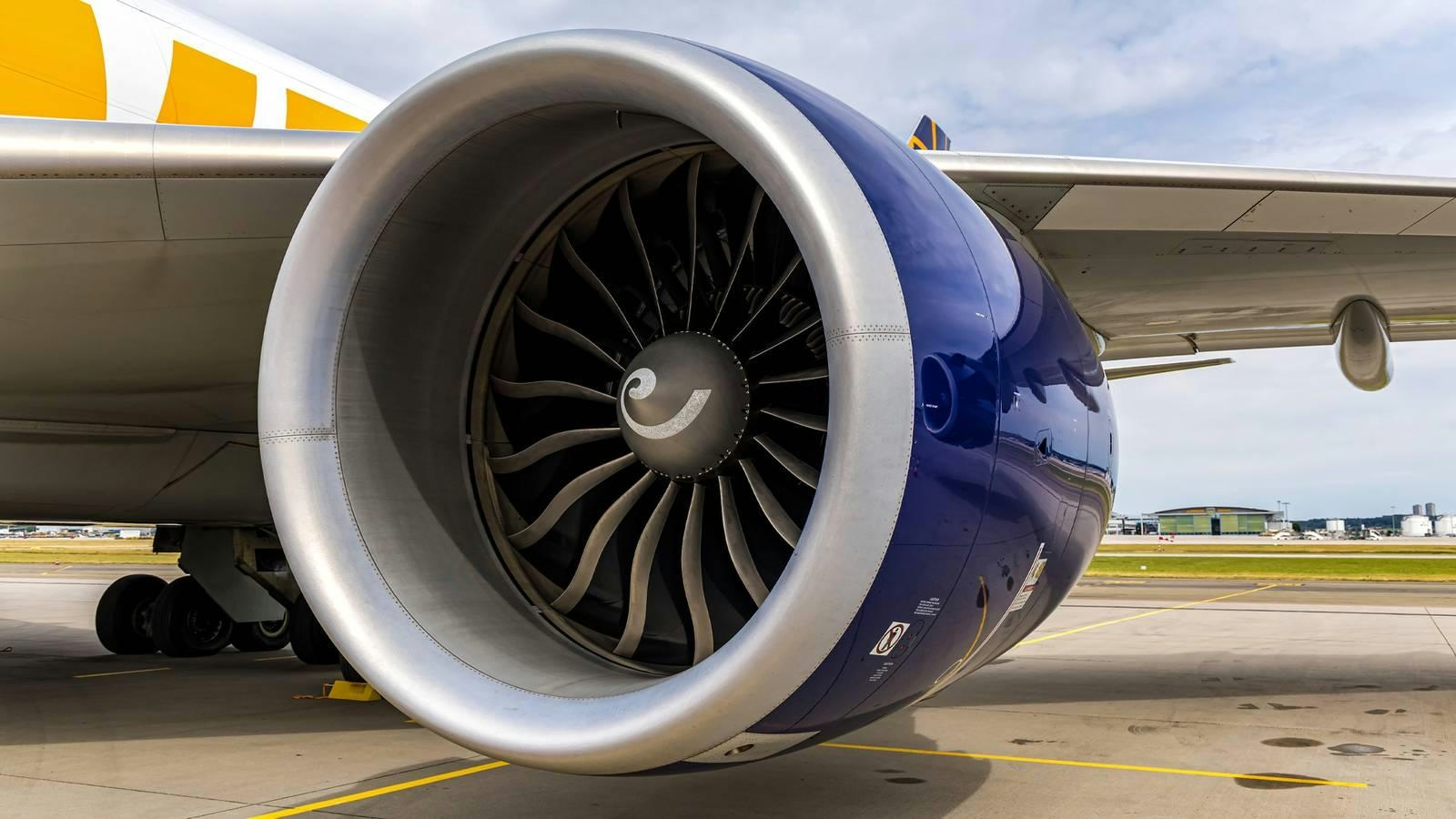
Keyamo’s comments coincided with the report from United Nigeria Airlines (UNA) of its fifth bird strike incident since January. The most recent event occurred on Tuesday evening when flight UN0579, a CRJ-900 operating from Kano to Abuja, encountered a bird strike while approaching Nnamdi Azikiwe International Airport. UNA’s Public Relations Officer, Chibuike Uloka, confirmed that all incidents have been managed in strict compliance with aviation safety regulations, highlighting ongoing operational and safety challenges within the region’s aviation sector.
The Call for Local Capacity Building and Industry Sustainability
The Ethiopian Aviation Forum convened regulators, airline executives, investors, and industry leaders from across Africa to discuss the future trajectory of the continent’s aviation industry. Despite increasing passenger numbers and expanding fleets, Keyamo emphasized that African airlines remain heavily dependent on MRO facilities located in Europe, the Middle East, and Asia. He noted that the $2.5 billion spent abroad accounts for approximately half of Africa’s heavy maintenance needs, a situation he described as neither sustainable nor strategic.
Citing Ethiopian Airlines as a successful example, Keyamo urged African nations to develop world-class MRO capabilities that can serve both domestic and international fleets. He warned that the current lack of adequate local facilities results in higher costs for airlines, extended aircraft downtime, and complex logistics associated with sending aircraft overseas for maintenance. Keyamo stressed that African countries must transition from being passive consumers of aviation technology to active participants in its development, asserting that building local capacity is essential for the long-term sustainability of the industry.
Global Aviation Context and Regulatory Implications
The challenges confronting African airlines reflect broader trends in the global aviation sector. In the United States, the industry is highly concentrated, with American, Delta, United, and Southwest Airlines controlling the majority of domestic traffic. The recent maintenance costs and operational incidents, including United Airlines’ fifth bird strike, have intensified regulatory scrutiny. A proposed merger between United and American Airlines, if approved, would create the world’s largest airline by capacity and revenue, raising significant competition concerns.
Market responses to such consolidation may involve aggressive pricing strategies and operational adjustments by competitors aiming to protect their market share. Regulatory authorities are expected to closely monitor these developments and may impose conditions to mitigate potential anti-competitive effects.
As African aviation leaders consider strategies to build local capacity, the global context highlights the critical importance of strategic investment and regulatory oversight to ensure competitiveness and sustainability within the sector.

Etihad Airways Suspends Airbus A380 Flights on Key Route

Aditya Birla Group Seeks Approval for Aircraft Leasing in GIFT City

Qatar Airways Highlights Innovation and Connectivity at Arabian Travel Market 2026

Hong Kong's Five-Year Plan Includes Andrew Fan's Aircraft Parts Processing Hub Proposal

ACIA Aero Leasing Delivers ATR72-600 to Air Nostrum

RTX Appoints Jill Albertelli as Head of Pratt & Whitney

TAT Technologies Joins Beyond Aero Hydrogen Aircraft Program

AURAK Study Highlights Barriers to Air Taxi Adoption in Emerging Economies

Xiamen Air Selects Altitude for 787 Maintenance at Heathrow

Etihad and Swissport Extend Global Partnership
